Fence Staining in Bay Shore, NY
Bay Shore Fences Take a Beating From Salt Air. Here’s How We Fix It.
Hear from Our Customers
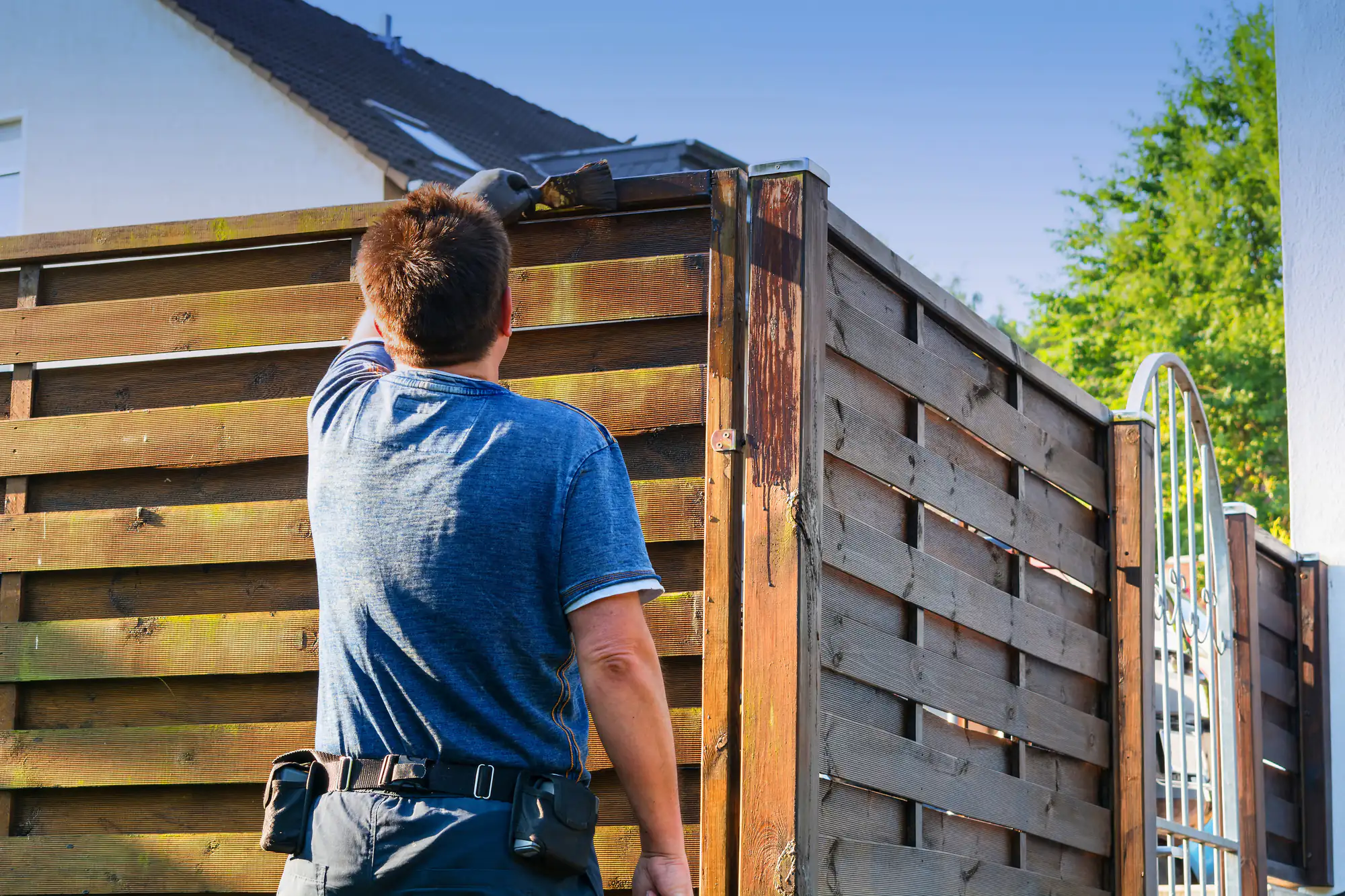
Wood Fence Staining Bay Shore
Living on the South Shore means your fence is dealing with things an inland fence never has to. Salt air off the Great South Bay works into untreated wood grain constantly and once that process starts, you’re looking at accelerated graying, surface mold, and boards that start to crack from the inside out before you know it. A properly applied stain seals that wood against moisture infiltration and slows the damage cycle significantly. For Bay Shore homeowners, that’s not a cosmetic upgrade it’s what keeps a fence functional for 15 to 20 years instead of needing full replacement in under ten.
The freeze-thaw cycles here make it worse. Water gets into unprotected wood in the fall, freezes, expands, and physically splits the grain from within. That happens dozens of times over a Long Island winter. A penetrating stain applied correctly after the wood is fully dry and ready stops that cycle before it starts. And when you factor in that professional staining runs a fraction of what full fence replacement costs, the math isn’t complicated.
Beyond the structural side, there’s the visual one. Bay Shore is a dense, active community with properties that sit close together. Your fence is visible from the street, from your neighbor’s yard, from the cars coming off Sunrise Highway and cutting through to the ferry. A clean, freshly stained fence signals that you take care of your property and in a neighborhood where median home values are pushing $690,000, that kind of upkeep matters.
Fence Company Bay Shore NY
We’ve been working on Long Island fences for over 15 years including plenty of them right here in Bay Shore and the surrounding South Shore neighborhoods, where the conditions are harder on wood than anywhere else in Suffolk County. We’re not a painting company that added staining to a service menu. We’re a fence company, which means when we look at your fence before staining, we’re reading the whole structure the wood species, the moisture level, the condition of the posts, the signs of storm stress not just the surface.
That matters in Bay Shore specifically. We know what a nor’easter does to a fence along the bay. We know what salt air looks like when it’s been working on cedar boards for two or three seasons. We serve homeowners from Pine Aire to Baywood and into Brightwaters, and we’ve seen enough South Shore fences to know exactly what yours needs before we ever open a can. Every job starts with a real site visit not a phone estimate and every quote is itemized so you know exactly what you’re paying for and why.
Fence Staining Process Bay Shore NY
The first thing we do is visit your property. Not a drive-by an actual site visit where we assess the fence condition, check moisture levels, verify property lines, and locate any underground utilities before any prep work begins. In Bay Shore, where lots run close together and fence lines occasionally overlap property boundaries, that step protects you from the kind of disputes that come up after a job, not before.
From there, we evaluate whether the wood is ready to accept stain. New pressure-treated lumber needs roughly six months to dry before staining will penetrate properly. New cedar needs at least five to seven weeks. If you’ve got an existing fence, we check for surface mold, weathering, and moisture content before anything else. Staining over wet or dirty wood is one of the main reasons DIY stain jobs peel within a season and it’s exactly what we avoid. If the fence needs cleaning or brightening first, that’s part of the process, not an add-on conversation.
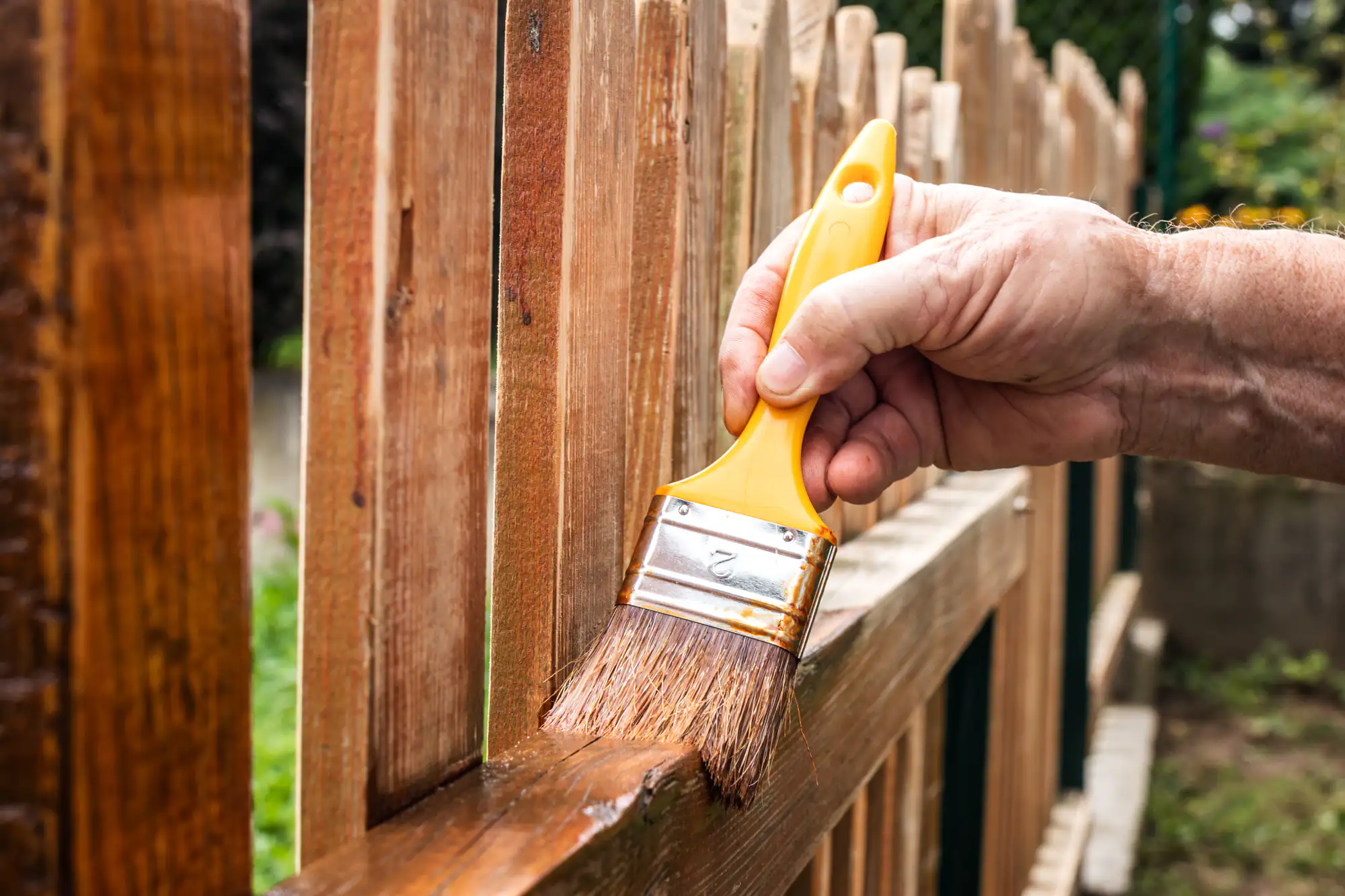
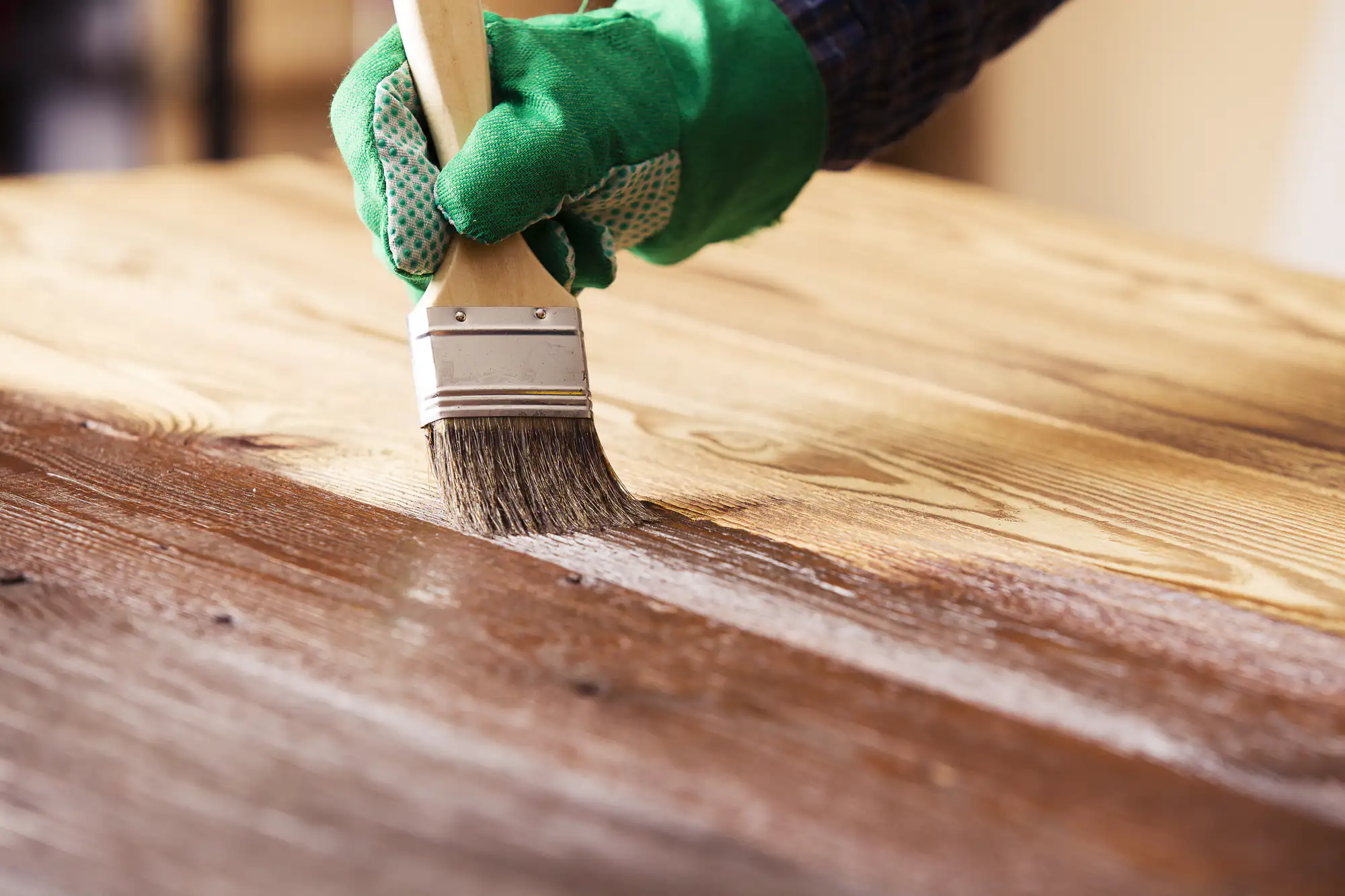
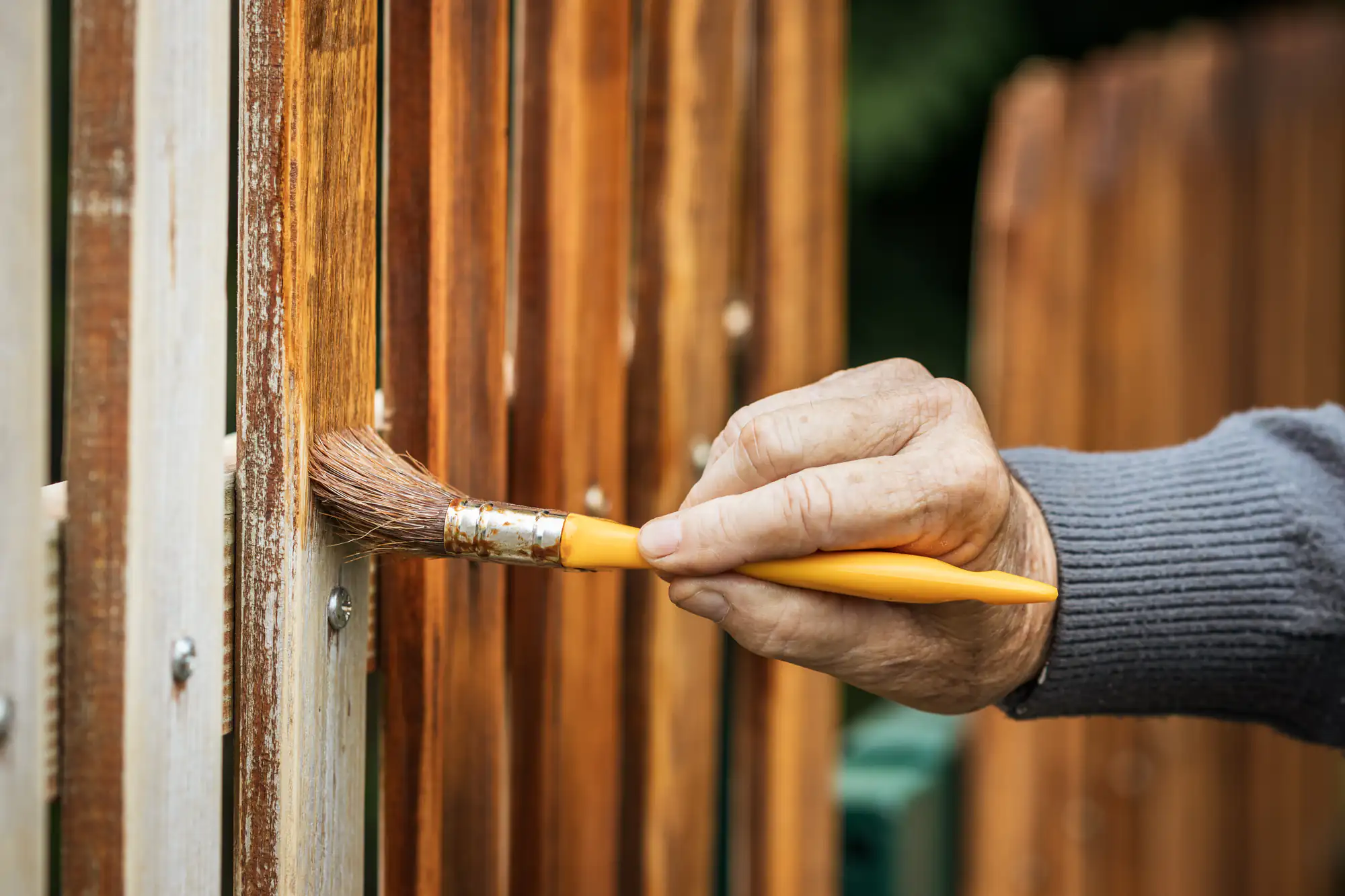
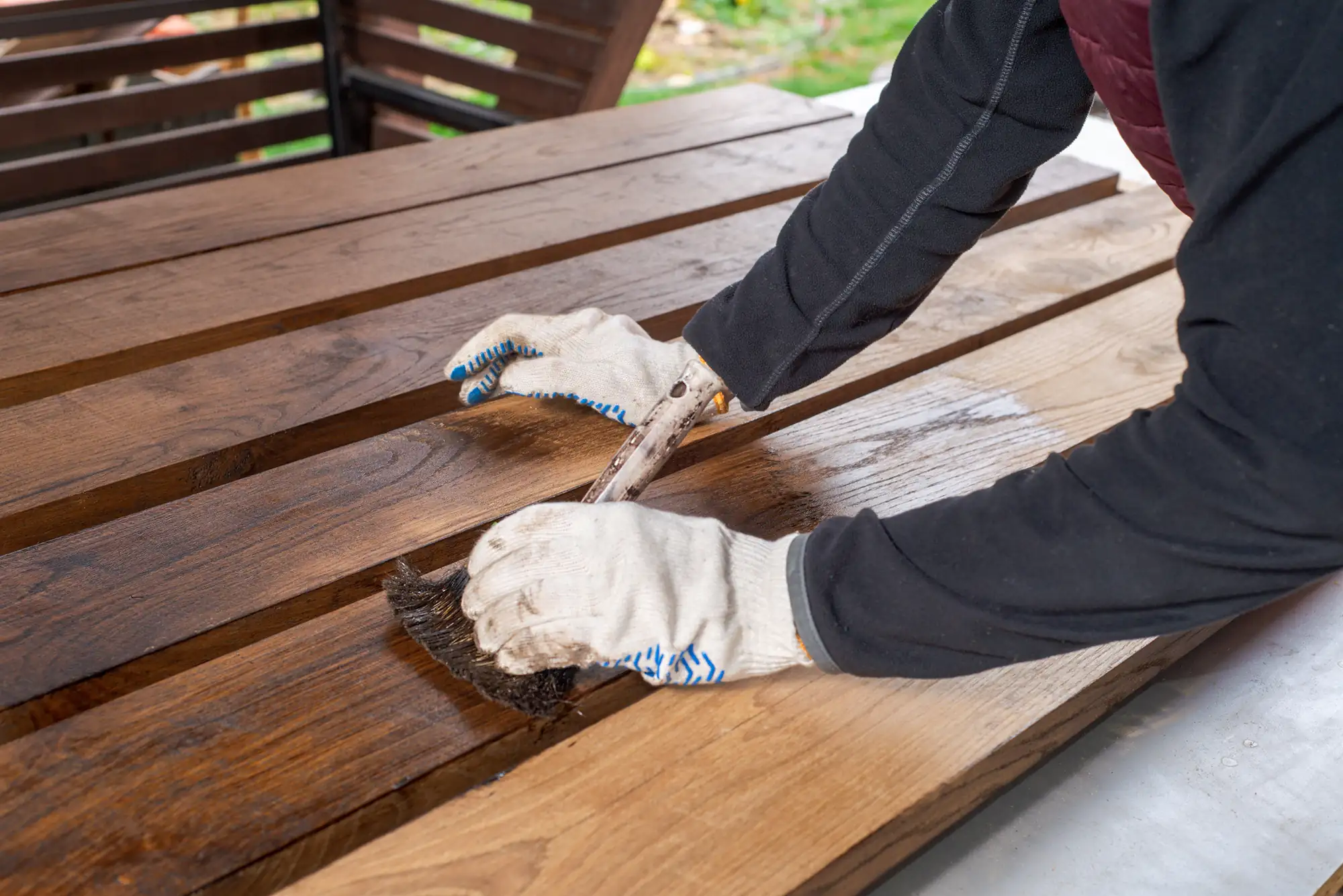
Once the surface is confirmed ready, we apply the stain with the right product for your wood type and your exposure level. A fence facing southwest toward the bay needs a different approach than one in a shaded backyard. We account for that. After the job, you’ll have a stain that’s designed to last three to eight years on vertical surfaces and a dual labor and material warranty backing both the work and the materials we used.
Ready to get started?
Professional Fence Staining Services Bay Shore
Fence staining in Bay Shore isn’t a one-size situation. The southwest-facing properties near the Great South Bay take significantly more UV and salt air exposure than a backyard in a sheltered neighborhood. The wood species matters too cedar and pressure-treated pine behave differently, absorb stain differently, and need different product formulations to hold up over time. We assess all of that before we quote, and the quote you get is itemized: lineal footage, materials, labor, all of it spelled out so there’s no guesswork.
For Bay Shore homeowners who are combining staining with any structural repair work storm damage, a section knocked loose by a fallen tree, posts that shifted after ground saturation we handle that in the same visit. If you’ve got damage from a nor’easter and you’re working through an insurance claim, our itemized estimate format is exactly what adjusters need to process that claim cleanly. You’re not coordinating two contractors or waiting on a second appointment.
It’s also worth knowing that fence staining itself doesn’t require a permit from the Town of Islip it’s a maintenance service on an existing structure. If your project involves any structural replacement alongside the staining, we’ll walk you through what, if anything, requires a permit under Town of Islip code before the job starts. No surprises, no after-the-fact conversations. All materials we use are American-made, and our practices include responsible disposal and material recycling something that matters when you’re working near the bay watershed.
How often should I stain my wood fence in Bay Shore, NY?
For most wood fences in Bay Shore, every two to three years is the right maintenance window but that’s a starting point, not a hard rule. Your fence’s actual condition, its sun exposure, and how close it sits to the Great South Bay all affect how fast the stain breaks down. A southwest-facing fence taking full bay wind and UV is going to need attention sooner than one tucked behind a garage.
The best way to check is the water bead test: pour a cup of water on the wood. If it absorbs quickly and darkens the surface, the wood is thirsty and ready for stain. If it beads up and rolls off, there’s still enough protection in place. Don’t wait until the wood is visibly gray or cracking at that point you’ve already lost some of the protection window, and the prep work required becomes more involved. Staying ahead of it is always cheaper than catching up.
What’s the difference between fence staining and fence painting for wood fences?
Stain penetrates the wood grain and protects from the inside out. Paint sits on top of the surface and forms a film. For a fence especially one exposed to Bay Shore’s humidity, salt air, and freeze-thaw cycling that distinction matters a lot. Paint traps moisture underneath it, and when that moisture expands in winter or tries to escape in summer, it peels, blisters, and cracks. Once paint starts failing, the prep work to fix it is significant.
Stain breathes with the wood. It doesn’t trap moisture it slows infiltration while allowing the wood to expand and contract naturally with the seasons. On a vertical fence surface that’s getting direct weather exposure year-round, stain consistently outlasts paint and requires far less prep when it’s time to reapply. For the South Shore climate specifically, stain is almost always the right call for a wood fence. The only exception is if you’re trying to match a specific color for aesthetic reasons, and even then, a solid-color stain achieves that without the failure modes of paint.
Can I stain my fence right after it was installed?
It depends on the wood. Pressure-treated lumber is kiln-dried to a point, but it still holds moisture from the treatment process and if you stain it too soon, the stain can’t penetrate properly and will sit on the surface, peel, and fail within a season. The general guideline for pressure-treated wood is to wait about six months before staining. New cedar is faster typically five to seven weeks but it still needs time to open up the grain.
The way to confirm readiness is the water bead test. Splash water on the board. If it soaks in, you’re ready. If it beads, wait longer. In Bay Shore’s humid coastal climate, new wood can hold moisture longer than it would in a drier inland area, so don’t rush the timeline based on how the fence looks test it. Staining too early is one of the most common reasons homeowners end up calling for a redo within a year of installation, and it’s completely avoidable.
My fence took storm damage during a nor’easter can it still be stained, or does it need repairs first?
Repairs come first always. Staining over compromised wood or loose sections doesn’t fix the underlying problem; it just covers it up temporarily. If boards were cracked, blown off, or saturated from flooding, those issues need to be addressed before any stain goes down. In some cases, boards that look okay on the surface have absorbed enough water from storm flooding to make them poor candidates for immediate staining they need to dry out fully first.
The good news is that we handle both in the same visit. If your fence took damage in a storm whether it was wind, a fallen tree, or ground saturation that shifted your posts we assess the full structure during the site visit, repair what needs repairing, and schedule the staining once the wood is confirmed dry and ready. If you’re filing an insurance claim, our itemized estimate covers both the repair and staining scope in a format that insurance adjusters can work with directly. Bay Shore homeowners deal with nor’easter damage more than most we’ve been through this process enough times to make it straightforward.
How much does professional fence staining cost in Bay Shore, NY?
Professional fence staining typically runs between $2 and $10 per linear foot, depending on the fence’s condition, the wood type, the product being used, and how much prep work is involved. For a standard residential perimeter fence in Bay Shore, most homeowners are looking at somewhere in the range of $1,400 to $2,200 though that range moves based on the specifics of your job.
What affects the cost most in Bay Shore is the prep side. A fence that’s been maintained and just needs a fresh coat is straightforward. A fence that’s weathered, has surface mold from bay humidity, or needs cleaning and brightening before staining takes more time and product and that shows up in the price. That’s exactly why we give you an itemized quote before any work starts: you see the lineal footage, the materials, and the labor broken out clearly so you understand what you’re paying for. Compare that to a full fence replacement, which runs $3,000 to $8,000 or more, and professional staining every two to three years is an easy investment to justify.
Does fence staining require a permit in Bay Shore or through the Town of Islip?
No fence staining is a maintenance service on an existing structure, and it doesn’t require a permit from the Town of Islip. You don’t need to file anything or wait on approvals to have your fence cleaned, prepped, and stained.
Where permits do come into play is if your project involves structural work alongside the staining replacing posts, adding sections, or building new fence runs. The Town of Islip requires permits for walls over 18 inches in height from grade, and there are sight triangle restrictions at intersections and driveways that apply to fences above three feet. If your Bay Shore property is near the Great South Bay, tidal wetlands, or any watercourse, there’s also a separate wetlands and watercourses permit pathway that applies to structural fence work near the water line. None of that applies to a staining-only job but if you’re thinking about combining staining with any structural repairs or additions, we walk through the permit picture during the site visit so you know exactly where you stand before anything starts.
Useful Links
Other Services we provide in Bay Shore