Fence Staining in Blue Point, NY
Your Bay-Side Fence Deserves More Than a Generic Coat
Hear from Our Customers
Wood Fence Protection in Blue Point
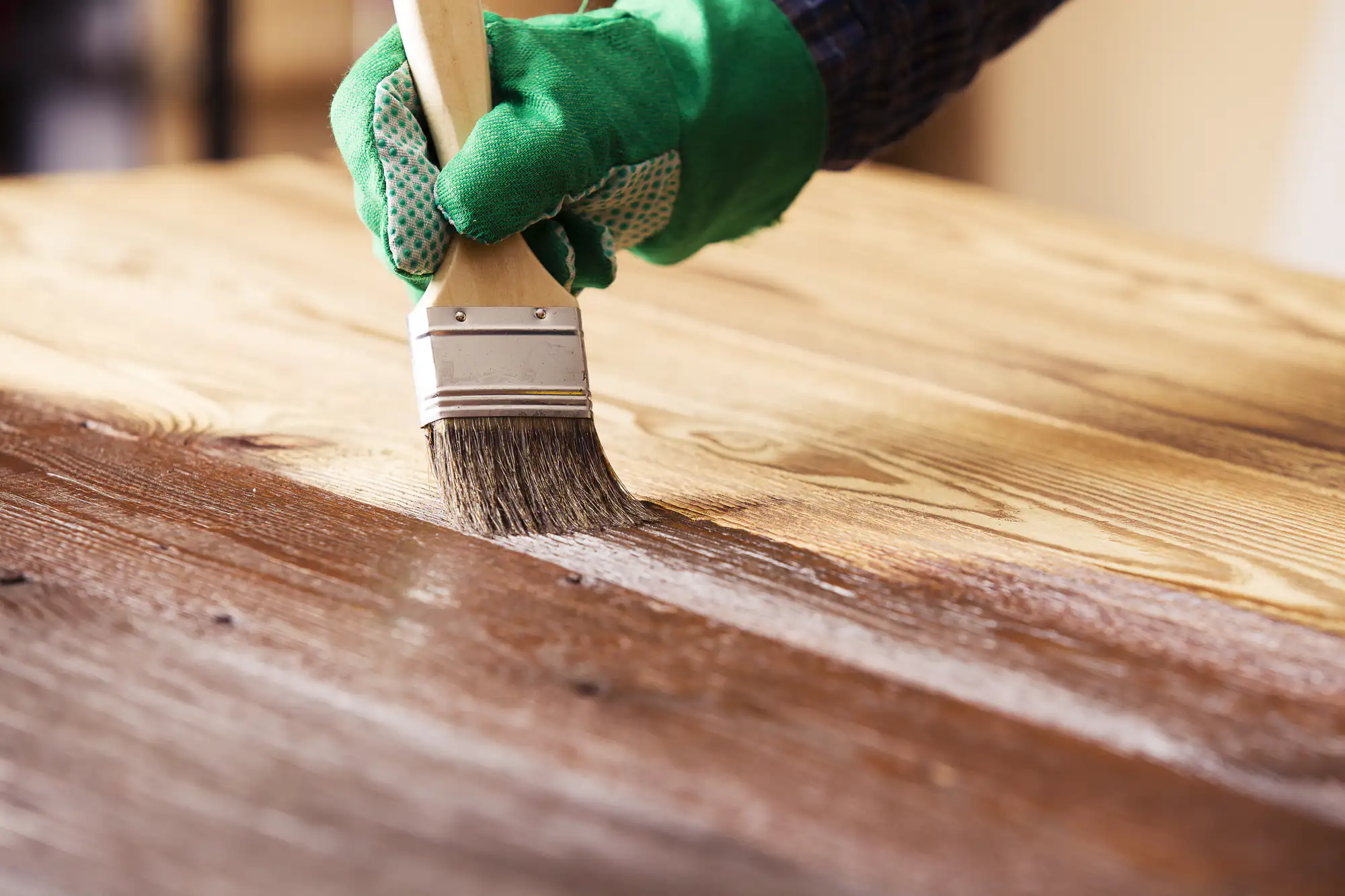
A freshly stained fence in Blue Point isn’t just about looks. It’s about stopping the damage that’s already working against your wood every single day salt-laden air drifting in off the Great South Bay, summer humidity that keeps wood from ever fully drying out, and the freeze-thaw cycling that turns small cracks into real structural problems by March.
Most wood fences in Blue Point are on properties built in the 1960s and 70s. That’s decades of weather, and in a coastal community, that adds up faster than it does anywhere inland. When wood is properly stained and sealed, it stops absorbing moisture the way untreated wood does. That means less warping, less splitting, and a fence that doesn’t need to be replaced years ahead of schedule.
The financial case is straightforward too. A full fence replacement in the Long Island area runs anywhere from $3,000 to $8,000 or more. Professional staining typically costs a fraction of that and done on a consistent cycle, it’s the single most effective thing you can do to push that replacement date further out. With median home values in Blue Point now near $810,000, protecting what you have just makes sense.
Blue Point Fence Staining Contractor
We’ve been working on fences across Suffolk County’s South Shore for over 15 years. That means we’ve seen what salt air does to cedar near the water in Blue Point, what happens to pressure-treated pine after a bad Nor’easter, and what separates a stain job that lasts from one that peels before the next summer.
We’re not a painting company that added fence staining to a dropdown menu. Fences are what we do installation, repair, and maintenance so when we assess your wood, we’re looking at it the way a fence company does, not a brush-and-bucket crew that treats every surface the same. We know the difference between wood that needs staining and wood that needs replacing first.
Blue Point homeowners near Corey Beach and along the bay-facing streets deal with conditions that most fence contractors simply aren’t accounting for. We are. Every quote we give is itemized, every project is backed by a warranty on both labor and materials, and we show up when we say we will.
Fence Staining Process in Blue Point, NY
It starts with a site visit. Before we quote anything, we come to your property, walk the fence line, assess the wood condition, and verify property boundaries. For homeowners in Blue Point where many properties date back to the mid-20th century and boundary lines aren’t always obvious this step matters. It protects you from surprises, and it gives us what we need to quote accurately.
From there, you get an itemized quote. Not a ballpark. Not a range with an asterisk. A written breakdown that specifies what’s being done, how much wood is being treated, and exactly what materials are going on it. If the fence needs cleaning or brightening before staining and most weathered fences in a coastal environment do that’s included in the scope, not added on later.
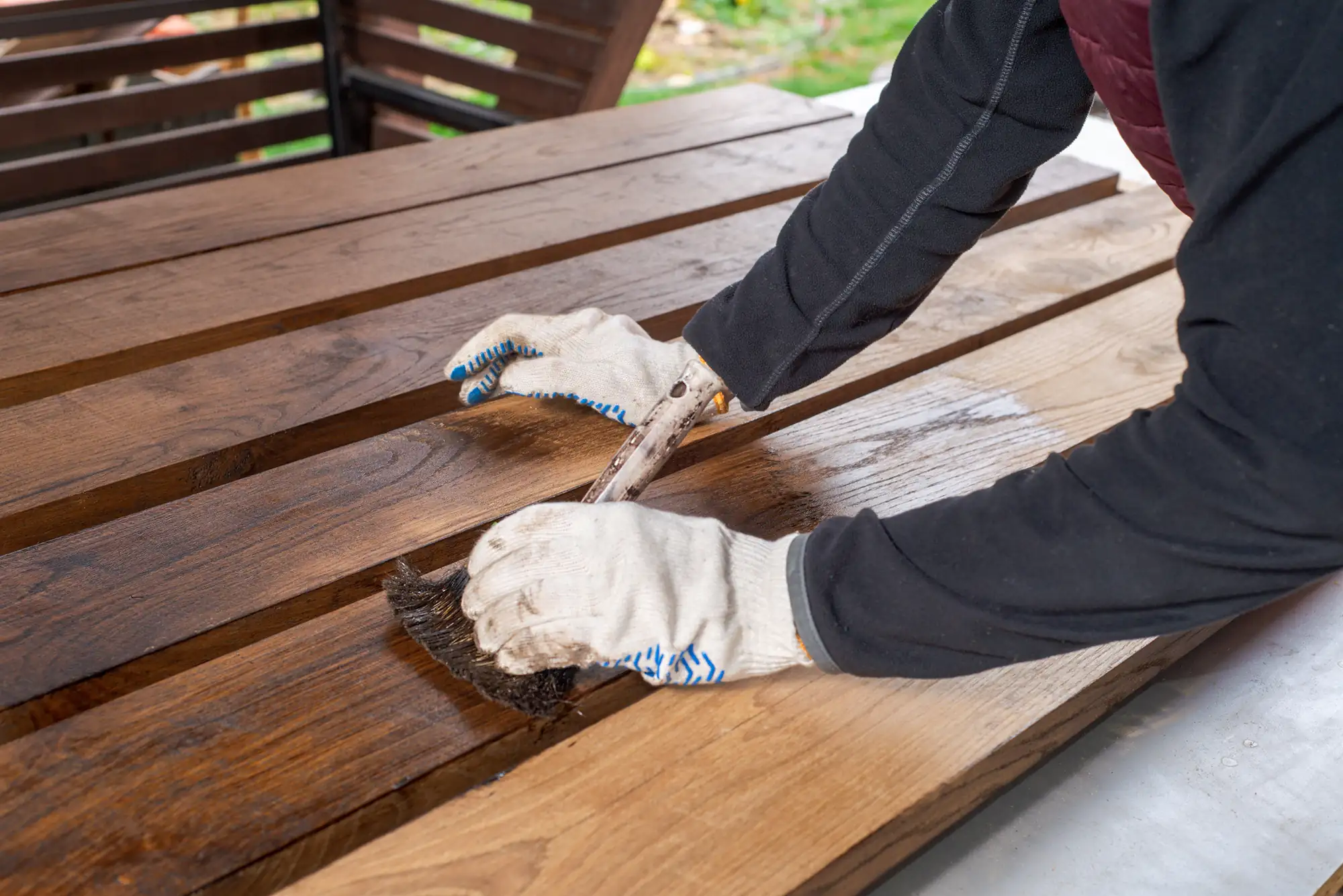
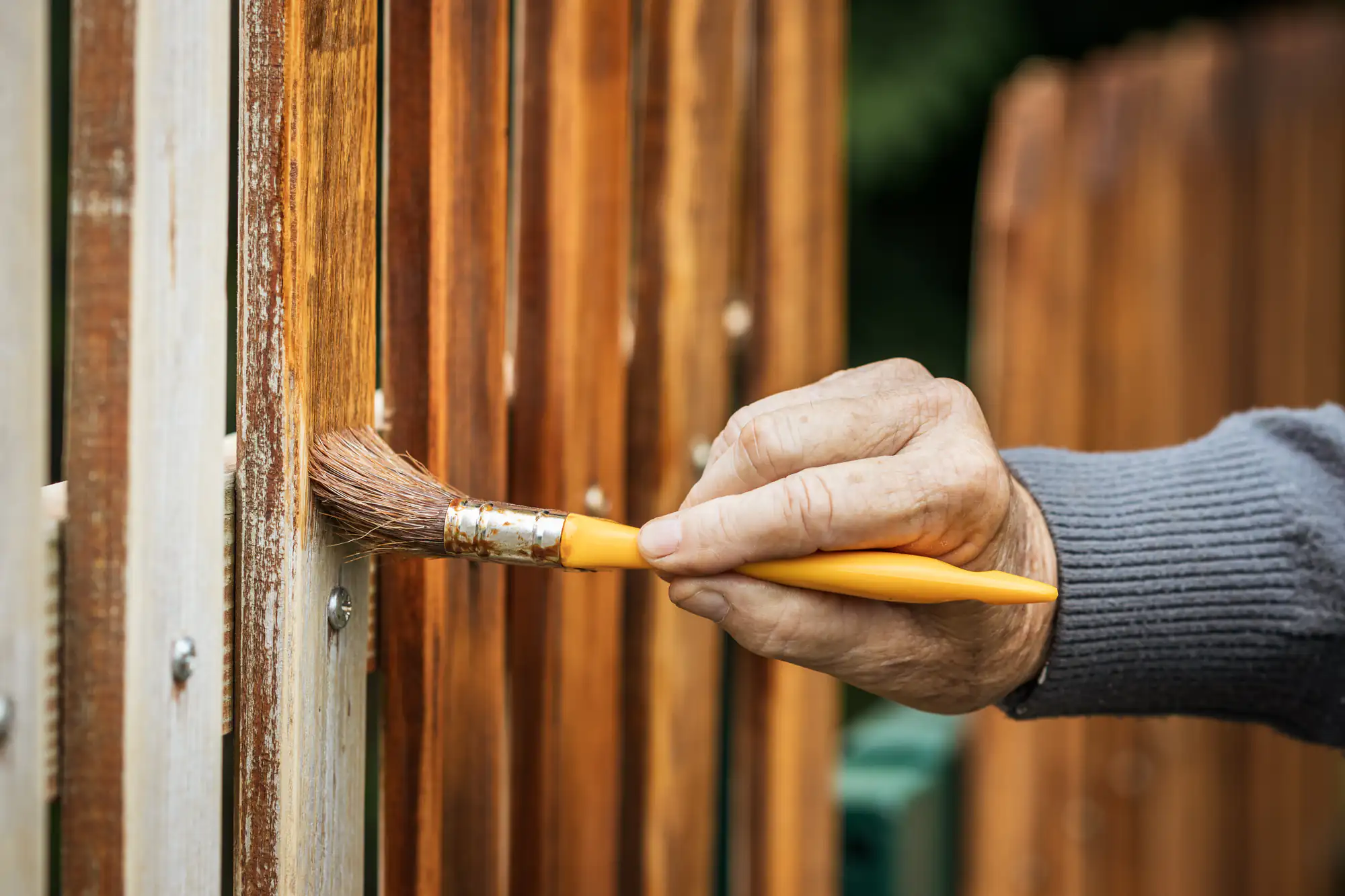
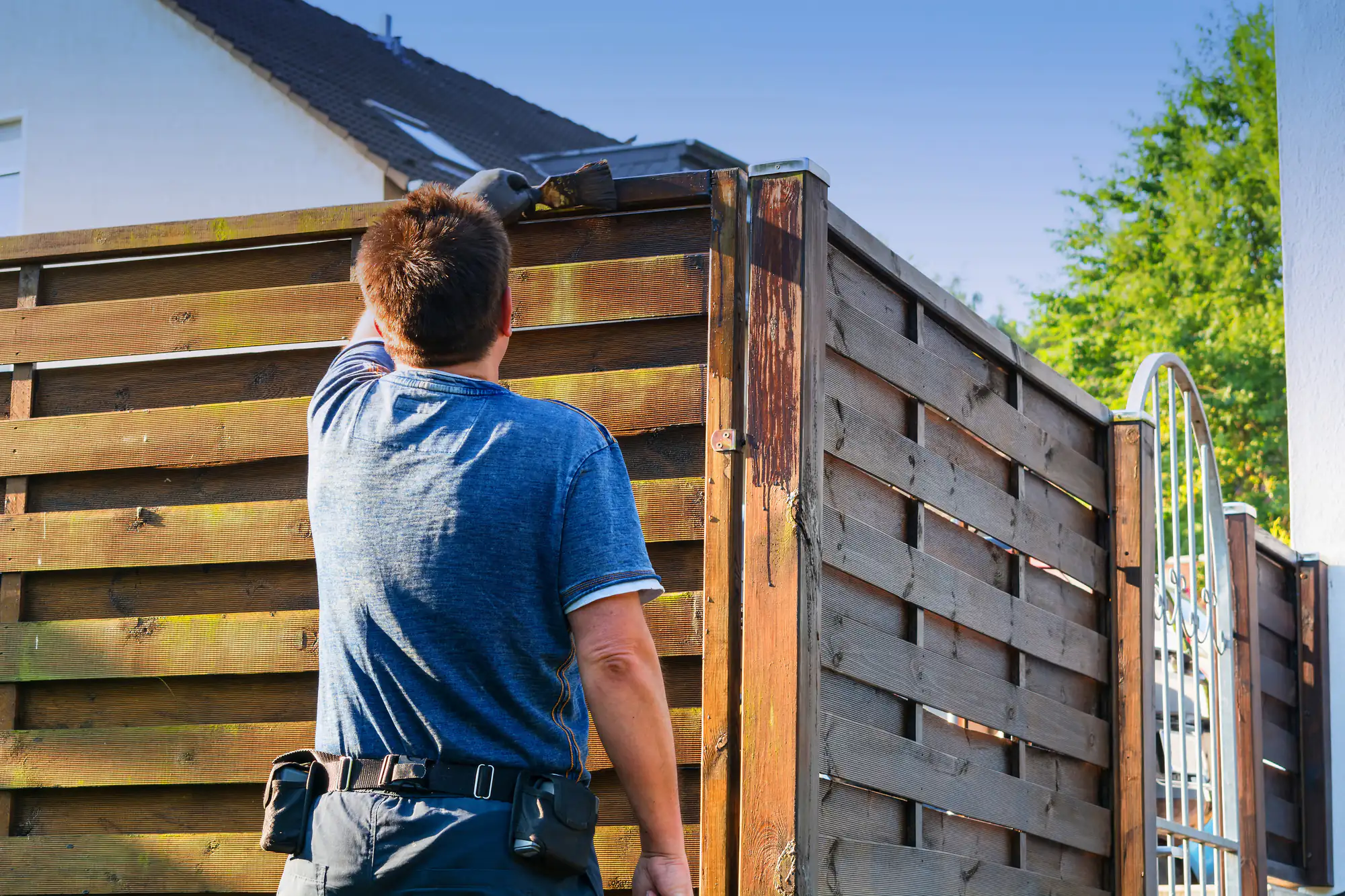
Once the work begins, prep comes first. We clean the surface, let it dry to the right moisture level, and then apply the stain in the conditions that allow it to penetrate and cure properly. Timing matters here: staining in high humidity or on wood that’s still wet from a recent storm produces poor results. We schedule around Blue Point’s South Shore weather patterns, not against them. When we’re done, the finish is even, the wood is sealed, and you have documentation of the work backed by our dual warranty.
Ready to get started?
Fence Staining Services in Blue Point, NY
Fence staining in a coastal community like Blue Point requires a different level of product selection than what works in an inland town. We use professional-grade stains chosen specifically for UV resistance, mildew inhibition, and moisture sealing the three things that matter most when your fence is living in salt air and high humidity for most of the year. The same semi-transparent oil-based stain that performs well in Hauppauge or Smithtown may not be the right call for a fence two blocks from the Great South Bay.
Every project includes a full assessment of your fence’s current condition. If there are boards that are too far gone to hold a stain, we’ll tell you before we start not after. If your fence was recently installed and isn’t ready to stain yet (new pressure-treated lumber typically needs around six months to dry before it accepts stain properly), we’ll give you a realistic timeline rather than rush a job that won’t last.
We also handle storm and vehicle damage repair as part of our scope. For Blue Point homeowners who’ve had fence panels knocked out by a Nor’easter or damaged in a flooding event off the bay, we can repair the structural damage and restain the affected sections in a single visit. No need to coordinate between a repair crew and a staining crew. It’s all covered under the same warranty labor and materials both and the same itemized quote process applies from start to finish.
How often should I stain my wood fence living near the Great South Bay?
For most wood fences in Blue Point, a restaining cycle of every two to three years is the right target. That’s shorter than what you might hear for inland Long Island communities, and the reason is straightforward: salt air accelerates the breakdown of stain faster than standard humidity alone. The moisture cycling that comes with living near the bay damp air rolling in off the water, followed by drying periods, followed by rain works the stain out of the wood grain more aggressively than a fence in Hauppauge or Smithtown would experience.
The best way to check whether your fence is due is the water bead test. Pour a small amount of water on the wood surface. If it beads up, the stain is still doing its job. If it soaks in immediately, the wood is no longer protected and you’re already losing ground to moisture damage. Catching it at that point before the wood starts graying, cracking, or showing early rot is when staining is most cost-effective. Waiting until the damage is visible usually means more prep work, higher cost, and sometimes boards that need replacement before staining can even happen.
What type of fence stain works best in Blue Point’s coastal climate?
For fences in Blue Point and along the South Shore generally, oil-based penetrating stains tend to outperform film-forming products in coastal conditions. The reason is that penetrating stains soak into the wood grain rather than sitting on top of it, which means they’re less prone to peeling when the wood expands and contracts with moisture changes something that happens constantly in a bay-adjacent environment. Film-forming stains can trap moisture beneath the surface, which leads to bubbling and peeling faster than you’d expect in a high-humidity setting.
Beyond the base formula, look for products that specifically list UV inhibitors and mildew resistance on the label. Blue Point’s South Shore summers bring intense UV exposure on top of the humidity, and mildew can take hold quickly on wood that isn’t protected. Semi-transparent stains are generally the better choice for cedar and pressure-treated pine because they allow the wood to breathe while still providing meaningful protection. We select stains based on your specific wood species and fence condition not a default product that gets applied to every job regardless of what the fence actually needs.
My fence was damaged in a storm can it be repaired and stained at the same time?
Yes, and for most Blue Point homeowners dealing with storm damage, handling the repair and restaining in a single visit is the smarter approach. Coastal storm events whether it’s a Nor’easter pushing water in off the Great South Bay or a severe summer storm don’t just knock panels down. They saturate wood with water, sometimes salt water, which is significantly more damaging than a standard rain event. Wood that’s been soaked in a flooding scenario needs to be properly dried and assessed before staining, but once it’s ready, doing the repair and staining together means the repaired sections are protected from the start.
The practical advantage is that you’re not coordinating two separate contractors, two separate schedules, and two separate invoices. We assess the full scope of the damage, repair what needs to be repaired, and apply stain to the affected sections as well as any adjacent wood that’s showing wear. Everything is covered under the same itemized quote and the same dual warranty on labor and materials. If you’re navigating an insurance claim at the same time, having detailed documentation of the work scope in writing helps that process too.
How much does professional fence staining cost in Blue Point, NY?
For most residential fence staining projects in the Blue Point area, you’re generally looking at a range of roughly $900 to $2,500 depending on the size of the fence, the condition of the wood, and the type of stain being applied. A standard 150-linear-foot privacy fence at six feet high typically falls somewhere in that range for professional staining including prep work. Larger fences, heavily weathered wood that requires more prep, or projects that include board repairs before staining can push the number higher.
What matters as much as the total cost is knowing exactly what’s included. Our quotes are itemized you’ll see the lineal footage, the materials being used, and the labor broken out clearly before any work begins. There are no charges added after the fact. For context, a full fence replacement in the Long Island area typically runs $3,000 to $8,000 or more depending on materials and scope. Professional staining on a consistent two-to-three-year cycle costs a fraction of that and is the most effective way to delay replacement significantly. With property taxes in Blue Point running over $10,000 per year, protecting what you already have is worth doing right.
How long does fence staining take to dry in Long Island’s humid summers?
Dry time depends on the product, the wood, and the conditions but in Blue Point’s South Shore climate, humidity is the main variable to manage. Most penetrating oil-based stains are dry to the touch within 24 to 48 hours under normal conditions, but full cure meaning the stain has fully bonded with the wood and is ready to handle rain and contact typically takes 72 hours or longer. In periods of high humidity, which are common on the South Shore from June through August, that window can extend further.
This is one of the reasons we don’t stain in poor conditions. Applying stain to wood that’s still damp from a recent rain event, or during a stretch of high humidity with no dry weather in the forecast, produces an uneven finish and poor penetration. The stain doesn’t bond the way it should, and the result fails faster. We schedule projects around the forecast ideally when temperatures are between 50 and 85 degrees, humidity is moderate, and there’s no rain expected for at least 48 hours after application. Late May through June and September through October are typically the best windows for fence staining in Blue Point, and we plan accordingly.
Should I stain or replace my aging wood fence in Blue Point?
The honest answer depends on what the wood actually looks like. Graying and surface weathering are cosmetic they don’t mean the fence is structurally compromised, and a proper cleaning followed by staining can bring a fence like that back to solid condition. Soft spots, significant rot at the post base, boards that flex when you press on them, or posts that are loose in the ground are different problems. Those indicate structural deterioration that staining won’t fix.
For Blue Point specifically, post bases are worth paying close attention to. Fences on properties close to the bay have dealt with years of ground moisture, and in some cases, flooding events that saturate the soil around post bases. A post that looks fine above ground can be compromised below it. When we do our site visit, we assess the full fence not just the surface and give you a straight answer about whether staining makes sense or whether some replacement work needs to happen first. If your fence has a mix of solid sections and compromised ones, a partial replacement combined with staining on the sound sections is often the most cost-effective path. You get a fence that looks consistent, performs well, and doesn’t cost you the full replacement price.
Useful Links
Other Services we provide in Blue Point