
Fence Staining in Commack, NY
Commack’s Oak Canopy Is Beautiful Until It Destroys Your Fence

Hear from Our Customers

Wood Fence Protection Commack NY
An untreated wood fence in Commack doesn’t just look rough after a few winters it structurally deteriorates. The mature oak and hickory canopy throughout the community traps moisture against fence boards after every rain. Add in Suffolk County’s freeze-thaw cycles, where overnight temperatures can swing from 40°F down to 15°F, and that trapped moisture expands and contracts inside the wood until boards split, warp, and loosen from their posts. A properly applied stain seals the wood against that cycle before it starts.
The difference between a stain job that lasts three to five years and one that fails by next summer comes down almost entirely to preparation. Cleaned, brightened, and moisture-assessed wood holds stain the way it’s supposed to. Wood that’s dirty, gray, or wet underneath will peel and blister usually within a season. That’s the part most DIY attempts skip, and it’s why professional results look and last so differently.
For a home worth $800,000 in Commack, a stained and maintained fence isn’t just about curb appeal. It’s about protecting a structure that, if left to deteriorate, costs $3,000 to $8,000 or more to replace. Regular staining every two to three years can extend a wood fence’s lifespan by up to 30%. The math is straightforward.
Fence Staining Company Commack NY
We’ve been working in Suffolk County for over 15 years through nor’easters, the wind events that specifically hammered the Commack and Brentwood corridor, and every seasonal extreme Long Island throws at wood fencing. This isn’t a painting company that added fence staining to its service list. Fence work is what we do, which means when we assess your fence before staining, we’re looking at the whole structure not just the surface.
Commack is one of those communities where the details matter. The community straddles the Town of Huntington to the west of Townline Road and the Town of Smithtown to the east, and those two municipalities have different permit thresholds for fence work. Our professional site visits include property line verification and utility locating so you know exactly where you stand before anything starts.
Every quote we provide is itemized: lineal footage, post spacing and depth, concrete volumes, and materials. No ballpark numbers that grow. No surprises when the job is done. And every project is backed by a warranty that covers both the labor and the materials not one or the other.

Fence Staining Process Commack NY
It starts with a professional site visit. We come to your property, walk the fence line, verify property boundaries, and locate utilities before any work is planned. For Commack homeowners, this step also confirms which municipality governs your property Huntington or Smithtown since the permit thresholds differ depending on which side of Townline Road you’re on. That’s not something you should have to figure out on your own.
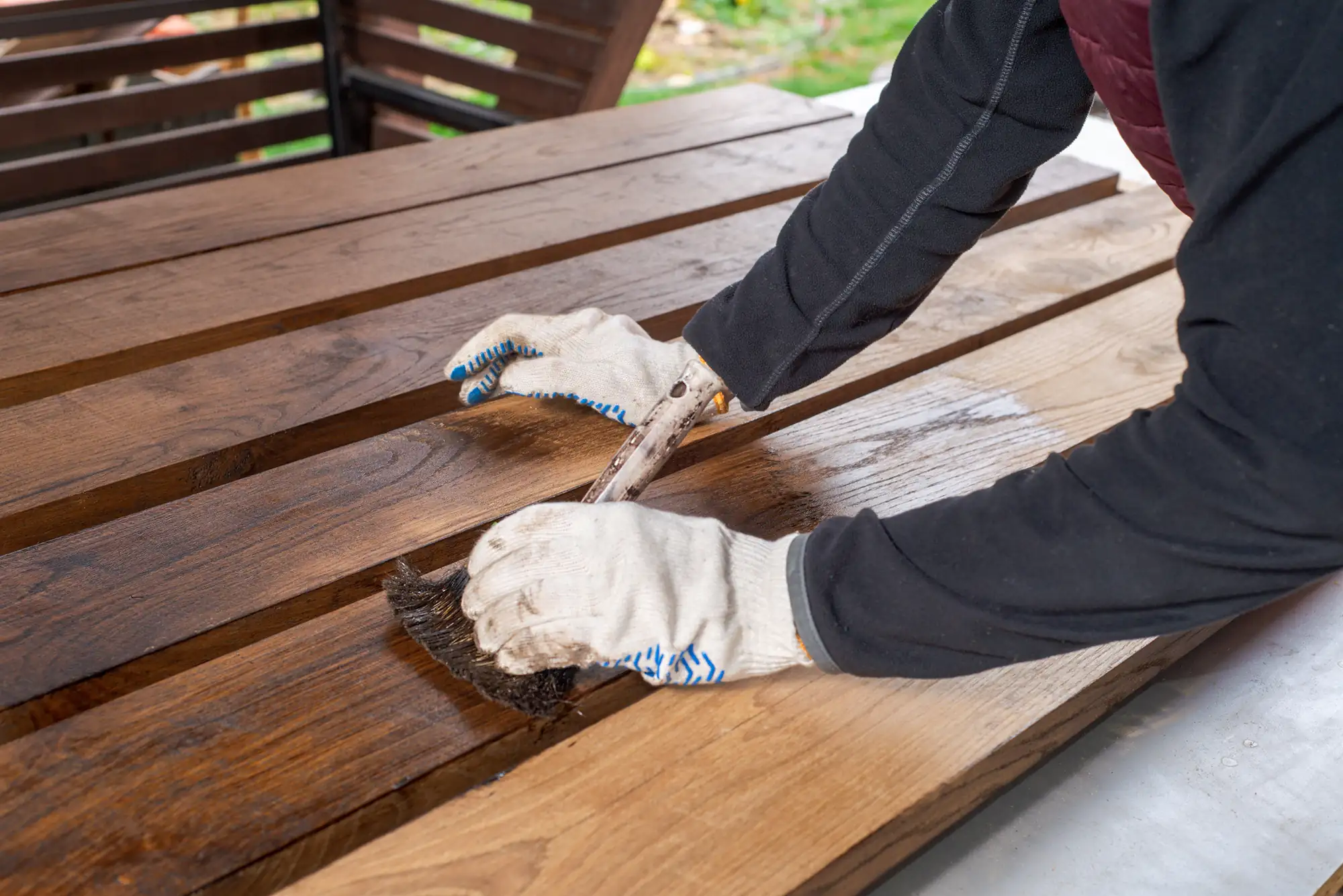
Once we’ve assessed the fence, we determine the right prep approach based on the wood’s current condition. If there’s mildew from shaded sections under Commack’s tree canopy, debris accumulation at the fence line, or surface graying from UV exposure, all of it gets addressed before a drop of stain is applied. Cleaning and brightening the wood isn’t optional it’s what determines whether the stain bonds correctly and holds for years instead of months.
After prep, we apply the stain in the right conditions temperature, humidity, and forecast all factor in. Commack’s best staining windows are late April through May and September through October, when temperatures are stable and the wood can cure properly. If you have new pressure-treated lumber, we’ll also let you know if it needs more drying time before it’s ready. When the job is done, you get a written warranty covering both workmanship and materials and a fence that’s ready for whatever the next Long Island winter brings.

Ready to get started?
Wood Fence Staining Services Commack NY
Every fence staining project we complete includes a full pre-stain assessment, professional surface preparation, and application by a crew that understands wood behavior from the installation side. For Commack’s housing stock much of it built out in the 1950s through 1970s, meaning a lot of the fencing in this community is on its second or third lifecycle that assessment matters. Older wood behaves differently than new lumber, and the prep requirements reflect that.
Because Commack’s tree canopy creates persistent shade on certain fence sections, we pay specific attention to mildew and moisture retention on those areas. Shaded boards dry slower after rain, which accelerates surface degradation if the wood isn’t properly sealed. We also cover storm and vehicle damage repair which is directly relevant here, given that Commack has been named among the hardest-hit areas in multiple documented Suffolk County wind events. If a fallen limb has damaged a section of your fence, we handle the repair and the staining together, so the finished result is uniform and protected.
All materials we use are American-made, and our practices include responsible material recycling something that fits naturally in a community that values its green spaces, from the neighborhoods near Hoyt Farm Nature Preserve to the wooded residential streets throughout the area. One call, one crew, one warranty on everything.
How often should I stain my wood fence in Commack, NY?
For most wood fences in Commack, every two to three years is the right maintenance window. That said, the actual timing depends on a few things the wood species, the fence’s sun and shade exposure, and how well the last stain job was applied and prepped. Sections of fence that sit under heavy tree cover, which is common throughout Commack given the mature oak and hickory canopy, tend to hold moisture longer and may show mildew or surface degradation faster than sections in full sun.
A simple field test works well: sprinkle water on the fence boards. If it beads up, the stain is still doing its job. If it soaks straight in, the wood is unprotected and it’s time to restain. Don’t wait until you see visible graying or cracking by that point, the wood has already been absorbing moisture through multiple freeze-thaw cycles, and the prep work required goes up significantly.
What’s the difference between fence staining and fence painting for wood fences?
Stain penetrates the wood and protects it from the inside out. Paint sits on top of the surface and creates a film that, over time, peels, chips, and traps moisture underneath especially on vertical fence surfaces exposed to Long Island’s wet winters and humid summers. Once paint starts peeling on a wood fence, the prep work to fix it is significant: you have to strip or sand down to bare wood before you can do anything else.
Stain, by contrast, wears gradually and evenly. When it’s time to restain, the process is cleaner and faster because there’s no failed film to remove. For wood fences in Suffolk County, where freeze-thaw cycling and summer humidity are both working against painted surfaces year-round, stain is almost always the better long-term choice. It keeps the wood breathing, holds up to the seasonal stress, and is far easier to maintain over a fence’s full lifespan.
Do I need a permit to stain my fence in Commack, NY?
Staining an existing fence generally doesn’t require a permit in either Huntington or Smithtown. Permits come into play when you’re installing a new fence or making structural modifications. If your staining project involves replacing damaged posts or sections which sometimes happens after storm damage in Commack that’s where the permit question becomes relevant, and the answer depends on which side of Townline Road your property sits.
For properties in the Town of Smithtown, east of Townline Road, a building permit is required for any fence over four feet in height, with a $200 fee. For properties in the Town of Huntington, west of Townline Road, the threshold is six feet. Commack is one of the only communities in this part of Suffolk County that straddles two separate municipalities, so knowing which town governs your property matters before any structural work begins. Our site visit process includes property line verification, so you won’t have to figure that out on your own.
How long does fence staining take, and will it disrupt my yard or daily routine?
For a typical residential fence in Commack say, 150 to 200 linear feet the full process including prep and stain application usually takes one day. Larger fences or those requiring more intensive prep work, like heavily mildewed sections or boards that need spot repair before staining, may extend into a second day. Either way, you don’t need to be home for the work to be done, and we’ll walk you through what access we need to the yard before scheduling.
The main thing to plan around is the cure window after application. Stain needs roughly 24 to 48 hours without rain to cure properly, and it shouldn’t be walked against or disturbed during that time. We schedule around the forecast specifically for this reason applying stain before a rain event is one of the most common reasons stain jobs fail prematurely, and it’s something we take seriously on every booking. Once it’s cured, your fence is ready for normal use.
Can I stain my fence right after a storm damaged part of it in Commack?
If a storm has knocked over a section, split posts, or driven a limb through your fence boards, the repair needs to happen before the staining and new wood typically needs time to dry before it accepts stain properly. Pressure-treated lumber, which is common in fence repairs, generally needs around six months to dry down enough for stain to penetrate correctly. Cedar dries faster, usually five to seven weeks. Applying stain to wood that’s still holding construction moisture will cause it to fail quickly.
We handle both the repair and the staining for Commack homeowners who’ve sustained storm damage. We’ll assess the damaged sections, complete the repair, and coordinate the staining timing so the finished result is uniform across the whole fence. You don’t need to manage two separate contractors for that.
How much does professional fence staining cost in Commack, NY?
Professional fence staining on Long Island typically runs between $2 and $10 per linear foot for wood fences, with most residential projects falling in the $1,400 to $2,200 range depending on fence size, height, current condition, and how much prep work is required. Fences that haven’t been maintained in several years which is common on Commack’s older housing stock, where fences have been through decades of freeze-thaw cycles and storm seasons often need more intensive cleaning and brightening before staining, which affects the total cost.
The more useful comparison isn’t staining versus not staining it’s staining regularly versus replacing the fence entirely. A full wood fence replacement in this area runs $3,000 to $8,000 or more. For a home in Commack where median values sit around $800,000, protecting that fence with a stain job every two to three years is a straightforward investment. We provide itemized quotes that break down every variable lineal footage, materials, prep requirements so you know exactly what you’re paying for before any work begins.
Useful Links
Other Services we provide in Commack