
Fence Staining in Coram, NY
Coram Winters Are Rough on Wood Fences
Hear from Our Customers
Wood Fence Protection Coram NY
Most homeowners in Coram don’t think about their fence until something goes wrong a board splits after a hard freeze, the wood turns gray and rough, or a nor’easter drops a limb and takes out a whole section. By that point, what could have been a straightforward staining job has turned into a repair conversation. Staining isn’t just about how the fence looks. It’s about keeping moisture out of the wood grain before the temperature drops and that moisture freezes, expands, and starts splitting boards from the inside. Coram sits inland, away from the coast, but central Suffolk County winters are still relentless and an unprotected wood fence absorbs every bit of that punishment.
There’s also the summer side of it. Coram’s suburban lots, many of them open and south-facing, take a full season of UV exposure that breaks down the wood’s surface, fades the color, and starts that familiar graying process that tells you the fence is overdue. Add in the organic debris that blows in from the Pine Barrens leaves, pine needles, pollen sitting against fence boards and holding moisture, and you’ve got conditions that accelerate rot faster than most homeowners expect. A properly applied, penetrating stain stops that cycle. It moves with the wood through humidity swings and temperature changes instead of sitting on top and peeling off. When it’s done right, you’re looking at three to five years of real protection before the fence needs attention again.
Fence Staining Company Coram NY
We’ve been working on wood fences across central Suffolk County for over 15 years, and that track record means we’ve seen what happens to cedar, pressure-treated pine, and every other species when it goes through a few Long Island winters without protection and we know exactly what it takes to fix it or prevent it in the first place.
Every job starts with a professional site visit. We verify property lines, locate utilities before any digging happens, and give you an itemized quote that breaks down lineal footage, materials, and labor not a ballpark number that shifts once work starts. That’s not standard practice in this industry, but it should be.
For Coram homeowners whether you’re on a quiet street off County Route 83 or backing up to the wooded fringe near the Pine Barrens you’re getting a crew that knows Brookhaven Town’s fence code, understands the local permit process, and isn’t going to leave you with surprises on either end of the job.
Fence Staining Process Coram NY
The biggest reason fence stain fails early isn’t the product it’s the prep. Wood that hasn’t been properly cleaned, brightened, and dried before staining will trap contamination underneath the finish. Within a season, you’ll see peeling, blotching, and uneven coverage. That’s not a material problem. That’s a process problem.
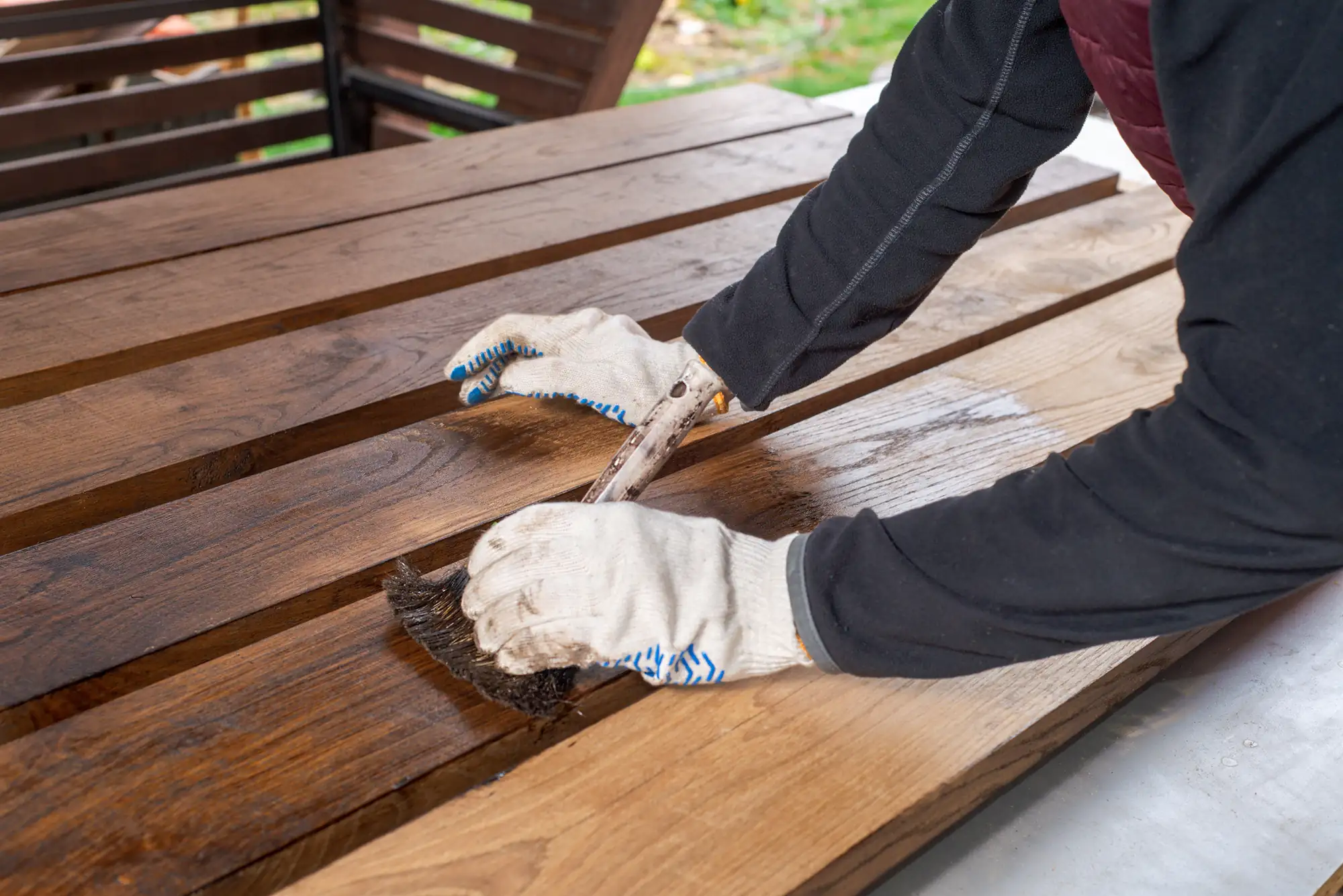
Here’s how it works when it’s done right. First, the fence gets a thorough cleaning to strip off dirt, mildew, algae, and any old surface coating that would block penetration. If the wood has grayed significantly which is common on Coram fences that have gone a few seasons without attention a wood brightener gets applied to open the grain back up and restore the surface’s ability to absorb stain evenly. Then the wood dries. In central Long Island’s humid summers, that drying window matters more than most people realize. Rushing it is how you end up with a stain job that looks fine on day one and starts peeling by fall.
Once the surface is ready, the stain goes on a professional-grade, penetrating formula suited to the specific wood species and the Northeast climate conditions your fence actually lives in. The goal is full grain penetration, not a surface coat. That’s what gives you protection through freeze-thaw cycles and UV exposure, not just a color refresh. Because fence staining in Coram doesn’t require a building permit from the Town of Brookhaven it’s a maintenance service, not new construction you can move forward as soon as you’re ready without waiting on approvals.
Ready to get started?
Professional Fence Staining Services Coram NY
Every fence staining job from us comes with an itemized written quote before anything starts. That means you see the lineal footage, the product being used, the labor involved, and the total cost line by line before you commit to anything. No vague estimates, no scope creep, no “we didn’t account for that” conversations halfway through the job.
The warranty covers both workmanship and materials. That’s not the industry standard most contractors offer one or the other. If the application fails due to how it was done, the labor warranty covers it. If the material itself underperforms, the material warranty covers that separately. For a Coram homeowner who’s invested in a property worth $500,000 or more, that dual coverage isn’t a bonus feature it’s what a professional job should come with.
If your fence took storm damage a limb from one of the mature trees common in Coram’s established residential neighborhoods, or wind damage from a severe system that tracked through central Suffolk County we handle repair and staining together. You’re not coordinating two separate contractors. All materials used are American-made, and we follow environmentally responsible practices, including material recycling something that matters in a community that sits alongside the Long Island Pine Barrens. One call, one crew, one job done right.
How often should I stain my wood fence in Coram, NY?
For most wood fences in Coram, a staining cycle of every two to three years is the right target but the honest answer depends on the wood species, the fence’s sun exposure, and how well the previous stain was applied. A cedar fence on a shaded lot off a side street near the Pine Barrens fringe is going to hold up differently than a pressure-treated pine fence sitting in full southern exposure on an open backyard lot.
The clearest signal that it’s time is visible graying and surface roughness. When the wood starts to look weathered and the grain feels raised, the UV and moisture cycling have already started breaking down the surface. At that point, you can still stain it but it needs proper prep first, including cleaning and brightening, to get the grain open again. Waiting too long doesn’t just affect appearance; it affects how well the stain penetrates and how long it lasts. Catching it before it gets to that point is always the better call.
What’s the difference between fence staining and fence painting for Long Island wood fences?
Stain penetrates into the wood grain. Paint sits on top of it. That distinction matters a lot in a climate like central Long Island’s, where wood fences are expanding and contracting through humid summers and cold winters all year long. Paint creates a surface film that doesn’t move with the wood which means it cracks, peels, and eventually fails, usually within a few seasons. Once paint starts peeling, you have to strip it before you can do anything else, which adds time and cost to every future maintenance cycle.
Penetrating stain moves with the wood. It allows the fence to breathe through moisture changes while still blocking the water absorption that causes splitting and rot. For most residential wood fences in Coram cedar, pressure-treated pine, or otherwise a semi-transparent penetrating stain is the right long-term choice. It protects the structure, lets the natural grain show through, and doesn’t lock you into the stripping-and-repainting cycle that paint eventually creates. If you’re trying to decide between the two, stain almost always makes more sense for a fence that’s going to live through Long Island winters.
Do I need a permit to stain my fence in Coram under Brookhaven Town rules?
No. Fence staining is a maintenance service, not new construction, so it doesn’t require a building permit from the Town of Brookhaven Building Division. You can schedule the work and move forward without waiting on any approvals. That’s one of the practical advantages of staining versus installation there’s no permit timeline standing between you and a protected fence.
Where Brookhaven Town code does come into play is if you’re repairing or replacing fence sections at the same time as staining. Installation and structural repair work does require a permit in Brookhaven Town, and there are height restrictions to be aware of residential front yards are capped at four feet, and rear and side yards at six feet. If your staining job involves any repair work, it’s worth confirming the scope upfront so the right steps are taken. Our site visit process includes exactly that kind of assessment before any work starts.
Can you stain a fence that’s already turned gray and weathered?
Yes but it requires proper preparation first, and skipping that step is the most common reason DIY staining jobs fail on gray wood. When wood has grayed, the surface cells have broken down from UV exposure and moisture cycling. The grain is often raised, the wood may have mildew or algae present, and the surface is no longer in a condition to absorb stain evenly. If you apply stain directly to that surface, you get uneven coverage, poor penetration, and a finish that starts peeling or blotching within a season.
The right approach is to clean the fence thoroughly to remove biological growth and dirt, then apply a wood brightener to restore the pH of the surface and open the grain back up. After adequate drying time which in Coram’s humid summer conditions needs to be respected the wood is ready to accept a penetrating stain properly. Done in that sequence, even a fence that’s been neglected for a few seasons can come back looking clean and protected. The prep adds time, but it’s what determines whether the stain lasts two years or five.
How much does professional fence staining cost in Coram, NY?
For most residential wood fences in the Coram area, professional fence staining runs somewhere between $600 and $2,200 depending on the size of the fence, the condition of the wood, and whether prep work like cleaning and brightening is needed before staining can begin. A fence that’s been maintained regularly and just needs a fresh coat will come in at the lower end. A fence that’s grayed significantly and needs full prep before staining will be toward the higher end.
That range is worth putting in context. Full wood fence replacement in the Long Island market runs $3,000 to $8,000 or more depending on material and linear footage. Regular staining every two to three years is a fraction of that cost and is the single most effective way to push a fence’s lifespan out significantly up to 30% longer than an unprotected fence in the same conditions. With home values in Coram continuing to rise, the math on protecting that investment is straightforward. We provide itemized quotes before any work starts, so you know exactly what you’re paying for no estimates that shift once the crew shows up.
What happens if my fence was damaged in a storm can you repair and stain it at the same time?
Yes, and that’s often the most efficient way to handle it. Severe storms that track through central Suffolk County including the kind of nor’easters and summer thunderstorm systems that have been documented naming Coram directly in their path can take out fence sections, crack boards, or bring down posts when limbs fall from the mature trees common in Coram’s older residential neighborhoods. When that happens, you’re dealing with a structural problem and a protection problem at the same time.
We handle both. We can assess the damage, repair or replace the affected sections using American-made materials, and stain the entire fence to a uniform finish in a single engagement. That matters because mismatched stain between old and new wood is a common outcome when homeowners use one contractor for repair and a separate one for staining the color and sheen rarely match perfectly. Doing it together means the finish is consistent across the whole fence. If you’re filing a homeowner’s insurance claim for storm damage, having a contractor who can document the scope of repair and provide an itemized breakdown of work is also useful during that process.
Useful Links
Other Services we provide in Coram