
Fence Staining in Gordon Heights, NY
Gordon Heights Winters Crack Wood Fast Here’s What Actually Lasts
Hear from Our Customers
Wood Fence Protection in Suffolk County
A wood fence in Gordon Heights takes a beating year-round. On streets like Gordon Avenue and Dunbar Avenue, ranch-style homes sit on full lots with morning-to-evening sun exposure no coastal breeze, no shade buffer, just direct UV breaking down the wood’s surface one season at a time. By fall, the grain is open, the color is gone, and the fence is ready to absorb every drop of moisture the next nor’easter brings.
That moisture is where the real damage happens. When water gets into unprotected wood and the temperature drops below freezing, it expands. It does that repeatedly through a central Long Island winter cracking boards, splitting grain, rotting post bases. A properly applied stain seals the wood before that cycle starts, not after the damage is already visible.
The financial case is straightforward. A professional stain job every two to three years costs a fraction of what a full fence replacement runs and with median property values in Gordon Heights now sitting around $382,000 and rising, protecting the investment you’ve already made in your home makes sense. A fence that looks maintained adds to that value. One that’s gray, cracked, and pulling away from posts does the opposite.
Fence Staining Company Near Gordon Heights
We’ve been working on wood fences across Suffolk County for over 15 years, including the central interior hamlets Gordon Heights, Medford, Middle Island, Coram where the housing stock is mostly ranch-style homes on full lots, the winters are real, and homeowners expect a contractor who shows up prepared and delivers what they quoted.
Every job starts with a professional site visit. That means walking your property, verifying boundary lines, and locating underground utilities before any work begins. In Gordon Heights, where Brookhaven Town’s fence code sets a six-foot maximum height for residential fences and takes property boundary compliance seriously, that kind of diligence protects you from issues that a less thorough contractor wouldn’t catch until it’s too late.
Our quotes are itemized: lineal footage, post spacing, depth, concrete volumes, materials, and labor all broken out line by line. No vague totals, no surprises after the work starts. Every job is backed by a written warranty covering both workmanship and materials, which is not standard in this industry. Most contractors cover one or the other. We cover both.
Fence Staining Process in Gordon Heights, NY
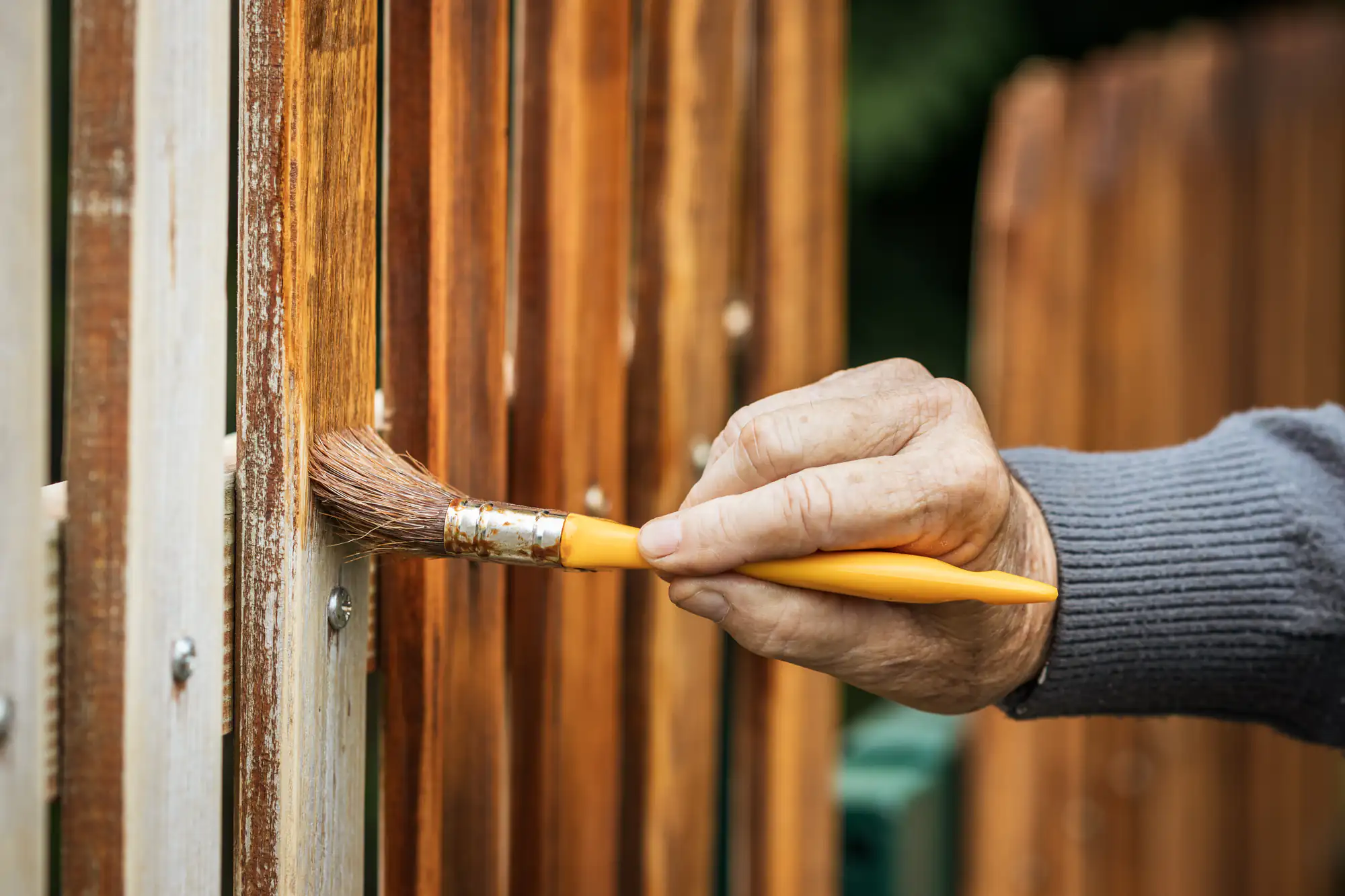
It starts with a site visit not a phone estimate, not a satellite image. Someone from our team comes out to your Gordon Heights property, walks the fence line, confirms boundaries, and assesses the condition of the wood. For homeowners dealing with post-storm damage after a bad nor’easter or a summer wind event, this visit also covers what needs to be repaired before staining can happen. We handle both, so you’re not coordinating two separate contractors.
Once the assessment is done, you receive an itemized quote. Every line is spelled out how many linear feet, what materials we’re using, what the labor covers. If the fence needs cleaning or brightening before the stain goes on, that’s included in the scope. Staining over dirty or wet wood is the most common reason a stain job fails within a year, so surface prep isn’t optional it’s part of the process.
Timing matters too, especially in central Suffolk County. The best windows for staining in this area are late April through early June and mid-September through late October after the last frost or after the summer heat breaks, with enough dry days ahead for the stain to cure properly. If you have a newer fence made from pressure-treated lumber, it needs roughly six months to dry before it’s ready to accept stain. We’ll assess readiness and schedule accordingly, so the job is done right the first time.
Ready to get started?
Wood Fence Staining and Sealing in Gordon Heights
Fence staining with Best Fence Long Island isn’t a coat of color brushed over whatever condition the wood is in. It starts with a proper assessment of the wood species, moisture content, and surface condition because cedar, pressure-treated pine, and other common materials used on Gordon Heights properties each behave differently and require different products and prep approaches. Semi-transparent stains with UV inhibitors are typically the right call for the full-sun exposure that open lots in this area see through the summer months.
Surface cleaning and wood brightening come before any stain is applied. The water bead test confirms the wood is dry enough to accept the product. If fence sections have been damaged by a fallen limb, a storm, or just years of wear we repair those first so the staining covers a structurally sound surface, not a compromised one. All fence materials we use are American-made, and our products and disposal practices meet environmentally responsible standards.
Every completed job is backed by a written warranty on both labor and materials. That’s not a detail buried in the fine print it’s the standard. If the stain fails because of application or because of the product itself, you’re covered. For Gordon Heights homeowners who’ve invested in their property and expect a contractor to stand behind their work, that warranty is the difference between a vendor and someone who’s actually accountable.

How often should I stain my wood fence in Gordon Heights, NY?
For most wood fences in Gordon Heights, every two to three years is the right maintenance schedule. Central Suffolk County’s climate is harder on wood than people expect full sun exposure through the summer, significant humidity, and then a winter that puts the fence through repeated freeze-thaw cycles. Each of those factors accelerates the breakdown of an unprotected or under-maintained stain finish.
The practical signal is the water bead test. Splash water on your fence boards if it beads up and rolls off, the stain is still doing its job. If it soaks straight in, the wood is exposed and it’s time to schedule a staining. Waiting until the wood is visibly gray and cracking means you’re already behind, and surface prep becomes more intensive. Staying on a two-to-three-year cycle keeps the job straightforward and the protection continuous.
What’s the difference between fence staining and fence painting for wood fences?
Stain penetrates into the wood fiber rather than sitting on top of it as a surface film. That matters because wood expands and contracts with temperature and humidity changes which happens constantly on Long Island across all four seasons. Paint forms a surface layer that can crack, peel, and trap moisture underneath, which accelerates rot. Stain moves with the wood instead of fighting it.
For a wood fence in Gordon Heights and central Suffolk County, stain is almost always the better long-term choice. It allows the wood to breathe, it handles the seasonal movement better, and when it does wear, it weathers gradually rather than peeling in sheets. Touch-ups and recoats are also simpler with stain you’re not sanding and stripping failed paint before you can reapply. A semi-transparent stain also lets the natural grain of the wood show through, which tends to look better on residential fences than a solid painted finish.
How long does fence staining take, and do I need to be home during the job?
The timeline depends on the size of your fence and its current condition. A standard residential fence on a ranch-style lot in Gordon Heights which often means a larger perimeter given the lot sizes common to this part of Brookhaven Town typically takes one to two days. If there’s repair work involved before staining, that adds time, and we’ll be upfront about that in the initial quote.
You don’t need to be home during the work itself, but we do ask that someone is available for the initial site visit so we can walk the property together, confirm the scope, and answer any questions before we start. After that, our crew works independently. We’ll let you know when the job is complete and what the dry and cure time looks like before the fence should be exposed to heavy rain or contact.
Does fence staining in Gordon Heights require a permit from Brookhaven Town?
Staining an existing fence does not require a permit it’s a maintenance service, not a structural change, so you don’t need to file anything with Brookhaven Town before we start. That said, if your fence has storm damage that requires replacing posts or significant sections, it’s worth confirming that any structural repair work on the existing permitted structure stays within the town’s guidelines.
Brookhaven Town’s fence code sets a six-foot maximum height for residential fences, and it takes property boundary compliance seriously. Our pre-job site visit includes property line verification, which protects you from any potential disputes with neighbors or issues with the town before work begins. If you’re planning to install a new fence section as part of a larger repair project, we can walk you through what does and doesn’t require a permit under the current Brookhaven Town code.
My fence was damaged in a storm can you repair and stain it in the same visit?
Yes, and that’s actually the most efficient way to handle storm damage. Central Suffolk County gets hit with significant wind events nor’easters from fall through spring, and severe summer thunderstorm lines that can push gusts well above 60 mph through the wooded corridor that runs through Gordon Heights, Middle Island, and Medford. Fallen limbs and toppled fence sections are a regular result, and when raw wood is exposed after a break, it needs to be protected quickly before the next weather system arrives.
We assess the damage, handle the structural repair board replacement, post work, whatever the fence needs and then stain the entire fence so the repaired sections match the rest and everything is sealed against moisture. You get one contractor, one visit, and one warranty covering the whole job. Trying to coordinate a fence repair company and a separate painting contractor after a storm is a slow, frustrating process that leaves your property exposed longer than it needs to be.
How much does professional fence staining cost in Gordon Heights, NY?
Professional fence staining typically runs between $2 and $10 per linear foot, with most complete residential jobs landing somewhere between $1,400 and $2,200 depending on fence size, wood condition, and the prep work required. Ranch-style homes on larger lots in Gordon Heights often have longer fence perimeters than the national average, so it’s worth getting an accurate linear footage measurement before you compare quotes.
What matters more than the per-foot number is what’s actually included. A quote that skips surface prep, uses lower-grade products, or offers no warranty might look cheaper upfront but typically means you’re restaining in 12 to 18 months instead of three to five years. Every quote from us breaks out exactly what you’re paying for linear footage, materials, labor, and prep so you can see the full picture before you commit. That level of transparency is how you make a real comparison, not just a price comparison.
Useful Links
Other Services we provide in Gordon Heights