
Fence Staining in Islip Terrace, NY
Islip Terrace Winters Are Hard on Wood Here’s What Actually Protects It
Hear from Our Customers
Wood Fence Protection Islip Terrace
An unstained wood fence doesn’t just look worn it’s actively breaking down. Every winter, freeze-thaw cycles force moisture into the grain, expand it, crack it, and pull it apart from the inside. Every summer, the sun bleaches the lignin out of the wood while humidity drives moisture back in every night. By the time a fence looks gray and checked, the damage is already compounding beneath the surface.
A properly stained fence changes that equation. The right penetrating stain seals the grain against moisture intrusion, blocks UV degradation, and gives the wood the flexibility it needs to handle Long Island’s seasonal swings without splitting. For the 1950s ranch homes and 1960s neo-colonial hi-ranches that define most of Islip Terrace’s residential streets, many of those fences have been standing for decades and professional staining is often what separates a fence that lasts another ten years from one that needs full replacement within two.
The math is straightforward. Professional staining runs $2–$10 per linear foot. A full fence replacement costs $3,000–$8,000 or more. Staining every two to three years is not a luxury it’s the cheaper option, by a wide margin. And with home values in Islip Terrace averaging well above $560,000, a maintained fence also signals property care to every neighbor and prospective buyer who walks past.
Fence Staining Company Islip Terrace NY
We’ve been working on wood fences across Suffolk County for over 15 years. That’s not a marketing number it means we’ve watched what Long Island’s climate does to untreated wood on real streets in real neighborhoods, including the tree-lined residential blocks throughout Islip Terrace and the surrounding Town of Islip communities.
We are a fence company first. That distinction matters more than it sounds. When we stain your fence, we’re not a painting crew that added staining to a service list we’re the same team that understands post depth, wood species behavior, grain direction, and what South Shore storm exposure does to a board over time. That depth of knowledge is what our prep process reflects, and prep is what determines whether a stain job lasts three years or peels in twelve months.
Every job starts with a professional site visit, property line verification, and utility locating before any work begins. You get an itemized quote that specifies lineal footage, labor, and materials. No round numbers. No surprises.
Professional Fence Staining Process Suffolk County
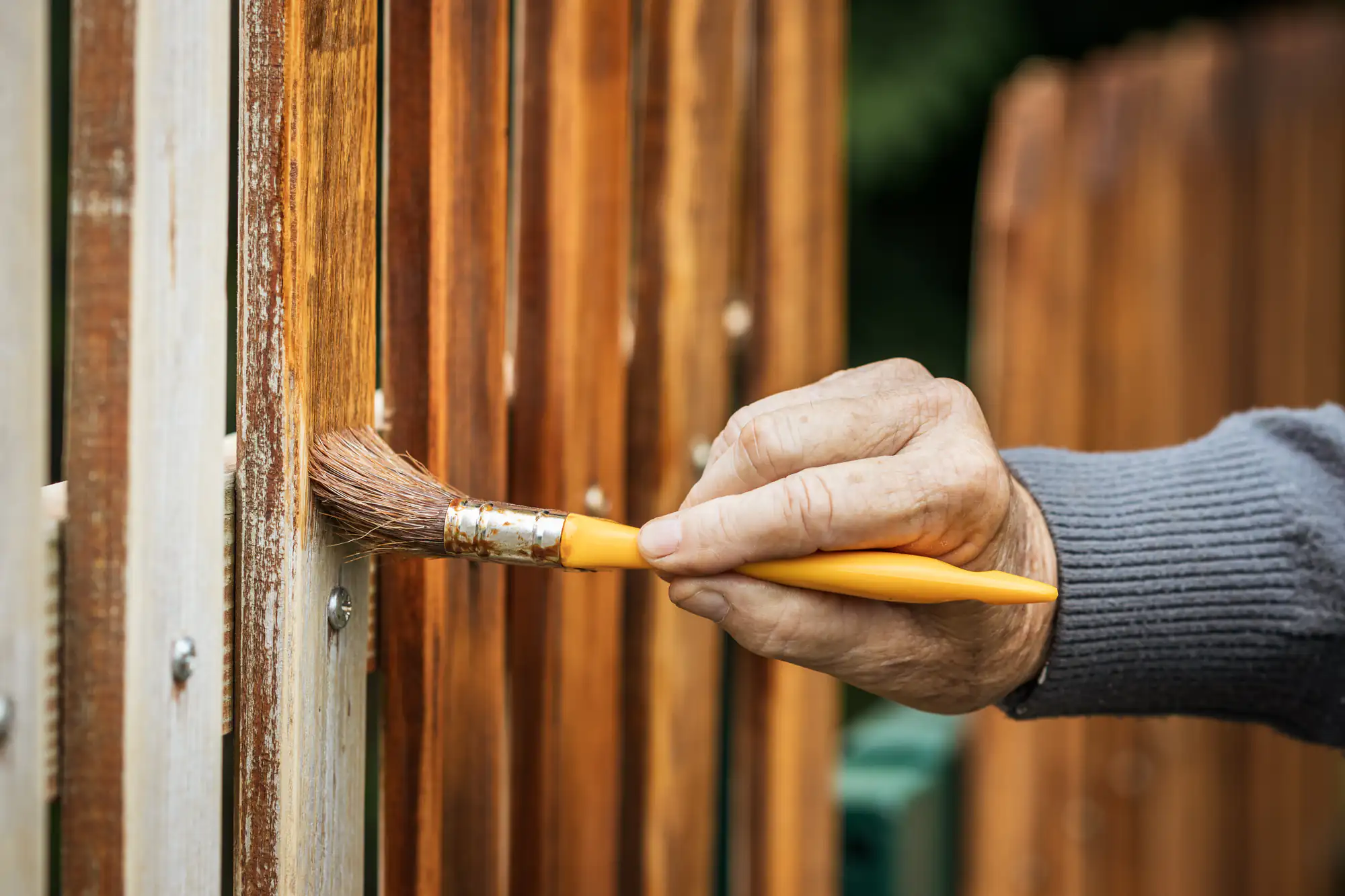
It starts before we touch the fence. We conduct a professional site visit, verify property lines, and locate utilities. In a compact, densely residential hamlet like Islip Terrace where homes sit on modest lots with neighbors close on all sides that step protects you from the two most common causes of fence job complications: encroachment disputes and utility strikes. We also assess the fence’s current condition to determine whether cleaning, brightening, or minor repairs are needed before stain is applied.
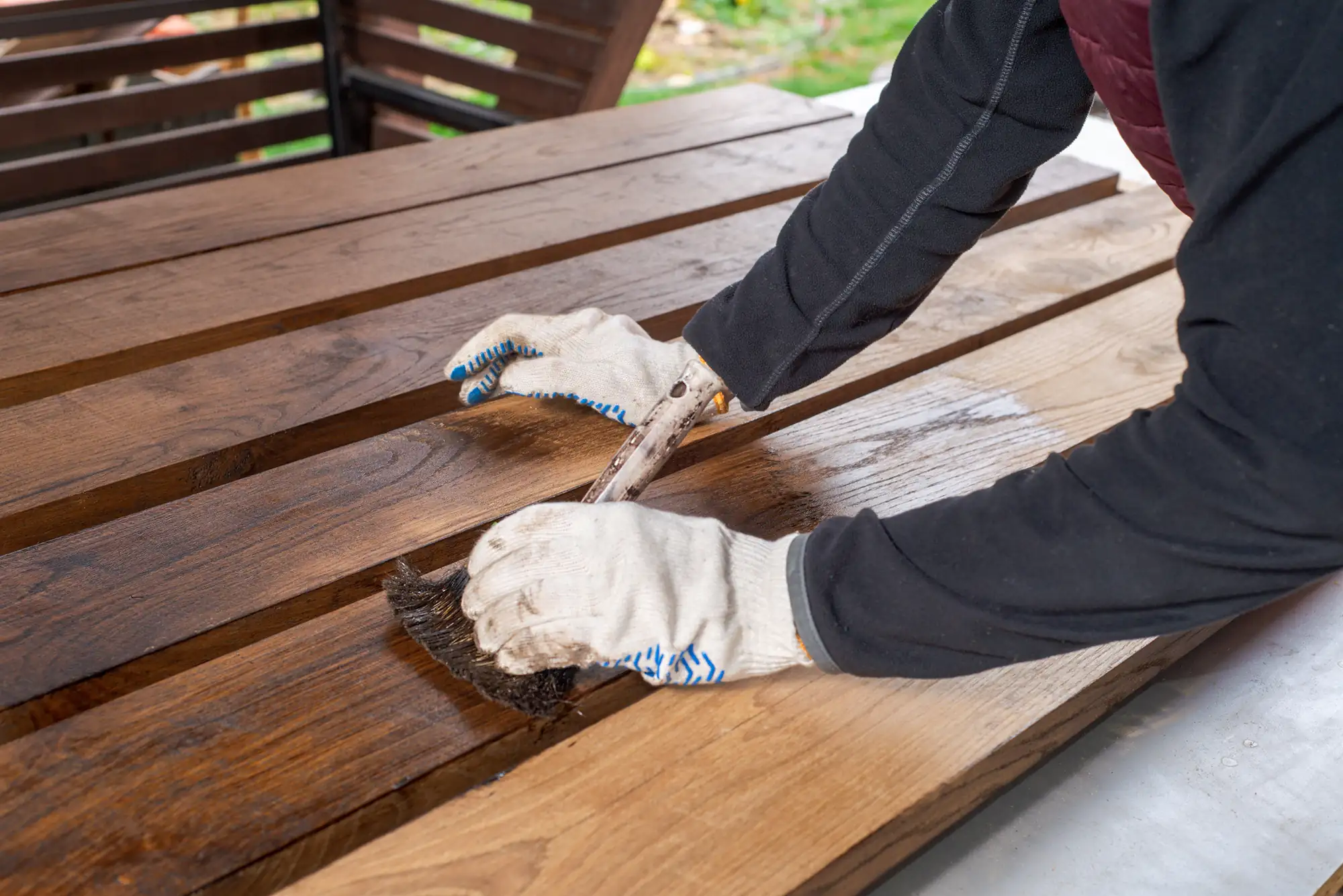
Surface preparation is where most stain jobs succeed or fail. We clean the fence thoroughly to remove dirt, mildew, and oxidation. If the wood has grayed from UV exposure which is common on older fences throughout Islip Terrace’s mature housing stock we use a wood brightener to open the grain and restore it to a condition that actually accepts stain properly. Applying stain over gray, dirty, or wet wood is the single biggest reason stain jobs fail early. We don’t skip that step.
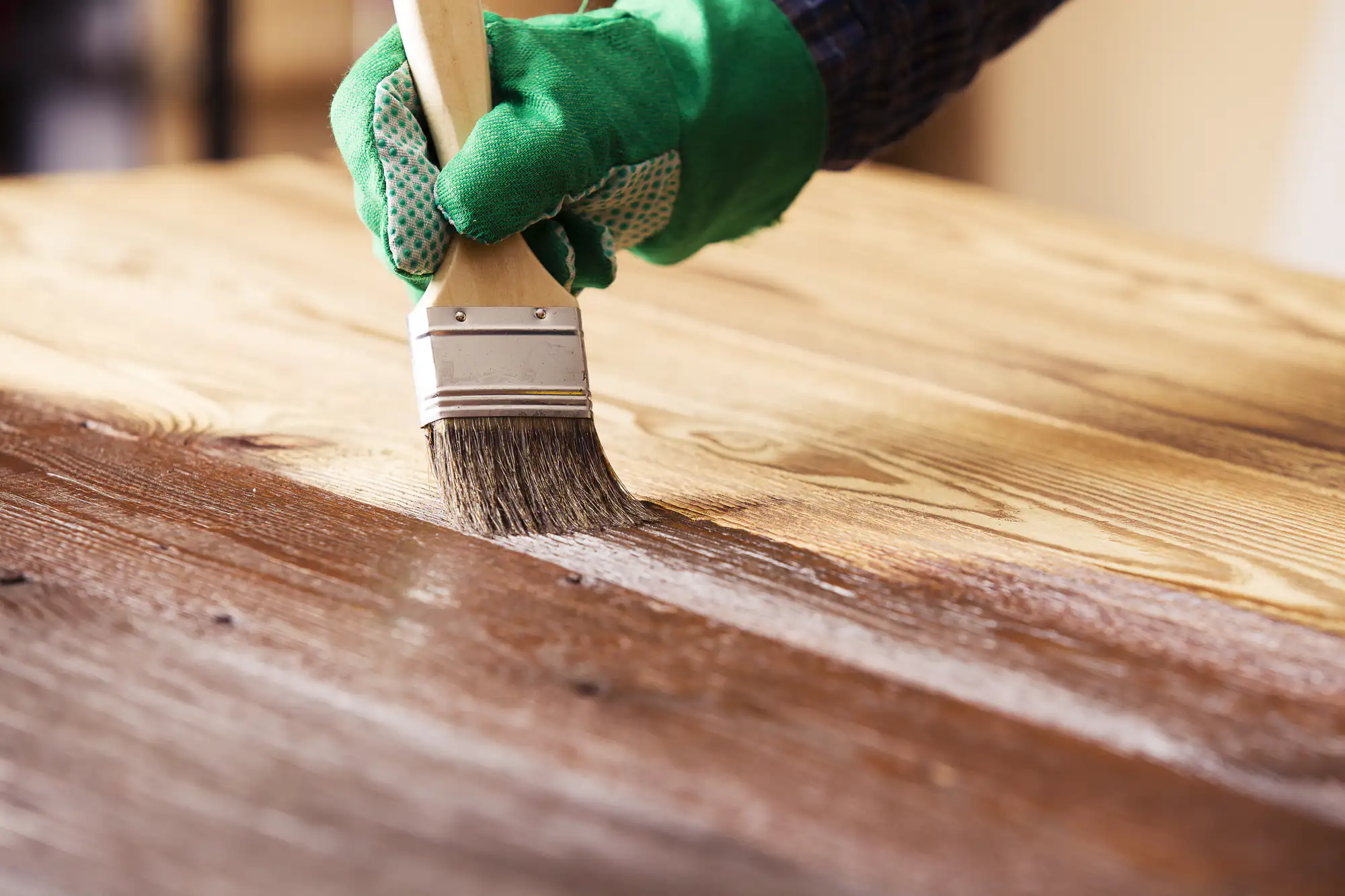
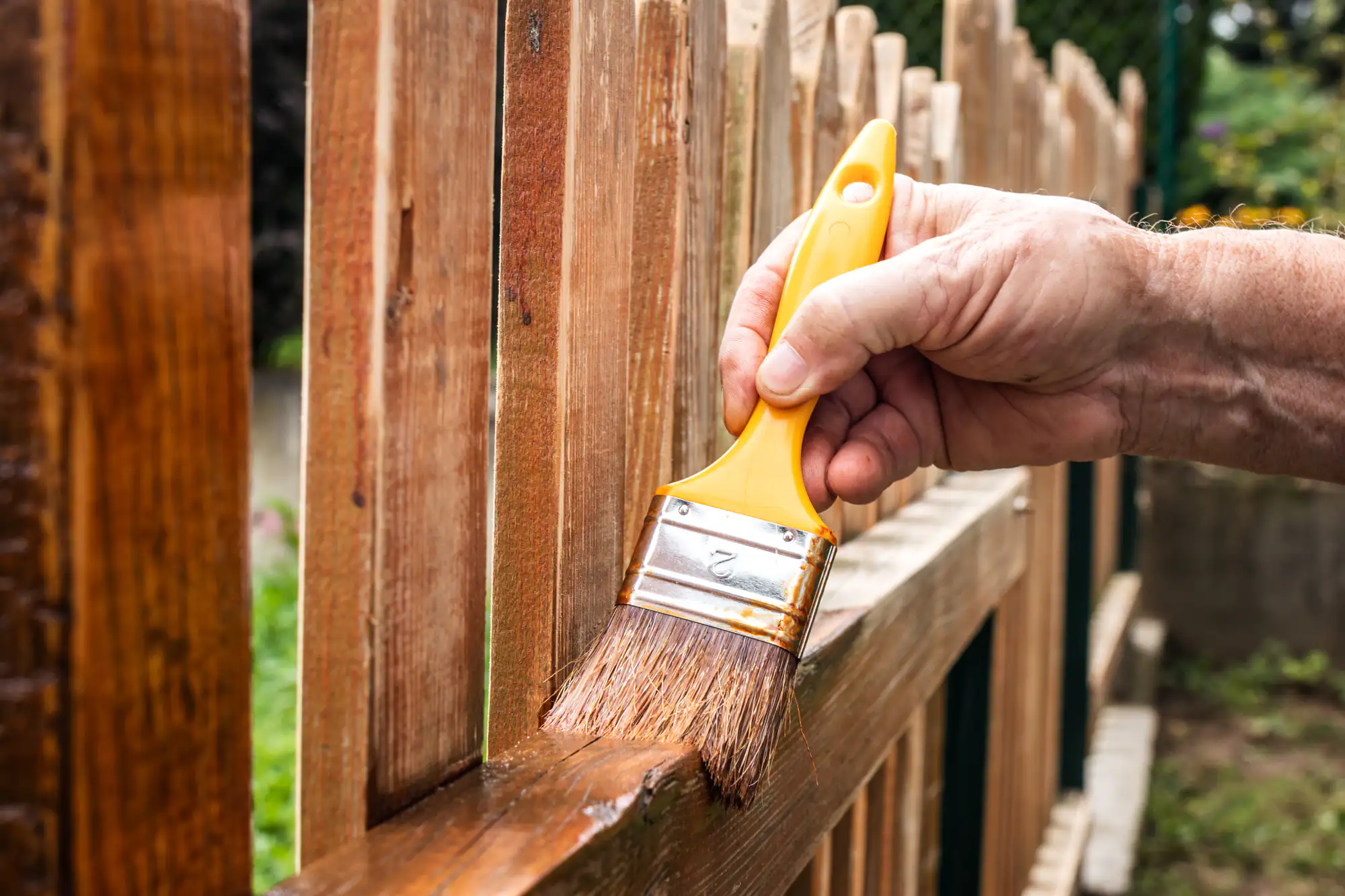
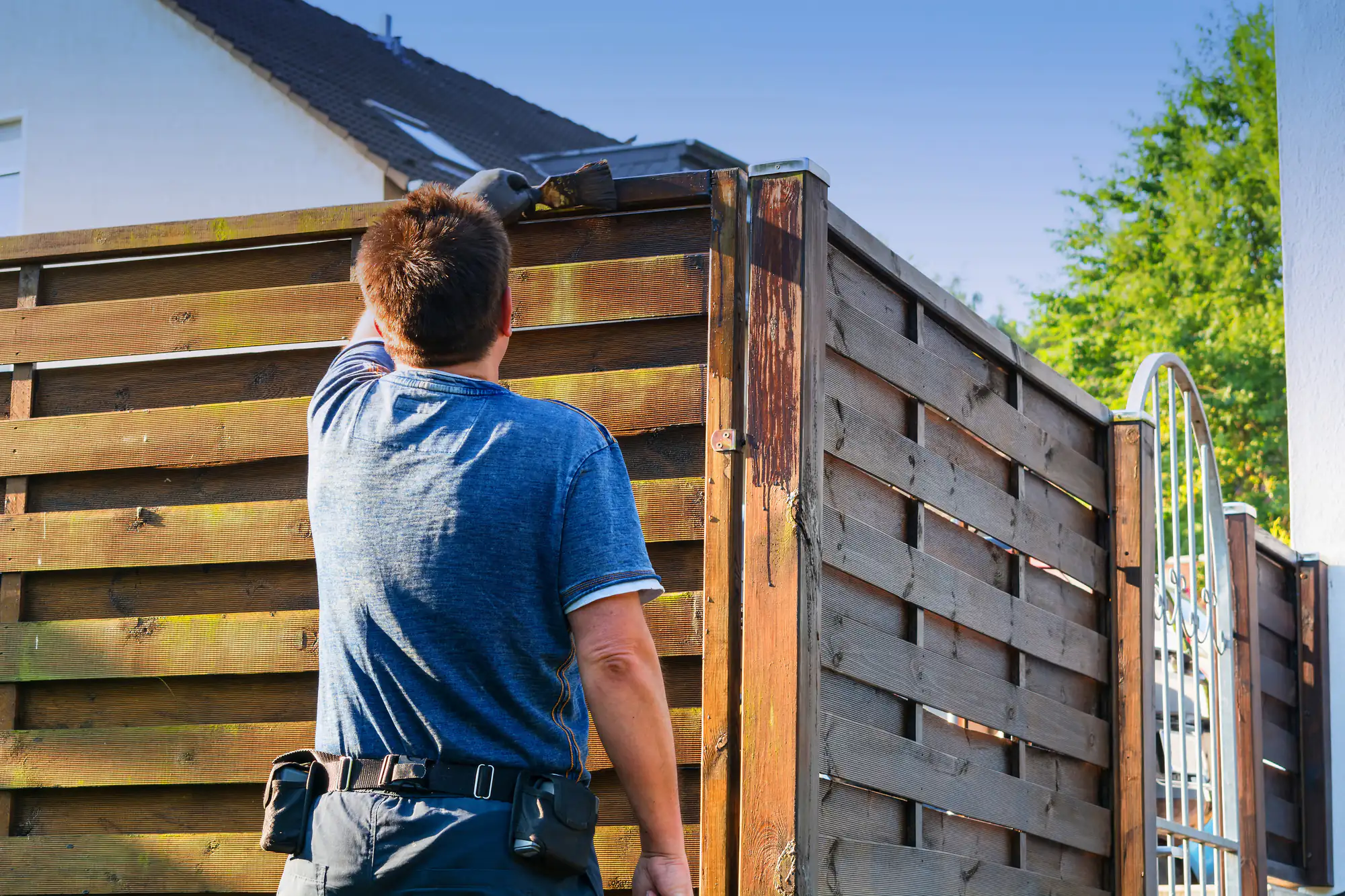
Once the surface is ready and the wood has dried to the right moisture level, we apply a professional-grade, American-made penetrating stain to both sides of every board. Staining only the visible side is a shortcut that causes boards to cup and warp moisture doesn’t respect which side faces the neighbor. Timing matters too: late spring and early fall are the ideal windows in Islip Terrace, when temperatures are in the 50°F–80°F range and humidity has stabilized. We’ll tell you exactly when your fence is ready.
Ready to get started?
Fence Staining and Repair Islip Terrace NY
Fence staining in Islip Terrace isn’t always a scheduled maintenance visit. Sometimes it’s what comes after a nor’easter drops a branch on your backyard fence and you need the damaged section repaired and stained to match before the next weather system rolls in off the South Shore. We cover storm and vehicle damage repair, which means you’re not calling two separate contractors. The team that repairs the fence is the same team that stains it, and we know how to match the finish to what’s already standing.
For planned maintenance, our service covers everything from a first-time stain on a newly installed fence where we’ll tell you exactly how long to wait before the wood is ready to full restoration staining on older fences that have grayed and begun to show surface cracking. We also work with homeowners who are preparing to list their property and want the fence looking sharp before buyers start walking through. At Islip Terrace’s home values, a well-maintained fence is not a minor detail.
Every job is backed by a warranty on both labor and materials. That’s not standard in this industry most contractors offer one or the other. You get both, in writing, before work begins. And because fence staining is a maintenance service applied to an existing structure, it does not require a permit under Town of Islip regulations. If any repair work involves changes to the fence’s structure or height, we’ll flag that during the site visit and walk you through what applies.
How often should I stain my wood fence in Islip Terrace, NY?
For most wood fences in Islip Terrace, every two to three years is the right interval but the honest answer depends on what your fence is exposed to and what type of stain was last applied. A solid stain tends to last longer than a semi-transparent one. A fence on the south or west side of a property that takes full afternoon sun will degrade faster than one that gets partial shade. And a fence that catches wind and moisture from storm systems pushing up from the Great South Bay will show wear sooner than one in a more sheltered position.
The easiest way to check is the water test: splash a small amount of water on the wood. If it beads up, the existing stain is still doing its job. If it soaks in quickly, the wood is absorbing moisture without protection and it’s time to restain. Don’t wait until the fence is visibly gray and cracking at that point you’re doing restoration work, not maintenance, and the job takes longer and costs more.
What’s the difference between fence staining and fence painting which is better?
Stain penetrates into the wood fiber. Paint sits on top of it. That difference matters a lot for a fence that’s exposed to Long Island’s freeze-thaw winters and humid summers. Paint forms a surface film that looks clean initially but eventually traps moisture beneath it and when moisture gets under a painted surface and then freezes, it lifts and peels. Once paint starts peeling on a fence, you’re stripping and repainting, which is a more involved and more expensive job than restaining.
Stain allows the wood to breathe. Moisture that gets in can also get out, which means the wood doesn’t build up the internal pressure that causes peeling and cracking. For most residential wood fences whether cedar, pressure-treated pine, or another species a penetrating stain is the better long-term choice in this climate. The finish won’t look as opaque as paint, but it will hold up significantly longer and require less labor to maintain over time.
Can a fence that’s already turned gray be stained, or does it need to be replaced?
Gray color in a wood fence is UV damage the sun has broken down the lignin in the surface layer of the wood, which is what gives it that weathered, silver-gray appearance. That doesn’t automatically mean the fence needs to come out. If the structural integrity is still solid posts are firm, boards aren’t rotting through, and there’s no significant warping or splitting then restoration staining is a legitimate option.
The process involves cleaning the fence to remove dirt and mildew, then applying a wood brightener to open the grain and remove the oxidized surface layer. This is what allows the stain to actually penetrate and bond rather than sitting on top of dead wood fiber. After brightening and drying, a penetrating stain is applied to both sides. The result won’t look brand new, but it will look significantly better and more importantly the wood will be protected again. We assess this during the site visit and give you a straight answer on whether staining makes sense or whether replacement is the smarter call given the fence’s current condition.
How long does fence staining take, and do I need to be home?
For a typical residential fence in Islip Terrace say, 100 to 150 linear feet of wood privacy fencing the full process including cleaning, prep, and stain application usually takes one to two days depending on the fence’s condition and drying time between steps. A fence that needs significant cleaning or brightening work before staining adds time. One that’s in good condition and just needs a maintenance coat goes faster.
You don’t need to be home for the work itself, but we ask that someone is available for the initial site visit so we can walk the fence together, confirm the scope, and go over the quote before anything starts. After that, our crew works independently. We verify property lines and locate utilities before we begin, so there are no surprises on the day of the job. We’ll give you a clear timeline before we start and let you know when the fence needs to stay dry typically 24 to 48 hours after application so you can plan accordingly.
Is there a best time of year to stain a fence on Long Island?
Late spring and early fall are the two best windows for fence staining in Islip Terrace. You’re looking for temperatures consistently between 50°F and 80°F, low humidity, and no rain in the forecast for at least 48 hours after application. Late May hits that window well pollen season is winding down, temperatures are stable, and the wood has had time to dry out after winter. Early September through mid-October is the second window, and it’s a good one: the wood has dried out from summer humidity, temperatures are dropping into the ideal range, and you’re getting protection in place before freeze-thaw cycling begins.
Summer can work, but high humidity and intense heat can interfere with how stain penetrates and cures. Winter is generally off the table staining below 40°F causes adhesion problems and the stain won’t cure properly. If you’re dealing with post-storm damage in the fall or winter, we’ll assess the fence and advise on the right timing. Sometimes a repair can be done immediately and the staining scheduled for the next appropriate weather window.
A storm took down part of my fence can you repair and stain it in one job?
Yes, and that’s actually the more efficient way to handle it. Islip Terrace’s tree-lined residential streets are one of the things that make the neighborhood feel the way it does and they’re also why branches and full trees come down on backyard fences during nor’easters and summer thunderstorms more often than homeowners expect. Calling a fence repair contractor and then a separate staining company means two site visits, two schedules, two quotes, and the risk that the stain on the repaired section doesn’t match what’s already standing.
We cover storm and vehicle damage repair as part of what we do. When we repair the damaged section, we’re also the ones staining it which means we control the match between the new work and the existing fence. We’ll assess whether the repair involves any structural changes that might require attention under Town of Islip’s fence regulations, and we’ll flag that before work starts. The goal is one call, one crew, one job and a fence that looks and functions like the storm didn’t happen.
Useful Links
Other Services we provide in Islip Terrace