
Fence Staining in Medford, NY
Medford Winters Are Hard on Wood Fences
Hear from Our Customers
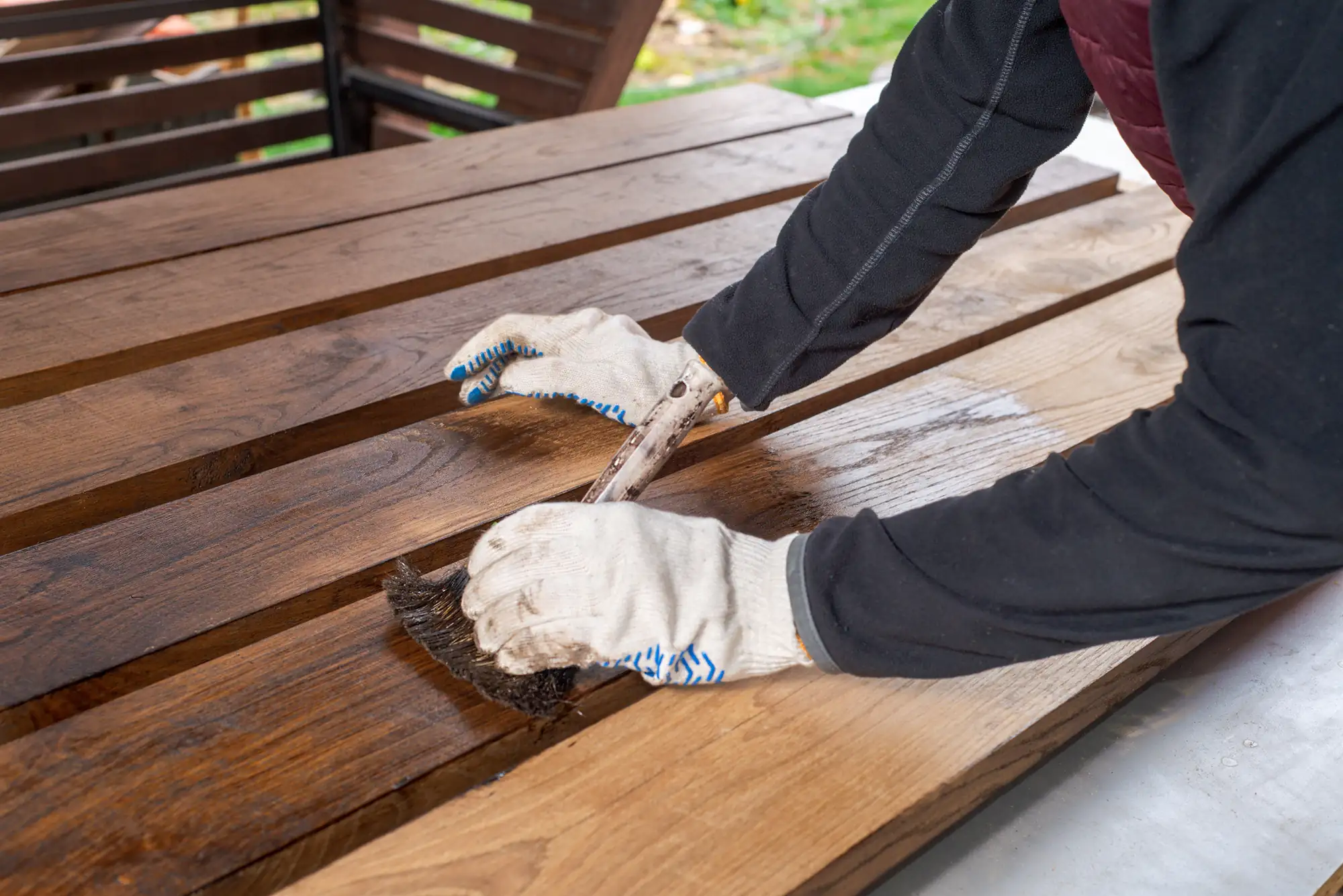
Wood Fence Protection in Medford
Medford sits inland, which means your fence takes the full force of Long Island’s freeze-thaw winters with no coastal buffer to soften things. Water gets into the wood grain, freezes, expands, and cracks the fiber from the inside. Do that two or three winters in a row on an untreated fence and you’re not looking at a staining job anymore you’re looking at a replacement.
The neighborhoods around Eagle Estates and Horseblock Road are filled with homes built in the 1960s and 70s, and a lot of those properties have wood fences that are well past their last treatment. The good news is that most of them are still saveable. A fence that looks rough on the surface gray, a little weathered, maybe some surface softness can often be cleaned, brightened, and stained back into solid shape for a fraction of what a new fence costs.
Beyond the structural side, there’s the tree situation. Medford’s proximity to the Pine Barrens means mature pitch pines and oaks surround a lot of residential lots. Shaded fence sections stay damp longer after rain, which accelerates mold and wood breakdown faster than sun-exposed panels. A quality stain addresses both it seals out moisture and slows the surface degradation that shade and humidity drive.
Fence Staining Company Serving Medford
We’ve been working on wood fences across Suffolk County for over 15 years, and Medford is a market we know well. That experience means we’ve seen what happens to an untreated fence after two winters in Medford, and we know which products and prep methods actually hold up here versus which ones look fine in April and start peeling by November.
From the established subdivisions near Horseblock Road to the properties backing up to the Pine Barrens, the conditions in Medford are specific sandy soil, mature tree canopy, real wind exposure and our approach accounts for all of it. We serve homeowners throughout the Town of Brookhaven, but Medford’s fence challenges are ones we’ve solved hundreds of times over.
Every project starts with a professional site visit. We verify property lines, locate utilities, and give you an itemized written quote before anything starts. No vague estimates, no surprises at the end.
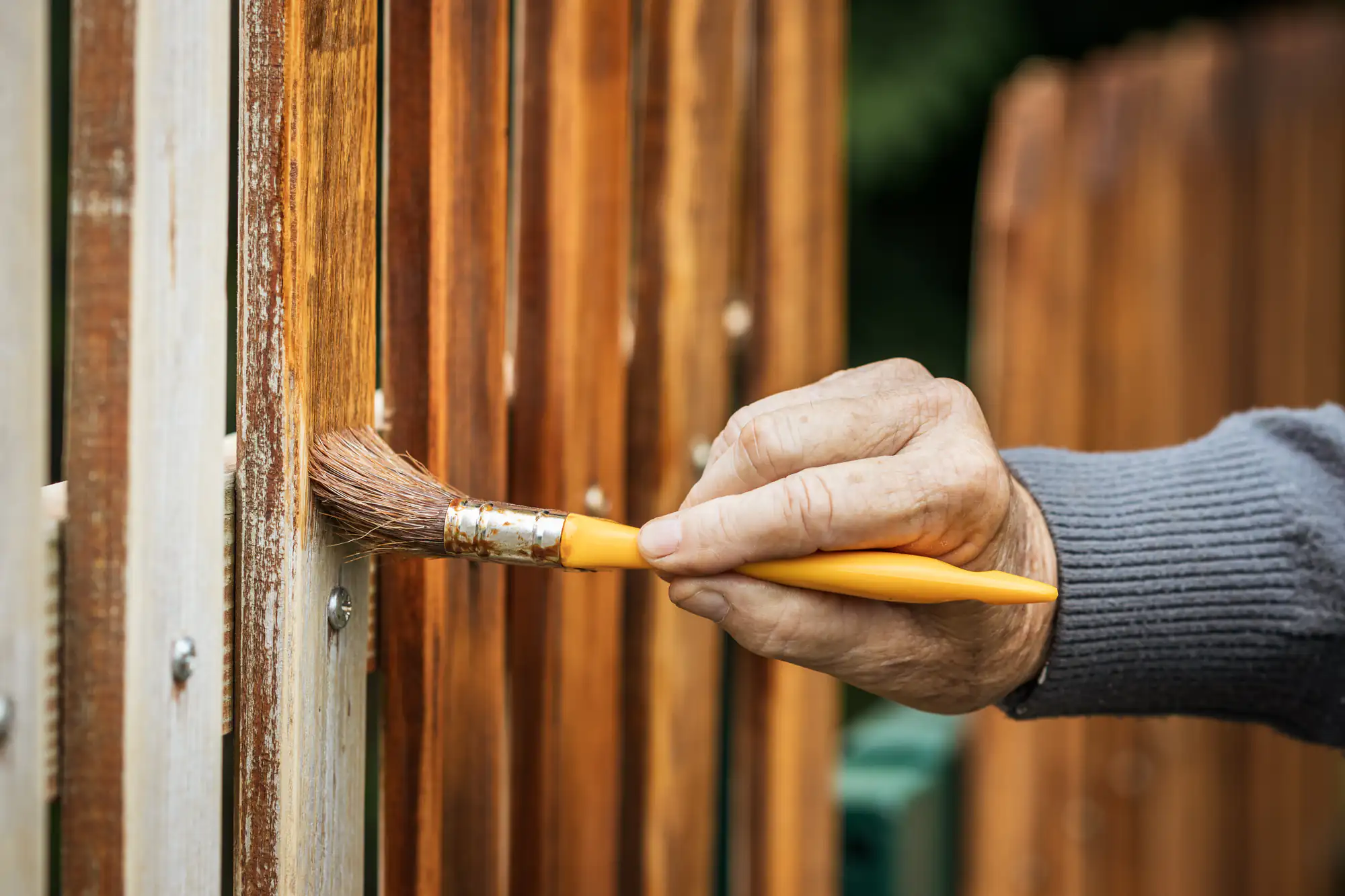
Our Fence Staining Process in Medford
It starts with a site visit. We come out, walk the fence line, check the wood condition, and verify property lines which matters more than people realize in Medford’s older subdivisions where lot markers from the 1960s aren’t always obvious. We also locate utilities before any work begins, because that’s a legal requirement in New York and the right thing to do regardless. From there, you get a written, itemized quote that breaks down lineal footage, materials, and labor. What we quote is what you pay.
If the fence needs cleaning or brightening before staining and a lot of Medford fences do, especially ones with mold or heavy weathering from shaded, tree-dense lots we handle that as part of the prep. Staining over a dirty or wet surface is one of the most common ways a staining job fails early, so we don’t skip it. Timing matters too: stain applied below 50°F doesn’t penetrate properly, which is why we work within the right seasonal windows, typically spring through early fall, and schedule around Medford’s weather patterns accordingly.
Once the surface is ready, we apply the stain and seal the wood against moisture, UV, and the freeze-thaw cycle that does the most damage here. When the job is done, both the labor and the materials are covered under warranty not one or the other, both.
Ready to get started?
Fence Staining and Sealing Near Medford, NY
Every fence staining job we do in Medford includes a professional site visit, property line verification, utility locating, a written itemized quote, surface prep, stain application, and dual warranty coverage on both workmanship and materials. That last part is worth paying attention to most fence companies in this area offer a labor warranty or a manufacturer’s material warranty, not both. We cover both because we stand behind the full job, not just part of it.
We work on all standard wood fence types common in Medford stockade, picket, split rail, and privacy panels using American-made materials throughout. If your fence has storm damage from a fallen branch or wind event, we handle the structural repair and the staining in the same engagement, so you’re not coordinating between two separate contractors. For homeowners in the tree-dense lots near the Pine Barrens, that matters.
Fence staining in Medford doesn’t require a permit from the Town of Brookhaven it’s a maintenance service on an existing structure, not new construction. So there’s no waiting on approvals. If your fence is ready, we can move quickly. And if you’re not sure whether your fence needs staining or replacement, that’s exactly what the site visit is for an honest assessment before you commit to anything.

How do I know if my Medford fence needs staining or full replacement?
The honest answer is that most homeowners assume the worst when they see a gray, weathered fence and most of the time, they’re wrong. Graying is a surface condition caused by UV exposure breaking down the wood’s outer layer. It looks bad, but it doesn’t mean the fence is structurally compromised. If the boards are still firm when you press on them, if the posts aren’t rocking, and if there’s no significant rot at the soil line, you’re almost certainly looking at a staining candidate, not a replacement.
Where it gets more nuanced is with Medford’s specific soil conditions. The sandy, well-draining soil near the Pine Barrens can be hard on post bases over time, so we always check the post integrity during the site visit. A fence with solid posts and weathered boards is a staining job. A fence with soft, rotting posts is a different conversation. We’ll tell you exactly which one you’re dealing with and we won’t push you toward a replacement if staining is the right call.
What’s the best time of year to stain a wood fence on Long Island?
Spring and early fall are the two best windows, and both apply directly to Medford’s climate. In spring, once temperatures are consistently above 50°F overnight and the freeze risk has passed typically mid-April through May conditions are right for proper stain penetration. One thing to keep in mind for Medford specifically: pollen season runs heavy through late April and May, and a thin pollen film on fence boards can affect adhesion. Waiting until after the main pollen drop, or cleaning the surface immediately before staining, handles that.
The second window is late August through October. Humidity drops compared to July, temperatures are still warm enough for the stain to cure properly, and you’re getting the fence protected before the first freeze hits. This is also when post-storm staining peaks after the summer thunderstorm season has passed and homeowners are assessing what the weather did to their property. If you’re in Medford and you had a branch come down on your fence during a storm, fall is a natural time to repair and restain before winter locks in.
How long does professional fence staining actually last in this climate?
A professionally applied stain on a properly prepped fence typically lasts two to four years in Long Island’s climate, depending on the wood species, the stain product, and how much sun and weather exposure the fence gets. Semi-transparent stains on cedar tend to last on the shorter end of that range because cedar is an open-grained wood that absorbs and releases moisture more actively. Solid stains on pressure-treated pine tend to hold longer but require more prep work when it’s time to recoat.
In Medford, the fence panels that face south and west getting full afternoon sun will show wear faster than shaded sections. Ironically, the shaded sections near mature trees often develop mold and mildew faster, which is a different kind of maintenance issue. The practical answer is that if you’re staining every two to three years, you’re staying ahead of the damage cycle. If you let it go four or five years, you’re usually looking at more intensive prep work before the next coat can go on which adds cost.
Does fence staining in Medford require a permit from the Town of Brookhaven?
No. Fence staining is a maintenance service on an existing structure, and it doesn’t require a building permit from the Town of Brookhaven. Permits come into play when you’re installing a new fence or making structural changes generally anything over four feet in a front yard or six feet in a rear or side yard in Brookhaven requires a permit. Staining, cleaning, and sealing an existing fence doesn’t trigger any of that.
What does apply, regardless of permits, is the legal requirement to locate utilities before any ground disturbance in New York State. We do that on every project through the standard 811 call-before-you-dig process. It’s not something you need to arrange separately we handle it as part of the site visit. The only thing you need to do to get started is schedule the visit, and we take it from there.
My fence was just installed how long should I wait before staining it in Medford?
It depends on the wood. New pressure-treated lumber which is common in Medford fence installations needs time to dry out before it can accept stain properly. The treatment process saturates the wood with preservative chemicals, and if you stain it too soon, you’re essentially sealing moisture inside the boards. That causes the stain to fail early, sometimes within a single season. The general guideline is to wait at least six months, though some pressure-treated lumber needs closer to a full year depending on how wet it was when it was milled.
New cedar is different it typically needs five to seven weeks to dry before staining. The way to check readiness on any new fence is the water drop test: sprinkle a few drops of water on the surface. If the water beads up, the wood isn’t ready to absorb stain yet. If it soaks in, you’re good. We check this during the site visit, so you don’t have to guess. Getting the timing right on a new fence is one of the most important things you can do to protect the investment you just made.
Can you stain a fence that was damaged by a storm or fallen tree in Medford?
Yes, and it’s actually one of the more common calls we get from Medford homeowners, especially after nor’easters and summer thunderstorms roll through. The mature pitch pines and oaks on lots near the Pine Barrens are beautiful, but they’re also a real source of fence damage when a storm moves through. A branch comes down on a fence section, knocks boards loose or breaks them outright, and suddenly you’ve got a structural repair and a staining job to deal with at the same time.
We handle both in a single visit. We assess the damage, make the structural repair, and then stain the repaired section and the surrounding fence if it’s due so everything matches and the wood is protected going into the next season. You don’t need to call a separate fence installer and then separately arrange for staining. One call, one crew, one result. If the damage is covered by your homeowner’s insurance, we can provide the documentation you need for the claim.
Useful Links
Other Services we provide in Medford