
Fence Staining in St. James, NY
Your North Shore Fence Deserves More Than One More Winter
Hear from Our Customers
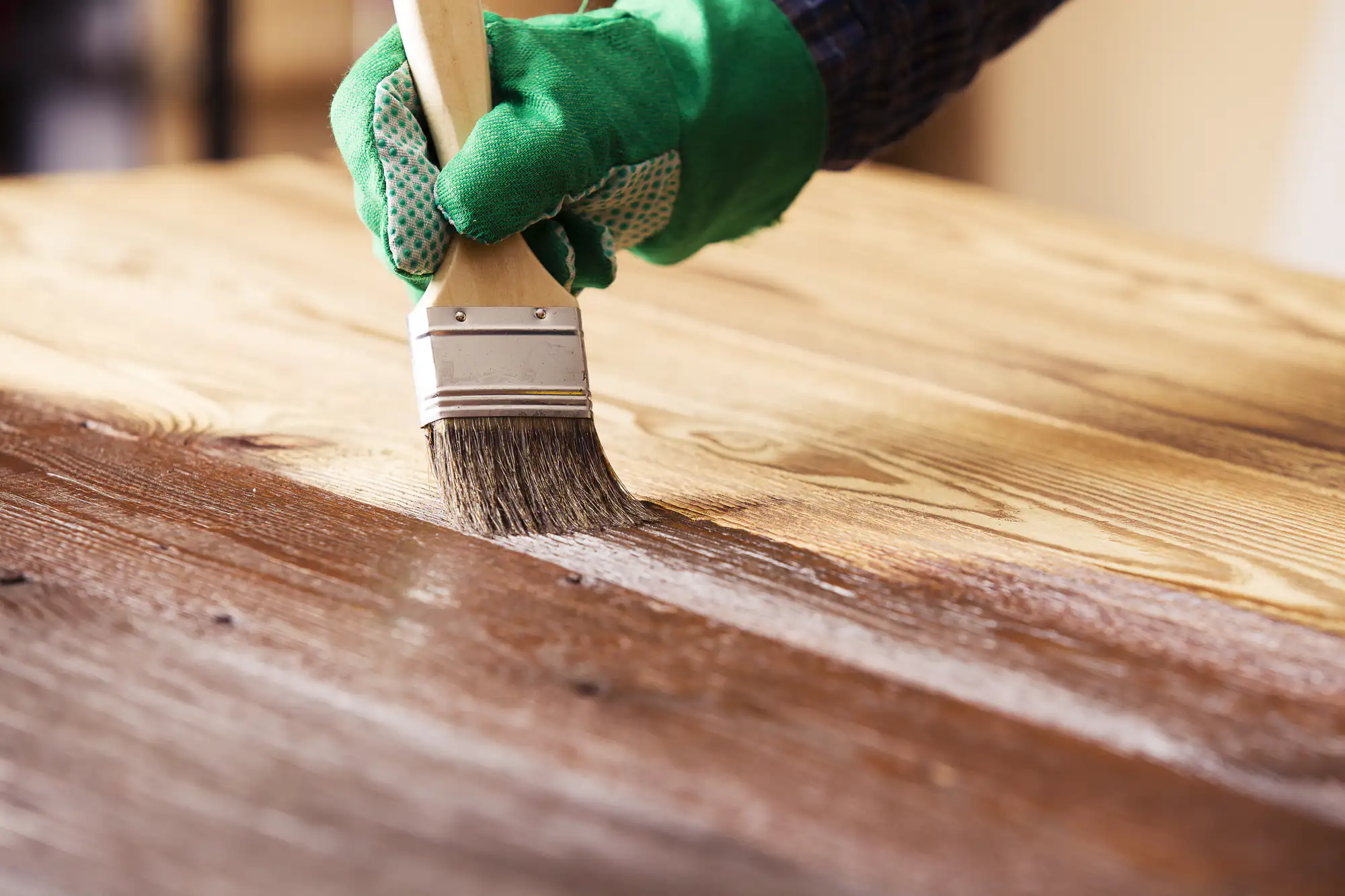
Wood Fence Staining St. James
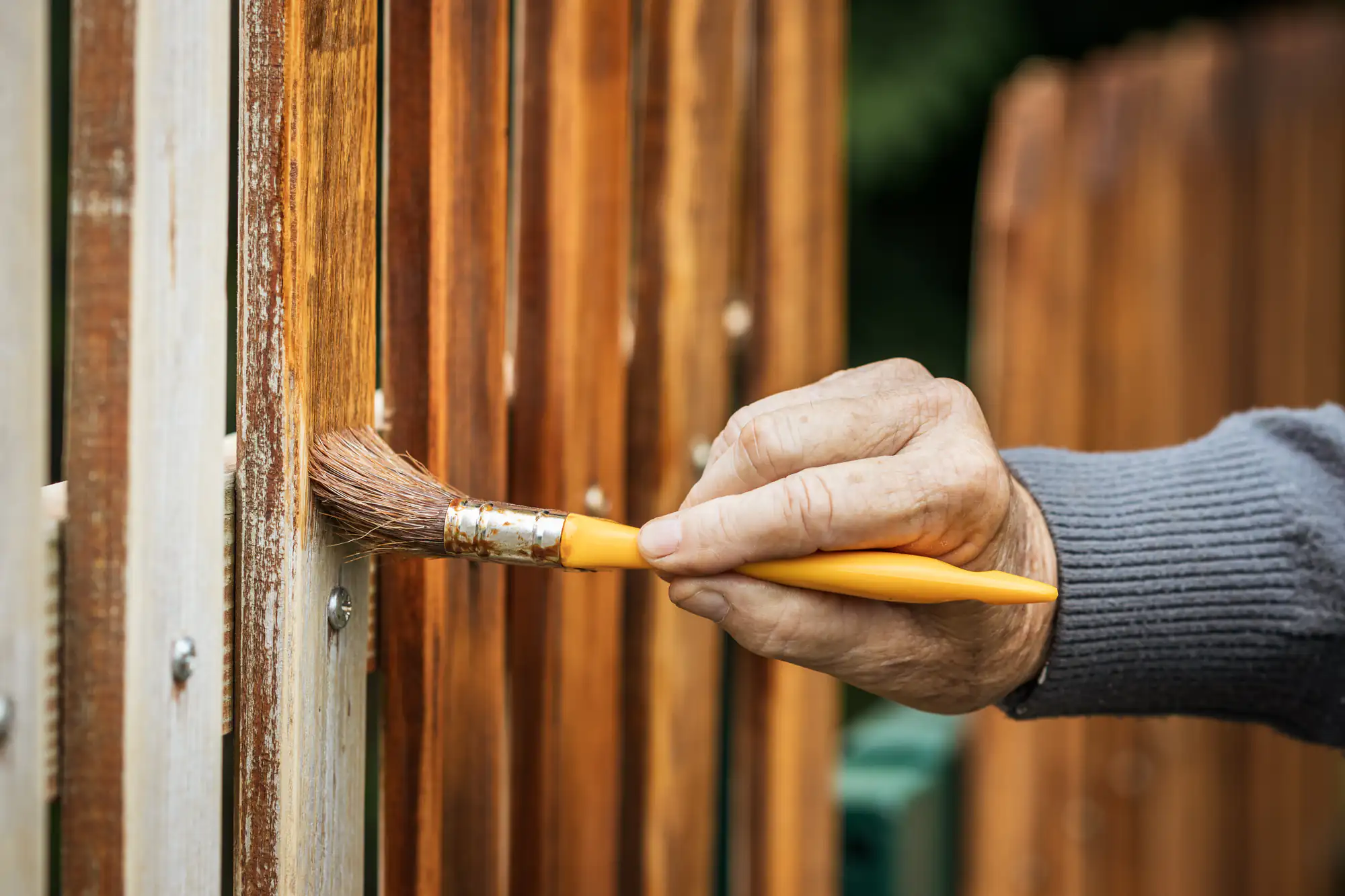
A freshly stained fence isn’t just about looks though that matters too, especially in St. James where homes regularly list near or above $900,000. It’s about keeping moisture out before it gets the chance to split boards, loosen posts, and turn a solid fence into a repair bill.
St. James sits on the North Shore at about 150 feet of elevation, inland enough that salt air isn’t your main concern but the freeze-thaw cycles from November through March absolutely are. Every time moisture works its way into untreated wood and freezes, it expands. When it thaws, it contracts. Do that enough times and you’ve got cupped boards, cracked rails, and a fence that’s aging faster than it should.
Summers here don’t let up either. The humidity that builds along the Nissequogue River corridor keeps moisture levels elevated well into fall, and UV exposure from those long Long Island summers breaks down wood grain faster than most homeowners expect. A quality stain applied correctly, with proper prep handles all of it. It slows moisture absorption, resists mildew, and blocks UV before it turns your fence gray. The result is a fence that holds up, stays sharp, and doesn’t need to be replaced before its time.
Fence Company St. James, NY
We’re not a painting company that added staining to the menu. We’re a residential fence installation company that has been working across Suffolk County for over 15 years, including throughout St. James and the surrounding Town of Smithtown area. That background matters more than it sounds. When we look at your fence before a staining job, we’re reading it the way a builder reads it checking where the wood is stressed, where moisture has already gotten in, and what prep is actually needed to make the stain last.
We know the lot configurations in St. James, the mature tree canopy that defines the neighborhood, and the way North Shore winters behave out here. We’ve worked near the historic Route 25A corridor, in the tree-lined subdivisions off Moriches Road, and on properties that back up to the Nissequogue watershed. That’s not a generic claim it’s 15 years of showing up and doing the work in this specific area.
Every job comes with a written warranty covering both labor and materials. You get itemized quotes that break down linear footage and scope before anything starts. No vague estimates, no surprises after the fact.
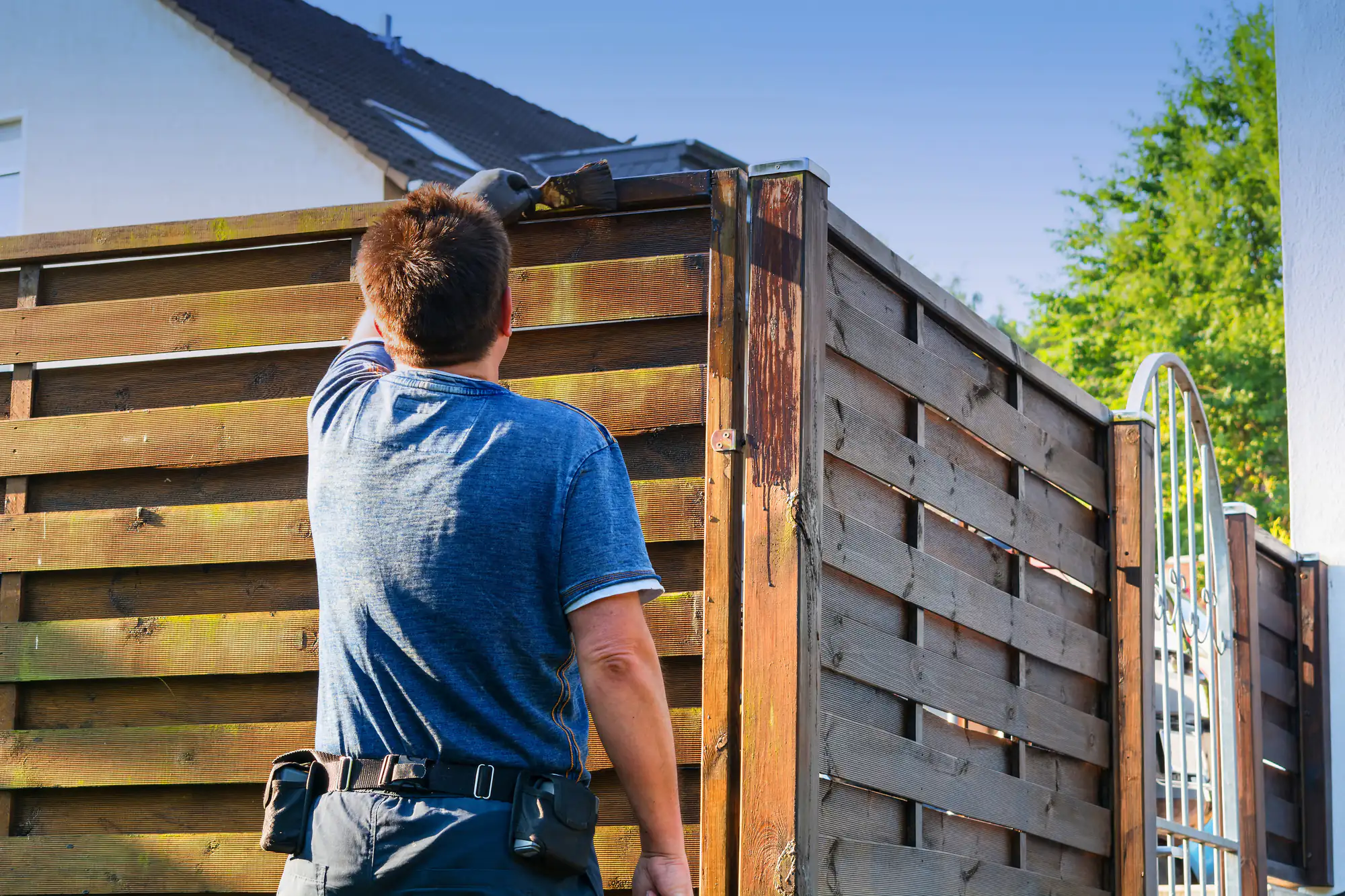
Fence Staining Process St. James
It starts with a site visit not a phone estimate. We come to your property, walk the fence line, verify the scope, and assess the wood’s actual condition. In St. James, where mature landscaping and historic lot patterns can make property lines less obvious than in newer subdivisions, this step matters. We also handle utility locating and property line verification as part of the process, so nothing gets started on assumptions.
From there, you get an itemized quote. It specifies linear footage, materials, and exactly what prep work is included. If there’s a section that needs repair before staining a post that’s soft at the base, a board that’s split we tell you before we start, not after.
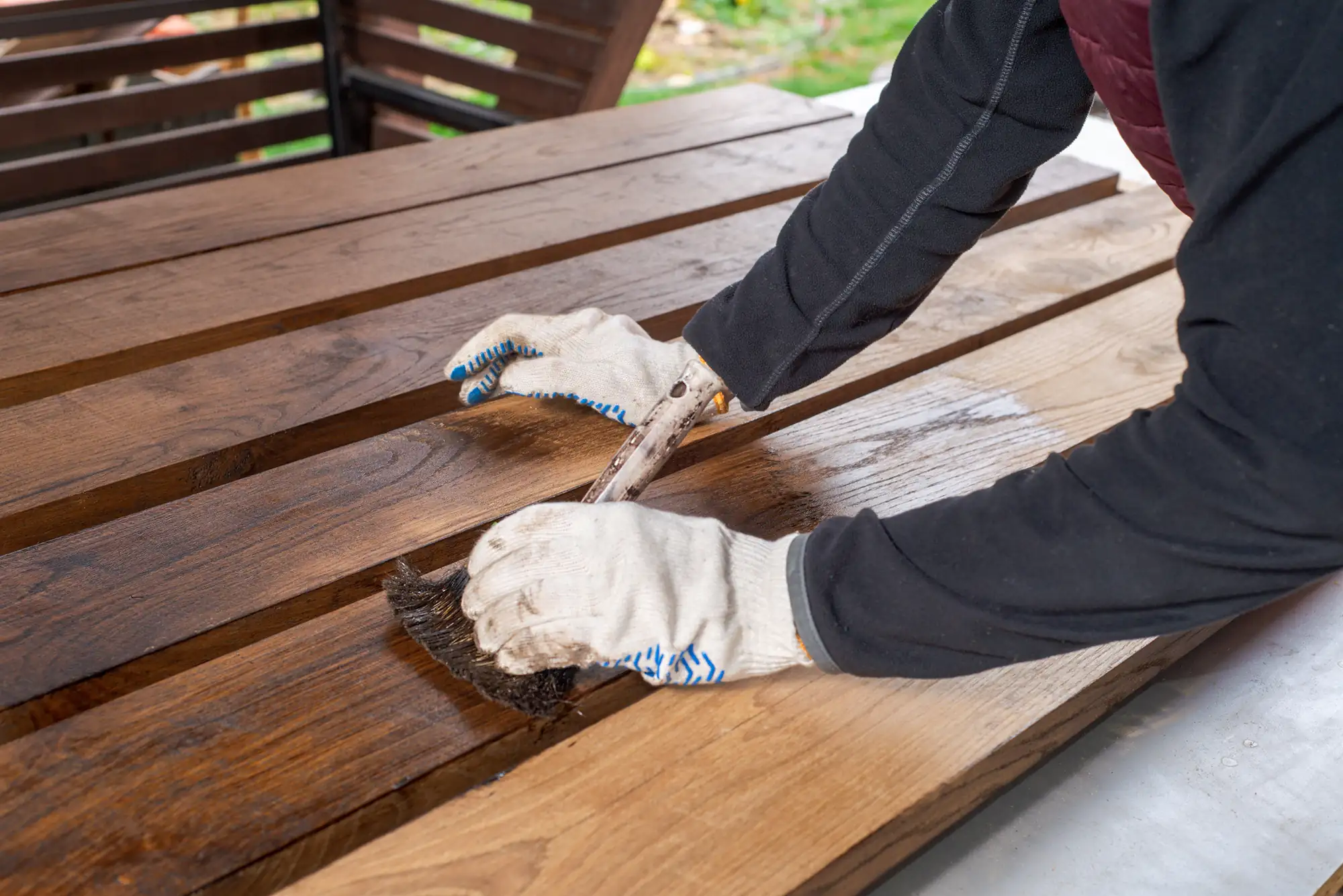
Once the job is approved, prep comes first. That means cleaning, brightening if needed, and letting the wood dry to the right moisture level before any stain goes on. Stain applied to wet or dirty wood doesn’t penetrate it sits on the surface and fails early. We apply stain to both faces of every board, which prevents the moisture imbalance that causes warping. Timing matters too: spring and early fall are the best windows in this climate, with temperatures in the right range for proper curing. If you’re booking after a storm or branch damage, we handle the repair and staining together so you’re not coordinating two separate contractors.
Ready to get started?
Professional Fence Staining Suffolk County
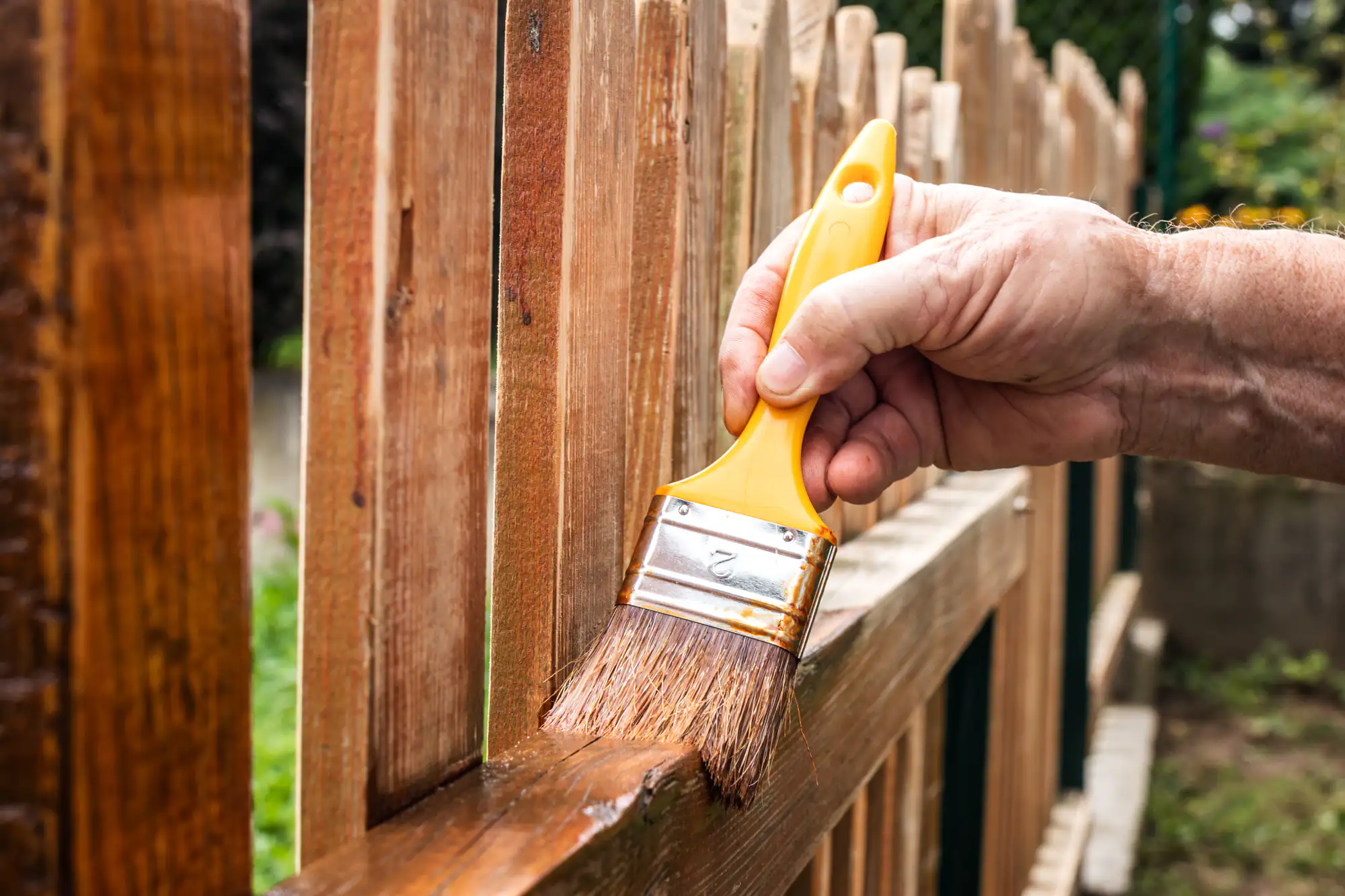
Fence staining in St. James isn’t a one-size-fits-all job, and we don’t treat it like one. The wood species, the sun exposure, the proximity to moisture sources like the Nissequogue River watershed all of it affects what product we use and how we apply it. For most wood fences in this area, a semi-transparent stain is the right call. It resists mildew better than fully transparent options, holds up longer in Suffolk County’s humid conditions, and still lets the natural wood grain show through.
Every job includes a full assessment of the fence’s current condition, surface prep, and application to both faces of every board. If your fence has weathered to gray, that’s surface oxidation not necessarily structural failure and in most cases it can be cleaned and brightened before staining without needing replacement. We’ll tell you honestly which way it goes. Fence staining doesn’t require a permit from the Town of Smithtown Building Department, so there’s no waiting on approvals before we can schedule.
For homeowners dealing with storm or branch damage which happens regularly in a neighborhood with the kind of mature tree canopy St. James has we cover repair and staining together under one warranty. One call, one crew, one written guarantee covering both the work and the materials. That’s the cleaner way to handle it, and it’s how we’ve been doing it for over 15 years across Suffolk County.
How often should I stain my wood fence in St. James, NY?
Most wood fences in St. James need to be restained every two to four years, depending on the wood species, how much direct sun the fence gets, and how well the previous application held up. Cedar tends to hold stain well and can stretch toward the longer end of that range. Pressure-treated pine in full sun exposure may need attention closer to every two years.
The North Shore climate is the main factor here. The freeze-thaw cycles from late fall through early spring put real stress on wood, and the summer humidity along the Nissequogue corridor keeps moisture pressure elevated. If you’re starting to see gray discoloration, surface cracking, or water soaking in rather than beading off, those are reliable signs it’s time. A simple water bead test splash a little water on the fence boards tells you a lot. If it absorbs immediately, the wood is ready for stain.
Do I need a permit to stain my fence in St. James or Smithtown?
Fence staining is considered routine maintenance in the Town of Smithtown, not a structural modification, so no permit is required. You can schedule and complete the job without waiting on any approvals from the building department.
That said, if your fence itself needs repair work before staining replacing posts, adding sections, or making structural changes those repairs may require a permit depending on scope. The Town of Smithtown Building Department handles permits for St. James as an unincorporated hamlet, while adjacent incorporated villages like Head of the Harbor and Nissequogue have their own building departments with separate processes. If you’re unsure whether your planned work crosses into permit territory, it’s worth a quick call to the town before starting. We can help you understand where the line is based on what we see during the site visit.
My fence is turning gray is it too late to stain it or does it need replacing?
Gray color on a wood fence is almost always surface oxidation, not structural failure. UV exposure breaks down the lignin in the wood over time, which is what causes that weathered, silver-gray look. In most cases, even a heavily grayed fence can be cleaned, brightened with a wood brightener, and successfully stained without replacement.
The real question is what’s happening structurally. If the boards are still solid when you push on them, if the posts aren’t soft or rocking at the base, and if you’re not seeing deep splitting or rot at the bottom of the boards, there’s a strong chance the fence is worth restoring. Professional staining costs a fraction of what a full fence replacement runs and for a home in St. James where property values are high and curb appeal matters, restoring what you have is almost always the smarter financial move. We assess this honestly during the site visit and tell you what we find, either way.
What type of stain works best for wood fences on Long Island?
For most wood fences in the St. James and broader Suffolk County area, a semi-transparent oil-based or water-based stain is the standard professional recommendation. Semi-transparent stains penetrate into the wood rather than sitting on the surface, which means they hold up better through freeze-thaw cycles and don’t peel the way solid stains or paints can.
Semi-transparent also handles mildew resistance better than fully clear options, which matters in a climate with humid summers and proximity to moisture sources like the Nissequogue River watershed. Solid stains are an option if the wood is heavily weathered and you want full color coverage, but they require more maintenance over time because they sit on the surface and are more prone to peeling. The right choice depends on your specific wood species, the fence’s current condition, and how much sun exposure it gets. We factor all of that in before recommending a product not after.
How long does fence staining take, and when is the best time of year to do it?
For a typical residential fence in St. James say, 100 to 200 linear feet the job usually takes one full day once prep and application are factored in. Larger fences or those requiring more extensive cleaning and brightening may run into a second day. The wood needs to be dry before stain goes on, so if there’s been recent rain, we’ll schedule accordingly.
Timing-wise, spring and early fall are the best windows for fence staining in this climate. April through June gives you mild temperatures, lower humidity, and wood that’s had time to dry out after winter. September and October are also strong the summer heat has passed, temperatures are in the right range for curing, and you’re getting ahead of the next freeze-thaw season before it starts. Midsummer staining is possible but requires working in the cooler parts of the day, since extreme heat causes stain to dry too fast and not penetrate properly. Winter staining is not recommended when temperatures drop below 40°F, as the stain won’t cure correctly.
A tree branch fell and damaged part of my fence what’s the process for repair and staining?
Storm and branch damage is one of the more common calls we get from St. James homeowners, and it makes sense the neighborhood’s mature tree canopy is one of its best features and also one of the most consistent sources of fence damage during Nor’easters and summer thunderstorms. When a branch takes out a section of fence, the typical process is repair first, staining second, handled together as one job.
We start with the site visit to assess the damage how many boards or posts need replacement, whether the structural integrity of the surrounding sections is still solid, and what prep the repaired area needs before staining. From there, we provide an itemized quote covering both the repair and the staining so you know the full scope upfront. The repaired sections and the existing fence get stained together, which means the finished product looks consistent rather than patched. Everything is covered under a single written warranty for both labor and materials. If you’re filing a homeowner’s insurance claim, having a detailed, itemized quote from a licensed contractor makes that process easier and that’s exactly what we provide.
Useful Links
Other Services we provide in St. James