
Fence Staining in Stony Brook, NY
North Shore Weather Eats Fences Here’s How to Stop It
Hear from Our Customers

Wood Fence Protection in Stony Brook
A gray, weathered fence isn’t just an eyesore it’s wood that’s already losing the fight. Once moisture works its way into unprotected grain, you’re not dealing with a cosmetic issue anymore. You’re dealing with rot, warping, and eventually a full replacement that runs anywhere from $3,000 to $8,000 or more.
In Stony Brook, that process happens faster than it does in most of Suffolk County. Homes north of Route 25A closer to West Meadow Beach and the Long Island Sound face salt-laden coastal air that pulls moisture into wood fibers more aggressively than standard inland humidity. That’s not a general Long Island problem. That’s a specific condition in Stony Brook that shortens the window between “needs staining” and “needs replacing” if you’re not on top of it.
The good news is that a professional stain job, done right and repeated every two to three years, can extend your fence’s life by roughly 30 percent compared to untreated wood. In a market where Stony Brook homes are selling in the $700,000 to $900,000 range and moving in under 30 days, a well-maintained fence isn’t just protection it’s curb appeal that buyers notice immediately. The math on staining versus replacing isn’t close.
Fence Staining Company Serving Stony Brook
Best Fence Long Island has been installing and maintaining fences across Suffolk County for over 15 years, with deep roots in the Stony Brook community. That’s not a number we throw around lightly it means we’ve worked through enough nor’easters, humid summers, and coastal moisture conditions to know exactly what wood fences in the Three Village area are up against.
Every project starts with a real site visit. We verify property lines, locate utilities, and assess your fence’s actual condition before we recommend anything. That’s not standard practice in this industry most contractors skip it entirely. We do it because it protects you from the two most common problems homeowners face: boundary disputes with neighbors and surprise charges after work has already started.
Our quotes are itemized. You’ll see the lineal footage, the materials, and exactly what’s being done before you sign off on anything. And when the job is complete, you’re covered by warranties on both the workmanship and the materials something most fence staining companies in the Stony Brook area simply don’t offer.
Fence Staining Process in Stony Brook, NY
It starts with a site visit, not a phone estimate. We come out to your property, look at the fence in person, assess the wood condition, and check whether it’s actually ready to be stained. This last part matters more than most people realize. New pressure-treated lumber needs around six months to dry before stain will properly penetrate. Cedar needs five to seven weeks at minimum. Stain applied to wood that isn’t ready sits on the surface and peels wasting your money and your time. We check readiness before we schedule anything.
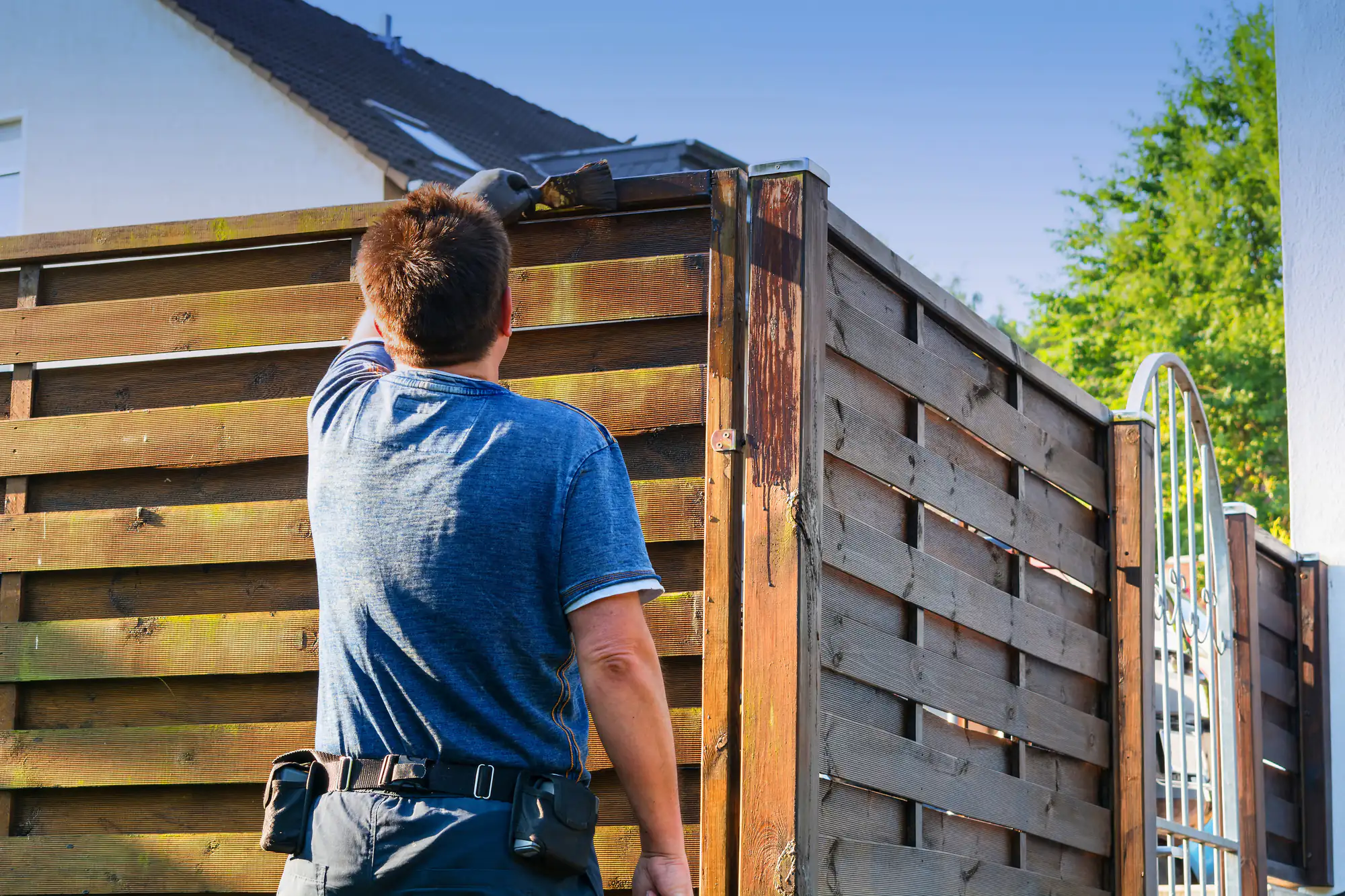
Once the fence is confirmed ready, we prep the surface. That means cleaning off any mildew, dirt, or old failing stain so the new coat can actually bond with the wood. If your fence is in the Old Stony Brook area or anywhere close to the water, this step is especially important salt air and moisture leave behind residue that blocks penetration if it isn’t removed first.
From there, we apply the stain using the right product for your wood species and your fence’s condition. Semi-transparent stains work well for wood that’s still in good shape and you want the grain to show through. Solid stains are better for older wood with more surface wear. We’ll walk you through the recommendation before anything is applied. After the job is done, you’ll have a written record of what was used so when it’s time to re-stain in two to three years, there’s no guessing involved.
Ready to get started?
Fence Staining Services in Stony Brook, NY
Fence staining in Stony Brook isn’t a one-size job. The homes north of Route 25A older properties on larger lots with mature trees and proximity to the Sound have different needs than the ranch-style and Cape Cod homes south of it. We factor in your wood species, your fence’s age and current condition, your proximity to water, and the specific exposure your yard faces. That assessment shapes every product and process decision we make.
All fence materials we work with are American-made, and that standard carries through to the staining products we use. We’re not grabbing whatever’s on sale we’re selecting professional-grade stains matched to what your fence actually needs. We also offer water-based, low-VOC options for homeowners who want a durable finish without the heavier chemical profile. Given how many residents in Stony Brook are connected to the research and academic community at the university, that option tends to matter.
It’s also worth knowing that staining an existing fence does not require a permit under Town of Brookhaven code that’s a maintenance activity, not a structural installation. However, if storm damage has left you needing to replace fence sections before staining, permit requirements for the installation portion may apply. We know Brookhaven’s Chapter 85 fence regulations and can walk you through what applies to your specific situation. If your property is near a wetland area relevant for some homes close to Stony Brook Harbor or the Mill Pond there are additional elevation requirements under Town Code Chapter 81 that factor into any fence work we do.
How often should I stain my wood fence in Stony Brook, NY?
For most wood fences in Stony Brook, a two-to-three-year staining cycle is the right target. That said, homes north of Route 25A closer to West Meadow Beach and the Long Island Sound tend to need attention on the shorter end of that range. Salt air accelerates surface wear and moisture penetration in a way that inland Suffolk County towns don’t experience at the same rate. If your fence is within a half mile of the water, plan for every two years rather than every three.
The easiest way to check whether your fence is due is the water bead test. Splash a small amount of water on the wood surface. If it beads up, the existing stain is still doing its job. If it soaks straight in, the wood is unprotected and it’s time to restain. Catching it at that point before you start seeing gray discoloration, surface checking, or soft spots is exactly when staining delivers the most value. Waiting until the damage is visible means you’re already paying a higher price in wood degradation.
Does salt air from Long Island Sound actually damage wood fences faster?
Yes, and it’s not a minor difference. Salt air carries moisture that penetrates wood grain more aggressively than standard humidity. It also promotes mildew growth on the surface, which breaks down stain coatings faster and creates the conditions for deeper wood deterioration if it’s not addressed. Fences in Stony Brook’s northern neighborhoods the streets closest to West Meadow Beach, the harbor, and the historic Town Center area see this effect more directly than homes further south toward Centereach or Lake Grove.
What this means practically is that surface prep before staining matters even more in these areas. Any mildew or salt residue on the wood needs to be cleaned off before the new stain is applied otherwise you’re sealing the problem in rather than protecting against it. A professional who understands coastal conditions will build that cleaning step into the process as a standard practice, not an add-on. It’s one of the reasons hiring someone with real North Shore experience makes a difference here versus a general painting contractor who stains fences on the side.
What’s the best time of year to stain a fence in Stony Brook?
Late spring and early fall are the sweet spots specifically May through early June and then September through October. You want temperatures between 50°F and 80°F with low humidity so the stain can penetrate the wood fully and cure properly before the next weather event. Stony Brook’s spring and fall seasons generally deliver those conditions reliably, which makes scheduling in those windows a straightforward call.
Summer staining is trickier here than in drier climates. When temperatures climb above 85°F and humidity is high which happens regularly in July and August on the North Shore stain dries too fast on the surface before it has a chance to penetrate. The result is a surface film that looks fine initially but peels well before it should. If you’ve already missed the spring window, it’s often worth waiting for September rather than rushing a summer application. And if you’re thinking about pushing it to late fall, keep in mind that once temperatures drop below 50°F consistently, you’re out of the staining window until the following spring meaning another full winter of unprotected wood exposure.
My fence was damaged in a storm can it be repaired and stained together?
Yes, and handling both in one coordinated project is almost always the smarter approach. Stony Brook’s wooded neighborhoods particularly north of Route 25A where lots have mature tree canopy are well-documented storm damage zones. The August 2024 nor’easter that breached the Mill Pond dam and damaged homes throughout the hamlet is a recent example, but it’s not an isolated one. High-wind events regularly bring down trees and heavy branches onto fences in this area, and the damage often involves both structural repair and surface restoration.
The problem with splitting repair and staining into two separate jobs with two separate contractors is the coordination headache and the timing gap. If the repaired sections sit unprotected through a wet season while you wait for a staining appointment, you’re starting the deterioration clock on new wood immediately. We handle storm and vehicle damage repair alongside staining, so the repaired sections and the existing fence get treated together in one visit. That also means the color and finish match across the whole fence rather than having new sections look noticeably different from the older ones.
How much does professional fence staining cost in Stony Brook?
Professional fence staining on Long Island typically runs in the range of $600 to $2,200 for a standard residential project, depending on the fence’s total linear footage, the wood species, the current condition of the surface, and the type of stain being applied. Fences that require more intensive prep work heavy mildew cleaning, removal of old failing stain, or surface repairs before coating will land toward the higher end of that range.
The more useful way to think about the cost is against the alternative. A full fence replacement in the Stony Brook area runs $3,000 to $8,000 or more. A stain job done on a consistent two-to-three-year cycle is a fraction of that, and it’s what keeps the replacement timeline from arriving early. In a market where homes are valued at $700,000 and above, the maintenance investment is straightforward to justify. Our quotes are itemized you’ll see exactly what you’re paying for before any work begins, with no vague estimates that turn into something else after the deposit clears.
Do I need a permit to stain my fence in the Town of Brookhaven?
No staining an existing fence is a maintenance activity and does not require a permit under Town of Brookhaven code. You can schedule and complete a staining project without any interaction with the town’s permit office. That applies whether you’re in the Stony Brook South area, near the university, or in the older neighborhoods north of Route 25A.
Where permits do come into play is if storm damage or deterioration has left you needing to replace fence sections, not just stain them. New fence installation in Brookhaven requires a permit under Chapter 85 of the Town Code, and there are specific height rules six feet maximum for backyard fences, four feet for front yards. If your property is near a designated wetland area, such as properties close to Stony Brook Harbor or the Mill Pond, Chapter 81 adds an additional requirement: fences within 100 feet of wetlands need to be elevated at least six inches above ground level. These are details that matter in Stony Brook specifically given the waterfront geography, and they’re part of what we review during a site visit before any work is scoped or quoted.
Useful Links
Other Services we provide in Stony Brook