
Fence Staining near Stony Brook University, NY
Your North Shore Fence Deserves More Than One More Winter Unprotected
Hear from Our Customers
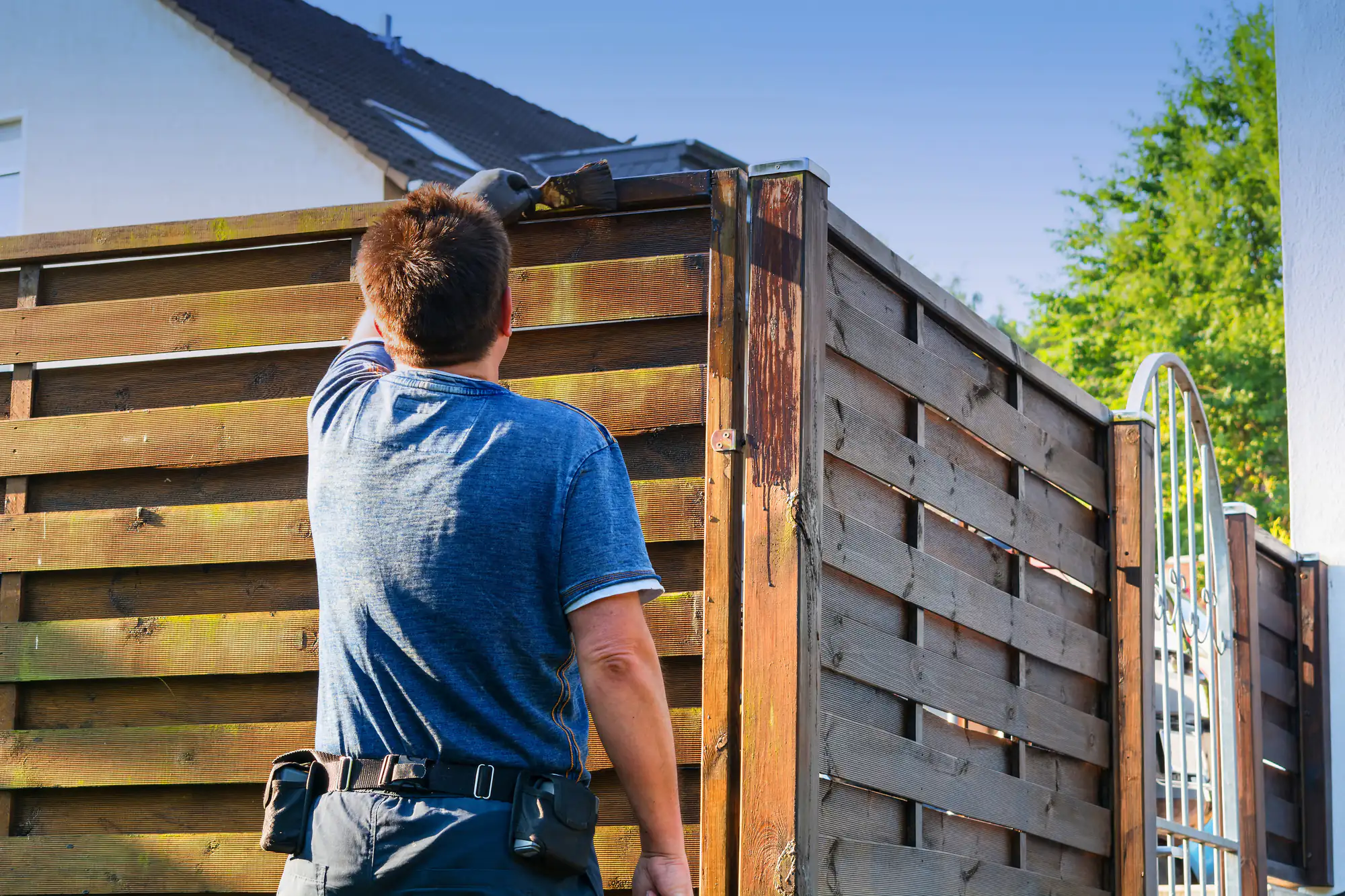
Wood Fence Staining Stony Brook NY
A wood fence that hasn’t been stained in a few years isn’t just graying it’s absorbing moisture every time it rains, every time the temperature drops below freezing, every time the ground thaws in March. That cycle doesn’t stop on its own. It just gets worse, and eventually you’re not talking about staining anymore. You’re talking about replacement.
Professional fence staining stops that cycle. A good penetrating stain creates a moisture barrier that works from inside the wood out not just on the surface. That matters especially in Stony Brook’s northern sections, where properties near West Meadow Beach and Stony Brook Harbor deal with salt air that accelerates wood oxidation faster than most Long Island homeowners realize. A quality stain with the right mildew inhibitors and UV blockers can extend your fence’s life by close to 30%.
For homeowners in the Three Village area where average home values are pushing $766,000 and rising this isn’t a minor maintenance call. It’s protecting a real financial asset. A professional staining job runs a fraction of what fence replacement costs, and when it’s done right, it holds for years before you need to think about it again.
Fence Staining Company Stony Brook NY
We’ve been doing this work on Long Island for over 15 years. That’s enough winters to know which stains hold up on the North Shore, enough summers to know how UV and humidity team up to gray out cedar faster than the manufacturers’ timelines suggest, and enough jobs in wooded neighborhoods to understand what persistent shade and moisture do to a fence that wasn’t prepped correctly.
We serve Stony Brook, Setauket, East Setauket, and the surrounding communities throughout Suffolk County. Whether you’re in the M-Section, near Nicolls Road, or on a larger lot south of Route 25A, we come out to your property before we quote anything. We verify property lines, check for utilities, and look at what your fence actually needs not what a phone estimate would assume.
Every quote we give is itemized. You see the lineal footage, the materials, the labor line by line. No ballpark numbers, no surprises when the invoice shows up.
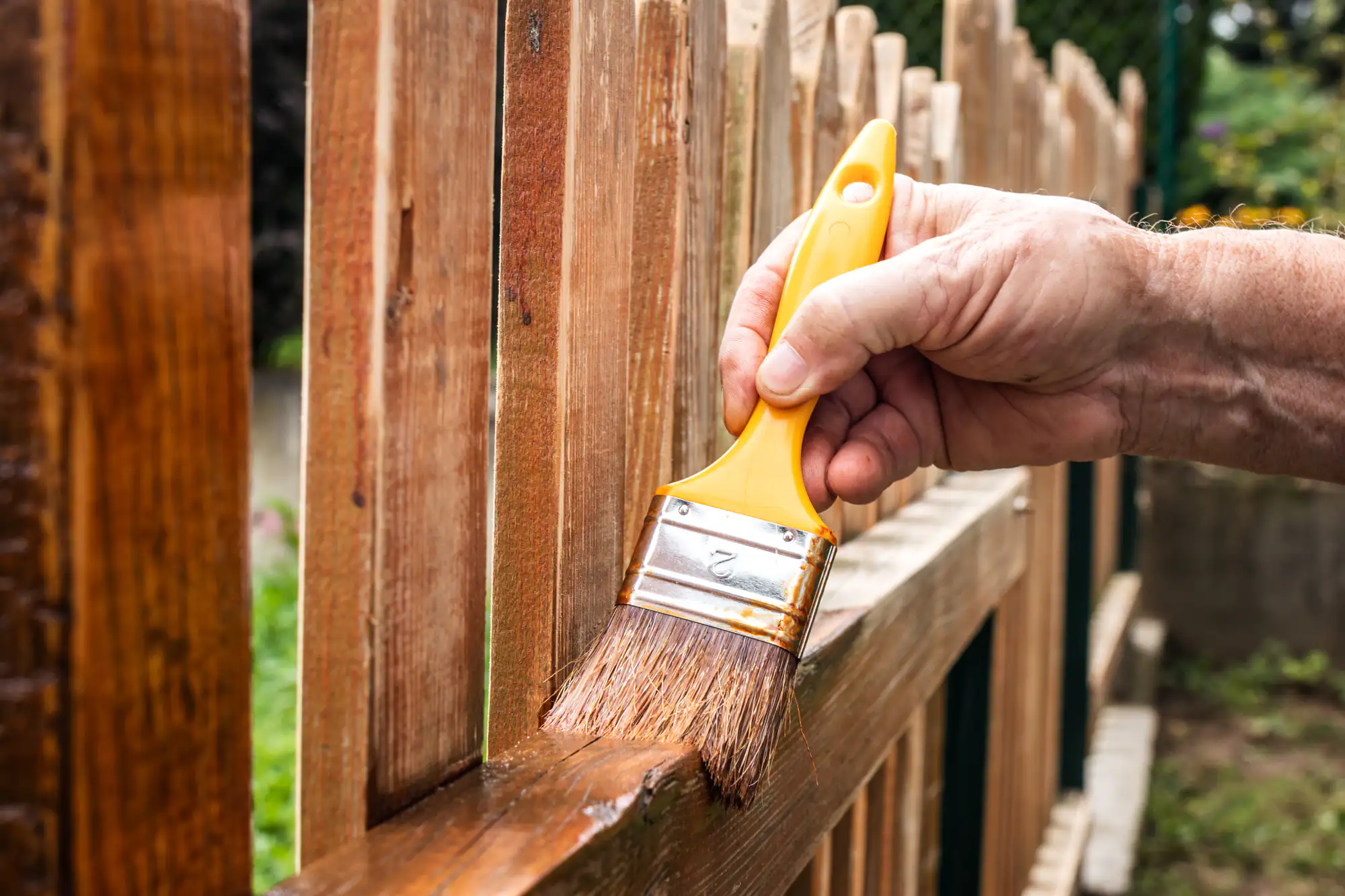
Professional Fence Staining Process Stony Brook
It starts with a site visit. We come to your property, walk the fence line, check the wood’s condition, and confirm the scope before we put any numbers together. We verify property lines and locate utilities both of which matter in Stony Brook’s established neighborhoods, where lot configurations can be irregular and underground infrastructure is decades old. That visit is what separates an accurate quote from a guess.
Once we’re aligned on scope, timing matters. If your fence is new pressure-treated lumber, it needs time to dry sometimes up to six months before stain will properly penetrate. New cedar needs at least five to seven weeks. We use the water bead test on-site to confirm readiness. Staining too early is one of the most common mistakes homeowners make, and it leads to peeling within a single season. We won’t let that happen on a job we’re responsible for.
When the fence is ready, we prep the surface first cleaning off any mildew, algae, or weathering then apply the stain in the right conditions. On Long Island’s North Shore, the best windows are late April through early June and September through October, when humidity is manageable and temperatures are consistently above 50°F. We work around your schedule and the weather, not the other way around.
Ready to get started?
Fence Staining and Wood Fence Maintenance Stony Brook
Every fence staining job we do is backed by a warranty on both labor and materials. That’s not standard in this industry most contractors cover one or the other, not both. If something goes wrong with how the work was done or with the materials themselves, you’re covered. In a community where people expect professional accountability, that matters.
We use American-made fence materials and professional-grade staining products selected for Long Island’s specific climate conditions. For properties in Stony Brook’s coastal sections near West Meadow Creek or north of Route 25A we factor in salt air exposure and recommend stain formulations with stronger mildew inhibitors and UV protection. For the wooded lots in the M-Section and Timberidge, where shade keeps surfaces damp longer, surface prep and mildew treatment are built into the process, not treated as add-ons.
We also handle storm and wind damage repair. Stony Brook’s tree-canopied neighborhoods take a hit after every nor’easter, and if a fallen limb takes out a section of your fence, we can assess, repair, and stain in one coordinated process so the finished result is consistent from one end of your fence to the other. If you’re navigating a homeowner’s insurance claim, we can work within that process. The Town of Brookhaven has its own fence regulations, and our site visit covers any permit or setback questions specific to your parcel before work begins.
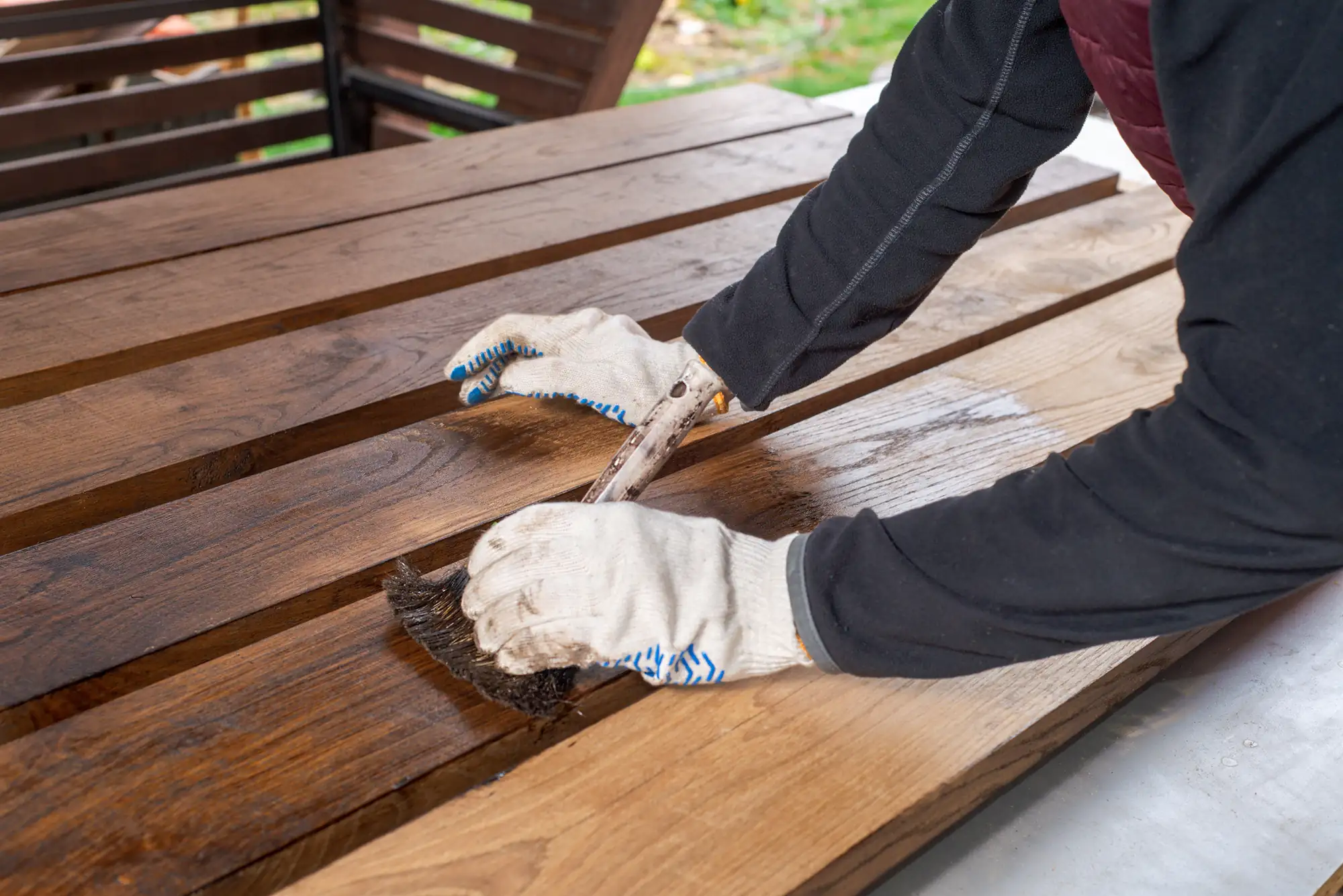
How much does professional fence staining cost near Stony Brook University, NY?
Fence staining typically runs between $2 and $10 per linear foot, which puts most residential jobs in the range of $1,400 to $2,200 though the full range can run from around $240 on the low end to $4,000 or more for larger properties. What drives the number is the total linear footage, the height of the fence, the condition of the wood, and whether any prep work like mildew removal or light sanding is needed before stain goes on.
In Stony Brook, a lot of the larger lots in neighborhoods like the M-Section or Timberidge have substantial fence runs, which pushes the total up. Properties near West Meadow Beach or Stony Brook Harbor may also need more intensive prep if salt air and moisture have already caused surface weathering. The best way to get an accurate number is a site visit we come out, walk the fence, and give you an itemized quote that breaks down exactly what you’re paying for. No ballpark estimates that change after the work starts.
How often should I stain my wood fence on Long Island’s North Shore near Stony Brook University?
On vertical fence surfaces in most conditions, a quality professional stain lasts three to eight years. On Long Island’s North Shore and especially in Stony Brook’s northern sections near the Sound that window tends to run closer to the shorter end of that range. Salt air, humidity, and the freeze-thaw cycles that hit hard in late winter all work against unprotected wood faster than in inland locations.
A good rule of thumb: do the water bead test every couple of years. Splash water on the fence surface. If it beads up and rolls off, the stain is still doing its job. If it soaks in, the wood is absorbing moisture and it’s time to restain. For properties with significant shade from mature trees common in Stony Brook’s wooded residential sections you’ll also want to watch for mildew or algae growth, which can develop even on a stained surface if moisture lingers long enough.
Can a gray, weathered fence be stained, or does it need to be replaced?
In most cases, yes a gray or weathered fence can be restored with staining rather than replaced. Graying is surface oxidation, not structural failure. As long as the wood is still structurally sound no rot, no significant cracking or splitting cleaning, light prep work, and a penetrating stain can bring it back significantly and protect it going forward.
The key is proper surface prep before the stain goes on. A weathered fence needs to be cleaned to remove the oxidized surface layer, any mildew, and any old stain residue that would prevent the new product from penetrating properly. Skipping that step is why a lot of DIY staining jobs look decent for one season and then peel. We assess the condition of your fence during the site visit and tell you honestly whether staining makes sense or whether certain sections have deteriorated past the point where it’s worth it. In Stony Brook’s older residential neighborhoods south of Route 25A where a lot of the post-war homes have fences that have been through 20 or 30 winters that honest assessment upfront saves homeowners from spending money on the wrong solution.
How long do I need to wait before staining a brand new fence in Stony Brook?
It depends on the wood. If your fence is new pressure-treated lumber which is the most common material used in Suffolk County residential installations you’re looking at a wait of up to six months before the wood has dried enough for stain to properly penetrate. Pressure-treated lumber comes from the mill saturated with preservative chemicals and moisture. Staining it too early means the stain sits on the surface instead of penetrating the grain, and it will peel within a season.
New cedar or other naturally rot-resistant species dry faster generally five to seven weeks is sufficient, depending on weather conditions. On Long Island’s North Shore, spring and early summer installations may take longer to dry if the weather stays cool and damp. We use the water bead test on-site to confirm readiness before scheduling the staining appointment. If you had a fence installed in spring and are planning to stain it, the fall window September through October is typically the right timing for most Stony Brook installations, and it lines up well with one of the best staining seasons on the North Shore.
Does salt air near Stony Brook Harbor actually damage wood fences faster?
Yes, and it’s not a minor difference. Salt air accelerates wood oxidation and promotes mildew growth in ways that inland homeowners don’t deal with at the same rate. For properties in Stony Brook’s northern sections near West Meadow Beach, West Meadow Creek, or along the harbor the combination of salt air, coastal humidity, and moisture-retaining winds creates conditions that break down unprotected wood significantly faster than you’d see in inland areas.
The practical implication is that the stain formulation matters more in these locations. A basic stain that holds up fine on an inland property may not be sufficient for a fence that’s taking regular salt air exposure. We select products with stronger mildew inhibitors and UV protection for coastal and near-coastal applications, and we factor in more frequent maintenance windows closer to three to four years rather than the upper end of the range for properties with direct harbor or Sound exposure. If your property is in this zone, that’s something we discuss during the site visit so your staining plan reflects your actual conditions, not a one-size-fits-all schedule.
Is fence staining something I can do myself, or is professional application worth it?
You can DIY fence staining but the gap between a DIY result and a professional one is bigger than most homeowners expect, and it usually comes down to prep and product selection. The most common DIY failure is applying stain to a fence that wasn’t properly cleaned first, or choosing a surface-coating product that looks good initially but doesn’t penetrate the wood and peels within a year. The second most common issue is timing staining in conditions that are too hot, too humid, or too cold for the product to cure correctly.
For a standard residential fence in Stony Brook, professional staining costs $2 to $10 per linear foot. On a 150-linear-foot fence, that’s roughly $300 to $1,500 depending on the scope and it comes with a warranty on both the labor and the materials, plus the surface prep, product selection, and application method that actually make the stain last. When you factor in the cost of a fence replacement which runs several thousand dollars for a typical residential property paying for a professional job that extends your fence’s life by years is straightforward math. For homeowners in the Three Village area who are protecting a home worth $700,000 or more, that calculation isn’t a close call.
Useful Links
Other Services we provide in Stony Brook University