Fence Staining in West Sayville, NY
Bay Air Is Beautiful Until It Destroys Your Fence
Hear from Our Customers
Wood Fence Staining West Sayville
A stained fence isn’t just better-looking it’s structurally more sound. Moisture is the number one enemy of wood, and in West Sayville, you’re getting it from every direction: humidity off the bay, rain that doesn’t drain fast enough through the low-lying soil south of Montauk Highway, and freeze-thaw cycles through the winter that open cracks in boards that were fine the season before. A quality stain seals those entry points before they become rot.
The salt air here is a specific problem that inland Suffolk County towns don’t deal with the same way. Sodium chloride particles carried off the Great South Bay deposit on your fence boards year-round and pull moisture into the grain. That’s not a slow process it accelerates deterioration noticeably faster than what you’d see in a town like Holbrook or Hauppauge. Regular staining, done right every two to three years, can extend your fence’s lifespan by up to 30%. That matters when replacement runs $3,000 to $8,000 or more.
And if your fence has already taken on that weathered gray look, that’s not a cosmetic issue it’s a sign the wood’s surface layer has broken down and UV damage has set in. The good news is that most weathered fences can be restored through proper prep and staining without replacing a single board.
Fence Staining Contractor West Sayville NY
We’ve been working across Suffolk County for over 15 years, and West Sayville’s coastal conditions are some of the most demanding environments we work in. The hamlet sits just over two square miles, but the conditions here near the Great South Bay are real, and the homes are valuable. We treat both of those facts seriously.
Every project starts with a professional site visit. We verify property lines, locate utilities, and assess your fence’s current condition before quoting anything. That’s not standard practice in this industry, but it should be. For properties near Greens Creek or the waterfront along West Avenue, where lot lines can get complicated, it’s especially worth doing right.
Our quotes are itemized lineal footage, materials, labor, all of it in writing. No vague estimates that shift after the deposit. And we back the work with a warranty that covers both materials and workmanship, because one without the other doesn’t actually protect you.
Fence Staining Process West Sayville NY
It starts with a site visit, not a phone guess. We come to your property, look at the fence in person, check the wood’s condition, confirm your property lines, and locate any underground utilities before anything else happens. From there, you get a written, itemized quote not a ballpark.
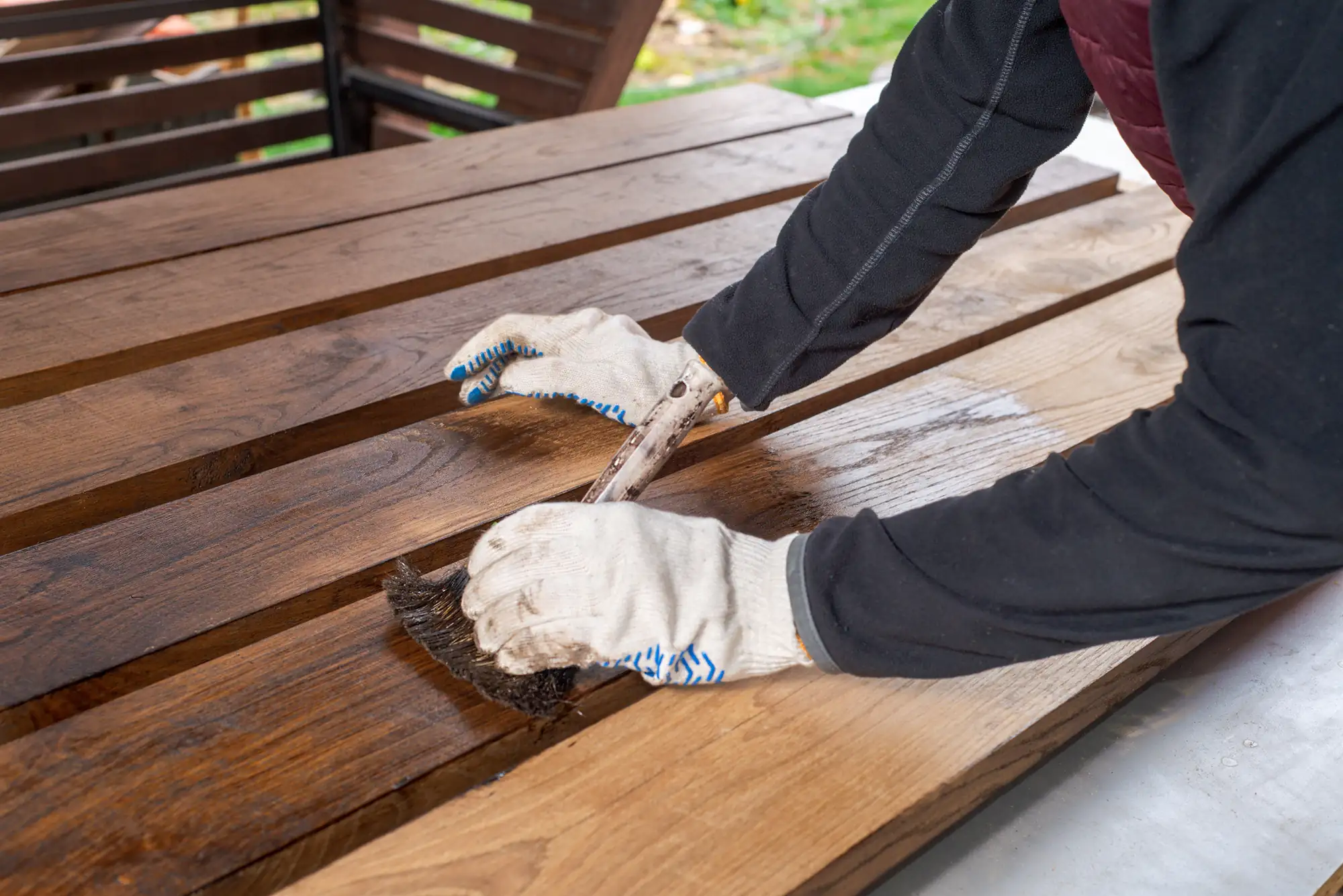
Once you’re ready to move forward, the first thing we do on the job is prep. This step is where most staining jobs fail when they’re done poorly. Staining over dirty, gray, or damp wood traps contamination under the surface and causes peeling within months. We clean the fence, brighten the wood where needed, and test for moisture before a drop of stain goes on. For fences in West Sayville especially anything south of Montauk Highway where mold, mildew, and salt deposits build up on surfaces this prep work isn’t optional.
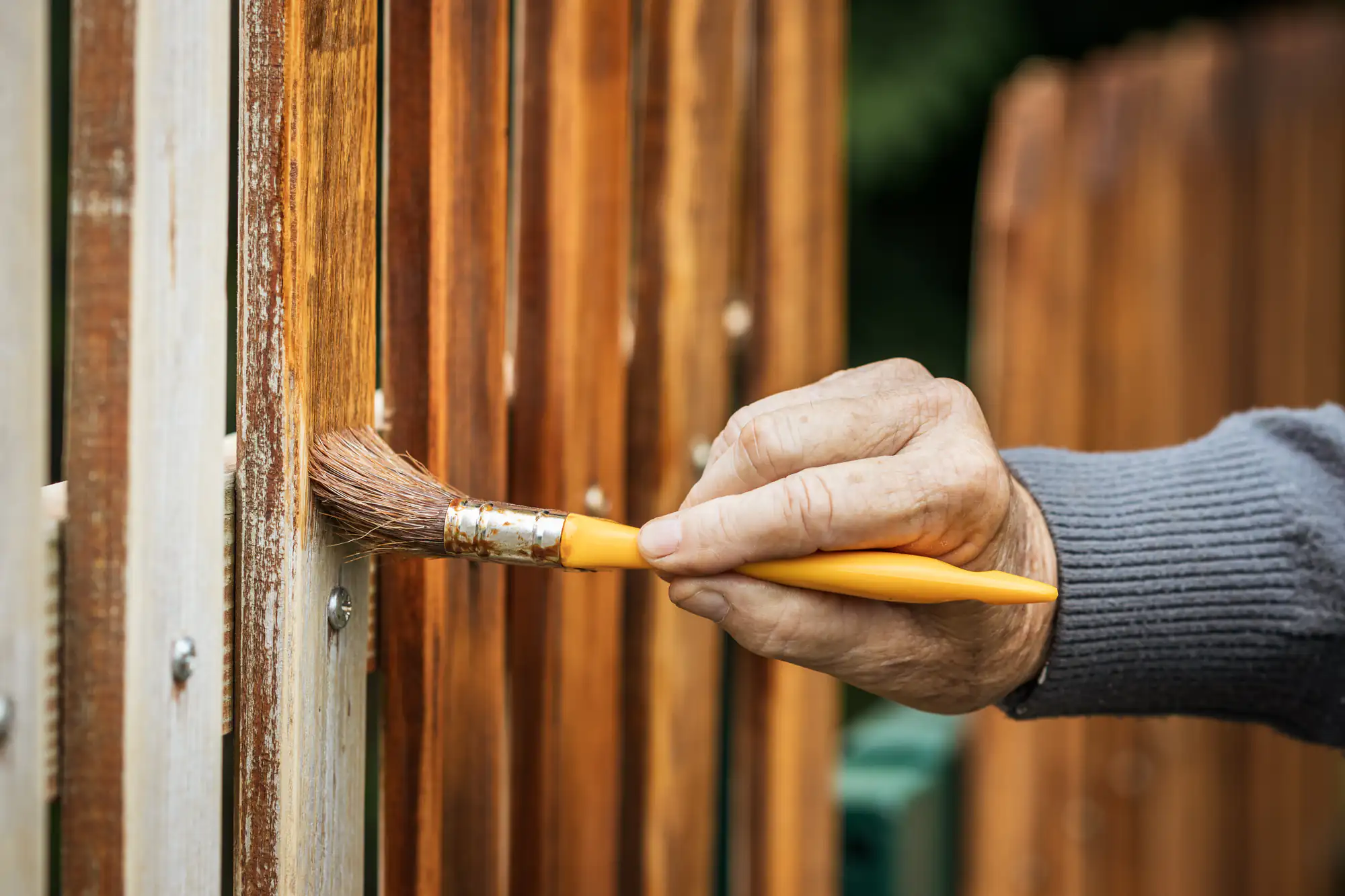
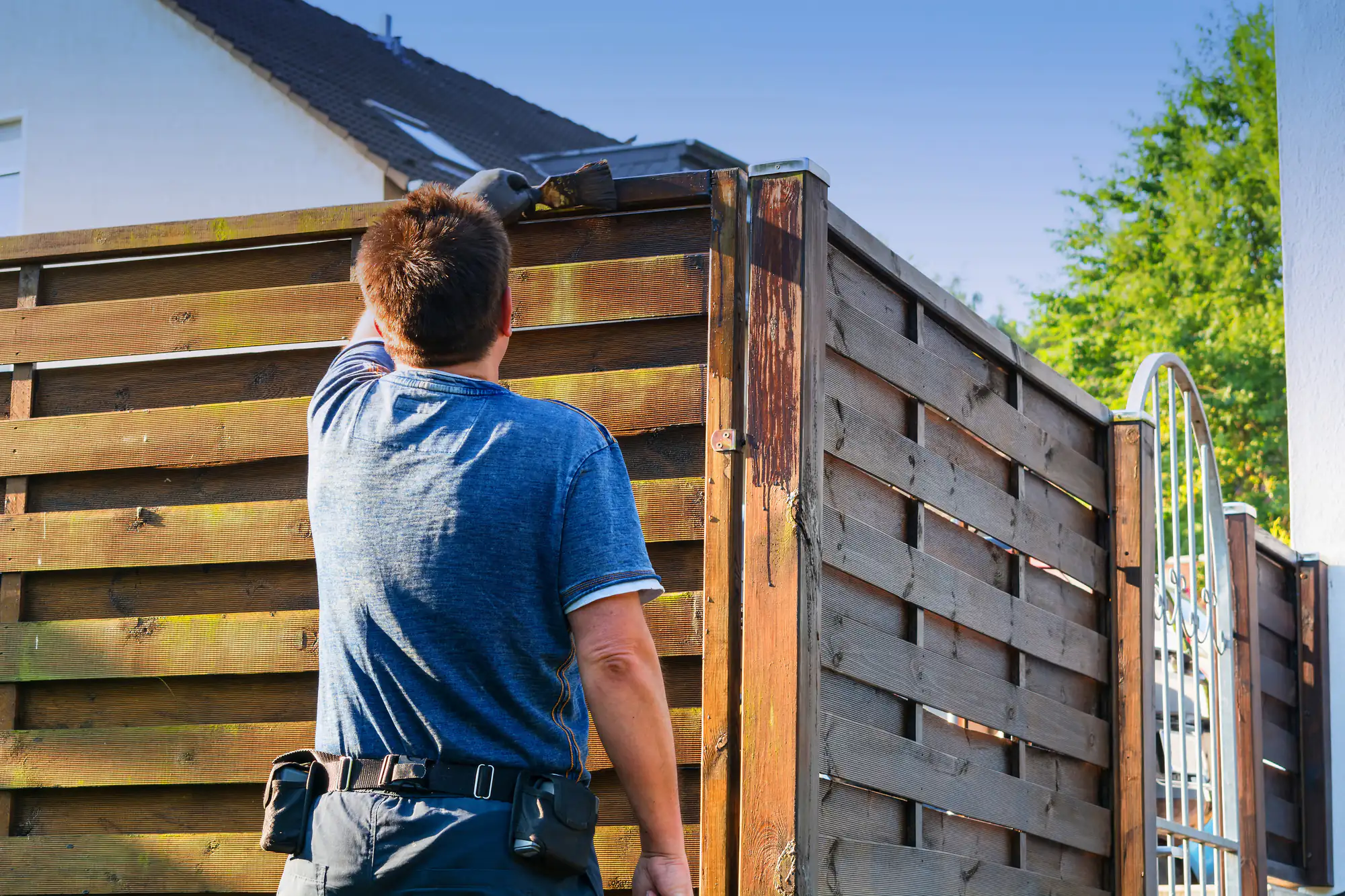
After prep, we apply the stain using the right product for your wood type and exposure level. Coastal properties near the bay need a different level of protection than a fence set back from the water. Spring and fall are the ideal windows for this work temperatures between 50°F and 80°F let the stain penetrate and cure properly. Once the job is done, everything is backed by our dual labor-and-material warranty. You’ll know what was done, why, and what to expect going forward.

Ready to get started?
Wood Fence Staining and Sealing West Sayville
Fence staining with us covers the full scope not just the application. You get the site visit, the surface prep, the stain, and the warranty. We use American-made materials across all of our work, and the stain products we select are matched to your wood type, your fence’s age, and your property’s specific exposure conditions. A cedar fence on a street backing up to the Great South Bay waterfront needs different treatment than a pressure-treated fence set back from the water on the north side of Montauk Highway.
If your fence has storm damage alongside the weathering boards knocked loose, posts shifted by saturated soil, sections that took a hit from a nor’easter we handle that too. Repair and staining in a single engagement means you’re not coordinating two separate contractors or waiting twice. That’s a real advantage for West Sayville homeowners who’ve dealt with South Shore storm events and know how quickly a damaged fence becomes a security and privacy problem.
The Town of Islip doesn’t require a permit for standard fence maintenance and staining, so there’s no bureaucratic delay to worry about. What matters is timing staining done in the right temperature window, on properly prepped wood, with the right product, lasts three to eight years on vertical fence surfaces. That’s the outcome we’re aiming for on every job.
How often should I stain my wood fence in West Sayville near the bay?
For most wood fences in West Sayville, every two to three years is the right interval but if your property is south of Montauk Highway or within close range of the Great South Bay, leaning toward every two years is the smarter call. The salt air off the bay deposits sodium chloride on your fence year-round, and that accelerates moisture penetration and surface breakdown faster than you’d see in an inland town.
The easiest way to check whether your fence needs staining is the water bead test. Sprinkle water on the wood surface if it beads up, the existing sealant is still working. If it soaks right in, the wood is unprotected and staining is overdue. Don’t wait until you see graying or cracking, because by that point, the surface layer has already broken down and you’re dealing with more prep work before the stain can do its job.
What’s the difference between fence staining and fence painting for wood fences?
Stain penetrates into the wood fiber, which means it protects from the inside out and doesn’t form a surface film that can peel or crack. Paint sits on top of the wood as a coating it can look sharp when it’s new, but once moisture finds a way in through any crack or gap, it lifts and peels, and you’re dealing with a prep and repaint job that’s more labor-intensive than a stain refresh would have been.
For wood fences on Long Island’s South Shore, stain is almost always the better choice. The humidity, freeze-thaw cycles, and salt air exposure in coastal communities like West Sayville create exactly the conditions that cause painted surfaces to fail prematurely. Semi-transparent stains also let the wood grain show through, which tends to look more natural on residential fences and ages better over time. If your fence was previously painted, that’s a conversation worth having before starting painted wood requires additional prep before stain can be applied correctly.
Can a weathered or grayed fence be restored, or does it need to be replaced?
In most cases, a weathered or grayed fence can be fully restored through proper cleaning, brightening, and staining no replacement needed. The gray color you see is oxidation of the wood’s surface layer, caused by UV exposure and moisture over time. It looks bad, but it doesn’t mean the structural integrity of the fence is gone. Once you clean the surface and apply a wood brightener to open the grain back up, the wood accepts stain well and the color comes back significantly.
Where replacement becomes the real answer is when the wood has rotted through particularly at the base of posts where ground contact and moisture are highest. In West Sayville, where the water table is close to the surface and storm surge events push bay water into already-saturated soil, post rot at the ground line is worth checking carefully before committing to a full stain job. We assess this during the site visit so you’re not investing in staining a fence that has structural problems underneath.
Does fence staining in West Sayville require a permit from the Town of Islip?
No fence staining and routine maintenance do not require a permit from the Town of Islip. Permits come into play when you’re installing a new fence or making structural modifications, and even then, the Town of Islip’s fence regulations don’t require a building permit for compliant fence installations. The main rules to know are the height restrictions: fences within 15 feet of a street property line are capped at four feet, and fences set back 15 feet or more can go up to eight feet.
If your property is near Greens Creek or the bay’s shoreline, there’s an additional layer to be aware of properties close to wetlands or waterways may need a Town of Islip Wetlands and Watercourses Permit for any construction near the water’s edge. That applies to fence installation, not staining maintenance. But it’s one more reason why a professional site visit that includes property line verification is worth doing before any fence work starts on South Shore waterfront properties.
What’s the best time of year to stain a fence on Long Island’s South Shore?
Spring and fall are your two best windows. You need air and wood surface temperatures consistently between 50°F and 80°F for stain to penetrate and cure properly below that range, the stain doesn’t absorb correctly and the cure is incomplete. On Long Island, that puts your ideal spring window roughly from mid-April through May, and your fall window from late September through October.
Spring is particularly useful for West Sayville homeowners because it follows the winter freeze-thaw season, which is when wood expands and contracts most aggressively and new cracks tend to open up. Getting a fresh stain on before summer’s UV intensity peaks is good timing. Fall works well too, but keep in mind that the tree canopy on West Sayville’s residential streets means fallen leaves can sit against fence boards and hold moisture you want the fence clean and dry before staining, so timing around leaf fall matters. Summer staining is possible but requires careful scheduling around heat and direct sun, which can cause the stain to dry too fast on the surface before it penetrates.
My fence was damaged in a storm should I repair it before or after staining?
Repair first, always. Staining over damaged wood cracked boards, loose posts, sections that have shifted doesn’t fix the underlying problem, and in some cases it can seal in moisture that accelerates rot rather than preventing it. The right sequence is to assess the damage, make the structural repairs, let any new or replaced wood dry adequately, and then stain the full fence so the color and protection are consistent across old and new sections.
For West Sayville homeowners, this situation comes up more than it does in inland towns. Nor’easters drive directly onshore along the South Shore, and the saturated soil conditions after a storm event especially in the lower-lying streets south of Montauk Highway can undermine post foundations even when the above-ground fence looks intact. We handle both repair and staining as part of the same engagement, so you’re not tracking down a separate contractor for each piece of the job. If you’re also navigating an insurance claim after storm damage, having one company document and handle the full scope makes that process cleaner too.
Useful Links
Other Services we provide in West Sayville