Aluminum vs Vinyl Fence: Which Holds Up on Long Island?
Not sure whether aluminum or vinyl fencing is right for your Long Island property? Here’s what actually matters before you decide.
If you’ve been going back and forth on aluminum versus vinyl fencing, you’re not alone. Most homeowners in Suffolk County hit the same wall: you find a comparison article online, read through it, and come away with a vague “both are good, it depends” answer that doesn’t actually help you decide anything.
The truth is, the right material does depend — but on specific things. Where on your property the fence is going. How close you are to the water. Whether you have a pool. What your town requires. Once you understand those factors, the decision gets a lot clearer. Here’s what you actually need to know.
Aluminum Fence Pros and Cons: What Long Island Homeowners Should Know
Aluminum gets recommended constantly for Suffolk County properties, and for good reason — but it’s worth understanding exactly why, rather than just taking it on faith.
The biggest advantage is longevity. A properly installed aluminum fence with a powder-coated finish can last 30 to 50 years or more with almost no maintenance beyond an occasional rinse. Compare that to vinyl at 20 to 30 years, or wood at 10 to 15 years if you’re diligent about upkeep, and the long-term math starts to favor aluminum pretty quickly.
The other thing worth knowing upfront: aluminum does not rust. Aluminum forms a natural oxide layer that protects it from corrosion, and the powder-coated finish adds another layer of protection on top of that. For a county with water on two sides, that matters.
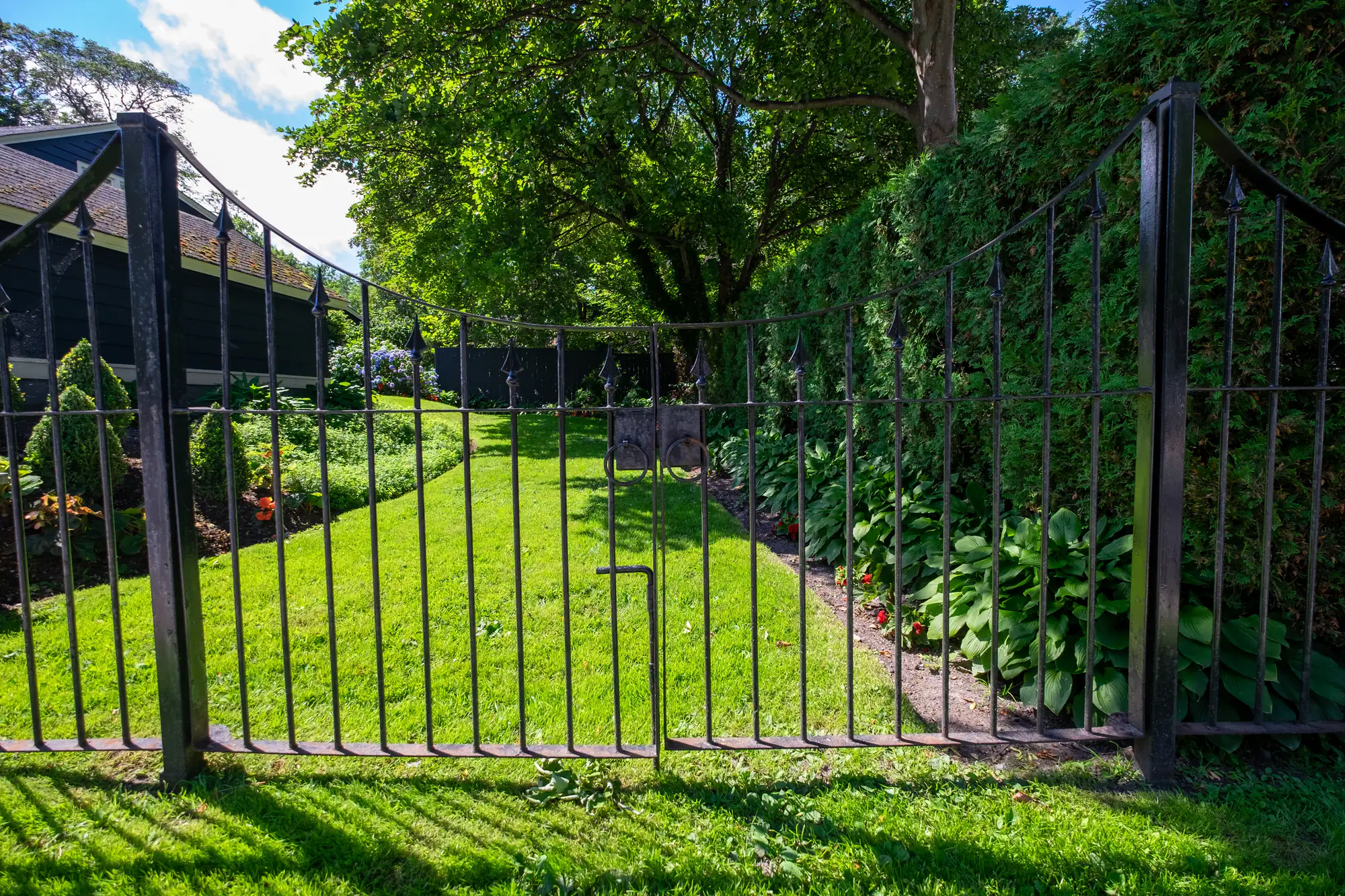
Best Fence for Coastal Climate: Why Aluminum Wins Near the Water on Long Island
Suffolk County isn’t just “near the coast” in a general sense. You’ve got the Long Island Sound running along the North Shore and the Great South Bay and Atlantic Ocean along the South Shore. Communities like Port Jefferson, Northport, and Smithtown on the north, and Patchogue, Bay Shore, and Babylon on the south, are dealing with persistent salt air from two different directions. It’s a more aggressive environment than most of the inland markets where generic fence comparison content gets written.
Salt air is hard on materials. It accelerates corrosion in untreated metals, promotes mold and algae growth on porous surfaces, and generally shortens the lifespan of anything that isn’t built for it. Aluminum handles this better than any other common fence material. The natural oxide layer, combined with a quality powder-coated finish, gives it documented resistance to saltwater, high humidity, and coastal winds. We’ve seen aluminum fencing hold up for years in these conditions with no rust, no warping, and no structural issues.
Vinyl holds up reasonably well too, but it’s not immune to Long Island’s coastal environment. In humid, salt-air conditions, vinyl surfaces can develop mold and algae buildup that requires periodic cleaning to keep the fence looking right. It’s still far less work than maintaining a wood fence, but “zero maintenance” is an oversell for vinyl in this climate. If your property sits close to the water — whether that’s the Sound, the Bay, or one of the many inlets and creeks that cut through Suffolk County — aluminum is the more durable long-term choice.
There’s also the wind factor. Nor’easters and tropical storms are part of life on Long Island, and they test every fence on the property. Aluminum’s strength-to-weight ratio gives it a structural advantage over vinyl in high-wind events. Vinyl panels can crack under significant pressure or storm impact in a way that aluminum typically doesn’t. After a bad storm, a damaged aluminum fence often means replacing a single picket or section. A damaged vinyl fence often means replacing an entire panel — and hoping the manufacturer still carries that exact style and color.
When Aluminum Is the Right Call: Pools, Front Yards, and HOA Properties
Beyond coastal performance, there are specific applications where aluminum isn’t just a good choice — it’s often the required one.
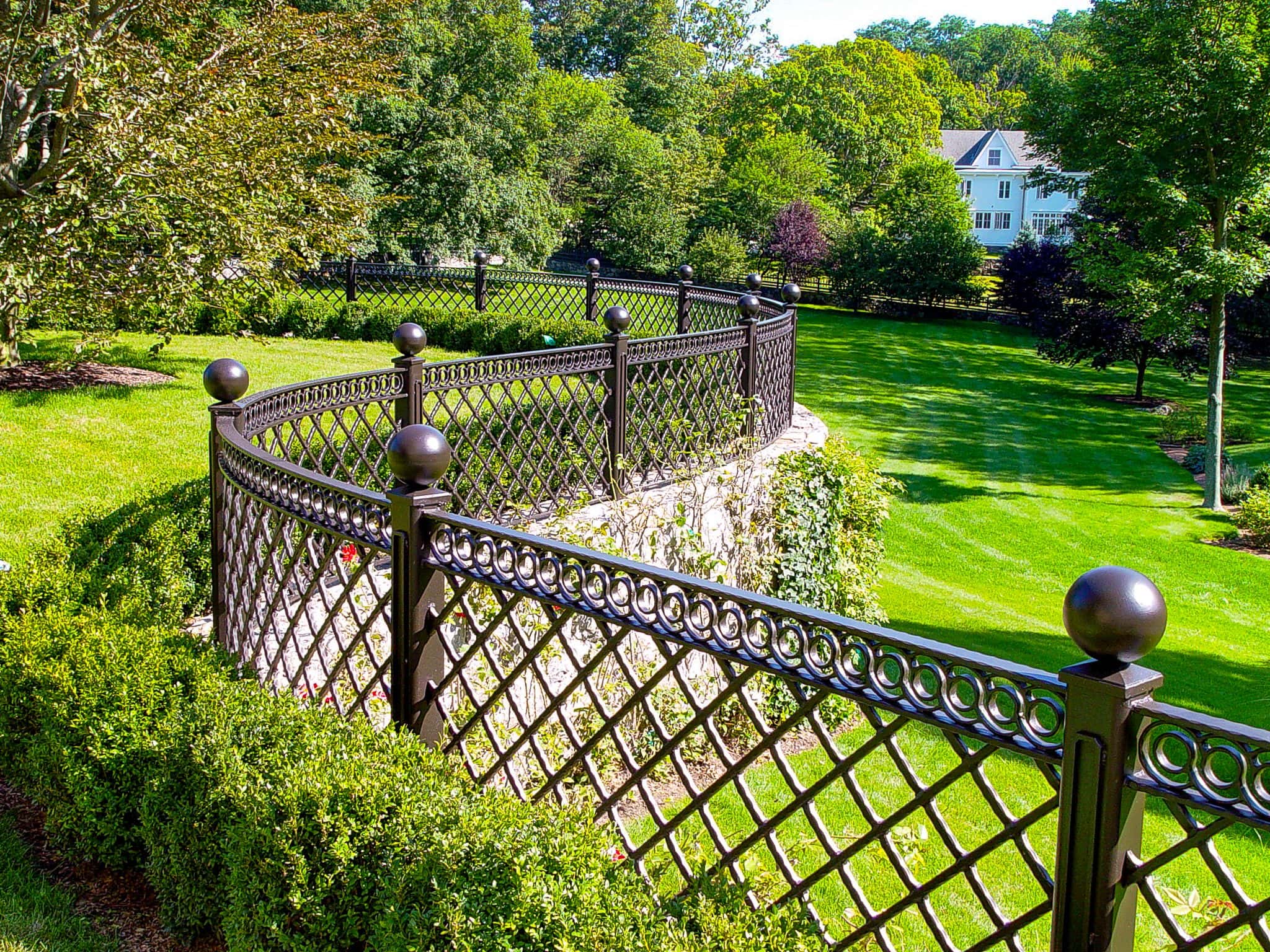
Pool enclosures are the clearest example. New York State building codes require pool fencing to meet specific safety standards: minimum 48-inch height, self-closing and self-latching gates, and anti-entrapment devices. Aluminum meets all of these requirements while maintaining an open, elegant appearance that doesn’t turn your backyard into a fortress. That combination — code compliance plus aesthetics — is why aluminum is the dominant material for pool enclosures across Suffolk County. Vinyl can technically meet pool code too, but its solid panels create a visual barrier that most homeowners don’t want around a pool area.
Front yards and street-facing applications are another natural fit for aluminum. Its ornamental look — clean lines, open picket design — enhances curb appeal without blocking sightlines. Many HOA communities in Suffolk County specifically require aluminum or ornamental-style fencing for street-facing installations, so if you live in a neighborhood with an HOA, it’s worth checking what’s actually permitted before you fall in love with a particular material.
One more practical point: when aluminum gets damaged, you replace a picket or a section. When vinyl gets damaged, you often replace a whole panel — and you need to find a panel that matches your existing fence in style, color, and dimensions, which gets harder as time goes on and product lines change. Over a 30-to-40-year ownership period, that repair economics difference adds up.
Want live answers?
Connect with a Best Fence Long Island expert for fast, friendly support.
Aluminum Fence vs Wood Fence: Why Most Long Island Homeowners Are Done with Wood
Wood fencing still has its fans, and there’s no denying it has a certain look. But on Long Island, the maintenance reality catches up with most homeowners fast.
A wood fence in a standard inland climate might last 10 to 15 years with proper upkeep — meaning regular staining or sealing every one to three years. In Suffolk County’s coastal conditions, that timeline shortens. Salt air, humidity, and freeze-thaw cycling accelerate rot and warping in ways that inland homeowners don’t deal with at the same rate. Many Long Island homeowners replacing their fences right now are replacing wood that failed faster than expected, and they’re not going back to it.
Both aluminum and vinyl eliminate the staining, sealing, painting, and rot concerns entirely. That’s the real comparison when wood is on the table — not just cost, but the ongoing time and money you won’t be spending every couple of years.
Vinyl Fence: Where It Actually Makes More Sense Than Aluminum
Vinyl gets a bad reputation in some circles, usually from people who’ve seen cheap, low-grade PVC turn yellow and brittle after a few years. But that’s a quality problem, not a material problem. Premium vinyl — made from virgin PVC with UV inhibitors and impact modifiers — is a genuinely durable product that performs well in Long Island’s climate for 20 to 30 years.
And for backyard privacy, vinyl is simply the better choice. Aluminum’s open picket design is beautiful, but it doesn’t give you privacy. If you want to block sightlines from neighbors or create an enclosed feel for your yard, vinyl’s solid panels do that in a way aluminum can’t without add-on modifications. For homeowners in denser communities — think Centereach, Selden, Lake Grove, or Ronkonkoma, where lots are closer together and backyards are more visible — vinyl privacy fencing is often exactly what the situation calls for.
Vinyl also tends to come in at a lower upfront cost than aluminum for comparable residential installations. If you’re fencing a large backyard perimeter and privacy is the primary goal, vinyl can deliver the result you want at a price point that makes the project more accessible. The key is making sure you’re getting quality material — virgin PVC, not recycled — and a contractor who stands behind the installation with a written warranty.
One thing vinyl handles well that sometimes gets overlooked: it’s available in a wide range of styles, textures, and colors beyond the standard white. Woodgrain textures, earth tones, and various post cap and rail configurations give homeowners more design flexibility than aluminum’s more limited aesthetic range. If your backyard design has a specific look you’re going for, vinyl may give you more options to work with.
Suffolk County Fence Permits: What You Need to Know Before You Buy a Single Panel
Here’s something most fence comparison guides skip entirely, and it’s genuinely important for Suffolk County homeowners: your permit requirements depend on which town you’re in, and the rules are not the same across the county.
Brookhaven, Islip, Smithtown, Riverhead, and the other towns within Suffolk County each have their own building departments and their own fence regulations. The general rule across most towns is a maximum fence height of six feet without a variance from the Zoning Board of Appeals, but the specifics — setbacks, front yard restrictions, pool enclosure requirements — vary. In some towns, a fence within 15 feet of your street property line is capped lower than six feet. In others, there are additional rules for corner lots or properties adjacent to conservation land.
Homeowners who skip the permit process often don’t find out about it until they’re selling the house and a title search flags the unpermitted structure — or until a neighbor complains and the town sends someone out. The fine and mandatory removal scenario is real, and it’s a headache that’s entirely avoidable.
We handle the permit paperwork as part of our installation process. That means we know what your specific town requires, we file the necessary documentation, and we make sure the installation is compliant from the start. It’s not a service every fence company offers, and it’s one of the reasons homeowners across Suffolk County — from Port Jefferson to Patchogue, from Smithtown to Riverhead — come to us rather than trying to navigate the process on their own.
If you’re in a Spanish-speaking household, we offer full bilingual service in English and Spanish, which matters in communities like Brentwood, Central Islip, and Riverhead where navigating contractor conversations and permit paperwork in a second language adds a layer of stress that you shouldn’t have to deal with.
Which Fence Is Right for Your Long Island Property?
The short version: if you need privacy in your backyard, vinyl is probably your answer. If you’re fencing a pool, a front yard, a coastal property, or anywhere an HOA has a say, aluminum is almost certainly the better fit. And if you’re replacing a wood fence that’s given you nothing but maintenance headaches, either one will feel like a dramatic upgrade.
What matters most is getting the right material for the right application — and making sure the installation is done correctly, permitted properly, and backed by a warranty that means something if something goes wrong.
We’ve been installing fences across Suffolk County for over 15 years. We use American-made materials, handle the permit paperwork, and give you an itemized written quote with no hidden fees — the price we quote is the price you pay. If you’re ready to figure out which option makes sense for your property, Best Fence Long Island is available to walk you through it and get you a free on-site estimate.
Summary:
Table of Contents


Article details:
- Published by:
- Published to:
- Last modified:
- October 19, 2026
Share: