Gate Installation Cost in Suffolk County, NY: 2026 Pricing Guide
Wondering what gate installation actually costs in Suffolk County? This guide breaks down real local pricing, materials, permits, and what drives the final number.

If you’ve been searching “how much does a gate cost” and getting answers that feel completely disconnected from reality, you’re not imagining it. National averages don’t account for Suffolk County’s labor rates, permitting complexity, or the kind of winters that will destroy a gate set in a shallow post hole. This region is its own market, with its own rules, and the pricing reflects that. We walk you through what gate installation actually costs here in 2026 — broken down by gate type, material, and the factors that move the number in either direction — so you can get quotes with confidence.
Gate Installation Cost Breakdown for Suffolk County, NY
The honest starting point: gate installation in Suffolk County typically runs 20 to 30 percent above national averages. That’s not a contractor markup — it’s the reality of Long Island labor rates, material transportation costs, and a permitting environment that requires more time and paperwork than most other markets.
For a manual walk-through or driveway gate, most homeowners in Suffolk County are looking at somewhere between $1,200 and $4,500 installed, depending on material and complexity. Automated driveway gates — the kind with an opener, keypad, or app control — generally land between $3,000 and $10,000 or more once you factor in the gate itself, the operator, the electrical work, and any access control accessories. Custom fabrication, masonry columns, or a long driveway with a complex entry system can push past that upper range.
The wide spread in pricing isn’t a red flag — it reflects how different these projects actually are. A basic aluminum swing gate on a standard suburban driveway in Babylon is a very different job than a custom iron sliding gate with video intercom for an estate property in Southampton.
What Drives Gate Installation Cost Up or Down on Long Island
The gate itself is only part of what you’re paying for. Understanding what actually moves the number helps you evaluate quotes more intelligently — and spot the ones that are cutting corners.
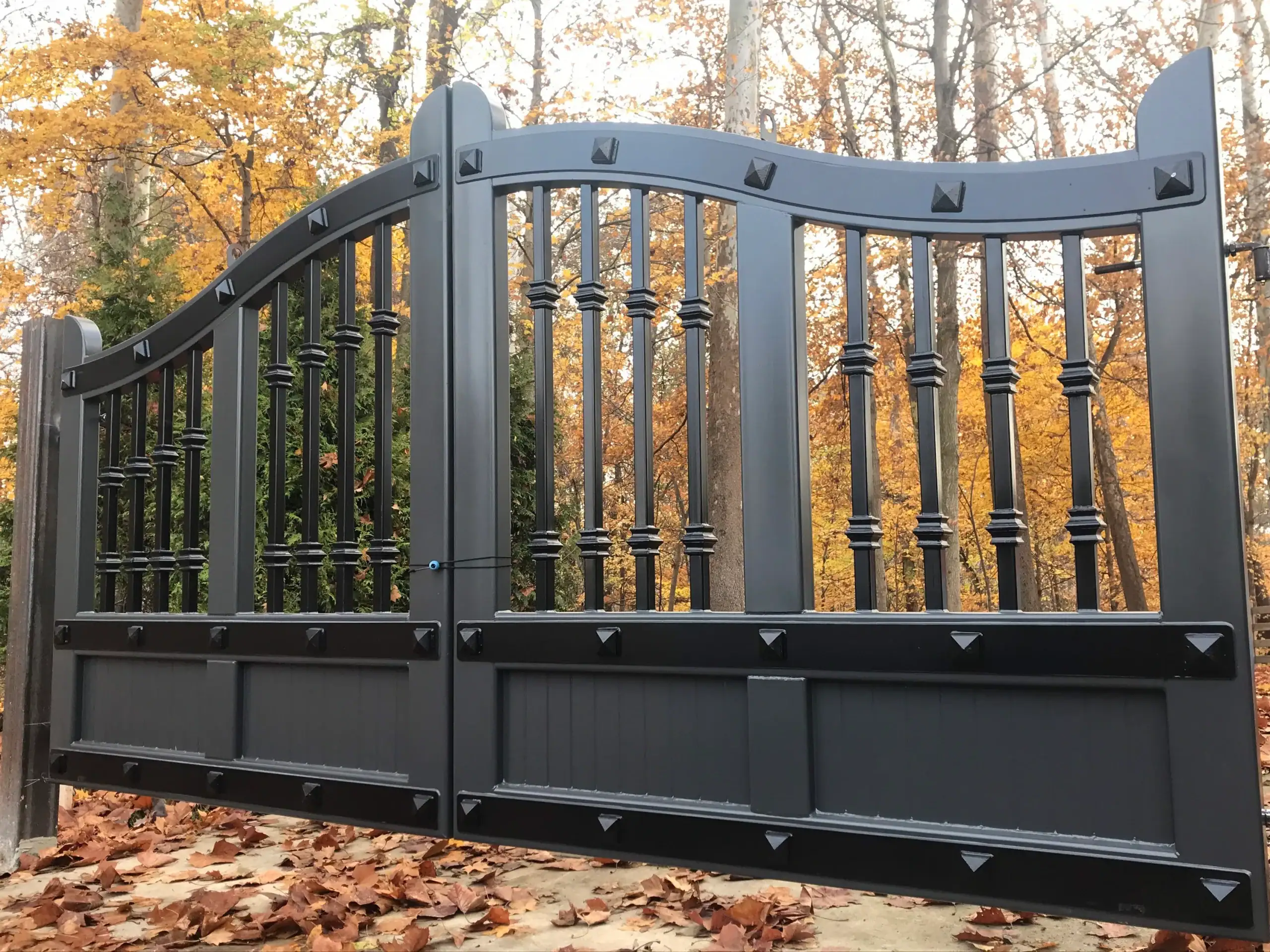
Material is the most obvious cost variable. Aluminum is the most popular choice for Suffolk County driveways because it holds up well against salt air, doesn’t rust, and comes in a wide range of styles. Ornamental iron looks sharp but requires more maintenance in coastal zones — properties near the Great South Bay, Long Island Sound, or the Atlantic face accelerated corrosion that can shorten the lifespan of untreated metal significantly. Vinyl gates are low-maintenance and work well for privacy applications but aren’t typically used for heavy automated driveway systems. Wood is affordable upfront but carries higher long-term maintenance costs, especially given the humidity and storm exposure that’s just part of life on Long Island.
Gate size matters more than most people expect. A wider driveway opening means a heavier gate panel, which means a more powerful and more expensive operator. A double swing gate covering a 16-foot opening is a fundamentally different installation than a single swing gate on a 10-foot driveway. The weight of the gate also affects what kind of posts you need, how deep they need to be set, and how much concrete goes into each footing.
Post depth is a cost factor that separates experienced Suffolk County installers from the ones who’ll leave you with a leaning gate by March. The frost line in this region sits at roughly 36 to 42 inches. Gate posts need to go deeper than fence posts — they carry more weight, absorb more stress from wind and daily operation, and need larger concrete footings to stay plumb through freeze-thaw cycles. If a quote seems unusually low, shallow post holes are often where the savings are coming from. That’s not a savings you want.
Automation adds cost in layers: the gate operator itself ($400 to $5,000 depending on the system), electrical work (which must be performed by a licensed electrician in New York), conduit installation, and any access control features like keypads, intercoms, loop detectors, or video entry systems. Smart home integration — connecting your gate to a mobile app or your existing security system — adds another layer but is increasingly something homeowners expect, not just a luxury add-on.
Permit Requirements for Gate Installation in Suffolk County Towns
This is where Suffolk County gets genuinely complicated, and it’s worth understanding before you hire anyone. The county doesn’t have a single building department. Each of the 10 towns — Babylon, Brookhaven, East Hampton, Huntington, Islip, Riverhead, Shelter Island, Smithtown, Southampton, and Southold — runs its own permitting process with its own fee schedule, height regulations, and inspection requirements. Some incorporated villages add yet another layer on top of that.
In the Town of Islip, fence and gate installations are governed by Article XXX of the Town Code. In Huntington, permit enforcement is notably strict, and homeowners in HOA communities face additional review before any work can begin. East Hampton and Southampton have architectural review requirements for visible structures — if your gate faces the street in certain villages, the design may need approval before installation can start.
For automated gates specifically, the electrical component almost always triggers a permit requirement. Any time you’re running conduit, connecting to your home’s electrical panel, or installing a gate operator, you’re in permit territory. Skipping that permit doesn’t just risk a fine — it can create real problems when you sell the house, and it leaves you liable if something goes wrong.
If your property has a swimming pool, New York State law requires that the pool enclosure include self-closing, self-latching gates at least four feet high. That’s a code requirement, not a suggestion, and it applies regardless of whether your town would otherwise require a permit for the gate itself.
We handle the permitting process as part of our installations — including verifying exactly what your specific town requires before any work begins. That’s not something every contractor offers, and it’s worth asking about directly when you’re getting quotes.
Want live answers?
Connect with a Best Fence Long Island expert for fast, friendly support.
Automatic Gate Installation: System Options and What They Actually Cost
Automatic gates have moved well past the “estate property” category. Plenty of homeowners across Suffolk County — in Smithtown, Hauppauge, Commack, and Dix Hills — are adding automated driveway gates not because it’s a luxury statement, but because it’s genuinely useful. You don’t get out of the car in a nor’easter. You can let a delivery in from your phone. You control who enters your property without being home.
The cost range for a complete automatic gate installation in Suffolk County — gate, operator, electrical, and basic access control — typically runs $3,000 to $10,000 for a residential system. Where you land in that range depends on gate size, material, operator type, and how sophisticated you want the access control to be.
Swing Gate vs. Sliding Gate: Which One Makes Sense for Your Driveway
This is one of the most common questions we get, and the answer is almost always determined by your driveway, not your preference.
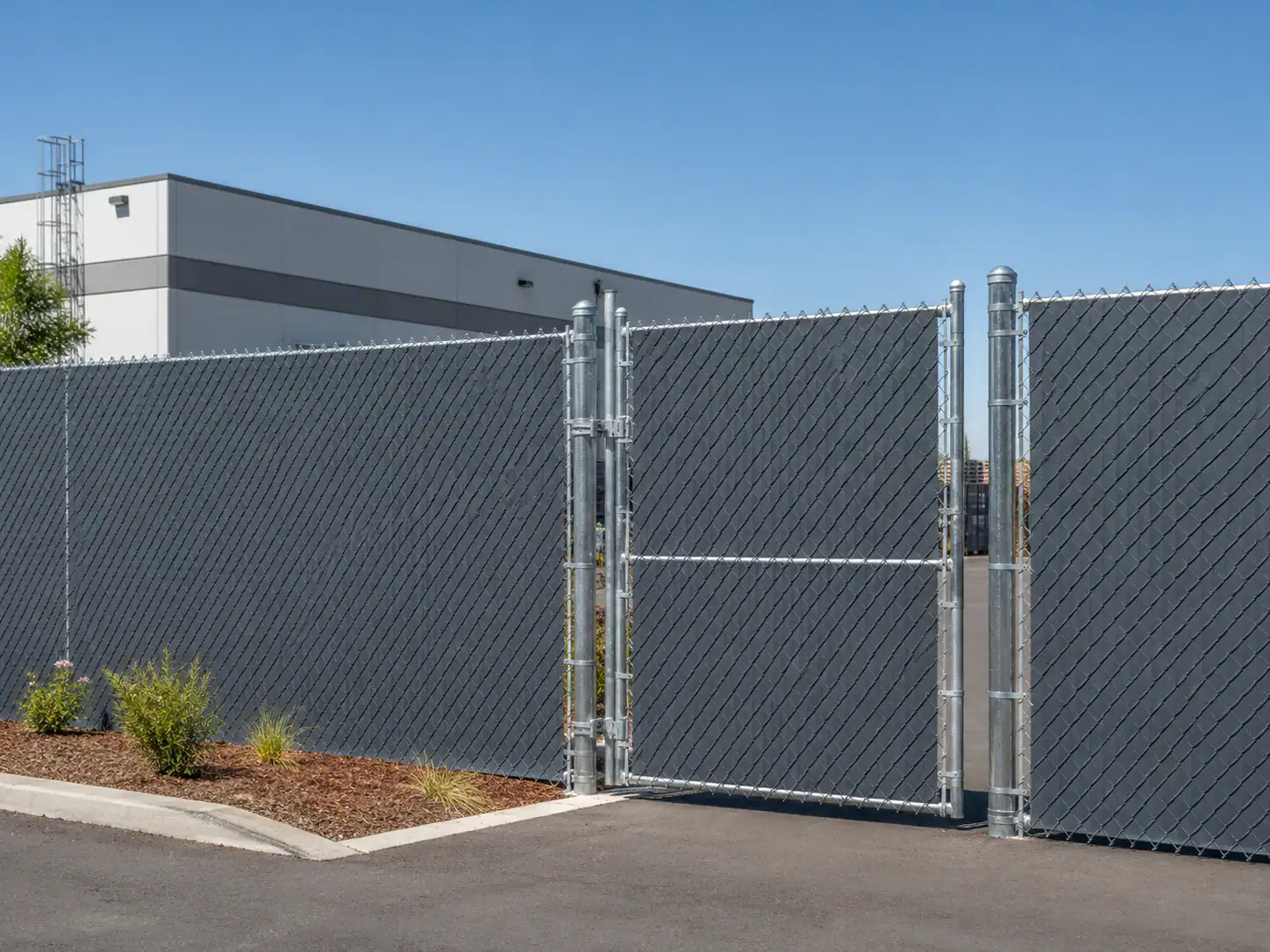
Swing gates — either single or double — need clearance space to open. If your driveway slopes upward from the street, a swing gate that drags or catches on the grade is a problem that no amount of adjustment will fully fix. Swing gates are a great fit for flat driveways with enough setback to allow the panels to open fully without blocking the sidewalk or street.
Sliding gates move parallel to the fence line rather than swinging inward or outward. They work well on sloped driveways and in situations where there isn’t enough clearance for a swing. The trade-off is that you need a flat, level surface along the track path and enough fence line on one side to accommodate the gate panel when it’s fully open. A 12-foot gate needs 12 feet of clear track space to slide into.
Cantilever gates are a variation on the sliding design — they hang from rollers rather than running on a ground track, which makes them a better choice for driveways where a ground track would be impractical or where snow and debris accumulation could jam a standard sliding system. They’re more expensive to install but require less maintenance over time.
For most standard suburban driveways in western Suffolk County — the kind you’d find in Babylon, Islip, or Brentwood — a swing gate is the most straightforward and cost-effective solution. For larger properties on the North Fork or in the Hamptons, where driveways are longer and grades more varied, sliding or cantilever systems are often the better fit. We do a proper site assessment before recommending anything, because the wrong gate type for your specific driveway is a problem you’ll be living with for years.
Driveway Gate Installation: Materials, Longevity, and Long-Term Cost
The upfront installation cost is only part of the financial picture. What a gate costs you over five or ten years depends heavily on the material — and in Suffolk County, where the climate puts outdoor structures through real stress, that calculation matters more than it does in most markets.
Aluminum is the most low-maintenance option available. It doesn’t rust, holds a powder-coat finish well, and handles the salt air environment along both the north and south shores without significant degradation. It’s lighter than iron, which means less stress on the operator and the hinges over time. For most residential driveway gate installations across Suffolk County, aluminum hits the best balance of cost, durability, and appearance.
Ornamental iron has a look that aluminum approximates but doesn’t fully replicate. If aesthetics are the priority and you’re willing to invest in periodic maintenance — repainting, rust treatment — iron can last decades. But within a mile or two of the water, iron requires more attention. Properties in Bayshore, Amityville, Northport, or Port Jefferson that are close to the bay or sound will see rust develop faster on untreated iron than inland properties will.
Vinyl gates are virtually maintenance-free and work well for privacy-style walk-through or side yard gates. They’re not typically used for heavy automated driveway applications because the material isn’t well-suited to the stress of daily mechanical operation at scale.
Wood is the most affordable option upfront and offers a natural look that works well in certain architectural contexts. The ongoing cost — staining, sealing, occasional board replacement — adds up over time, and Long Island’s wet winters and humid summers accelerate the weathering process. If you go with wood, the finishing and sealing schedule matters as much as the initial installation quality.
All of the materials we install are American-made, which means consistent quality standards and materials engineered for North American climate conditions — including the freeze-thaw cycles and coastal exposure that are specific to life on Long Island. That’s a practical difference when you’re comparing bids from contractors sourcing from different supply chains.
Getting a Gate Installation Quote in Suffolk County That You Can Actually Trust
The number one complaint homeowners have after getting fence and gate quotes isn’t the price — it’s the vagueness. A single total with no breakdown of materials, post depth, concrete, or hardware tells you almost nothing. You can’t compare it to another quote, and you have no way of knowing what you’re actually getting.
When you request a quote from us, you get an itemized document that specifies lineal footage, post spacing, post depth, and concrete volumes. You know exactly what’s going into the ground and why. We also verify your property line and locate underground utilities — including PSEG Long Island electric lines and National Grid gas mains — before any digging starts. That protects you, your neighbors, and the project timeline.
We’ve been installing fences and gates across Suffolk County for over 15 years, and we back every installation with a warranty on both materials and labor. If you’re ready to get a real number for your specific project, reach out to us and we’ll start with a professional site visit.
Summary:
Table of Contents

Article details:
- Published by:
- Published to:
- Last modified:
- October 19, 2026
Share: