
Suffolk County Fence Regulations: Height and Setbacks
Fence rules in Suffolk County aren’t one-size-fits-all. Here’s what homeowners need to know before breaking ground.

If you’ve started looking into fence regulations in Suffolk County, you’ve probably noticed something frustrating: there’s no single answer. The rules in Huntington aren’t the same as the rules in Islip. What’s allowed in Smithtown may not fly in Babylon. And if your neighborhood has an HOA, that’s a whole separate conversation.
That’s not a flaw in the system — it’s just how Long Island works. But it does mean that a quick Google search isn’t going to give you the clarity you need before you start planning. This page will. We’ll walk through the height limits, setback rules, permit requirements, and HOA considerations that actually apply to Suffolk County homeowners, town by town.
Suffolk County Fence Height Restrictions by Municipality
Suffolk County is made up of ten towns — Babylon, Brookhaven, East Hampton, Huntington, Islip, Riverhead, Smithtown, Southampton, Southold, and Shelter Island — and each one sets its own fence height limits through its local zoning code. There is no county-wide standard. That’s the first thing to understand.
The most common pattern you’ll find across western and central Suffolk County is a 6-foot maximum in rear and side yards, and a 4-foot maximum in front yards. Brookhaven follows this general structure, and it’s a reasonable baseline to start with. But baseline is all it is.

How Fence Height Limits Actually Vary Across Suffolk County Towns
The Town of Islip is a good example of where the details matter. Under Islip’s code, solid fences can’t exceed 6 feet in height, but open chain-link fences are permitted up to 8 feet. There’s also a specific rule that applies near the street: no fence can exceed 4 feet in height if it’s set back less than 15 feet from a street property line. That rule catches a lot of homeowners off guard, especially those with smaller front yard setbacks — which describes a significant portion of properties in communities like Bay Shore, Brentwood, and Central Islip.
Smithtown takes a slightly different approach. A fence not exceeding 4 feet can be placed on any portion of a lot without additional setback restrictions, but taller fences come with their own requirements. Smithtown also has a specific provision that most homeowners don’t know about until after installation: posts and structural members must face inward, meaning the finished side of the fence has to face outward toward your neighbors and the street. It’s a small detail with real consequences if you get it wrong.
East Hampton and Southampton — the East End towns — operate in a different world entirely. The aesthetic and zoning standards out there are stricter, and fence approvals tend to involve more scrutiny around materials, style, and visual impact. If you’re in the Hamptons corridor, don’t assume that what’s allowed in Islip applies to you.
The practical takeaway is this: before you decide on a fence height, look up the specific code for your town. Better yet, work with a contractor who already knows it. The building department phone numbers for each Suffolk County town are publicly available — Babylon is 631-957-3058, Brookhaven is 631-451-6387, Huntington is 631-351-3125, Islip is 631-224-5469, and Smithtown is 631-360-7520, among others. A quick call can save you from a costly mistake.
Fence Setback Requirements in Suffolk County: What “Property Line” Really Means
Setback requirements tell you how far your fence needs to be from a property line, a street, or another structure. They vary by town, by zone, and sometimes by the specific type of fence you’re installing. But the more immediate issue for most homeowners isn’t the code — it’s knowing where their property line actually is.
This is where a lot of fence projects go sideways. A homeowner assumes their yard ends at the edge of the grass, or at the existing landscaping, or roughly where their neighbor’s yard begins. They install a fence based on that assumption, and six months later they’re in a dispute — or worse, facing a removal order — because the fence is technically on someone else’s property. It happens more than you’d think, and it’s almost entirely avoidable.
A professional site visit that includes property line verification isn’t a luxury — it’s the step that protects you from the most expensive possible outcome. When we visit a property before installation, we review the deed, check existing survey markers, and confirm the boundary before a single post goes in the ground. That’s not standard practice across the industry, but it should be.
On the utility side, New York State law requires that NY One Call (dial 811) be contacted before any digging begins. Utility lines — gas, electric, water, cable — run through residential properties across Suffolk County, and hitting one during post installation is a serious safety risk and a significant liability. We schedule utility locating several days before every installation, because the lead time is required and because there’s no responsible way to skip it.
Want live answers?
Connect with a Best Fence Long Island expert for fast, friendly support.
HOA Fence Rules and the Permit Process in Suffolk County
If your property is in a community with a homeowners association, you’re dealing with two separate approval processes — not one. The town building department and your HOA operate independently, and approval from one doesn’t substitute for approval from the other. Both are required, and their rules don’t always align.
HOAs in Suffolk County are more common in newer developments, particularly in western and central Suffolk communities in Babylon, Islip, and parts of Brookhaven. If you’re in one, your HOA documents will spell out what’s allowed in terms of fence height, materials, colors, and style. In many cases, HOA standards are stricter than the town’s.
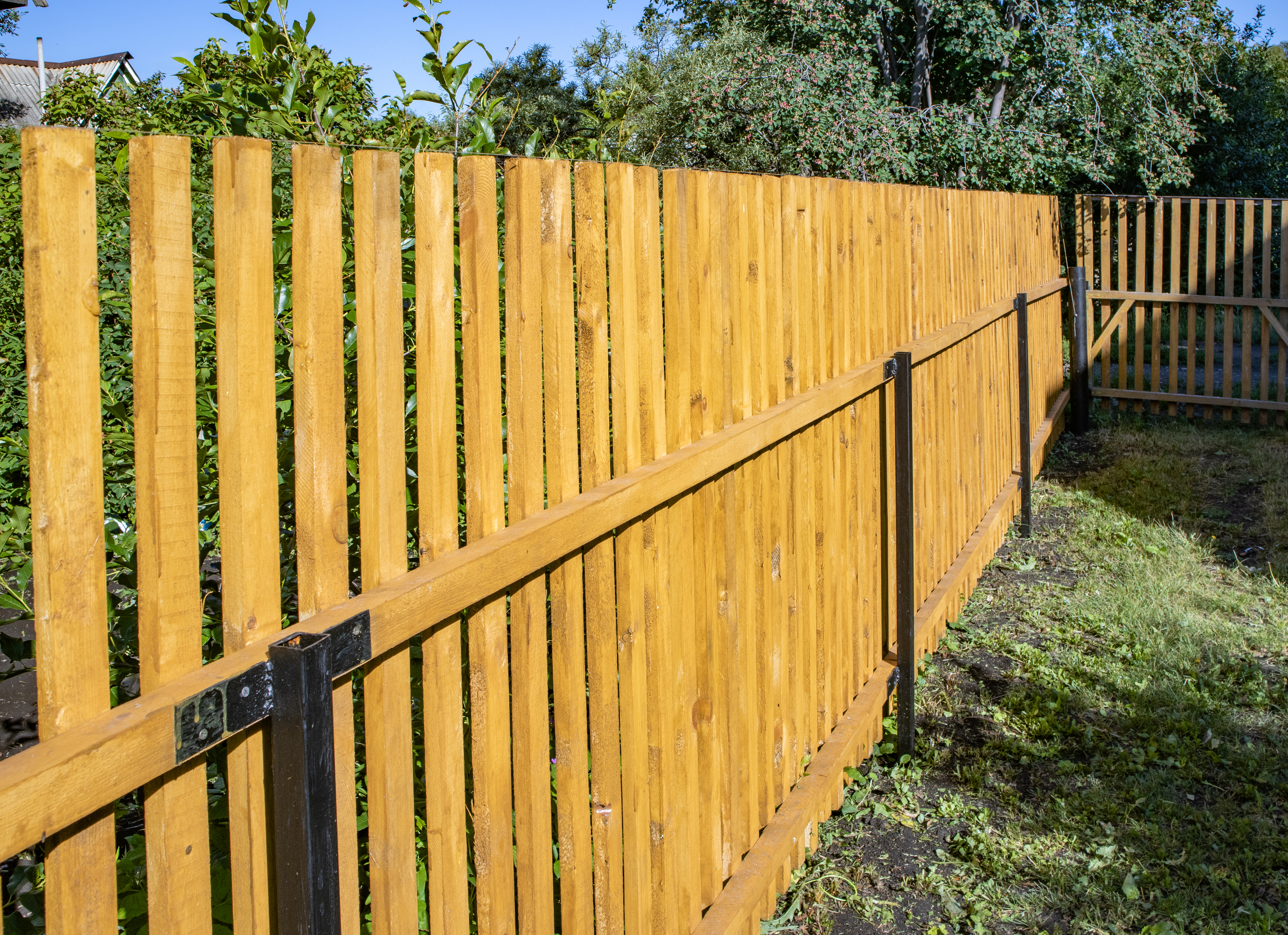
When HOA Rules and Town Fence Regulations Conflict in Suffolk County
The most common conflict homeowners run into is height. A town code might allow a 6-foot privacy fence in the rear yard, but the HOA’s architectural guidelines cap it at 5 feet, or require a specific style that limits effective height. In that situation, the HOA restriction governs — at least for HOA compliance purposes. You can build to the town’s limit and still be in violation of your HOA agreement, which can result in fines, forced modification, or legal action from the association.
The reverse is also possible, though less common. An HOA might permit something the town code doesn’t. In that case, the town code wins. Local zoning law always takes precedence over private HOA rules when it comes to what’s legally permissible on the property.
The practical approach is to get your HOA’s written approval first, then confirm that what they’ve approved is also compliant with the town code. Don’t assume one covers the other. And if you’re not sure whether your neighborhood has an HOA, check your deed or closing documents — it will be disclosed there.
One thing worth noting for Suffolk County homeowners specifically: even in communities without formal HOAs, some older neighborhoods have deed restrictions or restrictive covenants that limit fence height or materials. These are private legal agreements recorded with the property, and they’re separate from both HOA rules and town zoning. If your property has them, they’re enforceable.
Suffolk County Fence Permit Requirements and What Violations Actually Cost You
Whether you need a permit depends on your town, the height of the fence, and sometimes the material. Some Suffolk County towns require permits for any fence; others have thresholds. Brookhaven, for example, generally requires a permit for fences above a certain height, while some towns have broader requirements that apply across the board. The only reliable way to know is to check with your specific town’s building department before you start.
Permit fees for residential fences in Suffolk County typically start around $75 to $100. That’s not a significant cost relative to the overall project. What is significant is what happens when you skip the permit and get caught. Retroactive permit applications — sometimes called as-built permits — often come with double fees. And if the fence was built out of compliance with the current code, you may be required to modify or remove it entirely before a permit will be issued. The cost of that scenario dwarfs whatever you thought you were saving by skipping the process.
There’s also a real estate dimension that homeowners don’t think about until they’re in the middle of a transaction. An unpermitted fence can surface as a problem during a home sale — either flagged during inspection, flagged during title review, or flagged when the buyer’s attorney does due diligence on open permits. It can delay or complicate a closing, and in some cases it becomes a negotiating point that costs the seller money. Suffolk County’s median property value is around $578,400. That’s not the moment you want an unpermitted fence to become someone else’s leverage.
Permit approval timelines across Suffolk County range from a few days to several weeks, depending on the town’s current workload and the complexity of the application. If you’re planning a fence for spring or summer — which is when most Long Island homeowners want their projects done — starting the permit process early is the move. Waiting until April and hoping for a two-day turnaround is a gamble that doesn’t always pay off.
Working With a Contractor Who Knows Suffolk County Fence Regulations
The regulations themselves aren’t the hard part. The hard part is knowing which ones apply to your specific property, in your specific town, on your specific lot — and then navigating the permit process, the HOA approval, and the installation itself without something going sideways.
That’s where local experience actually matters. We’ve been installing fences across Suffolk County for over 15 years and have seen what happens when property lines aren’t verified, when permits are skipped, and when the finished face of a fence ends up pointing the wrong direction in Smithtown. Those aren’t hypothetical mistakes — they’re real projects that had to be redone.
If you’re ready to move forward, or even just trying to figure out what’s realistic for your yard, we offer professional site visits that include property line verification, utility locating, and a full itemized quote. No vague estimates, no surprises.
Summary:
Table of Contents


Article details:
- Published by:
- Published to:
- Last modified:
- October 20, 2026
Share: