Chain Link Fence Installation Cost: What Suffolk County Homeowners Actually Pay
What does chain link fence installation actually cost in Suffolk County? Here’s the honest breakdown — local pricing, permit realities, and what to watch out for.
You searched for chain link fence installation cost because you want a real number — not a range so wide it’s useless, not a sales pitch disguised as information. You want to know what you’re actually looking at before you pick up the phone.
That’s a smart way to start. We’ve been installing fences across Suffolk County for over 15 years, and we’re going to give you the honest breakdown — what chain link costs here, why quotes vary, what the permit situation actually looks like, and what separates a solid installation from one that leans after the first nor’easter.
Chain Link Fence Cost in Suffolk County: What Homeowners Actually Pay
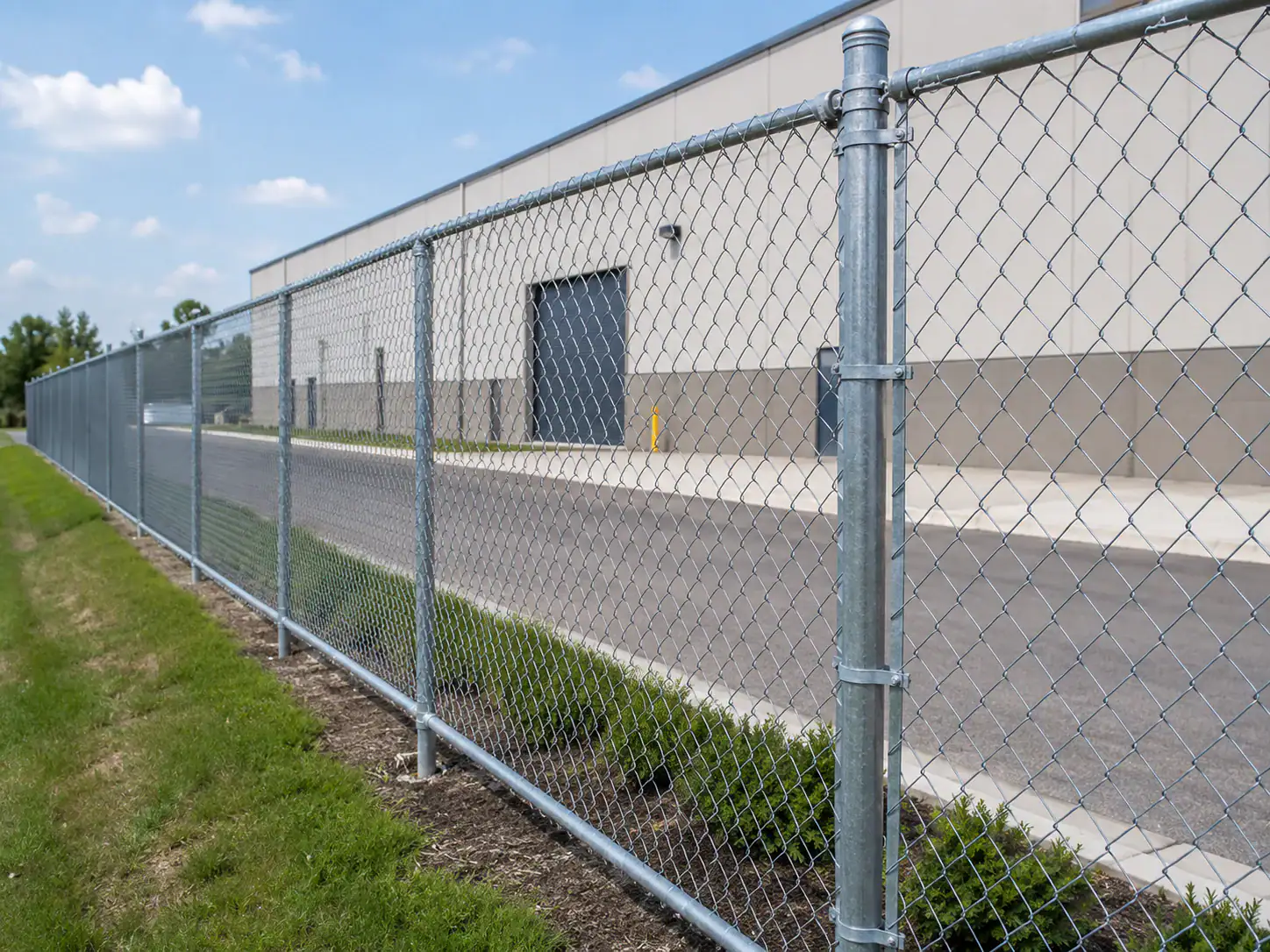
National cost guides will tell you chain link runs anywhere from $8 to $40 per linear foot installed. That range is technically accurate and practically useless. For a standard residential installation in Suffolk County — a 4- to 6-foot fence with proper post setting and galvanized or vinyl-coated fabric — you’re realistically looking at $13 to $22 per linear foot installed.
A typical backyard perimeter of around 150 linear feet will run somewhere between $1,500 and $3,300 for a complete installation. Your specific number depends on fence height, wire gauge, coating type, how many gates you need, and what the ground looks like on your property.
Cost to Install Fence Per Foot: What’s Actually Driving the Price Difference
When two quotes come in at very different numbers, it’s rarely random. The price difference almost always comes down to a handful of specific variables — and understanding them is the difference between comparing apples to apples and just picking the lower number and hoping for the best.
Wire gauge is one of the biggest factors most homeowners don’t think to ask about. Gauge is counterintuitive — a lower number means thicker wire. Nine-gauge wire is significantly more durable than 11.5-gauge, and in a coastal environment like Suffolk County, where salt air off the Great South Bay and Long Island Sound accelerates corrosion, that difference matters over the life of the fence. A quote for 9-gauge galvanized fabric is not the same product as a quote for 11.5-gauge, even if both invoices just say “chain link fence installation.”
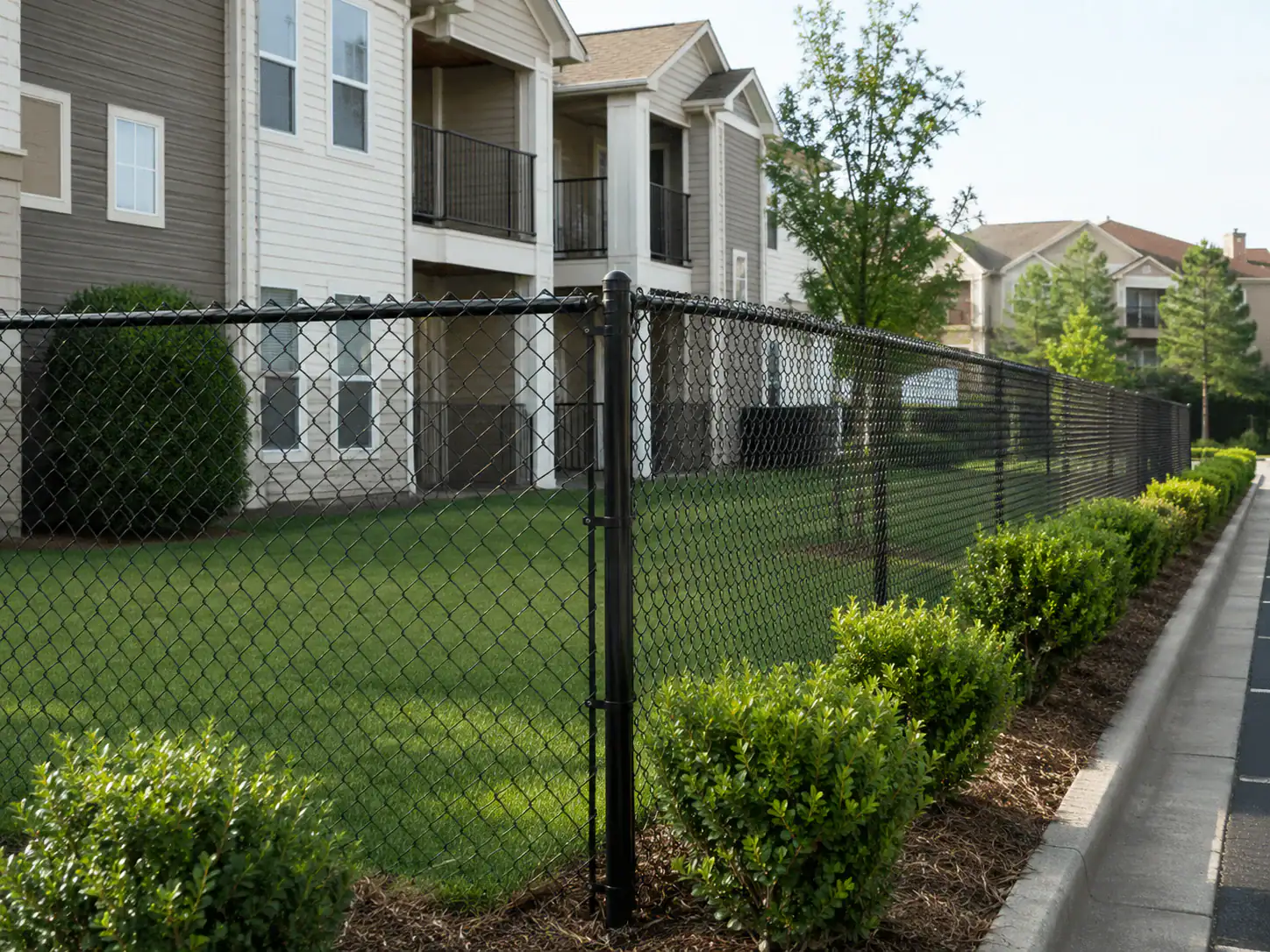
Coating type is the other variable that changes both price and longevity. Standard galvanized chain link is the most affordable option and performs well when properly specified. Vinyl-coated chain link — available in black, green, or brown — costs more in materials but adds a meaningful layer of corrosion resistance. In communities close to the water like Patchogue or Port Jefferson, vinyl-coated fabric is often the smarter long-term call even if it adds to the upfront cost.
Post setting is where quality installations separate from shortcuts. Posts need to be set in concrete at the right depth — generally at least one-third of the total post height below grade, and deeper in freeze-thaw climates like Long Island’s. Posts set too shallow will heave over time or lean after a storm. This isn’t theoretical in Suffolk County; it’s the most common reason homeowners call us after a nor’easter has done what nor’easters do.
Labor makes up roughly half of total chain link fence installation cost. That means the installer you choose is just as important as the materials they’re using. A lower labor quote that reflects shallower posts, faster concrete cure times, or thinner fabric is not a deal — it’s a delayed expense.
Suffolk County Fence Permits: The Hidden Variable Nobody Warns You About
Here’s something most chain link fence cost guides skip entirely: in Suffolk County, you almost certainly need a building permit before your fence goes in the ground. This applies across the major towns — Brookhaven, Islip, Smithtown, Huntington — and the application typically requires a site plan showing where the fence will be located.
Why does this matter for cost? Because an unpermitted fence can mean fines, a required removal order, or a serious complication when you go to sell your home. A buyer’s attorney doing due diligence will find it. That’s not hypothetical — it happens regularly, and it’s an expensive problem to create for yourself by trying to skip a step.
Suffolk County’s permitting landscape is genuinely complicated because there isn’t one building department — there are ten towns, each running their own process with their own height restrictions, setback rules, and application requirements. What’s allowed in a rear yard in Smithtown may differ from what’s allowed in Islip. Front yard height limits vary. Pool enclosure requirements add another layer.
We handle all of this for our customers. When we come out for your free on-site estimate, we walk through the permit requirements for your specific town and property as part of the conversation. You don’t have to figure it out on your own.
If you’re getting quotes from multiple contractors — which you should — ask each one directly: “Will you handle the permit paperwork?” The answer tells you a lot about how experienced they actually are with local code requirements. A contractor who avoids that conversation or tells you permits aren’t necessary for a fence in Suffolk County is not someone you want setting posts on your property.
Want live answers?
Connect with a Best Fence Long Island expert for fast, friendly support.
Chain Link Fence Installation: What the Process Actually Looks Like
Most residential chain link installations take one to three days from start to finish. Day one is typically post setting — digging holes, placing posts, and pouring concrete. The concrete needs time to cure before the fabric is stretched, which is why quality installations don’t try to rush through everything in a single afternoon.
Day two (or sometimes the second half of a longer single day on smaller projects) is fabric installation — unrolling and stretching the chain link mesh, attaching it to the posts and top rail, and installing tension wire at the bottom to keep the fabric from lifting at ground level. Gates go in last and need to be properly aligned to swing and latch correctly.

What to Ask Before You Hire a Chain Link Fence Installer in Suffolk County
Getting three quotes is smart. But quotes are only useful if you know what you’re comparing. Here are the questions that actually matter when you’re evaluating fence contractors in Suffolk County.
Ask for a written, itemized quote — not just a total number. You want to see materials and labor separated, the wire gauge specified, the post size listed, and the coating type noted. If a contractor gives you a single number on a handshake, you have no way to know what you’re actually getting or to compare it against another quote fairly.
Ask whether they’re licensed and insured. In New York, an uninsured contractor working on your property creates personal liability for you if someone gets hurt on the job. This is not a bureaucratic technicality — it’s a real financial risk. A legitimate contractor will have no hesitation confirming this.
Ask about the warranty. There are two types: workmanship warranty (covering how the fence was installed) and material warranty (covering the fence components themselves). Ask what each covers, how long it lasts, and what the process is if something goes wrong. A contractor who can’t answer this clearly is telling you something important.
Ask about permits. As covered above, this question alone is a useful filter for contractor experience and professionalism.
Ask who’s doing the work. Some contractors sub out installations to whoever’s available. When a company uses its own trained, insured staff, you have a clearer line of accountability if anything needs to be addressed after the job is done.
We offer written, itemized quotes on every project — no vague totals, no surprises at invoice time. The price we quote is the price you pay. All of our materials are made in America, every installation comes with a written workmanship warranty, and we carry full licensing and insurance. These aren’t extras — they’re the baseline we hold ourselves to on every job across Suffolk County, from Selden to Riverhead.
Is Chain Link the Right Fence for Your Property — or Is There a Better Fit?
Chain link is the most affordable fencing option available, and for a lot of Suffolk County homeowners, it’s genuinely the right choice. It’s practical, durable when properly installed, and gets the job done for property line definition, dog containment, pool enclosure compliance, and commercial perimeter security.
That said, it’s worth knowing what you’re trading off — and what’s available at the next price tier — so you can make a decision you’re comfortable with rather than one you second-guess later.
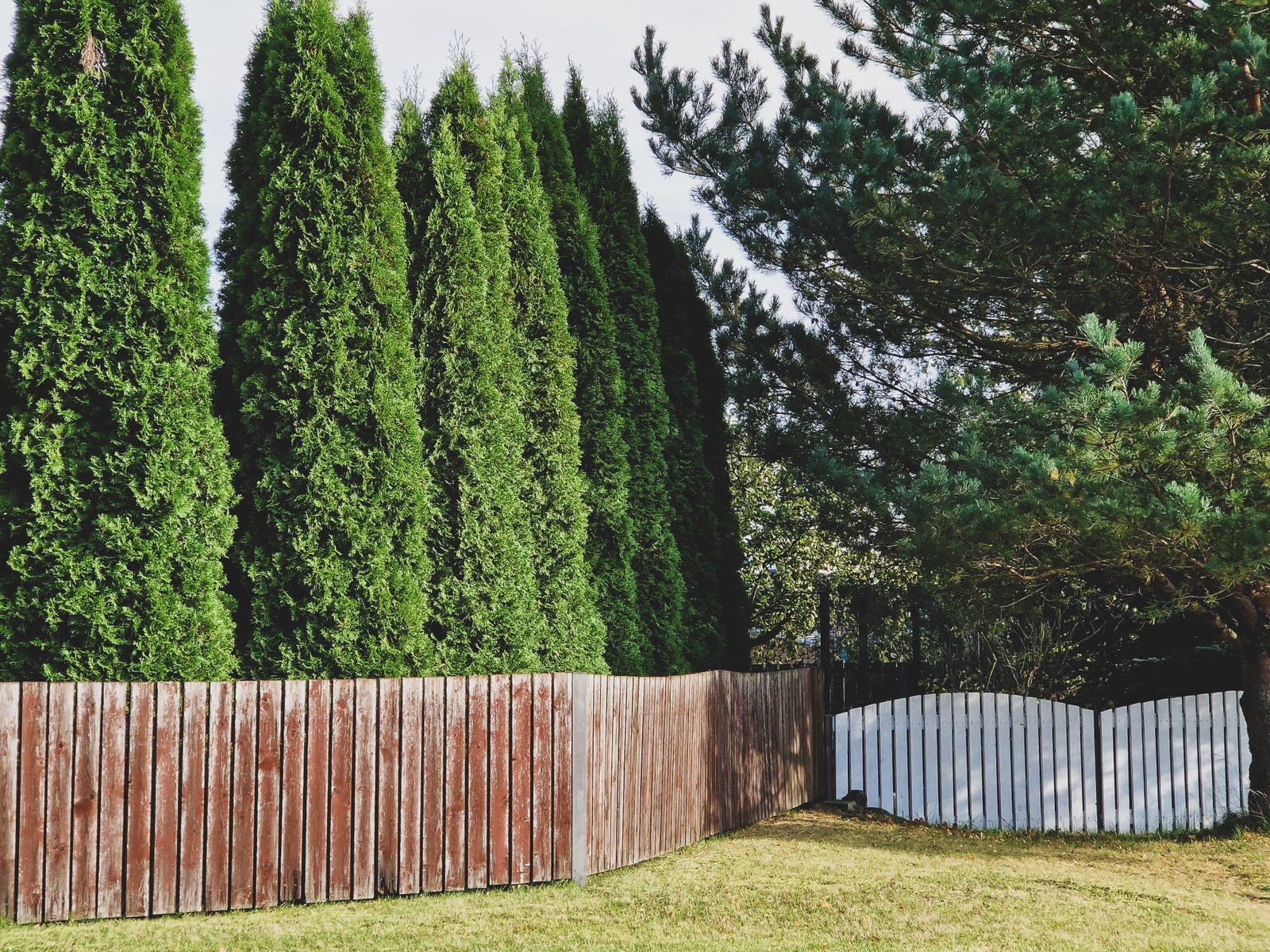
Chain link offers very little privacy on its own. Privacy slats can be threaded through the fabric to add screening, and vinyl-coated chain link in black or dark green reads as more finished than bare galvanized, but it’s still an open weave fence at its core. If privacy is a priority, vinyl (PVC) fencing or wood fencing will serve that goal better.
Aluminum fencing offers a cleaner, more decorative appearance than chain link at a moderate cost increase, and it handles Long Island’s coastal humidity well without rusting. For front yards, pool surrounds where aesthetics matter, or properties where curb appeal is part of the calculus, aluminum is worth a conversation.
Vinyl fencing is at the higher end of the cost range but requires almost no maintenance — no painting, no staining, no rust — and holds up well in Suffolk County’s climate. For homeowners who want to install a fence once and not think about it for decades, vinyl is a compelling option.
We install all of these materials, and our estimates cover whatever direction makes sense for your property and budget. If you come in thinking chain link and leave with a clearer picture of your options, that’s a better outcome for you — and we’d rather you make the right call than just the fast one.
One more thing worth mentioning: if your project involves 100 or more linear feet of fencing, we include a free gate installation. Most residential backyard projects in Suffolk County exceed that threshold. It’s a real benefit on a real project cost — gates add up before labor is even factored in.
Getting a Chain Link Fence Quote in Suffolk County: Next Steps
Chain link fence installation in Suffolk County costs $13 to $22 per linear foot for a standard residential installation — but the number that actually matters is the one on your written, itemized quote from a licensed, insured contractor who has walked your property and accounted for your specific height, material, gate, and permit requirements.
The biggest mistakes homeowners make in this process are choosing on price alone without understanding what the quotes actually include, skipping the permit question entirely, and hiring based on a verbal estimate with no documentation. None of those mistakes are hard to avoid once you know to look for them.
If you’re ready to get a real number for your project — not a ballpark from a national calculator, but an actual quote for your property in Suffolk County — reach out to Best Fence Long Island. We’ll come out, walk the site, answer your questions, and give you a written estimate with no pressure and no hidden fees. That’s how we’ve worked for over 15 years, and it’s not changing.
Summary:
Table of Contents

Article details:
- Published by:
- Published to:
- Last modified:
- October 19, 2026
Share: