
Electric Gate Repair vs Automatic: What’s the Difference?
Your gate stopped working — but do you actually know what type of system you have? The answer changes who you call, what gets fixed, and what it costs.
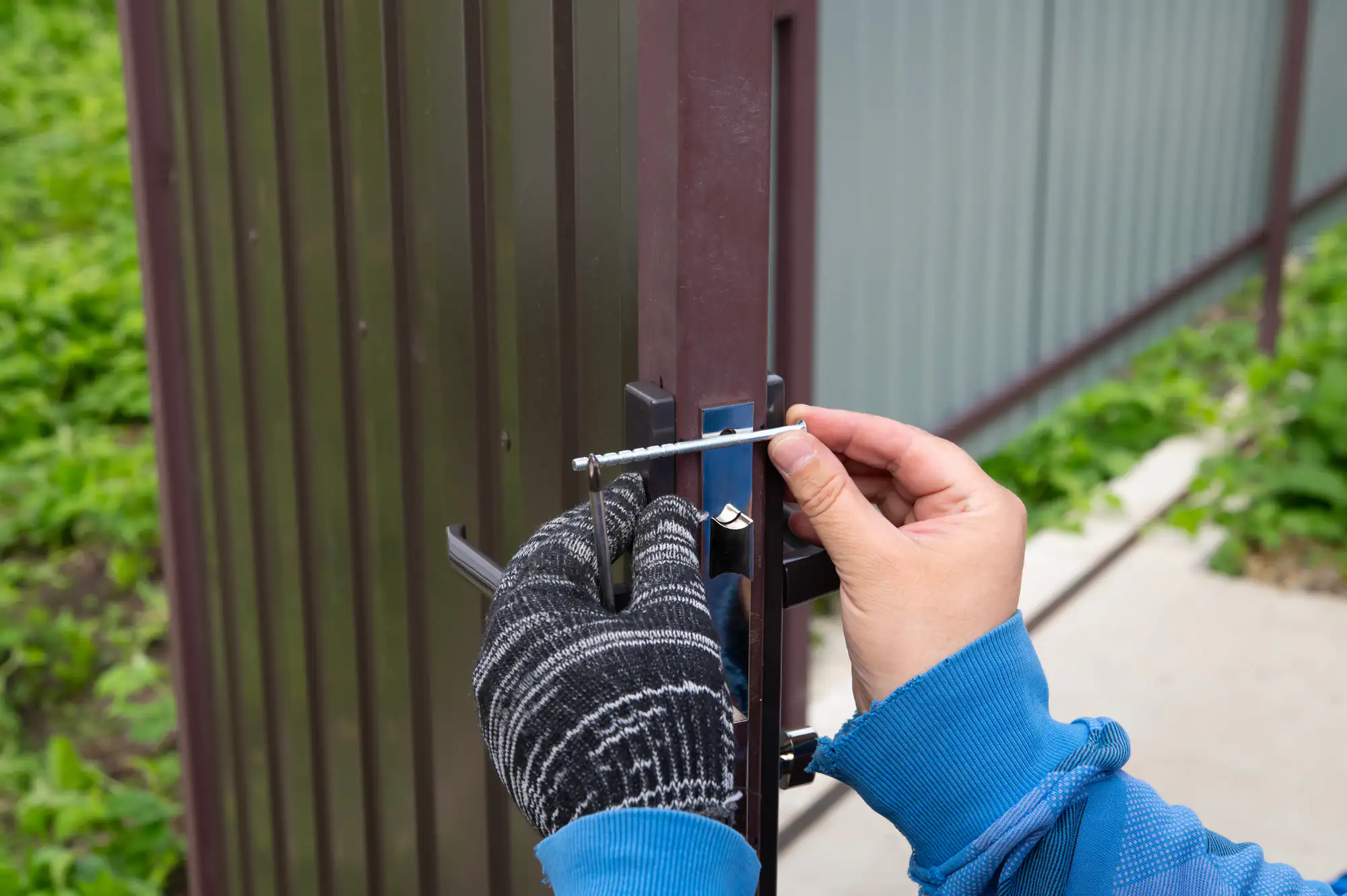
Your gate stopped working. Maybe it won’t open, maybe it’s making a noise it didn’t make last week, or maybe the remote just stopped responding entirely. Whatever the symptom, your first move was probably to search “electric gate repair” — which makes sense. But here’s a question worth asking before you call anyone: do you actually know what kind of gate system you have?
It sounds like a small detail, but it isn’t. The type of system determines what’s likely broken, who’s qualified to fix it, and what the repair is going to cost. Let’s clear that up first, then get into what actually goes wrong and how to handle it.
Electric Gate vs. Automatic Gate: What’s the Actual Difference?
These two terms get used interchangeably all the time, and it creates real confusion when something breaks. Here’s the short version: all automatic gates are electric, but not all electric gates are automatic.
An electric gate uses an electric motor to move the gate — open, close, that’s it. A remote or keypad triggers the motor, and the gate moves. Simple. An automatic gate does all of that and layers in additional technology: safety sensors that detect obstructions, auto-reverse functions, access control systems, and sometimes integration with intercoms or security cameras. The automation layer is what separates the two.
Why does this matter for repair? Because the components involved are completely different. A basic electric gate has a motor and a receiver. A fully automatic system has a motor, a control board, sensors, wiring, and sometimes a backup battery — each of which can fail independently.
What Type of Electric Gate System Do You Actually Have?
Most homeowners don’t know the answer to this until something goes wrong. If you bought your home with the gate already installed, or if the system was put in years ago, it’s worth taking a minute to understand what you’re working with before you call for service.
The two most common residential gate configurations in Suffolk County are swing gates and sliding gates. Swing gates open inward or outward on hinges, similar to a door. They’re common on properties with enough clearance in front of the driveway. Sliding gates roll along a track parallel to the fence line — you’ll typically see these on properties where there isn’t room for a swing gate to open freely, or on commercial properties that need a more industrial-grade solution.
Both swing and sliding gates can be either basic electric or fully automatic depending on the operator installed. The operator is the motor unit — it’s usually mounted near the gate post or along the track, and it’s the first thing our technicians look at when diagnosing a problem.
If your gate has a single remote and nothing else — no sensors, no intercom, no auto-reverse — you likely have a basic electric system. If your gate stops automatically when something’s in the way, or if it’s connected to a keypad, intercom, or access control panel, you have a more fully automated system. That distinction is going to shape every conversation you have with a gate contractor.
Long Island’s soil conditions play a role here that most homeowners don’t anticipate. Much of Suffolk County sits on sandy glacial soil, which shifts more than clay-heavy ground. That movement stresses gate posts over time, which throws off alignment and puts strain on the motor — especially after a hard winter. If your gate has been sluggish or grinding before it finally stopped working, soil shift may be part of the story.
The Most Common Reasons an Electric Gate Stops Working
Before you assume the worst, it’s worth knowing that a significant portion of gate service calls turn out to be something straightforward — a tripped breaker, a dead battery in the remote, or a sensor that got knocked out of alignment by a branch or a delivery truck. You’d be surprised how often a gate that “stopped working” just needs a reset or a fresh battery to get moving again.
Motor failure is one of the most common reasons a powered gate stops functioning entirely. Motors wear out over time, especially if the gate has been operating on a misaligned track or if the system has been running without regular maintenance. In Suffolk County, the freeze-thaw cycles from late fall through early spring are hard on gate hardware — ground movement shifts posts, which forces the motor to work harder than it should, which shortens its lifespan.
Control board failure is another common culprit, particularly in systems that have taken a power surge. Long Island sees its share of nor’easters and tropical storm remnants, and the power fluctuations that come with those events can fry the electronics in an automatic gate system even if the motor itself is fine. If your gate was working before a storm and stopped after, the control board is worth checking early in the diagnostic process.
Sensor issues are a frequent problem in automatic systems specifically. If your gate starts to open and then immediately reverses, or refuses to close all the way, a sensor is often reading a false obstruction. Sensors can be thrown off by dirt buildup, physical damage, or simple misalignment — none of which require a new gate, but all of which require someone who knows what they’re looking at.
Wiring problems, hinge wear, and track damage round out the most common issues. The important thing to understand is that diagnosing the real cause of the failure — not just the most visible symptom — is what separates a permanent fix from a repair that fails again in three months.
Want live answers?
Connect with a Best Fence Long Island expert for fast, friendly support.
Automatic Gate Repair: When to Fix It and When to Replace It
This is the question most homeowners are actually asking when they start searching for repair information. The repair-vs.-replace decision isn’t always obvious, and most contractor content skips it entirely and jumps straight to a service call.
The honest answer is that repair makes sense in most cases — especially if the system is under ten years old, the motor is intact, and the failure is isolated to a specific component. Replacement starts to make more financial sense when the system is older, has failed repeatedly, or when the cost of the repair approaches what a new system would run.
For context: automatic gate repair typically runs between $550 and $1,500 depending on the component and the scope of work. A full automatic driveway gate installation averages around $3,160, with a range of $2,500 to $5,000. If you’re looking at a $1,200 repair on a fifteen-year-old system with corroded hardware and a worn motor, replacement may be the smarter call.
What We Actually Do During an Electric Gate Repair
We don’t just swap out the most obvious broken part and call it done. Our repair process starts with a real diagnosis — checking the power supply, testing the motor, inspecting the control board, examining the sensors, and looking at the physical condition of the hinges, track, and gate post. The goal is to find the root cause of the failure, not just the symptom.
Once the problem is identified, we explain clearly what failed, why it failed, and what the repair involves. If a motor burned out because the gate was running misaligned, replacing the motor without addressing the alignment means you’ll be calling for service again in six months. A good repair fixes both.
Parts quality matters here too. Not all replacement components are created equal, and in a market where steel and aluminum hardware prices rose 15 to 18 percent in 2024, some contractors are sourcing cheaper imported parts to protect their margins. We use American-made materials — that applies to gate components the same way it applies to fencing. It’s not a small thing when you’re talking about hardware that’s exposed to salt air, freeze-thaw cycles, and everything else Long Island weather throws at it year-round.
We back our work with a written workmanship warranty that covers both labor and materials. If something we repaired fails, we come back and make it right. It’s documented, not a verbal promise.
If your repair involves adding automation to a previously manual gate, running new electrical wiring, or replacing posts, that work may require a permit from your town’s building department. Suffolk County’s 10-town structure means the process varies — what Smithtown requires is different from what Islip or Brookhaven requires. We handle the permit paperwork, so you don’t have to figure that out on your own.
How to Choose the Right Gate Contractor in Suffolk County
There’s no shortage of options when you search for gate repair on Long Island, and the quality varies significantly. Here’s what actually matters when you’re deciding who to call.
Licensing and insurance are non-negotiable. In New York, hardwired electrical work requires a licensed electrician, and any contractor working on your property should carry liability insurance. If something goes wrong during a repair and the contractor isn’t insured, that liability can fall back on you as the homeowner. Suffolk County Consumer Affairs can verify contractor licensing — it’s worth a quick check before you commit.
Experience with your specific type of system matters more than a contractor’s general reputation. Swing gates, sliding gates, and barrier arm systems all have different mechanics and failure modes. A contractor who primarily installs wood fences isn’t necessarily qualified to diagnose a control board issue on an automated sliding gate. Ask directly whether they’ve worked on your type of system before.
Pricing transparency is one of the clearest signals of a trustworthy contractor. The most common complaint in the gate and fence repair space is a quote that changes once the work is underway — extra charges for parts, labor, after-hours fees that weren’t mentioned upfront. We give every customer a free on-site estimate with an itemized written quote, and the price we quote is the price you pay. No surprises on the final invoice.
Response time matters too, especially when a stuck gate is blocking access to your property. A gate that won’t open isn’t a cosmetic problem — it’s an immediate access issue. We’re available 24/7 for exactly that reason. Whether your gate failed on a Tuesday afternoon or a Saturday night after a storm rolls through, we can get to you.
We’ve been doing this work in Suffolk County for over 15 years, operating out of Centereach and serving the full county — from Smithtown and Port Jefferson on the north shore to Patchogue and Riverhead further east. We know the local permit offices, the soil conditions, and the specific ways Long Island weather stresses gate hardware. That local knowledge is part of what we bring to every job.
Electric Gate Not Working? Here’s What to Do Next
If your gate has stopped working, the first step is figuring out what you actually have — basic electric system or fully automatic — because that shapes everything that follows. Most gate failures come down to a handful of components: the motor, the control board, the sensors, or the wiring. A real diagnosis identifies the root cause, not just the most visible symptom.
Repair makes sense in most situations, especially on newer systems or when the failure is isolated. Replacement becomes the smarter call when the system is aging, has failed repeatedly, or when the repair cost approaches what a new installation would run. Either way, you deserve a straight answer before any work begins — not a vague quote that changes once someone’s on your property.
If you’re in Suffolk County and dealing with a gate that won’t cooperate, Best Fence Long Island is the local team to call. We’ll come out, take a look, and give you an honest assessment — in writing, with no hidden fees attached.
Summary:
Table of Contents


Article details:
- Published by:
- Published to:
- Last modified:
- October 19, 2026
Share: