
Gate Installation on Long Island: Types, Costs & Permits
Everything Suffolk County homeowners need to know about gate installation — types, costs, permits, and how to avoid the most common mistakes.
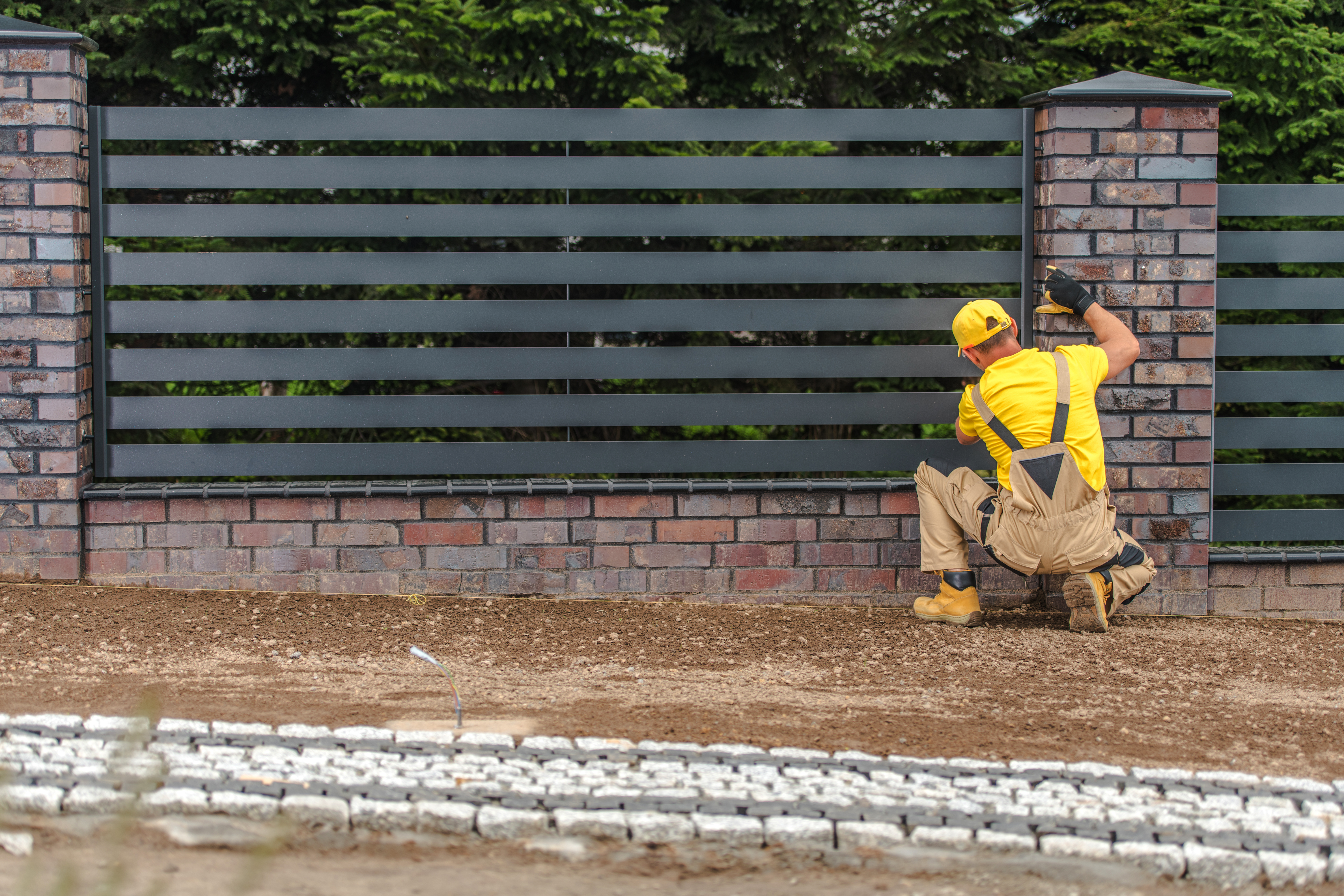
Most people start thinking about a gate when something forces the issue — a new pool, a dog that keeps escaping, a security concern, or a fence project that just makes sense to complete. Whatever brought you here, the questions are usually the same: What’s this going to cost? Do I need a permit? What kind of gate actually holds up on Long Island? And how do I find someone who won’t disappear after the deposit clears?
We’ve been installing gates across Suffolk County for over 15 years. This guide gives you the straight answers — no fluff, no upsell. Just what you need to make a good decision.
Types of Metal Gates: What Actually Works on Long Island
When most people picture a gate, they picture metal — and for good reason. Metal gates are durable, low-maintenance, and handle Long Island’s weather far better than wood over the long run. But “metal gate” covers a lot of ground, and the differences between your options matter more than most contractors bother to explain.
The three main categories are wrought iron, steel, and aluminum. Each has a different cost point, maintenance requirement, and suitability for coastal conditions. Getting this choice right upfront saves you from replacing hardware or repainting every few years.
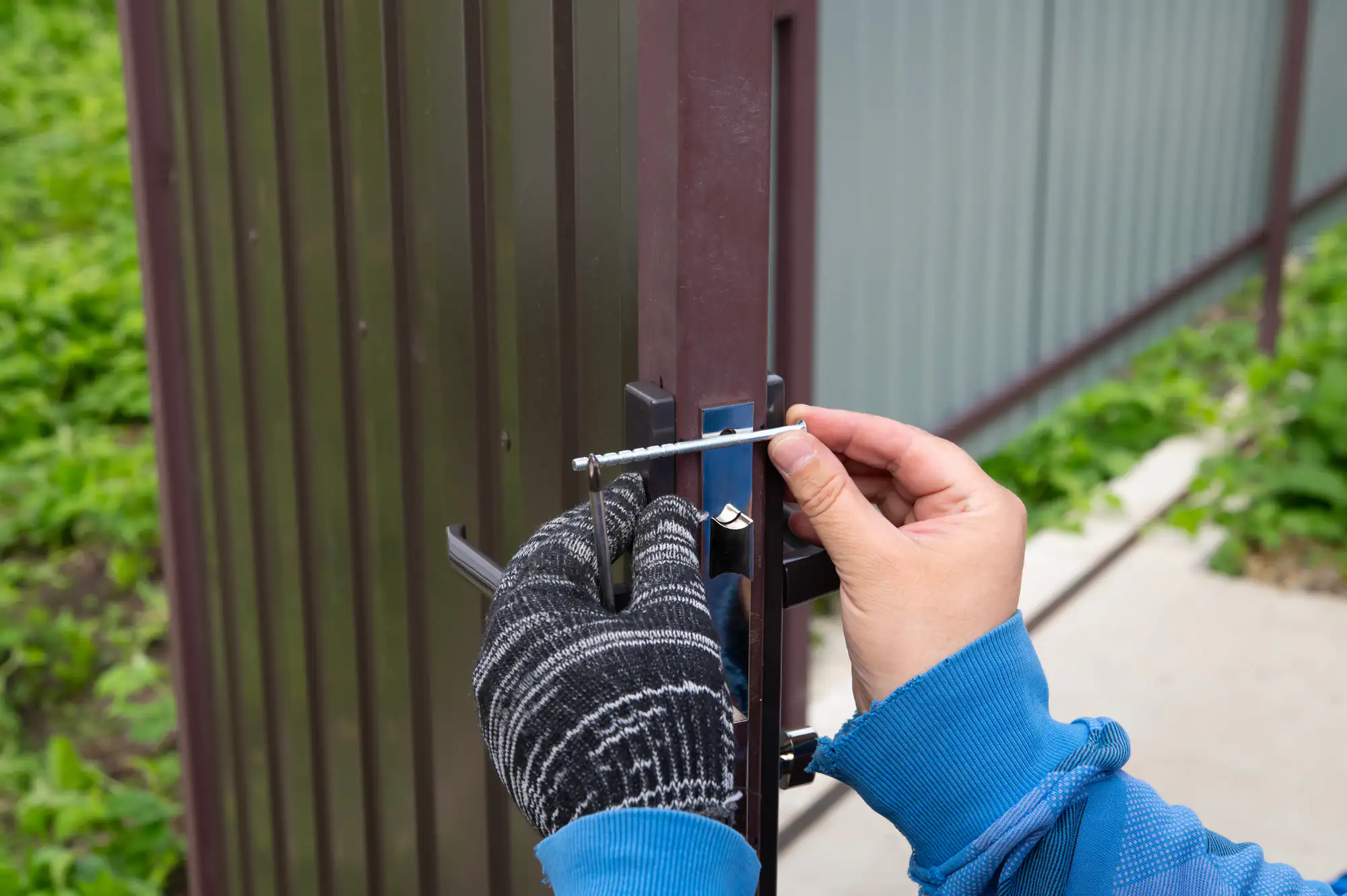
Types of Aluminum Fencing and Gates: The Best Fit for Most Suffolk County Properties
Aluminum is the material we recommend most often for residential gate installations in Suffolk County, and the reason is straightforward: it doesn’t rust. That matters here. A significant portion of our service area — from Port Jefferson down through Patchogue and out toward Riverhead — sits within a few miles of the Long Island Sound, the Great South Bay, or the Atlantic. Salt air is real, and it eats through unprotected steel hardware faster than most homeowners expect.
Aluminum oxidizes when exposed to the elements, but unlike iron or steel, that oxidation forms a protective layer rather than a destructive one. You’re not repainting it every few years. You’re not watching it pit and flake. It holds its finish, holds its shape, and holds up to the freeze-thaw cycles that crack concrete footings and stress gate posts every winter.
In terms of styles, aluminum gates come in several profiles. Flat-top panels have a clean, modern look that works well on contemporary homes. Spear-top or finial-top styles give you that classic ornamental look without the weight and maintenance of true wrought iron. Double-rail designs are common for pool enclosures and side yard access. If you have dogs or small children, a puppy-picket or close-spaced picket option keeps the gaps narrow enough to matter.
Aluminum also comes in residential, commercial, and industrial grades — which refers to the wall thickness of the pickets and rails, not just the aesthetic. A residential-grade aluminum gate is fine for a backyard entry. A commercial-grade gate on a property that sees vehicle traffic or heavy daily use needs heavier stock. We’ll tell you which one your situation actually calls for, not just quote you the cheapest option.
One combination we install fairly often is a black aluminum fence with wood posts. It’s a popular aesthetic choice — the warmth of the wood framing offsets the clean lines of the aluminum — and it works well when the surrounding fence is wood. The practical note: the wood posts need to be properly sealed and set in concrete, because they’re doing the structural work. If the posts aren’t set correctly in Suffolk County’s sandy soil, the gate will shift. That’s true of any gate, but it’s especially noticeable when the gate itself is rigid aluminum.
Different Types of Metal Fencing Beyond Aluminum: Wrought Iron, Steel, and Chain Link
Wrought iron is the original ornamental fencing material, and it still has a place — particularly on older homes, historic properties, or anywhere the aesthetic specifically calls for it. The trade-off is maintenance. Wrought iron rusts, and in a coastal environment like Long Island, that process is accelerated. A properly maintained wrought iron gate is beautiful, but “properly maintained” means periodic sanding, priming, and repainting. If that’s not something you’re going to keep up with, aluminum gives you a nearly identical look without the upkeep.
Steel gates occupy the space between wrought iron and aluminum in terms of cost and durability. Galvanized or powder-coated steel holds up reasonably well, but it’s heavier than aluminum, which affects the gate operator requirements if you’re adding automation. Heavier gates need more powerful motors, which adds to the installation cost. For most residential applications, aluminum hits the better balance of strength, weight, and longevity.
Chain link gates are the practical workaround when budget is the primary concern or when the application is purely functional — a side yard, a utility area, a commercial property perimeter. They’re not going to win any aesthetic awards, but they’re durable, low-cost, and straightforward to install. Chain link gate costs run from $180 to $1,000 for a manual gate, and $730 to $5,500 for an automatic version, depending on size and the gate operator you choose. For commercial properties, chain link with a slide gate is often the most practical solution for vehicle access.
The broader point with metal fencing — whether aluminum, steel, or chain link — is that the hardware matters as much as the gate panels themselves. Hinges, latches, and posts need to be rust-resistant regardless of what the panels are made from. We use rust-resistant hardware on every installation, because a gate panel that lasts 20 years attached to hinges that fail in five is a waste of everyone’s time.
Want live answers?
Connect with a Best Fence Long Island expert for fast, friendly support.
PVC Gate and Vinyl Gate Installation Cost: What to Expect
Vinyl and PVC gates get overlooked more than they should. The perception is that they’re flimsy or cheap-looking, but modern PVC gates are engineered to hold their shape, resist UV fading, and handle temperature swings without cracking. They don’t rust, they don’t rot, and they don’t need painting — ever. For homeowners who want a low-maintenance privacy fence with a matching gate, vinyl is genuinely one of the better options.
Cost-wise, vinyl gate installation runs from $200 to $1,100 for a manual gate and $750 to $5,600 for an automatic gate, depending on size, style, and the gate operator system. The spread is wide because a simple single-panel pedestrian gate is a very different project from a double-swing driveway gate with an automated opener, keypad, and intercom.

Automatic Gate Repair in Suffolk County: When Your Gate Stops Working
Automatic gates fail. It’s not a question of if — it’s a question of when, and whether your contractor picks up the phone when it happens. The most common failure points are the gate motor, the limit switches that tell the gate when to stop opening or closing, the photo-eye sensors that prevent the gate from closing on a vehicle or person, and the control board that ties it all together.
In Suffolk County, cold weather is a significant factor. January and February are hard on gate operators. Motors that are undersized for the gate’s weight struggle in low temperatures. Lubricant in the mechanical components thickens. If the gate was installed without proper weatherproofing on the control box, moisture intrusion can short out the board. These aren’t unusual problems — they’re the predictable result of a Long Island winter on a system that wasn’t installed with the local climate in mind.
When an automatic gate stops working, the first question is whether it’s a mechanical failure, an electrical failure, or a programming issue. A gate that won’t move at all is often a power or control board problem. A gate that moves but won’t latch or stop at the right position is usually a limit switch or sensor issue. A gate that’s physically stuck — binding on the track, or a swing gate that’s dropped and dragging — is a hardware or structural problem that no amount of reprogramming will fix.
We handle automatic gate repair across Suffolk County and we’re available 24/7, because a gate that won’t close at midnight is an emergency, not a problem that can wait until Monday morning. If you have a commercial property where a non-functioning gate is a security or liability issue, that matters even more. When you call, we’ll ask the right questions to diagnose the problem before we show up — so we’re not making multiple trips when one should do it.
Electric Gate Repair vs. Replacement: How to Know Which One You Actually Need
The question we get asked most often on a repair call is some version of: “Is it worth fixing, or should I just replace the whole thing?” It’s a fair question, and the honest answer depends on a few factors — the age of the system, the condition of the gate structure itself, and what the repair actually costs relative to a new installation.
A gate operator that’s 10 to 15 years old and has had multiple repairs is probably near the end of its useful life. Parts availability becomes an issue for older systems, and even if you fix the current problem, something else is likely to fail within a year or two. In that situation, replacing the operator — and potentially the gate — often makes more financial sense than patching a system that’s going to keep breaking down.
On the other hand, if the gate itself is structurally sound and the operator is relatively new, a targeted repair is almost always the right call. A failed control board, a worn motor, or a damaged sensor are all components that can be replaced without touching the rest of the system. The gate doesn’t need to come down. The posts don’t need to be reset. You’re fixing the specific part that failed, not starting over.
The one thing that changes the calculation is structural damage to the gate or posts. If the gate has been hit by a vehicle, if the posts have shifted in the ground, or if the frame has bent or corroded to the point where it’s affecting how the gate operates, you’re looking at a more involved repair that starts to approach replacement cost anyway. In those cases, it usually makes more sense to reset the posts properly, install a new gate, and put a new operator on it — rather than spending money repairing a gate that’s already compromised.
As an electric gate company serving all of Suffolk County, we’ll give you a straight assessment. If the repair makes sense, we’ll tell you. If it doesn’t, we’ll tell you that too — with the numbers to back it up.
How to Choose a Gate Installation Company in Suffolk County
The practical checklist is short: make sure they’re licensed and insured, get a written itemized quote, ask specifically what the warranty covers and for how long, and confirm they handle the permit paperwork for your town. In Suffolk County, that last point matters more than it does in most markets. With ten separate towns — each running its own building department, its own application process, and its own height and setback requirements — the permit piece alone is enough to derail a project if your gate contractor doesn’t know the local rules.
Beyond the paperwork, ask how long the installation will take and what happens if something goes wrong after the job is done. A contractor who gives vague answers to either question is telling you something.
We’re Best Fence Long Island, based in Centereach and serving all of Suffolk County. We handle permits, back our work with a written workmanship warranty, and we’re available when you need us — including when your gate fails at an inconvenient hour. If you’re ready to talk through your project, reach out and we’ll set up a free on-site estimate with a written, itemized quote. No vague totals. No surprises on the final invoice.
Summary:
Table of Contents


Article details:
- Published by:
- Published to:
- Last modified:
- October 19, 2026
Share: