HOA Fence Rules in Suffolk County: What You Can Actually Build
If you live in an HOA community in Suffolk County, there’s more to installing a fence than picking a style. Here’s what you actually need to know.

You’ve decided you want a fence. Maybe it’s for privacy, maybe it’s for a dog, maybe you just moved into a new subdivision and you’re finally ready to do it. But then you remember — you’re in an HOA. And suddenly a straightforward home improvement project starts to feel like a bureaucratic maze.
That’s not an exaggeration. In Suffolk County, homeowners in HOA communities face a layered approval process that trips people up constantly. We’ve seen it happen dozens of times: someone gets excited, calls a contractor, and three weeks later they’re dealing with a stop-work order or a violation notice.
This guide walks you through what HOA fence rules typically cover, what the approval process actually looks like, and why a town building permit is a completely separate requirement that you still need — even after your HOA says yes.
Understanding HOA Fence Rules: What They Actually Cover
HOA fence rules exist to keep a neighborhood looking consistent. That might sound like a minor concern, but the rules that flow from that goal can affect nearly every decision you make about your fence — the height, the material, the color, the style, and even which direction the finished side faces.
Most HOAs draw their authority from a document called the CC&Rs — Covenants, Conditions, and Restrictions. This is the governing document your HOA enforces, and it’s where fence rules live. Before you pick a material or call a contractor, the CC&Rs are the first thing worth reading. If you can’t find them, your HOA management company or property management office should have a copy.
What you’ll typically find is that HOAs limit backyard fences to six feet, restrict front yard fences to three or four feet, and specify which materials are acceptable. Many communities also have rules about color, post visibility, and whether the “good side” of the fence must face outward toward your neighbors and the street. These aren’t suggestions — they’re enforceable, and violations can result in fines that compound daily until the issue is resolved.

HOA Fence Material Restrictions: Which Fences Get Approved and Which Don’t
Material restrictions are where a lot of homeowners get surprised. You might have your heart set on a chain-link fence for the backyard — practical, affordable, low maintenance. But in most HOA communities across Suffolk County, chain link is either prohibited outright or restricted to rear yards only, out of sight from the street. It’s one of the most commonly rejected materials.
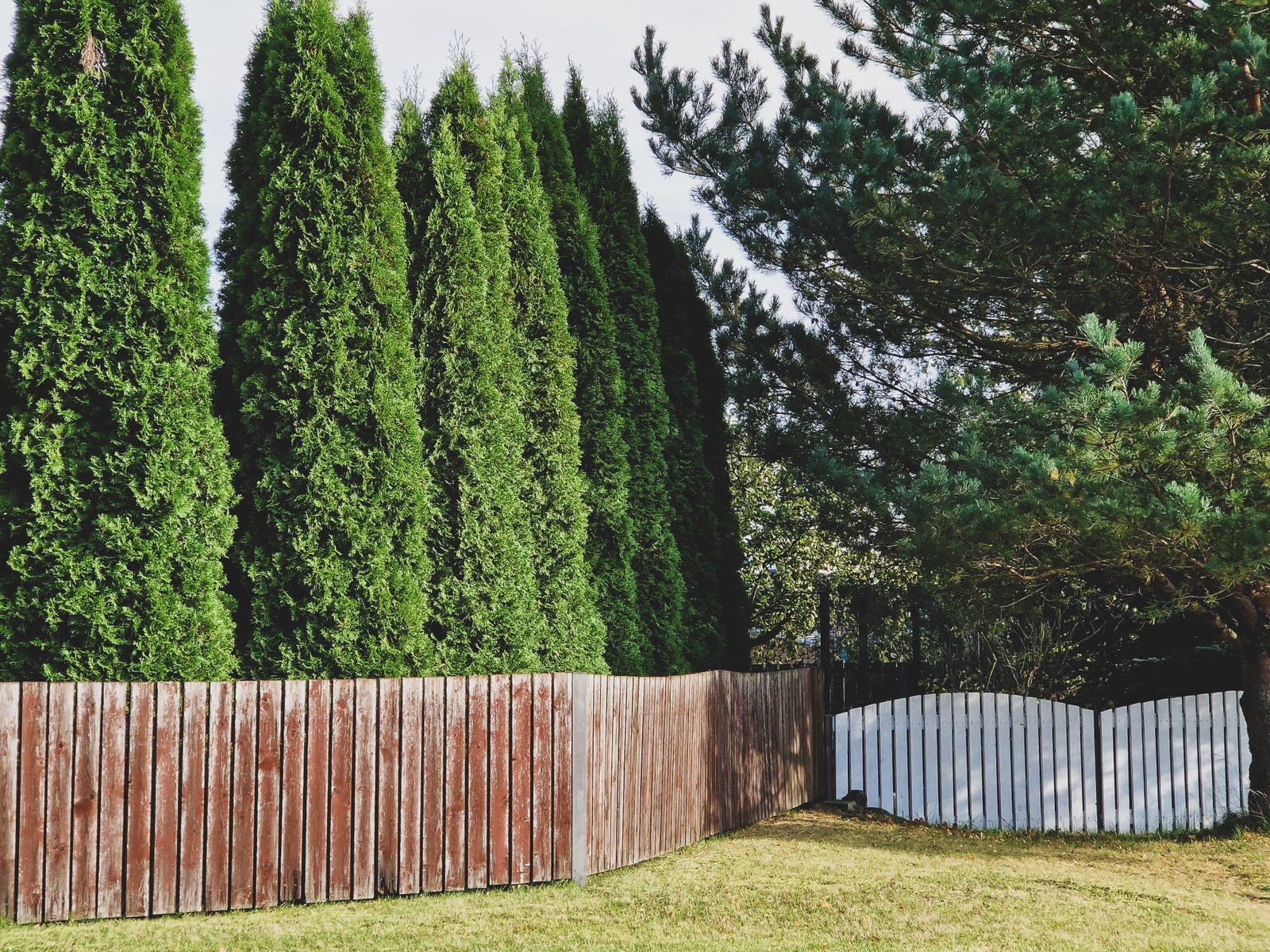
The materials that tend to sail through HOA approval are vinyl, wood, aluminum, and ornamental iron or steel. Of those, vinyl has become the dominant choice in Suffolk County for a reason that goes beyond aesthetics. Long Island’s coastal climate is genuinely hard on fencing. Salt air accelerates rust on metal. Wood absorbs moisture, warps, and eventually rots — especially in the sandy soil conditions common across Brookhaven, Islip, and other towns throughout the county. Vinyl doesn’t have those problems. It holds its color, it doesn’t need painting or staining, and it looks the same from both sides, which matters when your HOA has a “good side out” requirement.
From a compliance standpoint, vinyl is also the lowest-risk choice over time. HOAs don’t just approve your fence once — they can cite you for maintenance violations years down the road if your fence starts to look worn or deteriorated. A wood fence that was perfectly acceptable when installed can become a violation issue after a few Long Island winters. Vinyl sidesteps that problem almost entirely, which is part of why HOA architectural review boards tend to approve it without much pushback.
That said, every HOA is different. Some communities in the Hamptons or North Fork have stricter aesthetic standards and may require specific styles or colors that blend with the neighborhood. Some require that fence posts not be visible from the street. A few prohibit vinyl and require wood for a more traditional look. The only way to know for certain is to check your specific CC&Rs and, if anything is unclear, submit a question to your Architectural Review Committee in writing before you do anything else.
Barbed wire, razor wire, and electric fencing are prohibited in residential zones across virtually every municipality in New York State — HOA or not.
HOA Fence Height Limits in Suffolk County: What the Rules Actually Allow
Height is the most commonly asked-about restriction, and the answer is more complicated than most homeowners expect — because in Suffolk County, you’re not just answering to your HOA. You’re also subject to your town’s zoning code, and the two don’t always agree.
As a general rule across Long Island, fence height limits run something like this: four feet in the front yard, five feet on the sides, and six feet in the back. But that’s not universal. The Town of Islip — which covers communities like Ronkonkoma, Bay Shore, East Islip, West Islip, and Bohemia — allows solid fences up to six feet, with open or chain-link styles permitted up to eight feet. The Town of Southampton requires a building permit for any fence over four feet and prohibits fences over six feet entirely. Brookhaven has its own set of rules that apply across the dozens of hamlets it covers.
Here’s the part that catches people off guard: if your HOA allows a six-foot fence but your town limits you to five feet in that location, you’re limited to five feet. The more restrictive rule always wins. The reverse is also true — a town permit doesn’t override your HOA. Both have to be satisfied independently, and they’re completely separate processes.
This dual-compliance problem is the source of a lot of expensive mistakes in Suffolk County. A homeowner gets HOA approval, assumes they’re clear to build, skips the town permit, and ends up with a stop-work order or a forced removal. Or they pull the permit without checking the CC&Rs first and build something their HOA rejects. Either way, the homeowner pays twice.
The practical takeaway: check your CC&Rs for HOA height limits, check your town’s zoning code for municipal height limits, and then build to whichever number is lower. If you’re not sure which town you’re in — and in Suffolk County, with its 10 independent towns and 33 incorporated villages, that’s a legitimate question — your property tax bill or the Suffolk County GIS map will tell you.
Want live answers?
Connect with a Best Fence Long Island expert for fast, friendly support.
HOA Fence Approval Process: How It Works in Suffolk County
Getting HOA approval for a fence isn’t a quick phone call. Most communities require a formal written application submitted to the Architectural Review Committee — sometimes called the ARC or ARB — and review cycles typically run two to six weeks. Some boards meet monthly, which means if you miss a submission deadline, you’re waiting another month.
The application usually asks for a site plan showing where the fence will be placed, a description of the material and style, the proposed height, and sometimes a photo or product specification sheet. The more complete your submission, the faster it tends to move. A vague request with no supporting documentation is an easy thing for an ARC to table until the next meeting.
Once the ARC approves your application, you get written confirmation — and that written confirmation is the only approval that counts. Verbal approval from a board member or a neighbor on the committee means nothing legally. Get it in writing before you do anything else.

Do You Need a Town Permit After HOA Approval? Yes — Here’s Why
This is the question most homeowners don’t think to ask until it’s too late. HOA approval and a town building permit are two entirely separate things. One does not substitute for the other, and you need both before installation begins.
In Suffolk County, most towns require a building permit for fences over a certain height — often four feet. The permit application goes to your town’s building department, not your HOA. Brookhaven, Islip, Smithtown, Riverhead, Southampton — each has its own building department, its own application process, its own fees, and its own processing timeline. Some towns turn permits around in a week or two. Others can take three to four weeks, especially during peak season in spring and summer when the building departments are backed up.
If you’re doing the math, that’s potentially two to six weeks for HOA review and another one to four weeks for the town permit — before installation even begins. A homeowner who starts this process in late April hoping for a Memorial Day fence is almost certainly going to be disappointed. Planning ahead isn’t just a good idea; it’s the only way to hit your target date.
The consequences of skipping the permit aren’t abstract. Building departments in Suffolk County do conduct inspections, and unpermitted fences can result in stop-work orders, fines, and mandatory removal at the homeowner’s expense. If you sell your house, an unpermitted fence can complicate the closing process significantly. It’s not worth the shortcut.
We handle permit paperwork for Suffolk County towns as part of our service. That means when you work with Best Fence Long Island, you’re not navigating the Brookhaven or Islip building department on your own — we’ve done it before, we know what each town requires, and we take that piece off your plate. It’s one of the more practical things we offer, and it’s something a lot of homeowners don’t realize is even possible until they’re already knee-deep in the process.
What Happens If You Skip HOA Approval and Build Anyway?
Some homeowners decide to roll the dice. They figure the HOA won’t notice, or they assume forgiveness is easier than permission. It’s worth being direct about how that usually plays out.
HOA violations for unapproved fences commonly result in fines that exceed $500 — and in many communities, those fines compound every day the violation remains unresolved. That means a fence you installed in May can have generated thousands of dollars in fines by the time you deal with it in August. Beyond the fines, HOAs have real enforcement tools: they can restrict your access to common areas, suspend your voting rights, and in some cases place a lien against your property for unpaid fines. A lien doesn’t go away quietly — it shows up when you try to refinance or sell.
The most painful outcome is forced removal. If your HOA determines the fence doesn’t comply with the CC&Rs and you refuse to bring it into compliance, they can pursue legal action to have it removed. At that point, you’ve paid to install a fence and paid to remove it, and you still don’t have a fence. That’s not a hypothetical — it happens, and it happens in Suffolk County.
The smarter path is straightforward: read your CC&Rs, submit your ARC application with complete documentation, get written approval, pull your town permit, and then build. The process takes longer than just calling a contractor and starting work the next week, but it’s the only version of this story that doesn’t end badly.
If the timeline feels overwhelming or the paperwork feels like a lot to manage, that’s exactly the kind of thing we can help with. We’ve worked across Suffolk County — from Smithtown to Patchogue to Riverhead — and we know how the approval and permit process works in each town. The goal is to get your fence built right the first time, with nothing to undo later.
Planning a Fence in an HOA Community in Suffolk County? Start Here.
HOA fence rules aren’t designed to make your life harder — but navigating them without a clear picture of what’s required can absolutely feel that way. The key things to hold onto: your HOA’s CC&Rs and your town’s zoning code are separate documents with separate requirements, and both have to be satisfied before a single post goes in the ground. Height limits, material restrictions, and the approval timeline all need to be factored in before you commit to anything.
Suffolk County’s regulatory structure is genuinely more complex than most markets. Ten towns, dozens of villages, and hundreds of individual HOA communities — each with its own rules. Getting it right means knowing which set of rules applies to your specific property and planning your timeline accordingly.
If you want to talk through what’s allowed in your community or get a quote on a fence that’s built to pass HOA review, reach out to Best Fence Long Island. We’re based in Centereach, we serve all of Suffolk County, and we’ve been doing this long enough to know how to get it done without surprises.
Summary:
Table of Contents


Article details:
- Published by:
- Published to:
- Last modified:
- October 19, 2026
Share: