Professional Fence Installation for Suffolk County
Everything Suffolk County homeowners need to know before installing a fence — costs, permits, post depth, materials, and how to avoid the most common mistakes.
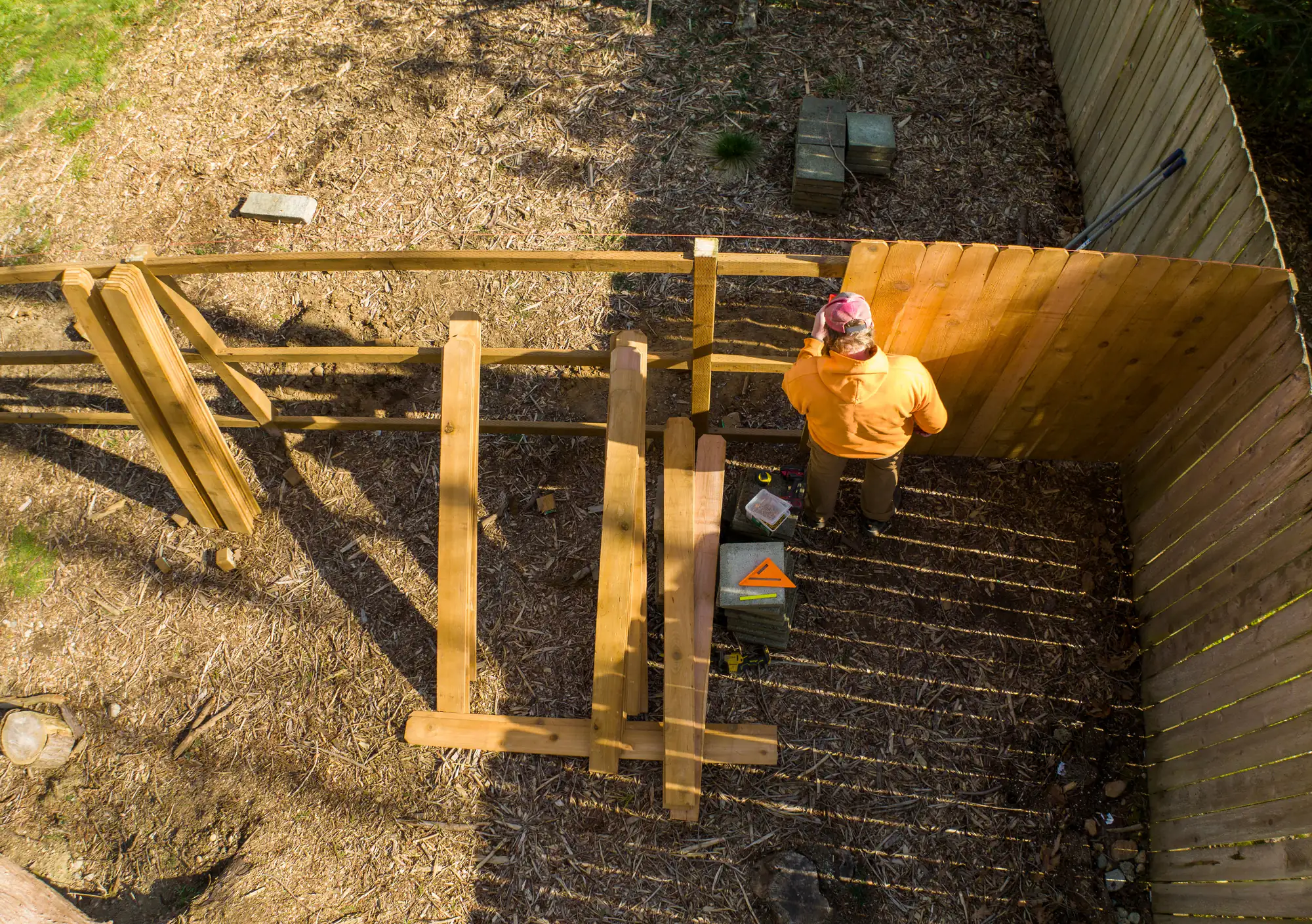
You’ve probably already done some research. Maybe you got a quote that was just a number with no explanation. Maybe you’re not sure if you need a permit or whether vinyl actually holds up near the water. These are the right questions to be asking — and they’re exactly what most fence companies don’t bother to answer upfront. We’ve been installing fences across Suffolk County for over 15 years, from Babylon and Bay Shore to Smithtown and the East End. This guide covers what you actually need to know before committing to a fence project — costs, materials, installation, permits, and what separates a fence that lasts from one that doesn’t.
Average Fence Cost in Suffolk County
The honest answer is that fence cost depends on material, linear footage, post depth, and how much concrete goes into each footing. What you’ll find online are national averages that don’t reflect what things cost here in Suffolk County. This isn’t a cheap market, and the conditions here — sandy soil, coastal exposure, freeze-thaw cycles — mean installation has to be done right, which affects price.
That said, here’s a realistic baseline. Chain link runs roughly $10–$40 per linear foot installed. Wood privacy fencing typically falls between $39–$74 per linear foot. Vinyl comes in around $25–$65 per linear foot depending on style and height. Aluminum is generally $20–$60 per linear foot. For a standard backyard privacy fence covering 150–200 linear feet, most homeowners in Suffolk County are looking at somewhere between $3,000 and $8,000 all in.
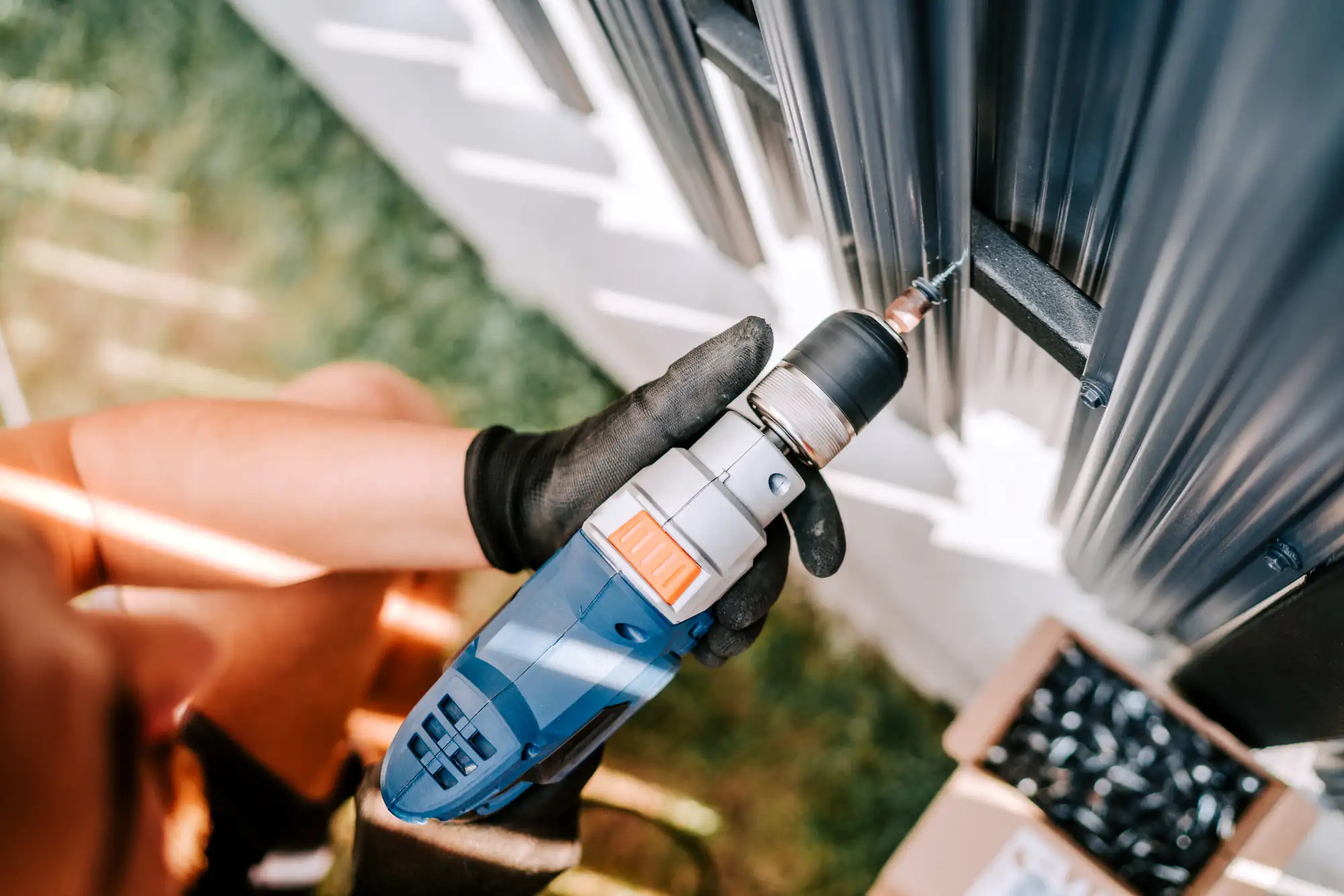
Average Fence Cost Per Foot by Material — What You’re Actually Paying For
The per-foot number is where most quotes start, but it’s rarely where the real story is. Two quotes can show the same price per foot and deliver completely different results — because one includes proper post depth and adequate concrete, and the other doesn’t. That gap matters enormously in Suffolk County, where sandy glacial outwash soil doesn’t grip posts the way denser inland soil does.
For chain link, the average fence cost per foot installed runs $10–$40, with vinyl-coated chain link — the better choice near salt air — coming in closer to $18–$40 per linear foot. The chain link fabric itself accounts for 40–60% of total material costs, and standard line posts run $15–$30 each, with corner and gate posts at $25–$60.
Wood fence cost per foot varies by species. Pressure-treated pine is the most affordable at roughly $10–$18 per linear foot for materials alone. Cedar, which holds up better in Long Island’s humidity, runs $15–$25 per foot. Once you add labor, concrete, and the permit fee — Suffolk County charges $300 to review fence plans — a full wood privacy fence project lands around $3,400 on average, though larger properties or complex designs push that higher.
Vinyl fence installation cost per foot tends to run $36–$65 for privacy styles. It costs more upfront than wood, but in communities along the Great South Bay or Long Island Sound, vinyl’s resistance to salt air and moisture makes it the smarter long-term choice. It doesn’t rot, warp, or need painting, and a quality American-made vinyl fence will outlast wood by a decade or more in this climate.
Aluminum fence installation cost runs $20–$60 per linear foot installed. It’s the go-to for ornamental applications and pool enclosures, and unlike wrought iron, it doesn’t rust — which matters a great deal in coastal Suffolk County towns like Amityville, Lindenhurst, or any community with water exposure.
Fence Post Installation Cost and Why It’s the Line Item That Actually Matters
Post installation is where most homeowners get burned — not because they chose the wrong material, but because they hired someone who didn’t set the posts correctly. In Suffolk County, this is a real and recurring problem. The sandy soil that covers much of the county, particularly on the South Shore and East End, has poor load-bearing capacity. Posts that would hold firm in clay-heavy soil will shift, lean, and eventually fail in sandy ground unless they’re set deep enough with enough concrete around them.
The standard recommendation is to bury one-third of the total post length, with a minimum of 24 inches. In Suffolk County’s sandy coastal zones, that’s often not enough. For a 6-foot privacy fence, we typically recommend 36–42 inches of post depth, paired with a concrete footing 8–12 inches in diameter. That’s more concrete than a lot of contractors use, and it’s reflected in our quotes — which is exactly why we itemize them.
When you get a quote from us, it specifies lineal footage, post spacing, post depth, and concrete volumes. Not because we enjoy paperwork, but because those numbers are what determine whether your fence is still standing after a nor’easter. Suffolk County homeowners know what a bad storm can do. The South Shore communities — Bay Shore, Islip, Babylon — take the brunt of coastal wind events, and a fence with shallow posts in sandy soil is the first thing to go.
Fence post installation depth is typically bundled into the per-foot labor rate, but it’s worth asking any contractor you speak with to break it out. How deep are the posts going? How much concrete per post? What’s the post spacing? If they can’t answer those questions specifically, that’s a red flag. A fence post installation depth of 36–42 inches with proper concrete volume is the baseline for a durable installation in this county — not an upgrade.
Want live answers?
Connect with a Best Fence Long Island expert for fast, friendly support.
Professional Fence Installation in Suffolk County — What the Process Actually Looks Like
Most fence companies will give you a quote and schedule a crew. We do something different before any of that. Every project starts with a professional site visit that includes property line verification and utility locating through NY811. Those two steps alone prevent the most common and most expensive fence installation mistakes: building on a neighbor’s property and hitting an underground utility line.
Property line disputes are one of the most common homeowner complaints in Long Island’s densely platted suburban neighborhoods. Installing a fence even a few inches over the line can mean tearing it out and starting over. We verify the lines before the first post goes in. Full stop.
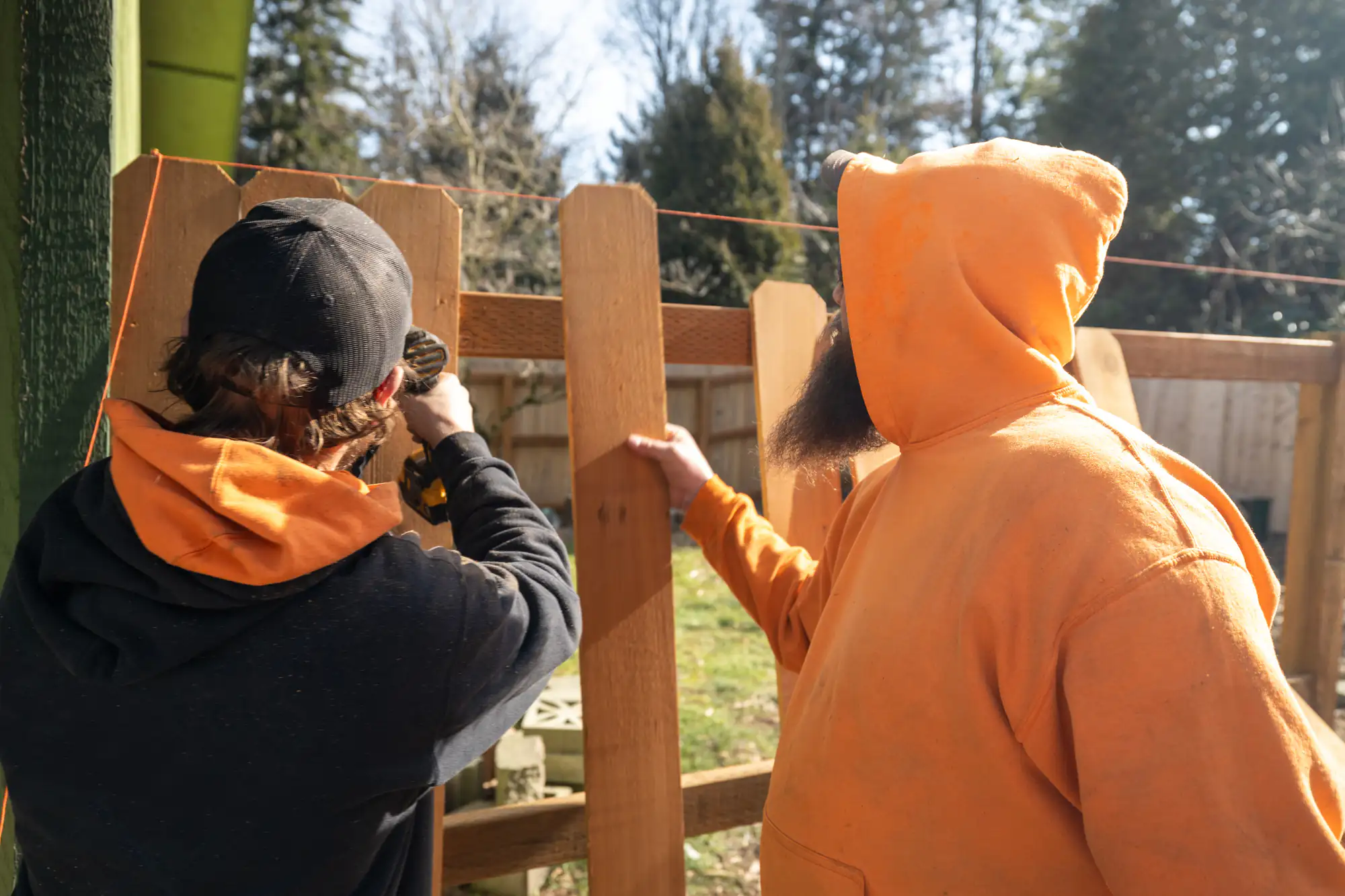
What Fence Installation Professionals Should Be Doing Before They Dig
Calling 811 before any digging is required by New York State law — but not every contractor treats it that way. Suffolk County has extensive underground utility infrastructure, and a post driven into a gas or electric line is a serious safety event, not just an inconvenience. We call 811 on every job, without exception, and we build that step into our standard site visit process.
Beyond utility locating, a professional site visit should include a real look at the ground conditions. Sandy soil behaves differently than what you’d find in Nassau County or further inland. Slope, drainage, and proximity to water all affect how the installation needs to be approached. A crew that shows up, drops a string line, and starts digging without assessing the site is a crew that’s going to create problems for you later.
We also look at permit requirements during the site visit. In Suffolk County, most fence installations require a building permit, and the requirements vary by town. The Town of Islip, Town of Babylon, Town of Brookhaven, Town of Smithtown, and Town of Huntington each have their own building departments, and front yard fences are typically capped at 4 feet while rear and side yard fences are generally allowed up to 6 feet. Pool enclosure fencing has its own requirements — minimum 48 inches, self-closing and self-latching gates — and those are non-negotiable. If your contractor doesn’t mention permits before starting work, that’s a problem you’ll eventually inherit.
The permit fee from Suffolk County is $300 to review plans and specifications. It’s not a surprise cost — it’s a known part of the project, and we factor it into the conversation upfront.
How to Choose a Quality Fence Company in Suffolk County
There’s no shortage of fence companies serving Nassau and Suffolk County. Some have been around for decades. Some are newer. The question isn’t how long they’ve been in business — it’s whether they know how to work in this specific environment, and whether they’ll stand behind the work after the crew leaves.
A good fence company should be registered with Suffolk County Consumer Affairs. You can verify license status by calling their office at 631-853-4600. Any contractor working in Suffolk County without that registration creates liability exposure for you as the homeowner. We carry general liability insurance and workers’ compensation — ask for proof before signing anything.
Beyond licensing, pay attention to how we quote the job. Vague per-foot estimates with no breakdown of post depth, concrete volume, or material specifications are a warning sign. Transparent, itemized quotes are the mark of a contractor who knows what they’re doing and isn’t hiding anything. If the quote doesn’t tell you how deep the posts are going, ask. If they can’t answer, move on.
Warranty terms matter too, and not all warranties are equal. A labor-only warranty that excludes storm damage is worth very little in Suffolk County, where nor’easters and tropical storm remnants are a regular part of life. Our warranty covers both labor and materials — including storm and vehicle damage repair. That’s a specific commitment, not a vague promise.
We use fence materials made entirely in America. That’s not a marketing line — it affects quality consistency, warranty support, and long-term durability. Imported materials vary in gauge, grade, and finish in ways that aren’t always obvious until a few years after installation. When you’re investing $4,000–$8,000 in a fence, the material sourcing matters.
Fence Installation Permits, Warranties, and Getting It Right the First Time
Installing a fence in Suffolk County involves more moving parts than most homeowners expect — permits, soil conditions, post depth, material selection, property lines, and utility locating all have to be handled correctly for the project to go the way it should. The good news is that none of it is complicated when you’re working with someone who’s done it hundreds of times in this county.
What you want is a straightforward process: a site visit that actually looks at your property, a quote that tells you exactly what you’re getting, materials that are built to hold up in Long Island’s climate, and a warranty that covers the things that actually happen here — storms, wind, and the occasional fender-bender near a driveway gate.
If you’re planning a fence project in Babylon, Islip, Huntington, Smithtown, Brookhaven, or anywhere else across Suffolk County, we’re worth a conversation. We’ll give you a real quote, answer your questions directly, and tell you upfront what the job involves — no surprises.
Frequently Asked Questions
Do I need a permit to install a fence in Suffolk County, NY? In most cases, yes. Suffolk County towns require a building permit before installing or replacing a fence. The permit review fee is $300, and requirements vary by town — front yard fences are typically capped at 4 feet, while rear and side yard fences are generally allowed up to 6 feet. Pool enclosure fences have their own specific requirements under Suffolk County code. Installing without a permit can result in fines, required removal, and complications when you sell the home. We walk through the permit requirements during our site visit so there are no surprises.
What type of fence holds up best near the water on Long Island? Vinyl is the most practical choice for homes near the Great South Bay, Long Island Sound, or any coastal community in Suffolk County. Salt air accelerates corrosion in untreated metal and degrades wood faster than inland conditions. Vinyl doesn’t rust, rot, warp, or require painting, and high-quality American-made vinyl holds up well through freeze-thaw cycles and wind events. Vinyl-coated chain link is also a better option than galvanized chain link in salt-air environments if you’re going that route.
What is the chain link fence price per foot in Suffolk County? Installed chain link fence typically runs $10–$40 per linear foot, depending on height, gauge, and coating. Vinyl-coated chain link — the better choice near coastal areas — comes in at $18–$40 per linear foot installed. A standard residential project covering 150 linear feet generally runs $1,500–$6,000 depending on scope and site conditions specific to your Suffolk County property.
How deep should fence posts be set on Long Island? The standard recommendation is one-third of the total post length, with a minimum of 24 inches. In Suffolk County’s sandy coastal soil, we typically go deeper — 36–42 inches for a 6-foot privacy fence — with a concrete footing 8–12 inches in diameter. This accounts for the poor load-bearing capacity of sandy glacial outwash soil and protects against frost heave during New York winters. Posts set too shallow are the primary reason fences lean, shift, or blow down in wind events.
What should be included in a fence installation quote? A quote should specify total lineal footage, post spacing, post depth, concrete volumes per post, material type and grade, and any permit costs. If a quote is just a total number or a single per-foot rate with no breakdown, you don’t have enough information to compare it against other quotes or evaluate what you’re actually getting. Ask for itemized quotes — any contractor confident in their work should be able to provide one.
Summary:
Table of Contents


Article details:
- Published by:
- Published to:
- Last modified:
- October 19, 2026
Share: