PVC Fence Styles & Costs for Long Island Homeowners in Suffolk County
Everything Suffolk County homeowners need to know about PVC fence styles, real installation costs, and what to ask before hiring a fence contractor.
Most homeowners start shopping for a fence with two questions: what’s it going to look like, and what’s it going to cost? Fair enough. But in Suffolk County, there’s a third question that tends to blindside people halfway through the process — do I need a permit for this, and if so, which town do I call?
This guide answers all three. We’ll walk you through PVC fence styles, real installation costs, how vinyl stacks up against wood over time, and what the process looks like when you work with a local contractor who actually knows Suffolk County’s rules. No vague estimates. No glossed-over details.
Fence Material Types: What You’re Actually Choosing Between
When people say “PVC fence,” they mean the same thing as “vinyl fence” — PVC is simply the type of plastic used to manufacture it. The terms are interchangeable, and any fence company that tries to sell them as different products is splitting hairs.
What actually matters is the grade of vinyl. Premium vinyl is made from 100% pure virgin PVC with UV inhibitors built into the material. That’s what resists yellowing, holds its color through Long Island winters, and doesn’t become brittle after a decade of freeze-thaw cycles. Cheaper vinyl — often made from recycled PVC scraps — looks identical on day one but tends to show its age much faster.
Beyond vinyl, the main fence material types you’ll encounter are wood, chain link, aluminum, and ornamental steel. Each has a different cost profile, maintenance burden, and use case. For most residential properties across Suffolk County, the conversation comes down to PVC versus wood — and that comparison deserves its own section.
Types of Fence Panels: Privacy, Semi-Privacy, Picket, Rail, and More
Once you’ve settled on vinyl as your material, the next decision is style. And there’s more variety here than most homeowners expect.
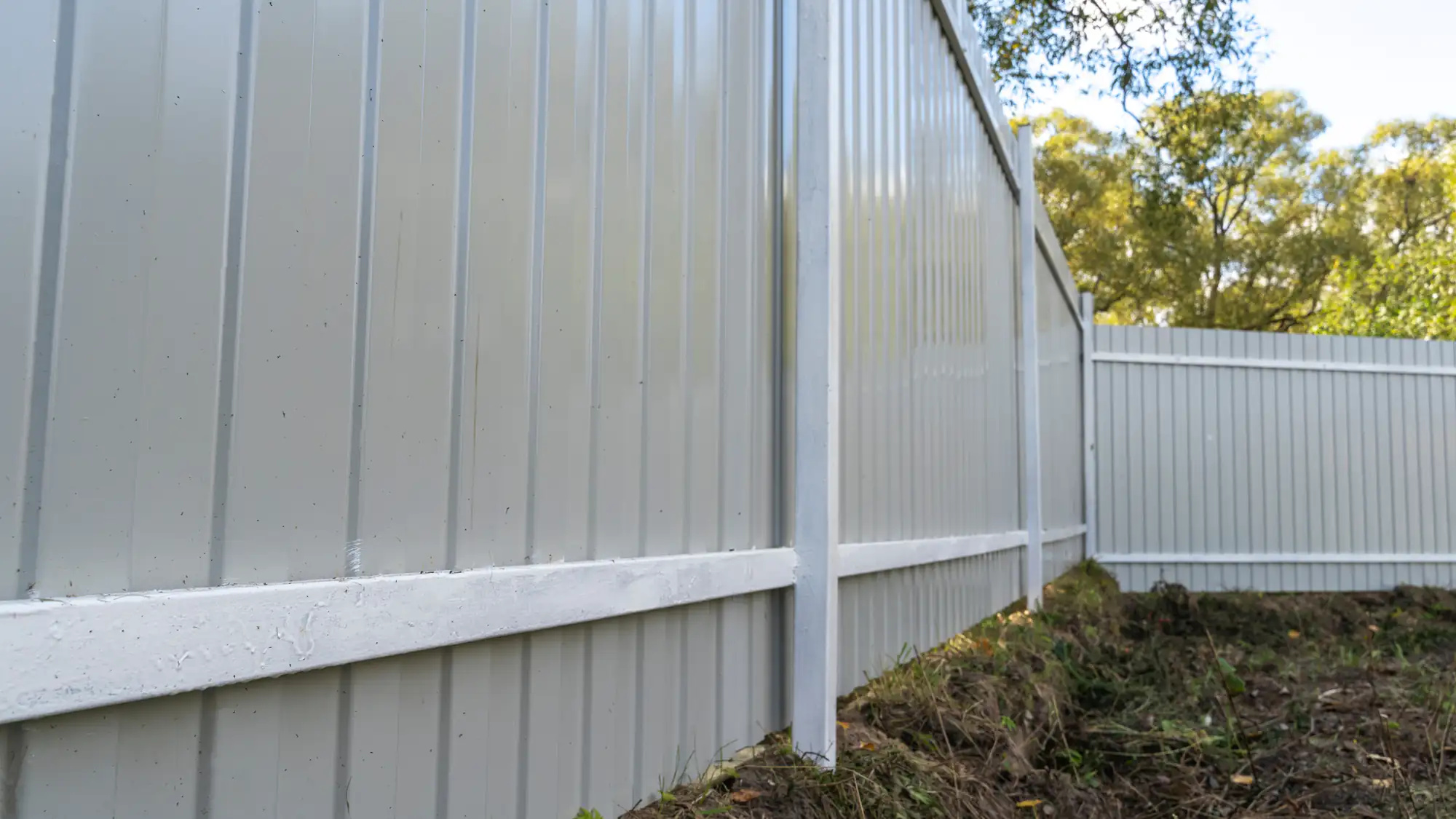
Full privacy panels are the most popular choice for backyard installations in Suffolk County. The boards sit flush against each other with no gaps, giving you a solid visual barrier. If your lot line runs close to a neighbor’s yard — which is common in neighborhoods like Lake Grove, NY, or Selden, NY — full privacy is usually what you want. Standard height runs six feet, which is the maximum most Suffolk County towns allow for rear yard fences without a variance.
A semi-privacy fence is worth considering if you want airflow without full exposure. The pickets are spaced slightly apart, letting light and breeze through while still blocking a direct sightline. It’s a good middle ground for side yards, front yards, or properties where a solid wall of white might feel too imposing.
Picket fences are the classic front-yard option — shorter, open, more decorative than functional. They define a property line without closing it off, and they photograph well. In vinyl, a picket fence holds its crisp look without the painting and rotting that wood picket fences are prone to.
Then there are specialty styles. A crossbuck fence uses an X-shaped rail pattern between posts — it has a farmhouse or ranch aesthetic that works well on larger lots, particularly in the more rural eastern parts of Suffolk County toward Riverhead, NY. Split rail is similar in feel, open and rustic, better for property definition than privacy.
For fence and railing applications — think deck railings, stair railings, or front porch borders — vinyl offers the same low-maintenance benefit as it does for full fence runs. The hardware and post cap options have expanded significantly, so the finished look can be clean and modern or traditional, depending on what suits the house.
Curb Appeal Front Yard Fence: What Actually Looks Good From the Street
Fence curb appeal is a real thing, and it matters more than people give it credit for. A fence is one of the first things someone sees when they pull up to your home. Done well, it frames the property. Done poorly, it looks like an afterthought.
For front yards, the most common mistake is going too tall or too solid. A six-foot privacy fence along your front property line can feel like a fortress — and in many Suffolk County towns, it may not be permitted at that height in the front yard anyway. Most local codes cap front yard fences at four feet, so it’s worth confirming with your town’s building department before you fall in love with a specific style.
Vinyl picket fences and low decorative aluminum panels tend to work best for front yard curb appeal. They define the space without dominating it. If you’re going vinyl, a bright white picket with a flat or gothic top is a classic that ages well and complements almost any house style on Long Island.
For corner lots — which are common throughout Centereach, NY, Ronkonkoma, NY, and Lake Grove, NY — you’re dealing with two street-facing sides, which means the style choice has twice the visual impact. A consistent material and color across both sides reads as intentional and polished.
Modern vinyl doesn’t look like the thin, slightly plasticky fences from 20 years ago. Today’s premium PVC comes in wood-grain textures and a range of colors beyond standard white. If you’ve been avoiding vinyl because you thought it would look cheap, it’s worth seeing current samples before you decide.
Want live answers?
Connect with a Best Fence Long Island expert for fast, friendly support.
Wood Fence vs. Vinyl Fence: The Honest Cost Comparison
This is the question most Suffolk County homeowners are quietly wrestling with before they ever call a contractor. Wood costs less upfront — that’s true. But the full picture is more complicated, and most fence company websites won’t show you the math because they’d rather just sell you whatever you’re already leaning toward.
Wood fencing typically runs $12 to $25 per linear foot for materials, while vinyl materials run $20 to $40 per linear foot for comparable styles. On a 150-foot backyard fence, that upfront gap can be real money. But wood requires regular staining or sealing, is vulnerable to rot and insect damage, and typically needs full replacement within 12 to 20 years. Vinyl, installed properly with quality materials, lasts 25 to 30 years with minimal upkeep — mostly just cleaning.
Are Wood Fences Cheaper Than Vinyl Over Time?
Upfront, yes — wood is usually 20 to 30 percent less expensive than vinyl. But that gap closes quickly when you factor in what wood actually costs to maintain on Long Island.
Salt air is a real factor here. The coastal winds that roll through Suffolk County every fall and winter accelerate wood rot and corrode metal fasteners faster than in inland climates. A wood fence near the water — or even in a neighborhood with significant wind exposure — may need its first round of staining within two or three years, and serious repairs within five to seven. By year 15, many Long Island homeowners are looking at a full replacement.
Vinyl maintenance over 20 years runs roughly $1,000 to $3,000, mostly in occasional cleaning. Wood maintenance over the same period — staining, sealing, board replacement, hardware corrosion — can add up to far more, not counting the cost of eventual full replacement.
There’s also the sandy soil factor. Much of central Suffolk County sits on glacial outwash plain, which means the soil drains well but provides less lateral support for fence posts than clay-heavy ground. Posts in sandy soil need to be set deeper and in concrete to stay plumb over time. This matters for both wood and vinyl, but a vinyl fence that’s properly installed and doesn’t require repainting or re-staining is simply less likely to be disturbed and re-examined every few years.
When someone asks us whether vinyl or wood fence is better, the honest answer is: it depends on your timeline. If you’re planning to sell in three years, wood might pencil out. If you’re staying put and want to install once and move on, vinyl is almost always the better long-term decision for a Suffolk County property.
Cost of PVC Fence vs. Wood: What to Expect Per Linear Foot
Let’s get specific, because vague ranges don’t help anyone plan a budget.
For vinyl fence installation — materials and labor combined — you’re typically looking at $15 to $40 per linear foot on the lower end of the national range, with real 2026 install data from the Northeast running closer to $45 to $74 per linear foot depending on style, post spacing, and site conditions. A typical midpoint for a standard six-foot privacy fence runs around $55 per linear foot installed. For a 150-foot backyard run, that puts the project somewhere in the $6,750 to $8,250 range before gates or site-specific variables.
Wood fence installation cost for a comparable six-foot privacy fence runs $8 to $25 per linear foot for materials, with labor adding $5 to $20 per linear foot depending on complexity. On paper, the savings look meaningful. In practice, many Suffolk County homeowners who chose wood five or ten years ago are now replacing it — and paying installation costs all over again.
Gates are a separate line item regardless of material. Budget $300 to $1,500 per gate depending on size and style. We include a free gate with any installation of 100 linear feet or more — which is a real savings on most standard backyard projects.
Chain link fence installation cost runs lower than either wood or vinyl — roughly $8 to $20 per linear foot installed — and chain fence cost is the most budget-friendly option for utility applications like enclosing a side yard or securing a commercial property. It’s not a curb appeal choice, but it’s durable, low-maintenance, and practical when aesthetics aren’t the priority.
The average cost of a privacy fence project nationally sits around $3,701, but Long Island pricing trends higher than the national average due to labor costs and local material sourcing. For an accurate number on your specific property, an on-site estimate is the only reliable way to get it. We provide free, itemized written quotes — not a single lump-sum number — so you can see exactly what you’re paying for before you commit.
Finding a Reliable Fence Company in Suffolk County, NY
The difference between a fence that lasts 30 years and one that starts leaning in five often comes down to who installed it — specifically, whether they set posts deep enough in concrete, used quality virgin vinyl, and pulled the right permits for your town.
Suffolk County has nine separate town building departments, each with its own fence codes, height limits, and setback requirements. Brookhaven, Smithtown, Islip, Huntington, Babylon, Riverhead, Southampton, East Hampton, and Southold all handle permits differently. A contractor who doesn’t know that — or who skips the permit entirely — leaves you holding the liability if something goes wrong or when you go to sell the house.
We handle permit paperwork as part of the process. We’ve been doing this work out of Centereach, NY, for over 15 years, and we know what Brookhaven requires, what Smithtown wants, and where the common sticking points are. If you’re ready to get a real number for your project, reach out to Best Fence Long Island — we’ll come to you, walk the property, and give you an itemized written quote with no surprises at the end.
Summary:
Table of Contents
Article details:
- Published by:
- Published to:
- Last modified:
- July 16, 2026
Share: