Why Most Fence Construction Projects Fail Without This
Most fence failures come down to a handful of avoidable mistakes. Here’s what proper installation actually looks like — and why it matters more in Suffolk County than most places.
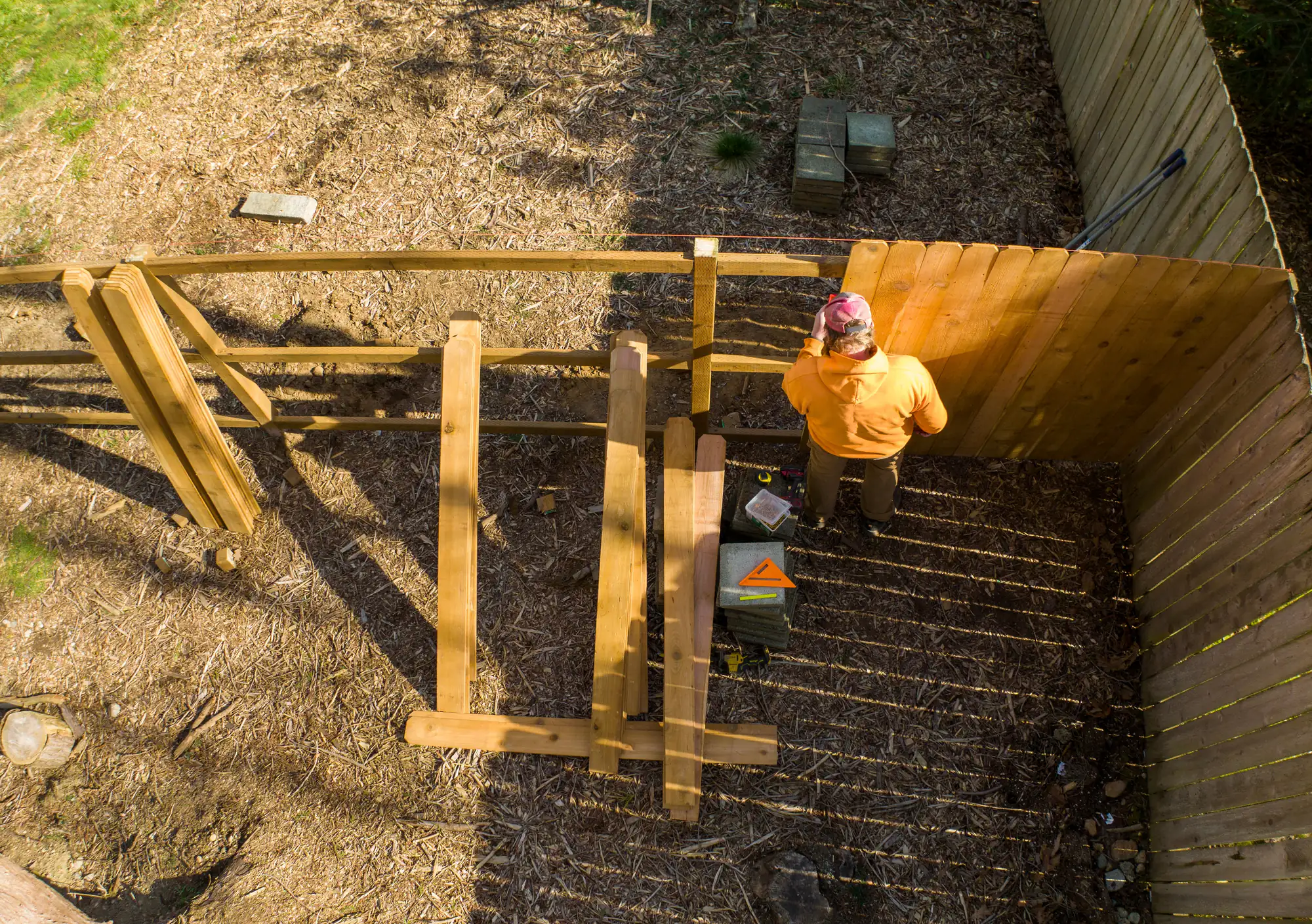
Most fence problems don’t start with bad materials or a bad storm. They start with a contractor who skipped a step — dug too shallow, skipped the utility locate, didn’t pull the permit, or handed you a lump-sum number with no explanation of what it actually included. By the time you notice something’s wrong, the crew is long gone and the concrete has been set for months. We’ve spent over 15 years doing fence construction across Suffolk County, and the failures we see most often are completely preventable. This is what you actually need to know before any work starts.
Fence Post Depth: The Most Overlooked Factor in Long Island Fence Construction
Ask most homeowners what makes a fence last, and they’ll say the material — vinyl over wood, aluminum over iron. That’s not wrong, but it’s not the whole picture. The part of your fence that determines whether it’s still standing straight after five Long Island winters is the part you never see: how deep the posts go and what’s holding them there.
In Suffolk County, the frost line in interior areas sits around 36 inches deep. When the ground freezes and thaws through a typical winter, soil expands and contracts — and anything set above that depth gets pushed. That’s frost heave, and it’s the most common reason fences start leaning before they’re even a few years old. The fix isn’t complicated, but it requires doing it right the first time.
How Deep Should Fence Posts Be Set in Suffolk County Soil?
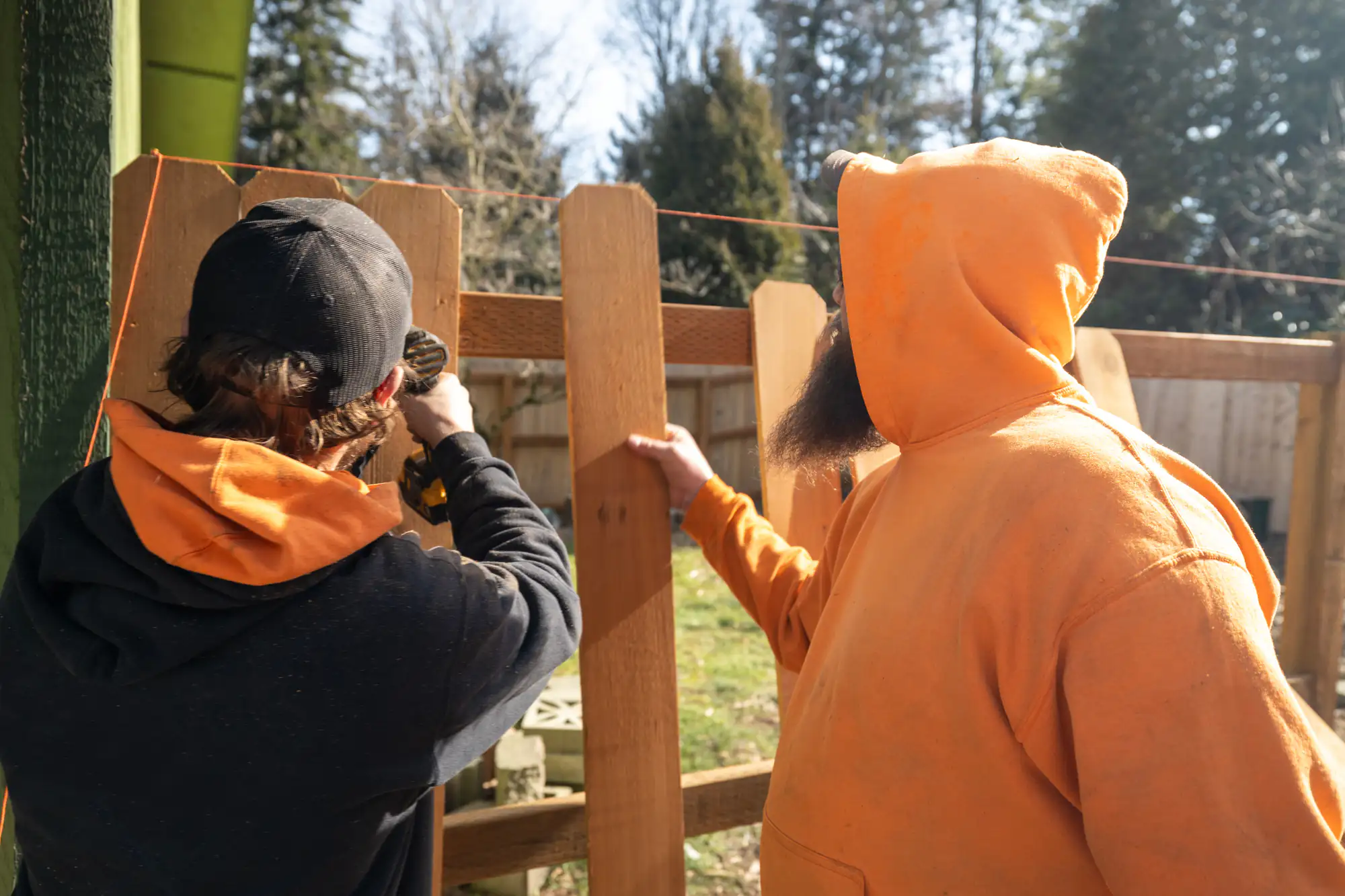
The local contractor consensus for a standard six-foot fence on Long Island is a minimum of 30 inches of post depth — and that number exists for a reason. Suffolk County’s soil isn’t uniform. On the South Shore, from Bay Shore down through Babylon and East Islip, you’re often dealing with sandy coastal soil that has very low lateral resistance. A post sitting in sandy soil without a proper concrete footing will shift. It’s not a question of if — it’s a question of when, and how far.
On the North Shore, in towns like Huntington and Smithtown, the soil tends to be rockier and denser, which sounds like an advantage until you realize it takes the right equipment to dig a proper hole through it. Contractors who don’t have that equipment cut the depth short and pour concrete around a post that’s never going to hold the way it should.
The correct approach is what’s called a bell-shaped footing — a hole that’s wider at the bottom than the top, filled with concrete. That shape resists upward pressure from frost far better than a straight-sided hole. When we provide a quote, we specify the post depth in writing. That’s not standard practice in this industry, but it should be, because a contractor who commits to depth on paper is a contractor who has to deliver it. If a quote doesn’t tell you how deep the posts are going, that’s worth asking about before you sign anything.
Post depth also intersects with wind load — something that matters more in coastal Suffolk County than most inland markets. Solid privacy panels act like sails. A six-foot vinyl privacy fence running along a South Shore property facing Great South Bay is taking on a lot of wind force during a nor’easter, and all of that force transfers directly to the posts. Closer post spacing and deeper footings are how you account for that. Skipping either one is how you end up with a fence on the ground after the first bad storm.
What Is the Best Vinyl Fence for Long Island’s Coastal Climate?
Vinyl fencing has become the dominant choice for Suffolk County homeowners who want something that holds up without constant upkeep, and for good reason. Quality vinyl doesn’t rot, warp, crack, or attract insects. It doesn’t need to be painted or sealed every few years the way wood does. In a coastal environment where salt air accelerates the breakdown of most materials, that matters enormously.
But not all vinyl is the same, and that’s where a lot of homeowners get burned. Imported vinyl fencing — which a significant portion of the market uses — tends to have thinner walls, lower-grade UV stabilizers, and inconsistent manufacturing tolerances. It may look identical on day one. By year five or six, after seasons of UV exposure, salt air, and Long Island winters, the difference shows up in fading, brittleness, and hardware that’s started to fail.
All of the fence materials we install are made in America. That’s not a marketing line — it’s a quality standard that has real consequences for how your fence holds up over time. American-made vinyl meets higher manufacturing specifications, uses UV-stabilized compounds that are formulated for extended outdoor exposure, and comes with manufacturer warranties that are actually backed by companies you can reach. When something is made domestically by a named manufacturer, there’s a traceable chain of accountability. When it’s imported from an unknown source, there isn’t.
For properties with direct water exposure — anywhere along the Great South Bay, the Sound-facing communities on the North Shore, or the East End — aluminum is often the better choice for front yards and pool enclosures. Aluminum doesn’t rust. It forms a natural oxide layer that actually protects it from further corrosion, which makes it uniquely well-suited for salt-air environments. It’s also the material of choice for pool fences, which under New York State pool safety code must be at least 54 inches tall with self-closing, self-latching gates. That’s a code requirement, not a suggestion — and it’s one we know cold after 15 years of pool fence installations across Suffolk County’s 10 towns.
Want live answers?
Connect with a Best Fence Long Island expert for fast, friendly support.
What Proper Fence Construction in Suffolk County Actually Looks Like
There’s a version of fence construction that looks fine on paper and falls apart in practice. Crew shows up, digs holes, sets posts, installs panels, collects payment, leaves. The homeowner has a fence. For a while.
Then there’s the version where every step that matters actually gets done — before the first hole is dug and after the last panel goes in. The difference between those two versions is almost never visible on the finished product. It’s in the decisions made before the work starts, and in whether the contractor had the experience and the discipline to make them correctly.
Why Property Line Verification and Utility Locating Matter Before Any Post Is Set
Two of the most expensive fence construction mistakes in Suffolk County are completely preventable. The first is building on the wrong side of a property line. The second is hitting an underground utility while digging post holes.
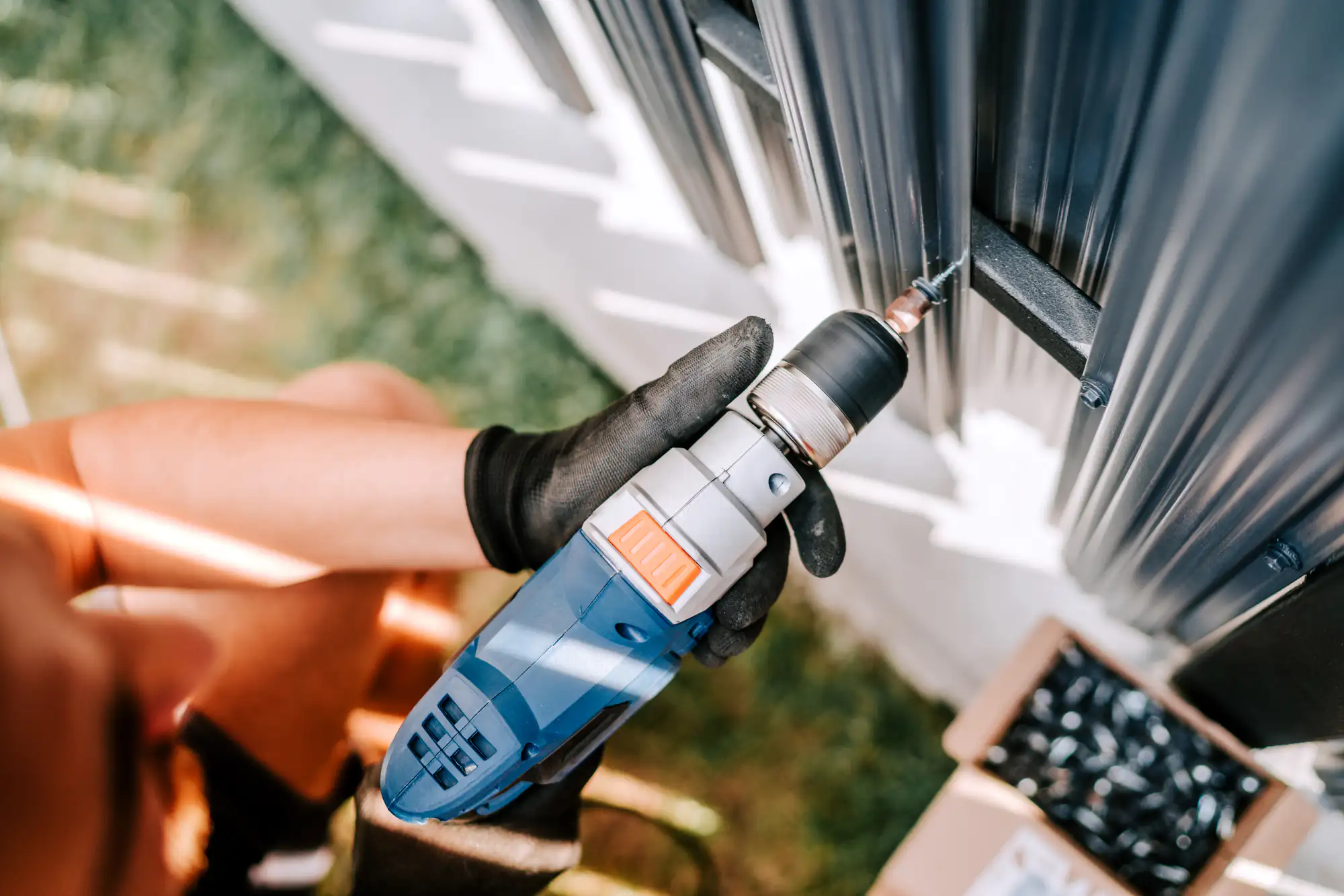
Long Island has a dense underground infrastructure — PSEG Long Island electrical lines, National Grid gas, Cablevision, water district lines, and more. Digging post holes without calling 811 first isn’t just risky; it’s illegal in New York State. We handle this as a matter of course. It’s not an upsell or an optional step — it’s a baseline requirement. The reason some contractors skip it is that it adds a day or two to the timeline, and some crews are moving too fast to wait.
Property line verification is equally important and equally skipped by contractors who are cutting corners. Homeowners often have a general sense of where their property ends, but “general” isn’t good enough when you’re setting posts in concrete. A fence built six inches onto a neighbor’s property is a legal problem that can require tearing out and reinstalling — at the homeowner’s expense. We verify the property line before any post goes in the ground. That step has saved more than a few of our customers from a situation that would have been far more expensive to fix than to prevent.
Every quote we provide is itemized — lineal footage, post spacing, post depth, concrete volumes. That level of specificity exists because it makes us accountable to exactly what we said we’d do. A lump-sum quote with no breakdown isn’t just hard to compare — it’s a document that gives the contractor room to cut corners without you ever knowing. When the scope is in writing, everyone knows what was agreed to.
How Suffolk County’s Permit Requirements Affect Your Fence Project
One of the more common surprises homeowners run into during fence construction in Suffolk County is the permit process — specifically, discovering after the fact that they needed one and didn’t get it. Fences taller than four feet in front yards or six feet in side and rear yards generally require a building permit, and the permit review fee in Suffolk County is $300. But the more important detail is that each of the 10 towns has its own building department with its own specific requirements.
What applies in Islip doesn’t necessarily apply in Brookhaven. What’s standard in Babylon may differ from what Smithtown requires. Contractors who don’t work in this county regularly — or who’ve never pulled a permit in the specific town where your property sits — can cause delays, failed inspections, or installations that need to be modified after the fact. That’s a frustrating and expensive outcome that comes entirely from not knowing the local rules.
We’ve been navigating these requirements across Suffolk County for over 15 years. That means we know the permit process in Huntington, Riverhead, Southampton, and every town in between. We handle the permitting as part of the project — it’s not something we hand off to you to figure out. For pool enclosures, the requirements are even more specific: New York State pool safety code mandates a minimum 54-inch fence height with a self-closing, self-latching gate, and local building departments inspect these installations before they’re considered complete.
There’s also the HOA layer to consider. Planned communities across Babylon and Islip towns — and throughout Suffolk County more broadly — often have their own rules on top of municipal requirements, governing fence materials, colors, and heights. Homeowners who install a fence without checking their HOA guidelines can end up with a fine and a mandatory modification. We ask about HOA requirements at the start of every project, before anything is ordered or installed, because fixing it afterward costs far more than asking the question upfront.
Choosing the Right Fence Contractor in Suffolk County, NY
The fence itself is only as good as the decisions made before and during construction. Post depth, concrete footings, utility locating, property line verification, permit handling, material quality — none of these show up in a photo of the finished product, but all of them determine whether that fence is still standing straight in five years or giving you problems after the first winter.
Suffolk County’s conditions — the sandy South Shore soil, the rocky North Shore terrain, the coastal salt air, the freeze-thaw cycles, the storm exposure — make those decisions matter more here than in most markets. A contractor who’s worked through all of it, across all 10 towns of this county, for over 15 years, brings something that experience genuinely can’t be faked.
If you’re getting quotes, ask for itemized breakdowns. Ask about post depth. Ask whether we pull permits and verify property lines. The answers will tell you a lot. When you’re ready to talk through your project, we’re here to give you a straight answer and a quote that shows exactly what you’re getting.
Summary:
Table of Contents
Article details:
- Published by:
- Published to:
- Last modified:
- July 23, 2026
Share: