Vinyl Fence Installers in Suffolk County: Why Upfront Price Isn’t Enough
Getting multiple fence quotes is smart. Knowing which one to trust is a different skill entirely — and it matters more than most homeowners realize.

You’ve probably already gotten a quote — maybe two or three. And if you’re like most homeowners in Suffolk County, those numbers didn’t line up the way you expected. One came in low with almost no detail. Another had line items you didn’t recognize. A third was verbal, which means it doesn’t really count for anything.
The frustrating part isn’t that fences are expensive. It’s that it’s genuinely hard to know what you’re actually comparing. This guide is here to fix that. By the time you finish reading, you’ll know what a real quote should include, why vinyl almost always wins the long-term cost argument, and what to look for in a fence installer before you hand anyone a deposit.
Fence Material Types: What You’re Actually Choosing Between
Before price even enters the picture, it helps to understand what the main material options actually are and where they differ. In Suffolk County, most residential fence projects come down to two choices: vinyl (also called PVC) and wood. Aluminum and chain link come up for specific applications — pool enclosures, commercial properties, large perimeter fencing — but for a standard backyard or property line installation, vinyl and wood are where most homeowners land.
Wood has been the default for decades, and its lower sticker price is a real thing. Vinyl costs more upfront. That’s not spin — it’s just true. But those two facts don’t tell you nearly enough to make a smart decision, which is exactly why so many homeowners end up second-guessing themselves after they’ve already signed.
Types of Vinyl Fence Panels — and Why the Style Affects the Price
Vinyl fence panels come in a wider range of styles than most people expect, and the style you choose affects both the installed cost and the finished look of your property. The most common options in the residential market are privacy panels, semi-privacy panels, picket panels, and post-and-rail configurations.
Privacy panels are exactly what they sound like — solid boards set tightly together, typically in a six-foot height, designed to block the view from neighboring yards. These are the most popular choice in Suffolk County neighborhoods where homes sit close together, and they’re what most people picture when they think of a vinyl fence.
Semi-privacy panels use the same general structure but with small gaps between boards, which lets air move through and softens the visual weight of the fence without sacrificing much actual privacy. Picket panels are the classic front-yard style — evenly spaced vertical boards with a flat or pointed top, usually in a four-foot height. They define a property line and add curb appeal without creating a closed-off look.
Post-and-rail designs are more open still, typically used for larger properties, decorative borders, or equestrian applications.
The reason style matters beyond aesthetics is material volume. A full-privacy panel uses significantly more PVC per linear foot than a picket or post-and-rail design, which is reflected in the installed price. When you’re comparing quotes, make sure each one specifies the exact panel style, height, and post spacing — because “vinyl fence” without those details is not a real quote. It’s a placeholder.
Two quotes for a “six-foot vinyl privacy fence” can still differ by thousands of dollars if one uses thick-wall, steel-reinforced panels and the other uses the thinnest material the supplier carries. This is one of the most common ways homeowners get burned. The low quote looks appealing until the fence is up and the gate sags, or the first nor’easter of the season finds every weak point in a panel that wasn’t built to handle Long Island wind loads.
Quality vinyl — particularly American-made vinyl with UV stabilization and galvanized steel reinforcement in the bottom rails — behaves very differently over time than the cheapest option available.
PVC Fence vs. Wood: The Cost Comparison That Actually Matters
Here’s the math that most fence companies don’t show you, because it requires them to acknowledge that their cheaper product isn’t actually cheaper.
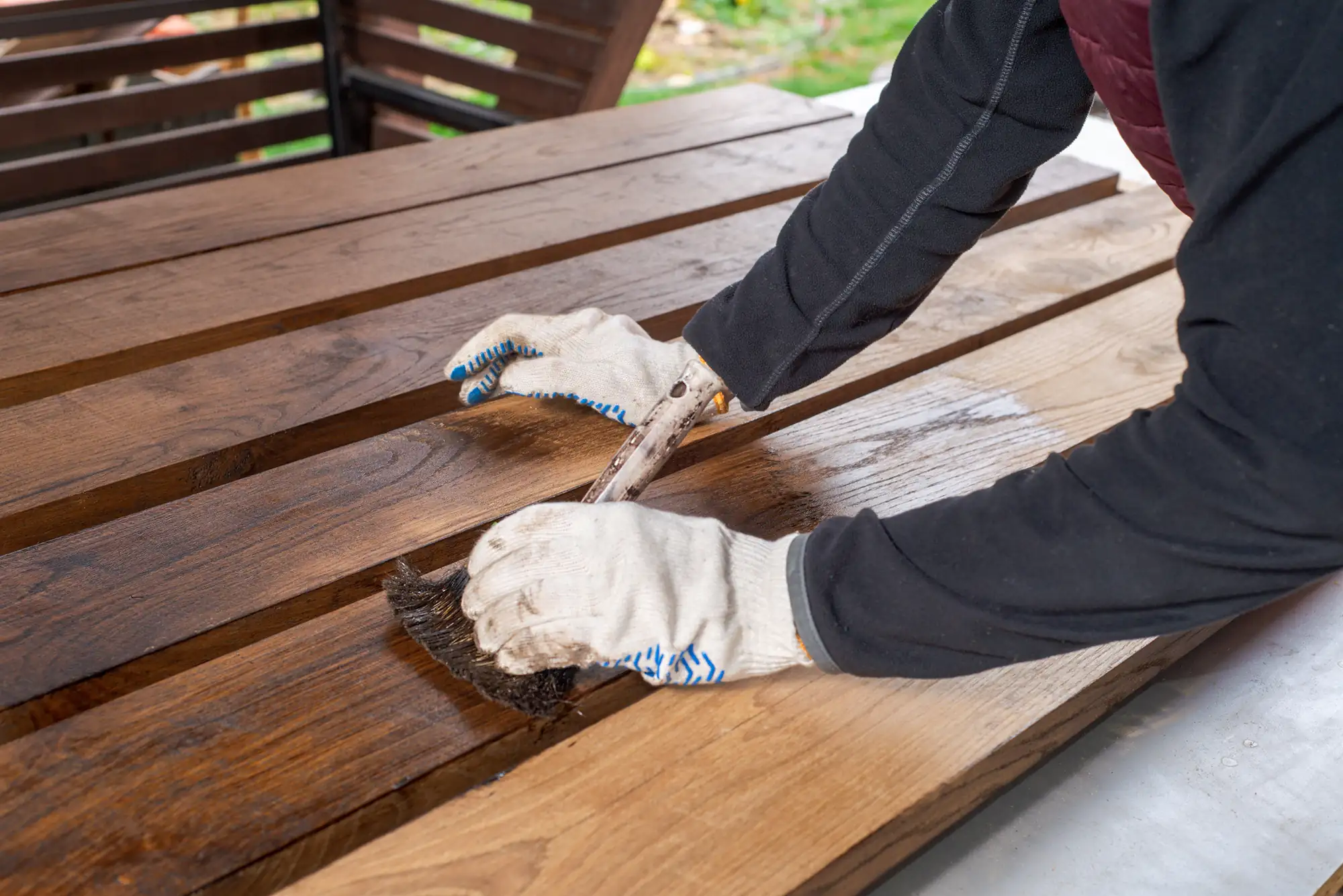
Wood fencing materials cost less per linear foot than vinyl. That’s the starting point, and it’s accurate. But a wood fence in Suffolk County requires staining or sealing every two to three years to hold up against the humidity, the salt air near the coast, and the freeze-thaw cycling that happens every winter. That maintenance runs roughly $200 to $600 per application for a standard 150-foot fence, depending on whether you do it yourself or hire someone.
On top of that, wood fences typically need repairs — boards warp, posts rot at the base, gates shift — and most homeowners replace a wood fence entirely within 15 to 20 years. Vinyl doesn’t require any of that. Occasional cleaning with a hose is genuinely all it takes. The material doesn’t rot, it doesn’t absorb moisture, and quality vinyl won’t yellow or crack under normal Long Island sun exposure.
A properly installed vinyl fence lasts 25 to 30 years with no significant maintenance costs — roughly $100 to $200 per year at most. When you run those numbers out over 25 years on a 150-foot fence, vinyl comes in between $3,750 and $10,250 in total cost. Wood, once you account for staining, sealing, repairs, and eventual replacement, lands between $10,050 and $44,250 over the same period.
The “cheaper” fence ends up costing two to four times as much. That’s not a marketing argument — that’s arithmetic.
The coastal communities in Suffolk County make this gap even wider. In Patchogue, Port Jefferson, and Ronkonkoma, salt air accelerates wood rot and corrodes metal fasteners faster than inland areas. Vinyl’s resistance to moisture and salt is a genuine material advantage in those environments, not just a talking point.
There’s also the question of what happens to your property value. A vinyl fence in good condition after 15 years looks the same as it did on installation day. A wood fence at 15 years, even a well-maintained one, typically shows its age. For homeowners thinking about resale, that difference shows up in how the property presents.
Want live answers?
Connect with a Best Fence Long Island expert for fast, friendly support.
What to Look for in Vinyl Fence Installers in Suffolk County
Choosing a material is only half the decision. The installer matters just as much, and in some ways more, because a quality material installed poorly will still fail. In Suffolk County, there are specific things that separate a contractor who knows this market from one who doesn’t.
Suffolk County requires a Home Improvement Contractor license for all fence installation work. That license requires proof of liability insurance, property damage coverage, and workers’ compensation. Hiring an unlicensed contractor isn’t just a quality risk — it can leave you personally liable if someone gets hurt on your property during the job.
Always ask for license verification before signing anything. We maintain our license in good standing and provide proof of insurance and workers’ compensation coverage as part of every estimate.

Do I Need a Permit to Install a Fence in Suffolk County?
This is one of the most common questions homeowners ask, and the answer is almost always yes — with the details depending on which of Suffolk County’s ten towns your property sits in. Babylon, Brookhaven, East Hampton, Huntington, Islip, Riverhead, Shelter Island, Smithtown, Southampton, and Southold each have their own building departments and their own permit requirements.
Height thresholds, setback rules, and pool barrier requirements vary from town to town. The pool fence requirement is worth calling out specifically. Suffolk County enforces pool barrier codes that require compliant fencing — typically a minimum four-foot height with self-closing, self-latching gates — around in-ground and above-ground pools.
If you’re installing a fence as part of a pool project, or if you already have a pool and are adding a perimeter fence, you need a contractor who knows those requirements and can pull the permit correctly the first time. Skipping the permit isn’t worth the risk. An unpermitted fence can result in fines, a stop-work order, or a requirement to remove and reinstall the fence at your own expense.
More practically, it can create complications when you sell the home — buyers’ attorneys look for open permits, and an unpermitted structure is a negotiating problem you don’t need. We handle the permit paperwork for all Suffolk County towns as part of every installation — it’s not an add-on, it’s part of the job.
How to Read a Fence Quote — and What a Real One Looks Like
The single most common complaint in the local fence market isn’t poor installation or bad materials. It’s a quote that changes between the estimate and the invoice. A number that seemed clear when the salesperson left turns into something different when the crew shows up — suddenly there’s a charge for the gate, or the concrete, or the cleanup, or a fuel surcharge that wasn’t mentioned.
A real quote is itemized. It breaks out materials, labor, gates, post concrete, permit fees, and anything else that’s part of the project. It’s in writing. And the number on that document is the number you pay — not an approximation, not a starting point for negotiation, not subject to change once the job is underway.
When you’re comparing quotes from multiple vinyl fence installers, make sure you’re comparing the same scope. The same panel style, the same height, the same post spacing, the same number of gates, the same permit handling. A quote that looks $800 lower than another might be missing a gate, using thinner material, or leaving the permit to you. Those differences add up fast.
Beyond the numbers, pay attention to how the estimate is conducted. A contractor who measures your property in person — walking the actual fence line, noting grade changes, identifying where gates need to go — is giving you a real number. A contractor who estimates over the phone or off a satellite image is guessing. Those guesses tend to get corrected at invoice time.
Ask about the warranty before you sign. There are two types that matter: a material warranty (covering the PVC against manufacturer defects) and a workmanship warranty (covering the installation itself). Having one without the other leaves you exposed. If the posts were set too shallow for Long Island’s frost line and your fence heaves out of the ground in February, a material warranty won’t help you — that’s an installation problem.
We provide a written workmanship warranty on every installation alongside manufacturer material warranties on qualifying products, because both matter and both should be in writing. A well-installed vinyl fence does meaningfully improve how a property looks and presents. But that value only holds if the installation is done right — proper post depth, correct panel alignment, gates that open and close cleanly from day one.
Choosing the Right Vinyl Fence Installer in Suffolk County
The upfront price on a fence quote tells you one thing. What it doesn’t tell you is whether the materials are quality, whether the posts will hold through a Long Island winter, whether the permit is handled, or whether the number will still be the same when the job is done. Those are the questions worth asking before anyone breaks ground.
Vinyl almost always wins the long-term cost comparison when you run the actual numbers. And a licensed, experienced installer who provides itemized written quotes, handles the permit paperwork, and backs the work with a written warranty is worth more than the cheapest number on a spreadsheet.
If you’re ready to get a real quote — one that’s in writing, itemized, and won’t change — Best Fence Long Island serves all of Suffolk County and offers free on-site estimates with no pressure and no vague totals. Reach out and we’ll come take a look.
Summary:
Table of Contents


Article details:
- Published by:
- Published to:
- Last modified:
- October 19, 2026
Share: