
Suffolk County Fence Repair: Assessment to Restoration
From storm-knocked posts to rotted boards, this guide walks Suffolk County homeowners through every stage of fence repair — assessment, costs, and what to expect.

Most fence damage doesn’t announce itself. It builds quietly — a post that shifts after a wet winter, a board that softens at the base, a gate that starts dragging on the ground. Then a nor’easter comes through Smithtown or Bay Shore, and what was a minor issue becomes an urgent one. If you’re trying to figure out whether your fence needs a few repairs or a full replacement, whether you need a permit, and what any of this is going to cost on Long Island — you’re in the right place. This guide covers all of it, without the runaround.
How to Assess Fence Damage Before Calling Anyone
Before you get a quote, it helps to understand what you’re actually looking at. Not because you need to diagnose it yourself, but because a homeowner who walks the fence line before the contractor arrives tends to ask better questions and make better decisions.
Start at the posts. Grab each one and push. A solid post shouldn’t move. If it rocks even slightly, the concrete footing may have failed, the post may have rotted at the soil line, or frost heave may have pushed it up over multiple winters. In Suffolk County, where the frost line sits around 36 inches deep, posts set too shallow will shift — and that’s often the real cause of a leaning fence, not wind damage.
Then look at the boards. Surface cracks and weathering are cosmetic. Soft, spongy wood near the ground is rot — and rot spreads, so what looks like one bad board is often three or four once you start pulling them.

Wood Fence Repair: When a Handyman Isn’t the Right Call
There’s a version of fence repair that a capable handyman handles just fine — swapping out a few broken pickets, tightening loose hardware, rehanging a gate that’s dropped on one side. If the damage is cosmetic and the structure is sound, that’s a reasonable approach.
But structural fence repair is a different job entirely. Replacing a rotted post means digging out the old concrete footing, setting the new post to the correct depth — below the frost line in most of Suffolk County — mixing and pouring fresh concrete, and waiting for it to cure before loading the fence back onto it. Do any of that wrong and the post fails again within a season or two. One homeowner described hiring a handyman for fence post work and coming back with the same problem the following spring. It’s a common story.
The other issue is rot assessment. A handyman replacing visible rot often stops at what they can see. We look further — because rot is fungal, it spreads through wood in ways that aren’t always obvious until you start pulling boards. Missing the full extent of the rot means the repair doesn’t last.
There’s also the hardware question. In coastal communities along the South Shore — Bay Shore, Sayville, communities near the Great South Bay — standard steel hardware rusts fast in salt air. We automatically spec galvanized or stainless steel hardware for these conditions. A generalist handyman may not think about it at all.
For small cosmetic repairs, a handyman can work. For anything structural — posts, sections, storm damage, or anything near a property line — you want a dedicated fence specialist with the right tools, the right materials knowledge, and the experience to assess the full scope before quoting the job.
Cheap Fence Repair in Suffolk County: What Lower Price Actually Means
“Cheap” is a word that makes most homeowners nervous when it comes to contractors, and for good reason. There’s a version of cheap that means corners cut — posts set too shallow, wrong concrete mix, mismatched boards that weather differently than the rest of the fence. That kind of cheap costs more in the long run.
But there’s another kind of lower pricing that comes from operational efficiency. A company that has been running fence jobs in Suffolk County for over 15 years has refined its process, built supplier relationships, and figured out how to move through a job without waste. That efficiency gets passed to the homeowner in the form of a lower quote — not because the materials are inferior, but because the operation runs leaner.
The way to tell the difference is the quote itself. A vague lump-sum estimate — “$850, call us to schedule” — tells you nothing about what you’re getting. An itemized quote that specifies lineal footage, post spacing, post depth, and concrete volumes tells you exactly what the job involves and why it costs what it costs. That level of detail is harder to fake. It means the contractor has actually thought through the job, not just thrown a number at you.
We provide itemized quotes on every fence repair job we do. Not because it’s required, but because a homeowner who understands what they’re paying for is a homeowner who trusts the process — and that makes the whole job go better for everyone. All materials we use are American-made, which means consistent quality standards and no supply chain surprises. Lower price doesn’t have to mean lower quality. It just means the operation behind it has to be run well.
Want live answers?
Connect with a Best Fence Long Island expert for fast, friendly support.
Broken Fence Post Repair: The Most Common Structural Job on Long Island
Post failure is the most common structural repair we handle across Suffolk County — from Huntington down to Southampton, from Brookhaven’s sprawling inland neighborhoods to the salt-air communities along the South Shore. The causes vary, but the pattern is consistent: a post that was set too shallow, or set without adequate concrete, eventually loses its hold.
Nationally, broken post replacement averages around $140 per post, with most projects running between $165 and $485 depending on how many posts are involved and what material they’re made of. In Suffolk County, where labor rates run 20 to 35 percent above the national average, expect those numbers to be higher — but the scope of the job is what drives the final cost more than anything else.
What matters most is getting the assessment right before the repair starts. A post that looks like a single failure often signals a pattern — if one post in a run has heaved or rotted, the posts on either side are worth checking too.
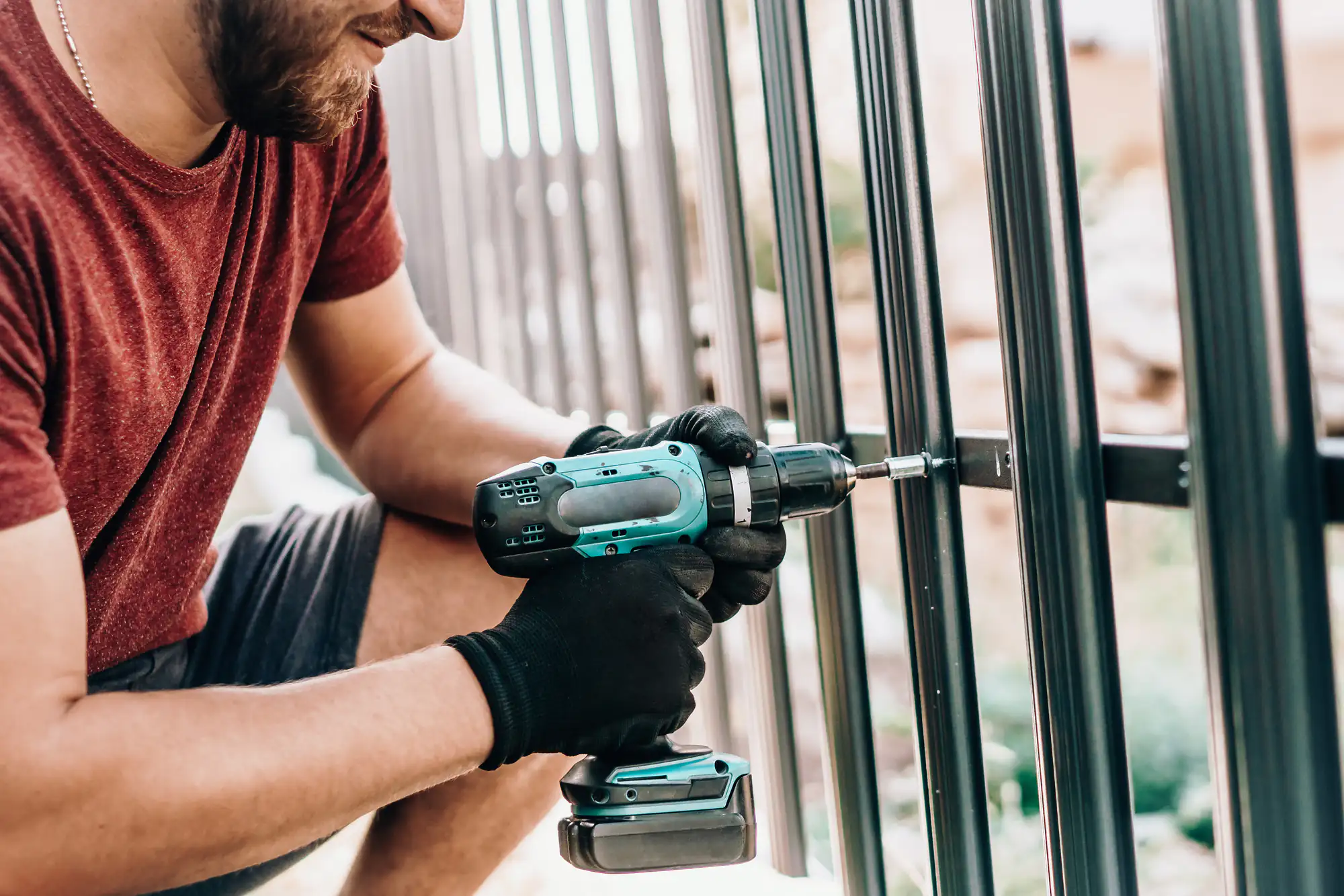
Concrete Post Repair: When You Can Stabilize vs. When You Have to Replace
Not every compromised post needs to come out of the ground. Sometimes a post that has shifted slightly can be stabilized by removing the surrounding soil, repositioning the post, and resetting it with fresh concrete. This is a legitimate repair when the post itself is structurally sound — meaning the wood hasn’t rotted and the post hasn’t cracked — and the movement was caused by inadequate original concrete rather than post degradation.
When it works, concrete post repair is faster and less expensive than full replacement. The process involves clearing the area around the post, checking the post for rot at the soil line (this is the critical step most DIYers miss), repositioning to plumb, pouring new concrete at the correct depth, and allowing it to cure fully before reattaching fence sections. Rushing the cure time is one of the most common mistakes — concrete needs time to reach working strength before load is applied, and skipping that step compromises the whole repair.
Full post replacement is necessary when the post has rotted at or below the soil line, when the concrete footing has spalled or cracked significantly, or when the post has been physically broken — by a vehicle impact, a falling tree limb, or storm force. In those cases, trying to save the post costs more in the long run than pulling it and starting fresh.
In Suffolk County specifically, the frost line consideration matters at every stage. Whether you’re stabilizing or replacing, the post needs to be anchored below 36 inches to prevent frost heave from restarting the problem the following winter. We verify this on every post job we do — it’s one of those details that separates a repair that holds from one that fails again by spring.
Before any post work begins, we also contact 811 — NY Dig Safely — to locate underground utilities. It’s a legal requirement in New York before any digging, and it’s a step some contractors skip because it adds a day or two to the timeline. We don’t skip it, because a gas line strike or electrical hit is not a recoverable mistake.
Local Fence Repair Companies in Suffolk County: What to Look For Before You Hire
Suffolk County has no shortage of fence companies in the area — from national franchises with local operators to small outfits running a truck and a trailer. The range in quality and accountability is wide, and the stakes are high enough that it’s worth knowing what to look for before you sign anything.
Licensing is the first filter. Home improvement contractors in Suffolk County are required to hold a Suffolk County Home Improvement Contractor license, issued by the Department of Consumer Affairs. An unlicensed contractor means you lose your legal protections if something goes wrong — including the right to file a complaint. Ask for the license number before the job starts. A legitimate company will give it to you without hesitation.
Insurance is the second filter. General liability and workers’ compensation are both required. If a worker is injured on your property and the contractor doesn’t carry workers’ comp, you can be held liable. This isn’t a hypothetical — it happens.
Beyond licensing and insurance, local experience matters in ways that are specific to this market. Suffolk County’s 10 towns — Babylon, Brookhaven, East Hampton, Huntington, Islip, Riverhead, Shelter Island, Smithtown, Southampton, and Southold — each have their own building codes and fence regulations. A company that operates primarily in Nassau County or that expanded to Long Island recently may not know, for example, that a front yard fence in most Suffolk County residential zones is limited to four feet, or that villages within towns — Amityville, Port Jefferson Village, Patchogue — sometimes have stricter rules than the surrounding town.
We’ve been working specifically in Suffolk County for over 15 years. That’s not a marketing line — it means we’ve pulled permits in Brookhaven’s building department, navigated Huntington’s regulations, and dealt with the coastal conditions in Islip and Southampton that inland contractors don’t encounter. When permit assistance is part of the job, we handle it. When property line verification is needed before repair work begins, we do it — using survey data or markers before a single post is touched. That’s what local experience actually looks like in practice.
Getting a Fence Repair Estimate That Actually Tells You Something
A fence repair estimate should answer two questions clearly: what exactly is being done, and why does it cost what it costs. If you can’t answer both after reading the quote, ask for more detail — or find a contractor who provides it upfront.
We give itemized estimates on every job. That means lineal footage, post spacing and depth, concrete volumes, and a clear breakdown of materials and labor. You see exactly what you’re paying for before anything starts. Combined with warranties on both workmanship and materials, it means there’s no ambiguity after the job is done either — if something fails, one call resolves it.
Whether you’re dealing with storm damage in Patchogue, frost heave in Commack, rot along a cedar fence in Setauket, or a gate that stopped working in Hauppauge, the path forward starts with an honest assessment. Reach out to Best Fence Long Island for a free, itemized fence repair estimate — and find out exactly what your fence needs, and what it’ll cost to fix it right.
FREQUENTLY ASKED QUESTIONS
FAQ 1: Q: What is the labor cost to repair a wood fence in Suffolk County?
A: Labor for wood fence repair in Suffolk County typically runs between $50 and $100 per hour, or roughly $15 to $35 per linear foot for labor alone — separate from materials. The total cost depends heavily on what the job actually involves. Replacing a few boards is straightforward. Replacing posts requires digging, concrete, and cure time, which adds both labor hours and material cost. In Suffolk County, where labor rates run 20 to 35 percent above the national average, most homeowners should budget $400 to $950 for typical repair jobs, with post replacement projects running $200 to $650 or more depending on scope. An itemized quote — one that breaks out lineal footage, post work, and concrete separately — is the only reliable way to understand what you’re actually paying for before the job starts.
FAQ 2: Q: Do fence companies take small jobs, or is it not worth calling for a few broken boards?
A: Small repairs are a standard part of what we do — not an inconvenience. If you have three broken pickets, a single rotted post, or a gate hinge that’s pulled loose from the frame, that’s a real job worth doing right. The risk with small fence repairs is handing them to someone who treats them as an afterthought — a quick fix that doesn’t address the underlying cause. A few broken boards near the soil line often indicate early rot that will spread to adjacent boards within a season or two if it isn’t properly cut out and replaced. We assess the full scope before quoting, even on small jobs, so you’re not paying to fix the same section twice.
FAQ 3: Q: Do I need a permit to repair my fence in Suffolk County?
A: For most routine repairs — replacing boards, resetting posts, repairing a gate — no permit is required in Suffolk County. The general threshold in most of the county’s towns is that fences six feet and under don’t require a building permit for standard repair work. Where it gets more complicated is if you’re modifying the height, changing the fence line, or doing work in a front yard where height limits apply (typically four feet in residential zones). Pool fencing has its own set of requirements under New York State law — a minimum four-foot barrier with specific gate and latch specifications. Villages within towns, like Port Jefferson Village or Amityville, sometimes have stricter rules than the surrounding town. If there’s any question about whether your specific repair requires a permit, we handle the permitting process as part of the job — navigating the town-by-town regulations in Suffolk County so you don’t have to.
FAQ 4: Q: Is it better to repair or replace a fence?
A: The honest answer is: it depends on how much damage exists and how much useful life the fence has left. A useful rule of thumb — if the repair cost is approaching 50 to 60 percent of what full replacement would cost, replacement usually makes more financial sense. Similarly, if more than 20 percent of the posts are compromised, post-by-post repair tends to cost more over time than replacing the run entirely. Age alone isn’t the deciding factor. A well-maintained cedar fence in Smithtown or Setauket can last 25 to 30 years with regular staining and sealing. A vinyl fence with a few cracked sections might be worth repairing if the posts and rails are sound. The best starting point is a site visit from someone who will tell you honestly what the fence needs — not just what generates the larger job.
Summary:
Table of Contents


Article details:
- Published by:
- Published to:
- Last modified:
- October 19, 2026
Share: