Commercial vs Residential Fence Contractors: Key Differences
Hiring a fence contractor but not sure what type you need? Here’s what actually separates commercial from residential specialists — and how to choose wisely.
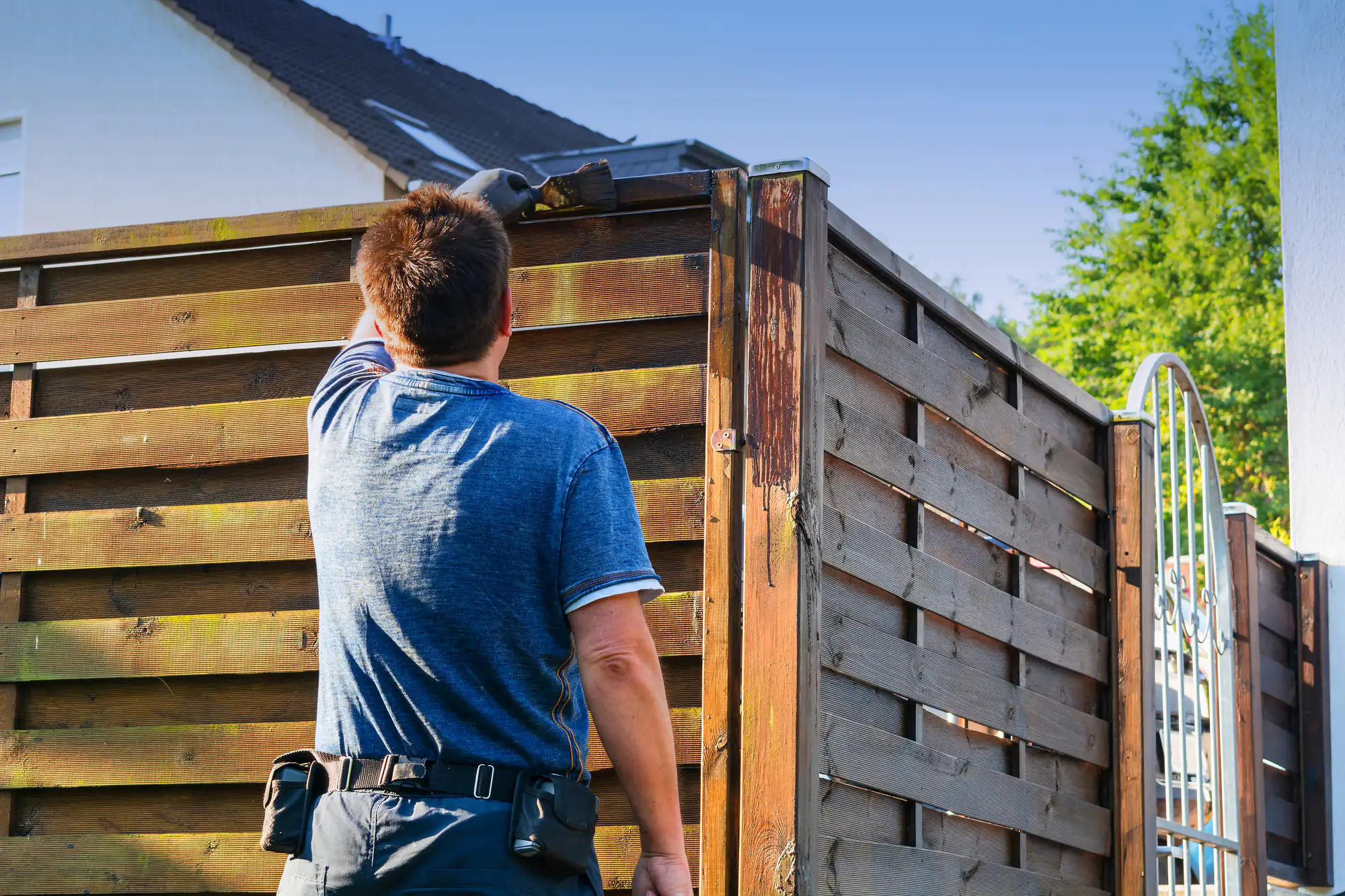
You’ve decided you need a fence. Maybe a storm took out a section, you just got a dog, or you’re finally putting in that pool. You search “fence contractors near me,” and suddenly you’re staring at a dozen options — some calling themselves commercial contractors, others residential specialists, others claiming they do both. What does any of it actually mean for you?
It matters more than most people think. The contractor you choose affects the materials you get, the permits that get pulled, and what happens if something goes wrong six months later. Here’s what you actually need to know before you commit.
What Commercial Fence Contractors Do Differently
Commercial fence contractors are built for scale, complexity, and compliance. They’re regularly working on school campuses, business parks, medical facilities, and municipal properties — jobs that require engineered drawings, higher insurance limits, ADA-compliant gate hardware, and a working knowledge of commercial building codes that most residential contractors never encounter.
That doesn’t mean commercial fence contractors are automatically better for every job. It means they’re equipped for a different set of problems. The real question isn’t which label a contractor wears — it’s whether they have the qualifications, process, and materials to handle your specific project properly.
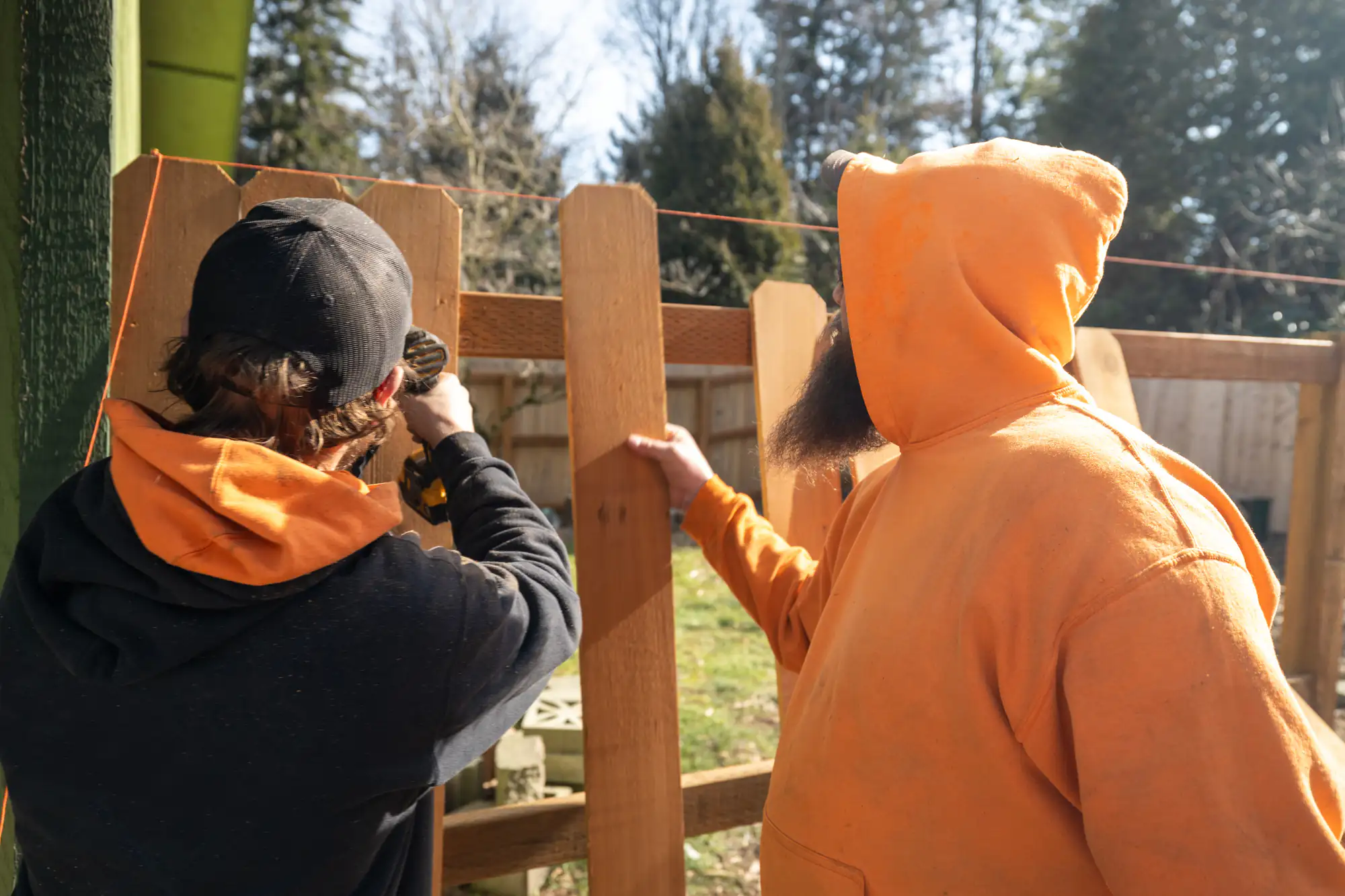
What Makes a Commercial Fence Company Qualified to Work on Your Property
Licensing and insurance are the floor, not the ceiling. In Suffolk County, any contractor doing home improvement work — including fence installation — is required to hold a Home Improvement Contractor license issued by the Suffolk County Department of Consumer Affairs. That license requires proof of general liability insurance, workers’ compensation coverage, and a surety bond. If a contractor can’t hand you those credentials when you ask, that’s your answer right there.
Beyond licensing, a genuinely qualified contractor — whether they call themselves commercial or residential — should be pulling permits, locating underground utilities before any digging starts, and verifying your property lines before a single post goes in. These aren’t extras. In Suffolk County, Call 811 utility locating is required by New York State law before any excavation. A contractor who skips that step is exposing you to liability for any utility damage that occurs.
Permit requirements vary across Suffolk County’s ten towns. What Islip’s building department requires isn’t necessarily what Huntington’s does. An experienced local contractor knows this. We’ve navigated Brookhaven’s process, we’ve worked with Southampton’s building department, and we’re not going to let a permit issue delay your project by three weeks because we didn’t know the local rules.
Materials are another dividing line. Commercial-grade fencing typically uses thicker rails, heavier pickets, and deeper post settings than standard residential materials. But here’s the thing — a quality residential contractor should be using materials and installation standards that are just as rigorous. If a contractor can’t tell you how deep they’re setting your posts or how much concrete they’re using per footing, that’s not a contractor who’s going to stand behind the work when a nor’easter rolls through.
How Suffolk County’s Soil and Climate Change What “Qualified” Actually Means
Long Island’s soil is not forgiving of shortcuts. Much of Suffolk County — particularly along the South Shore communities like Bay Shore, Lindenhurst, and Patchogue — sits on sandy, loamy soil that doesn’t grip fence posts the way clay-heavy inland soils do. That means post depth and concrete volume aren’t just specs on a quote. They’re the difference between a fence that holds through a storm and one that leans over by spring.
Anyone who lived through Superstorm Sandy in 2012 knows what a serious storm can do to fencing across the South Shore. Entire fence lines were gone overnight. The homeowners who fared best weren’t necessarily the ones with the most expensive fences — they were the ones whose contractors had set posts deep enough, used the right materials, and actually knew what they were building for.
Salt air is the other factor most contractors from outside the area underestimate. Communities along the Great South Bay, the North Shore harbors, and anything near the barrier islands are dealing with accelerated corrosion on metal components and faster degradation on lower-grade vinyl. American-manufactured materials with consistent quality control and proper coatings hold up significantly better in these conditions than cheaper imported alternatives — and that difference shows up within a few years, not decades.
When we provide a quote, we itemize it: lineal footage, post spacing, post depth, concrete volumes. That level of detail isn’t standard in this industry, but it should be. It means you know exactly what you’re getting, and we’re accountable to every line of it. No vague estimates, no surprises when the crew shows up.
Want live answers?
Connect with a Best Fence Long Island expert for fast, friendly support.
Privacy Fence Contractors vs. Full-Service Residential Fence Companies
Privacy fence specialists exist, and some of them do excellent work in a narrow lane. But when a contractor only installs one type of fence, they’re going to recommend that type of fence — regardless of whether it’s actually the best fit for your property, your HOA rules, or your municipality’s height restrictions.
A full-service residential fence company has installed thousands of privacy fences. We’ve also installed aluminum, chain link, vinyl, cedar, pool enclosures, and custom configurations. That breadth of experience means we’re recommending what’s right for your situation, not what we happen to sell.

How to Compare Residential Fence Companies Before You Commit
The quote is where most homeowners get tripped up. You get three estimates back, they’re all different numbers, and you have no idea what’s actually different between them. One contractor is setting posts 36 inches deep. Another is going 48 inches. One is using American-made vinyl. Another is using imported material at a lower gauge. None of that shows up in a lump-sum estimate — which is exactly why lump-sum estimates are a problem.
Ask every contractor you’re considering to itemize their quote. If they won’t, or if they can’t, that tells you something. A contractor who’s confident in their process and their materials has no reason to hide the specifics.
Beyond the quote, look at how the contractor handles the pre-installation process. Did they visit the property in person? Did they ask about underground irrigation, utility lines, or HOA restrictions? In communities like Cold Spring Harbor or Lloyd Harbor on the North Shore, mature landscaping and uneven terrain create real installation challenges that don’t show up on a phone estimate. In the Hamptons, HOA rules and architectural review boards can govern fence height, material, and color — a contractor who doesn’t ask about those restrictions upfront is going to create problems for you later.
Check their license with the Suffolk County Department of Consumer Affairs. It takes two minutes and it’s one of the most useful things you can do before handing anyone a deposit. A licensed contractor has insurance, a bond, and a legal obligation to complete the work as agreed. An unlicensed one has none of those things.
Warranty terms matter too, and they’re worth reading carefully. A labor warranty covers the installation. A materials warranty covers what was installed. Ideally, you want both — in writing, with specific terms, not a verbal promise that evaporates when you need it. Storm damage coverage is worth asking about specifically, given what Suffolk County weather can do to a fence line in a single night.
What a Quality Fence Company Actually Looks Like in Practice
Quality isn’t a feeling. It’s a set of specific, verifiable things a contractor either does or doesn’t do. They show up for the site visit. They verify your property lines before installation, not after a dispute with your neighbor. They locate utilities before they dig. They pull the required permits. They use materials they can name and stand behind. They leave the job site clean.
After 15 years working in Suffolk County, we’ve seen what separates a fence that lasts from one that doesn’t. It’s rarely the style. It’s almost always the installation process and the materials behind it. That’s why we use American-made materials across our full product line — not just for one product category — and why every quote we provide specifies exactly what’s going into the ground and how deep.
We also build for what actually happens here. Suffolk County homeowners deal with nor’easters, tropical storm remnants, and the occasional direct hit. Our warranty covers storm and vehicle damage specifically — because those are real events in this market, not hypotheticals. That kind of coverage doesn’t happen by accident. It comes from working in this county long enough to know what people actually need when something goes wrong.
For homeowners who want more flexibility after installation, we offer modular fence systems that allow you to make modifications yourself without calling a contractor back every time something needs to change. And for those investing in home security, our fence systems can integrate with smart home networks and mobile apps — something you won’t find most local fence companies offering at all.
The point isn’t to impress you with a list of features. It’s that a quality fence company thinks ahead. About your climate, your soil, your permit requirements, your long-term costs. That’s what 15 years in one market actually buys you.
Choosing the Right Fence Contractor in Suffolk County, NY
Commercial or residential, specialist or full-service — the label matters less than the qualifications behind it. What you’re really looking for is a contractor who knows this county, knows the permit process, uses materials worth standing behind, and puts everything in writing before a single post goes in the ground.
The mistakes that cost homeowners the most — fences built on the wrong property line, utility strikes during installation, permits that were never pulled — are almost always preventable. They happen when the process is rushed, the quote is vague, or the contractor is working somewhere they don’t actually know.
If you’re in Suffolk County and you want a straight answer about what your project actually requires, we’re a good place to start that conversation.
Summary:
Table of Contents


Article details:
- Published by:
- Published to:
- Last modified:
- October 19, 2026
Share: