
Fence Post Replacement Cost in Suffolk County, NY
Fence post replacement costs vary more than most people expect — especially on Long Island. Here’s what actually drives the price, and what to watch out for.

You noticed a post leaning. Or it snapped clean after the last nor’easter. Maybe it’s been slowly rotting at the base for a couple of years and you’ve been putting off dealing with it. Whatever brought you here, you’re probably trying to figure out what this is actually going to cost — and whether it’s worth repairing at all or just replacing the whole section.
The honest answer is: it depends, and the variables are more local than most cost guides let on. Long Island’s soil conditions, frost depths, and storm exposure all factor into what a proper repair costs and how long it lasts. Here’s what you need to know before you call anyone.
Fence Post Replacement Cost in Suffolk County, NY
In Suffolk County, fence post replacement typically runs between $150 and $400 per post, with total fence repair projects ranging from $222 to $1,441 depending on how many posts are involved, what’s underground, and how deep the new post needs to be set.
Wood posts are generally the least expensive to replace. Vinyl and aluminum posts cost more for materials but can save on labor if the surrounding panels are still intact. Concrete removal — pulling out the old footing before resetting a new post — adds roughly $50 to $100 per post to the total. That’s not a surprise charge a good contractor springs on you; it’s a standard part of doing the job right.

Broken Fence Post Repair: What the Job Actually Involves
A lot of homeowners assume broken fence post repair means pulling out the old post and dropping a new one in the same hole. In practice, it’s more involved than that — and understanding what the job requires helps explain why quotes vary so much.
First, the old post has to come out completely. That includes the concrete footing. Cutting a post at ground level and leaving the old concrete in place is a shortcut that some contractors take, but it creates problems. The new post ends up sitting alongside the old footing rather than being properly anchored below it, which means it’s more likely to shift or lean within a season or two.
Once the old post and footing are out, the hole needs to be dug to the correct depth. On Long Island, that means going below the frost line — which sits at 36 to 42 inches for Suffolk County. This is where a lot of older fences fail. Posts set at 24 inches, which used to be the standard rule of thumb, aren’t deep enough to resist frost heaving. Every winter, the freezing soil pushes those posts upward. Over a few years, what started as a plumb, solid fence starts to look like it’s slowly tipping over.
Long Island’s soil adds another layer of complexity. The South Shore — communities like Bay Shore, West Islip, Lindenhurst, and Patchogue — has particularly sandy, moisture-saturated soil that provides less lateral resistance than denser inland soil. That means posts need to go deeper, and the concrete footing matters more, not less. A gravel drainage base at the bottom of the hole helps prevent water from pooling around the base of the post, which is a primary driver of rot in wood posts.
After all of that, the new post gets set in fresh concrete, checked for plumb, and left to cure — typically 24 to 48 hours before panels are reattached. It’s not a same-day-start-to-finish job if it’s done correctly.
Concrete Post Repair: When the Footing Is the Problem
Sometimes the post itself is fine but the concrete footing has cracked, shifted, or been compromised by root intrusion or soil movement. Concrete post repair — resetting or replacing a footing without necessarily replacing the post — is a legitimate option in some cases, but it’s less common than most people expect.
The more typical scenario is that the footing and the post fail together. A cracked footing usually means water got in, froze, and expanded over multiple winters. If the post is still structurally sound, we can excavate around the existing footing, break it up, remove it, and reset the post in fresh concrete at the correct depth. If the post itself has rotted at the base — which is common in Suffolk County’s coastal environment, especially on the South Shore — then the post and footing both need to come out.
What makes concrete post repair tricky is what’s underground. In older neighborhoods across Suffolk County — Brentwood, Central Islip, Coram, Holbrook, and similar communities where a lot of housing was built in the 1960s and 1970s — you sometimes encounter old footings that are much larger than expected, or posts that were set alongside tree roots that have since grown around them. That’s not a reason to panic, but it is a reason to work with a contractor who does a proper site visit before quoting you, rather than giving you a number over the phone without ever seeing the job.
We include utility locating as a standard part of every post replacement job. New York State law requires calling 811 before any excavation, and we do that without exception. It protects your property and keeps the job from turning into something much more expensive than a fence repair. We also verify property lines during our site visit — which matters more than people realize in Suffolk County’s dense neighborhoods, where a post set six inches in the wrong direction can become a dispute with a neighbor.
Want live answers?
Connect with a Best Fence Long Island expert for fast, friendly support.
Broken Fence Post Repair vs. Full Replacement: How to Decide
The general rule in the industry is this: if the cost of repairs exceeds 40 to 50 percent of what full replacement would cost, you’re usually better off replacing. But that threshold doesn’t tell the whole story, especially for Long Island homeowners dealing with aging fences that were originally installed with shallow posts or untreated lumber.
If you have one or two damaged posts in an otherwise solid fence, repair almost always makes sense. If you’re looking at four or five posts with rot at the base, leaning in different directions, in a fence that’s already 20 years old, the math shifts quickly. You’d be spending real money to extend the life of something that’s going to need full replacement within a few years anyway.
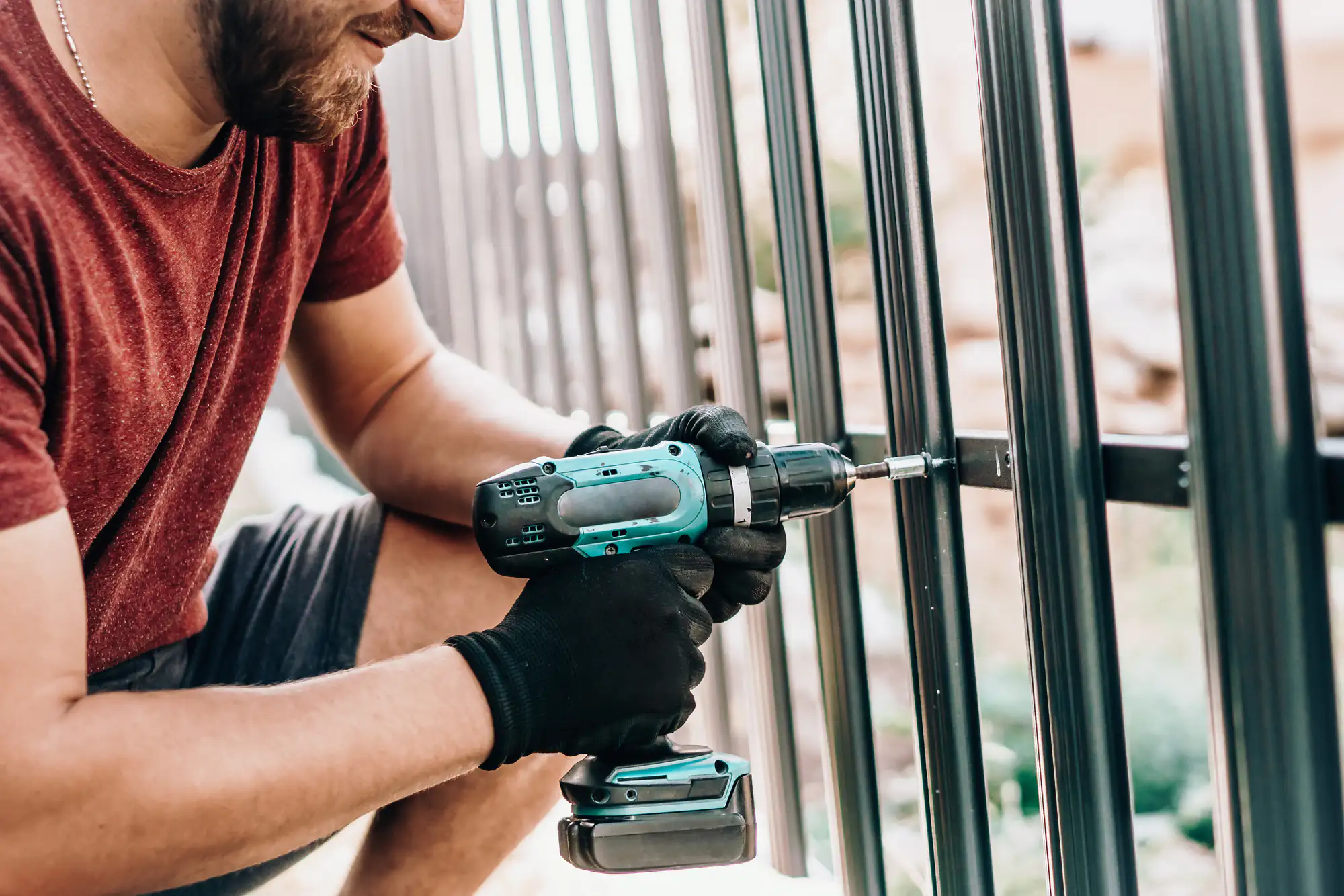
When Repairing One Post Is the Right Call
A single broken or storm-damaged post in a fence that’s otherwise in good shape is a straightforward repair. After a nor’easter rolls through — the kind that hits Huntington, Smithtown, and the North Shore towns hard in January and February — it’s not unusual for one or two posts to take the brunt of the damage while the rest of the fence holds. In that situation, targeted post replacement is the right move and the most cost-effective one.
The same logic applies after vehicle damage. If a car clips a corner post near a driveway in Ronkonkoma or Hauppauge, replacing that one post and reattaching the adjacent panels is a clean, sensible repair. There’s no reason to pull a whole fence section because one post got hit.
What makes a single-post repair worth doing — and worth doing properly — is the installation quality. A post set at the correct depth, in concrete, with a gravel drainage base, using pressure-treated lumber rated for ground contact, will last 15 years or more even in Suffolk County’s coastal environment. A post set at 18 or 20 inches without concrete will be leaning again by the time you’ve forgotten about it. The repair itself isn’t the variable. The installation standard is.
We use American-made materials on every job, including pressure-treated posts built to U.S. standards for ground contact in coastal environments. That distinction matters more than it might sound. Imported materials can carry inconsistent treatment ratings, which shortens their lifespan in the kind of salt-air, high-humidity conditions you get along the South Shore and in waterfront communities like Babylon, Islip, and Patchogue.
When It Makes More Sense to Replace the Whole Fence
There’s a version of this conversation that nobody wants to have, but it saves homeowners money in the long run. If a fence was originally installed with posts set too shallow — which describes a significant portion of the fences built in Suffolk County in the 1980s and 1990s — then repairing individual posts is a temporary solution to a structural problem. You’ll get a few more years out of it, but the underlying issue remains.
The same applies to wood fences where the rot isn’t isolated to one post. Rot spreads. It often starts at the base of a post where the wood meets the soil, but if the fence has been sitting in damp, sandy coastal soil for 15-plus years without proper treatment, there’s a good chance the rot extends into the rails and panels as well. Replacing three posts while leaving the rotted rails in place just means the fence fails again somewhere else.
For homeowners in communities like West Babylon, East Islip, or Medford — where a lot of the housing stock and original fencing dates back several decades — it’s worth having an honest conversation about total fence condition before committing to a repair budget. We do that as part of our site visit. If a full replacement makes more financial sense than repeated repairs, we’ll tell you that plainly, with the numbers to back it up.
Our quotes are itemized — lineal footage, post spacing, post depth, concrete volumes. Not a single number with no explanation. That level of detail lets you compare what you’re actually getting, not just what you’re paying, and it protects you from discovering halfway through a job that the scope was different than you expected.
Getting a Fair Price for Fence Post Replacement in Suffolk County
Fence post replacement in Suffolk County costs more than the national average when it’s done right — because doing it right here means accounting for frost depths, coastal soil conditions, concrete removal, and proper material selection. A single post repair can run $150 to $400, and a multi-post project can reach well over $1,000 once you factor in everything the job actually involves.
What matters most isn’t finding the lowest number. It’s knowing what that number includes. A quote that specifies post depth, concrete volume, and material type tells you something. A quote that just says “fence repair” doesn’t.
If you’re dealing with a leaning post, storm damage, or a fence that’s been declining for a few seasons, we offer free site visits across Suffolk County — with property line verification, utility locating, and a written itemized estimate so you know exactly what you’re getting before any work begins.
Summary:
Table of Contents



Article details:
- Published by:
- Published to:
- Last modified:
- October 19, 2026
Share: