
Fence Repair or Replace—Budget Decision Guide for Suffolk County Homeowners
Repair or replace? It’s the question every Suffolk County homeowner eventually faces. Here’s how to make the call without wasting money on the wrong one.

You noticed it after the last storm. Or maybe it’s been leaning for a while and you’ve been putting off the decision. Either way, you’re standing in your yard looking at a fence that clearly needs attention, and the question is the same one every homeowner across Suffolk County eventually asks: is it worth fixing, or is it time to start fresh?
There’s no universal answer. But there is a logical way to think through it — one that accounts for what you’ve already spent, what your fence is actually made of, and what kind of shape the posts are in. That last one matters more than most people realize.
When to Replace a Fence Instead of Repairing It
The repair-or-replace decision usually comes down to two things: how much of the fence is damaged, and whether the posts are still structurally sound. If more than 20 to 25 percent of the fence is compromised — rotted boards, broken panels, failing sections — most professionals will tell you replacement is the smarter financial move. At that point, you’re not really repairing a fence. You’re rebuilding one piece at a time.
The other trigger is cost. A useful rule of thumb: if the repair estimate approaches 50 percent of what a full replacement would cost, replacement is almost always the better long-term investment. You get a warranty, a fresh start, and years of reliable performance instead of another temporary fix on an aging structure.
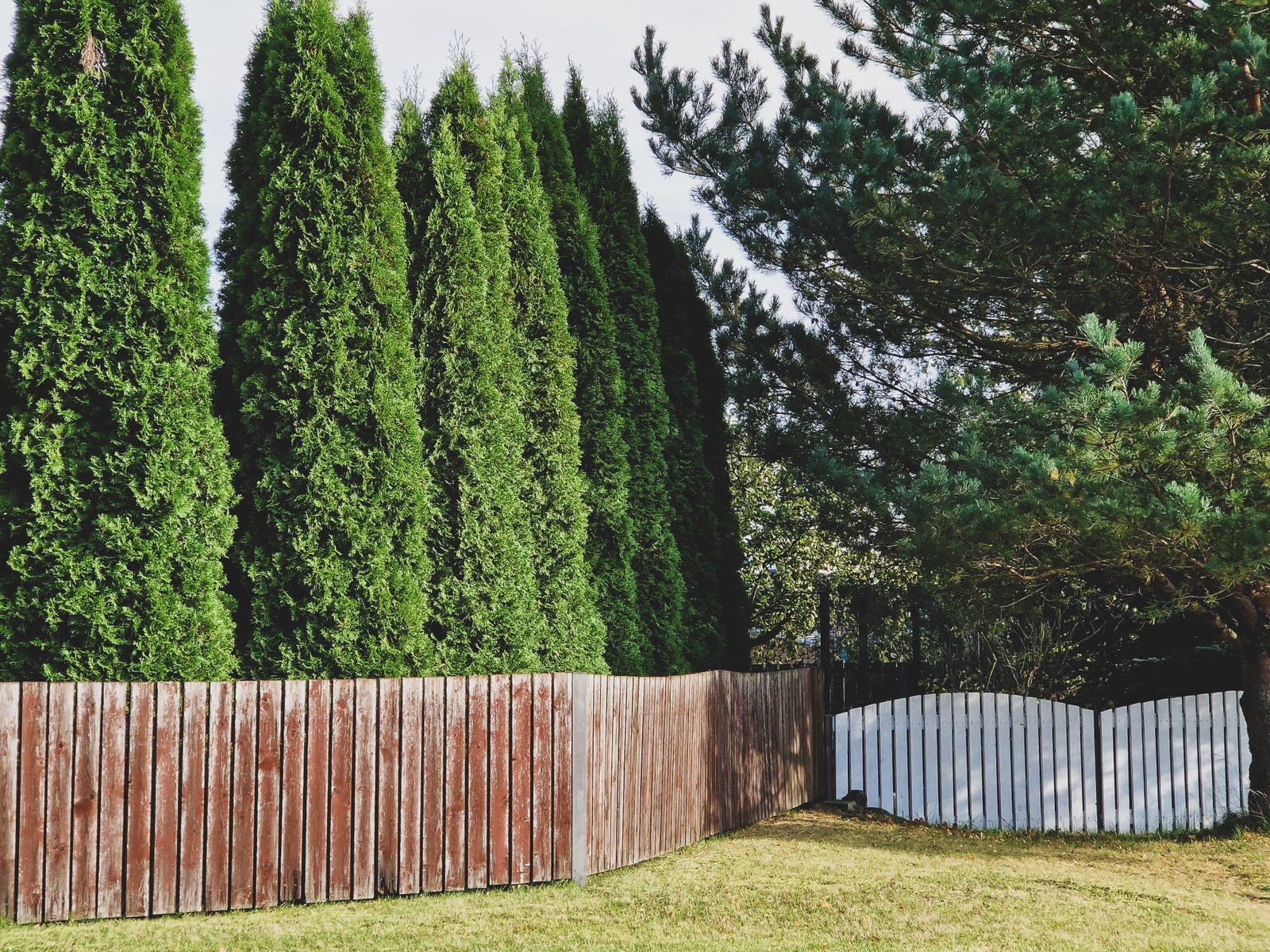
Is It Worth Repairing a Fence With Rotting Posts?
This is the question that changes everything, and it’s the one most homeowners don’t think to ask until a contractor points it out. You can replace every board on a fence, but if the posts are rotting underground, the whole thing will fail again — usually within a season or two.
Here’s the problem: post rot starts at ground level, where the wood meets soil and moisture. It’s invisible from the surface. A fence can look completely fine from ten feet away and have posts that are structurally compromised at the base. The way to check is simple — push on each post with both hands. If it moves, wobbles, or feels spongy near the ground, the post is failing. That’s not a repair. That’s a replacement.
This matters especially across Suffolk County. The freeze-thaw cycles we get every winter — water infiltrating the soil around posts, freezing, expanding, and heaving — accelerate post failure faster than national averages would suggest. By the time you’re seeing a lean or a gap in the fence line, the underground damage has often been building for years.
Sandy soil, which covers much of central and eastern Suffolk County, drains well but provides less lateral resistance than clay-heavy soil. Posts that lose their concrete footing integrity have nothing to hold them in place. If your posts are solid, a targeted repair often makes complete sense. A few rotted boards, a broken panel, a gate that won’t latch — these are fixable problems that don’t require replacing the whole structure.
But if the posts are going, no amount of surface repair is going to save you from having this same conversation again next year. The honest move at that point is to replace the fence properly, with posts set in concrete at the right depth, and move on.
The Cumulative Repair Cost Trap Most Homeowners Fall Into
Here’s a scenario that plays out constantly across Suffolk County: a homeowner repairs a section of fence after a nor’easter, spends a few hundred dollars, and figures the problem is solved. The following spring, another section goes. They fix that too. A year later, a post fails. They patch it. By the time they finally call for a full replacement estimate, they’ve spent well over a thousand dollars in cumulative repairs — sometimes more — on a fence that still has no warranty, no fresh posts, and no meaningful remaining lifespan.
The repair-is-cheaper assumption only holds when you’re looking at a single repair event in isolation. When you zoom out and add up what you’ve spent over three or four years, the math often tells a completely different story. A full fence replacement isn’t just a cost — it’s a reset. You get a written warranty on both the labor and the materials, you get posts set correctly in concrete, and you’re not going to be back in the same position two winters from now.
This is why we always recommend getting a full assessment before committing to another repair on an older fence. It’s not about pushing you toward the bigger job. It’s about making sure you’re not throwing good money after bad. If the fence has solid bones — sound posts, limited damage, a material that still has years of life in it — repair is absolutely the right call. But if you’ve been patching the same fence for years and it’s still giving you problems, the honest answer is usually that the fence has run its course.
Storm damage to a fence is sometimes covered by homeowner’s insurance, depending on your policy. Insurance typically covers damage from named perils — a nor’easter, a fallen tree, a vehicle impact — but it does not cover damage from age, rot, or general wear. If your fence came down in a storm, it’s worth a call to your insurer before you decide how to proceed. That coverage can change the financial picture significantly.
Want live answers?
Connect with a Best Fence Long Island expert for fast, friendly support.
Fence Lifespan by Material: What Suffolk County Homeowners Should Know
How long a fence lasts depends almost entirely on what it’s made of — and how well it was installed. The same material can last 10 years or 30 depending on post depth, drainage, and whether the right concrete was used. But material choice is still the biggest factor, and it’s worth understanding what you’re working with before you decide whether repair or replacement makes more sense.
Long Island’s climate adds a layer of complexity that national averages don’t capture. The combination of coastal humidity, salt air, and hard winters shortens the effective lifespan of wood and standard galvanized chain link compared to what you’d see in a drier, milder climate.

How Long Does a Wood Fence Last in a Long Island Climate?
Pressure-treated pine — the most common wood fence material in Suffolk County — typically lasts 10 to 15 years. Cedar and redwood can stretch to 15 to 25 years with proper maintenance, including staining every couple of years and painting every four or so. Most homeowners don’t keep up with that maintenance schedule, and the fences they installed in the 1990s and early 2000s are now well past their expected lifespan.
What accelerates wood fence failure on Long Island specifically is moisture. The South Shore communities — Patchogue, Babylon, Islip — deal with salt air that corrodes metal fasteners and hardware faster than inland areas. The North Shore isn’t immune either. High humidity throughout the warmer months keeps wood fence posts damp at ground level, which is exactly where rot starts.
Combine that with freeze-thaw heaving in winter and you have a climate that is genuinely harder on wood fences than the national averages account for. If you have a wood fence that’s 12 or more years old, already showing rot in any posts, and you’re deciding whether to repair it or replace it — the honest answer is that you’re likely looking at replacement within the next few years regardless. The question is whether you want to spend money on a repair that buys you one or two more seasons, or put that money toward a replacement that comes with a warranty and a material that will actually hold up.
That’s where the material upgrade conversation usually starts. A lot of homeowners in Centereach, Selden, and Ronkonkoma who come to us for a repair estimate end up asking about vinyl once they see the comparison. Not because we pushed them toward it, but because the lifespan difference is hard to ignore once it’s laid out clearly.
Vinyl, Aluminum, and Chain Link: Which Material Lasts Longest?
Vinyl fencing lasts 20 to 30 years — some premium products push past that — with almost no maintenance required. No staining, no painting, no rot, no insect damage. It doesn’t absorb moisture, which means Suffolk County’s humidity and freeze-thaw cycles don’t affect it the way they affect wood. The tradeoff is that vinyl can crack under significant impact, and a cracked panel usually means replacing that section rather than patching it. But that’s a very different problem from the slow, invisible rot that takes down a wood fence from the ground up.
Aluminum fencing is the longest-lasting option in this market — 50 years or more with proper care. It doesn’t rust, doesn’t rot, and the powder-coated finish resists chipping. For homeowners who want a fence they’ll never have to think about again, aluminum is typically the best lifetime value per dollar, even though the upfront cost is higher than wood or chain link.
Chain link sits in the middle. Galvanized chain link lasts 20 to 30 years, but once the galvanized coating wears through — usually around the 15 to 20 year mark — rust sets in quickly. Vinyl-coated chain link adds several years to that timeline and holds up better against salt air. If you have an older galvanized chain link fence showing rust at the posts or along the bottom rail, that’s typically a replacement situation rather than a repair.
Fence replacement often requires a permit, while repair typically does not. The rules vary by township across Suffolk County. We handle all permit paperwork for our customers — you don’t have to figure out which building department to call or what forms to file. It’s one less thing to deal with when you’re already managing a project.
How to Make the Final Fence Repair or Replace Decision
Start with the posts. If they’re solid, figure out how much of the fence is actually damaged and what a repair would cost relative to a full replacement. If the repair estimate is pushing toward half the cost of a new fence, replacement is almost certainly the smarter move. If you’ve already repaired this fence more than once in the past few years, add those costs up — the number might surprise you.
Material matters too. A 15-year-old wood fence on Long Island has had a full life. Putting money into it now means buying time, not solving the problem. A vinyl or aluminum replacement, installed correctly with posts set in concrete, will outlast anything you can do to extend the current fence’s lifespan.
If you’re not sure which way your fence falls, the most useful next step is a real on-site assessment — not a phone estimate, not a ballpark based on square footage, but someone who actually looks at the posts, checks the damage, and gives you a written, itemized quote you can make a decision from. That’s exactly what we do at Best Fence Long Island, and the assessment is free.
Summary:
Table of Contents


Article details:
- Published by:
- Published to:
- Last modified:
- October 19, 2026
Share: