
Swing Gate vs Sliding Gate: Which Works for Your Suffolk County Drive?
Not sure whether a swing gate or sliding gate fits your driveway? Here’s how to figure it out before you commit — and before you spend a dollar.
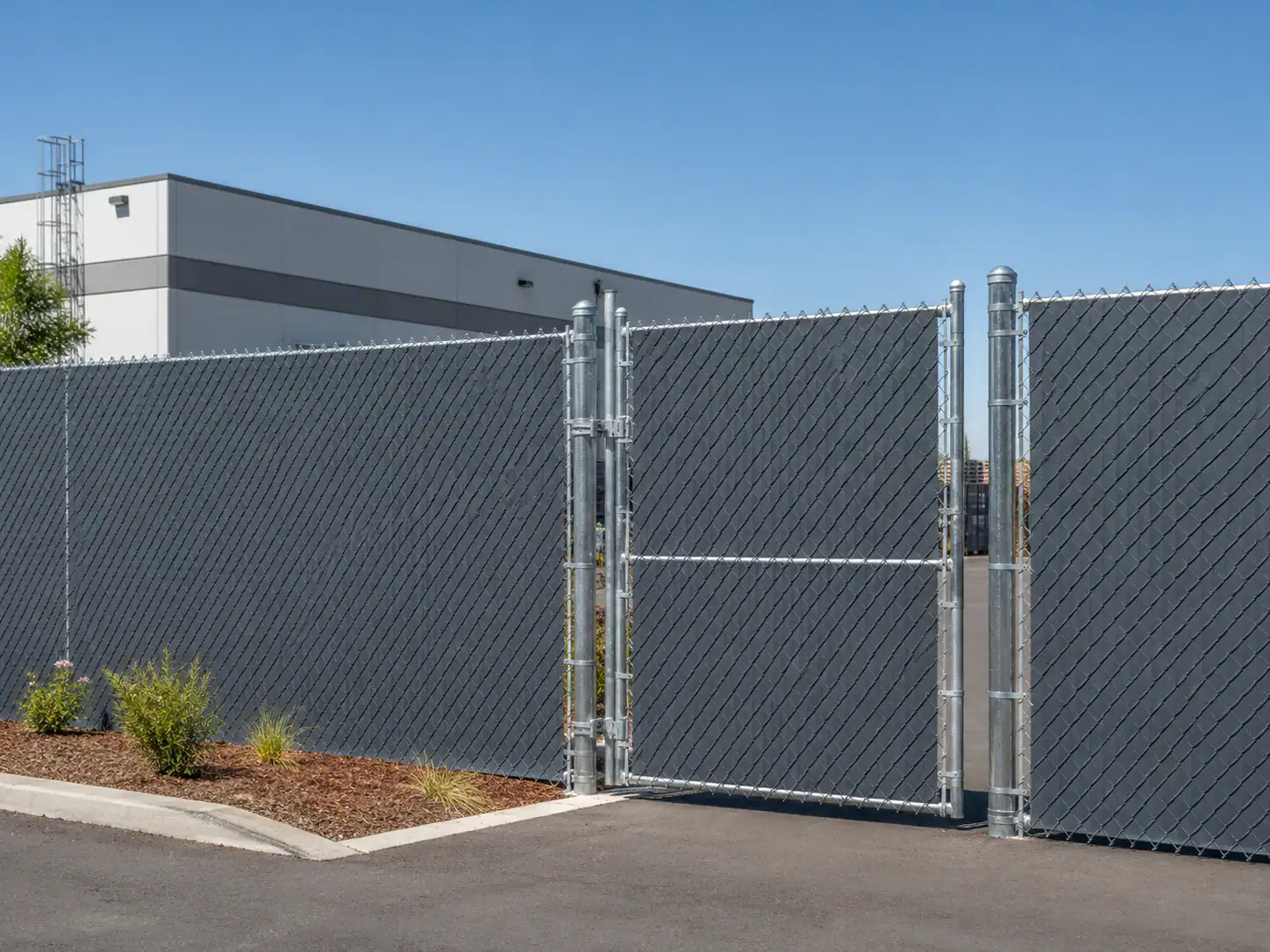
Most people pick a gate style the same way they pick a front door — they go with what looks right. And swing gates do look right. They have that classic, estate-feel that’s hard to argue with. But looks don’t tell you whether your driveway is deep enough to let one open fully, or whether a Long Island winter is going to leave you fighting a frozen track at seven in the morning.
The gate type that works best for your property depends on a few specific factors — and getting it wrong is an expensive lesson. Here’s what you actually need to know before you decide.
How an Automatic Swing Gate Works — and Where It Falls Short
A swing gate operates exactly like it sounds — it pivots open on hinges, either inward toward your property or outward toward the street. Single-leaf swing gates cover the full width of the opening in one panel. Double swing gates split that into two leaves that meet in the middle, which cuts the clearance requirement in half.
The appeal is real. Swing gates have a traditional look that fits well with most residential styles, and we generally find them simpler to install than sliding systems, which tends to keep the upfront cost lower. For a flat driveway with enough depth, they work well and hold up for years when properly installed.
The limitations show up fast when the conditions aren’t right — and across Suffolk County, the conditions often aren’t.

How Much Space Does a Swing Gate Actually Need?
This is where most homeowners get caught off guard. A single swing gate that covers a 12-foot-wide driveway needs 12 feet of clearance to open fully — meaning 12 feet of unobstructed space on your side of the gate. With the average car running around 15 feet long, you’d need roughly 27 feet of driveway depth just to park behind an open gate without blocking it. That’s a lot of real estate, and plenty of Suffolk County driveways — especially in denser neighborhoods like Ronkonkoma, Selden, or Lake Grove — simply don’t have it.
A double swing gate helps here. Each leaf only needs to swing half the width, so a 12-foot opening only requires about 6 feet of clearance per side. That’s a much more workable number for a standard suburban driveway, and it’s why double swing configurations are the more practical choice when a homeowner has their heart set on the swing gate look.
Slope is another critical factor. Swing gates need a relatively flat surface to arc open cleanly. If your driveway runs uphill from the street — which is common on the North Shore in areas like Port Jefferson and Smithtown, where the terrain gets hilly — an inward-swinging gate will hit the rising grade before it opens fully. You end up with a gate that technically works but never opens all the way, which defeats the purpose. This is one of those problems that’s easy to spot during a proper site assessment and nearly impossible to fix after installation.
Wind matters more than most national guides acknowledge, especially along Long Island’s coastline. A large swing gate panel acts like a sail in a strong nor’easter. That puts real stress on the hinges and on any automatic operator attached to it. Properties in Patchogue, Riverhead, or anywhere near the Great South Bay see enough wind that this is worth factoring into the decision — both in terms of gate type and in terms of how deep and solidly the support posts are set.
Do Swing Gates Work Well With Automatic Openers?
Yes — swing gates automate well, and it’s one of the reasons they remain popular for residential driveways. The most common setup uses an articulated arm or underground actuator that pushes or pulls the gate leaf through its arc. These systems are reliable, widely available, and work with most standard gate configurations.
The key is matching the operator to the gate’s weight and width. A heavy ornamental iron gate on a wide opening needs a more robust actuator than a lightweight aluminum panel on a 10-foot driveway. Getting that pairing right is part of what a proper installation involves — and it’s something that should be specified in your quote, not figured out on the day of install.
Any compliant automatic swing gate operator follows UL 325, the safety standard for automatic gate systems in the United States. That means entrapment protection — photo eyes, edge sensors, or pressure sensors — to prevent the gate from closing on a person or vehicle. If a contractor isn’t mentioning safety sensors as part of an automated gate installation, that’s a gap worth asking about.
Maintenance matters too. We recommend professional service at least once a year — checking for wear on the hinges, lubricating the operator, verifying that sensors are aligned and functioning. Suffolk County’s freeze-thaw cycles are hard on mechanical systems. Posts set in clay-heavy soil, which is common across central parts of the county, can shift slightly over winter and throw a gate subtly out of alignment. You might not notice it until the gate starts dragging or the operator starts straining. Annual service catches those issues before they become repairs.
Want live answers?
Connect with a Best Fence Long Island expert for fast, friendly support.
When a Sliding Driveway Gate Is the Smarter Call
A sliding gate moves laterally along a track — or, in the case of a cantilever system, floats across the opening on rollers without touching the ground at all. It doesn’t need clearance in front of it or behind it to open. It just slides to the side.
That makes it the practical answer for a lot of situations where a swing gate simply won’t work: short driveways, sloped terrain, properties where there’s no room on either side of the gate for a panel to arc through. For commercial properties or high-traffic entrances, sliding gates also hold up better under repeated daily use and are generally harder to force open.
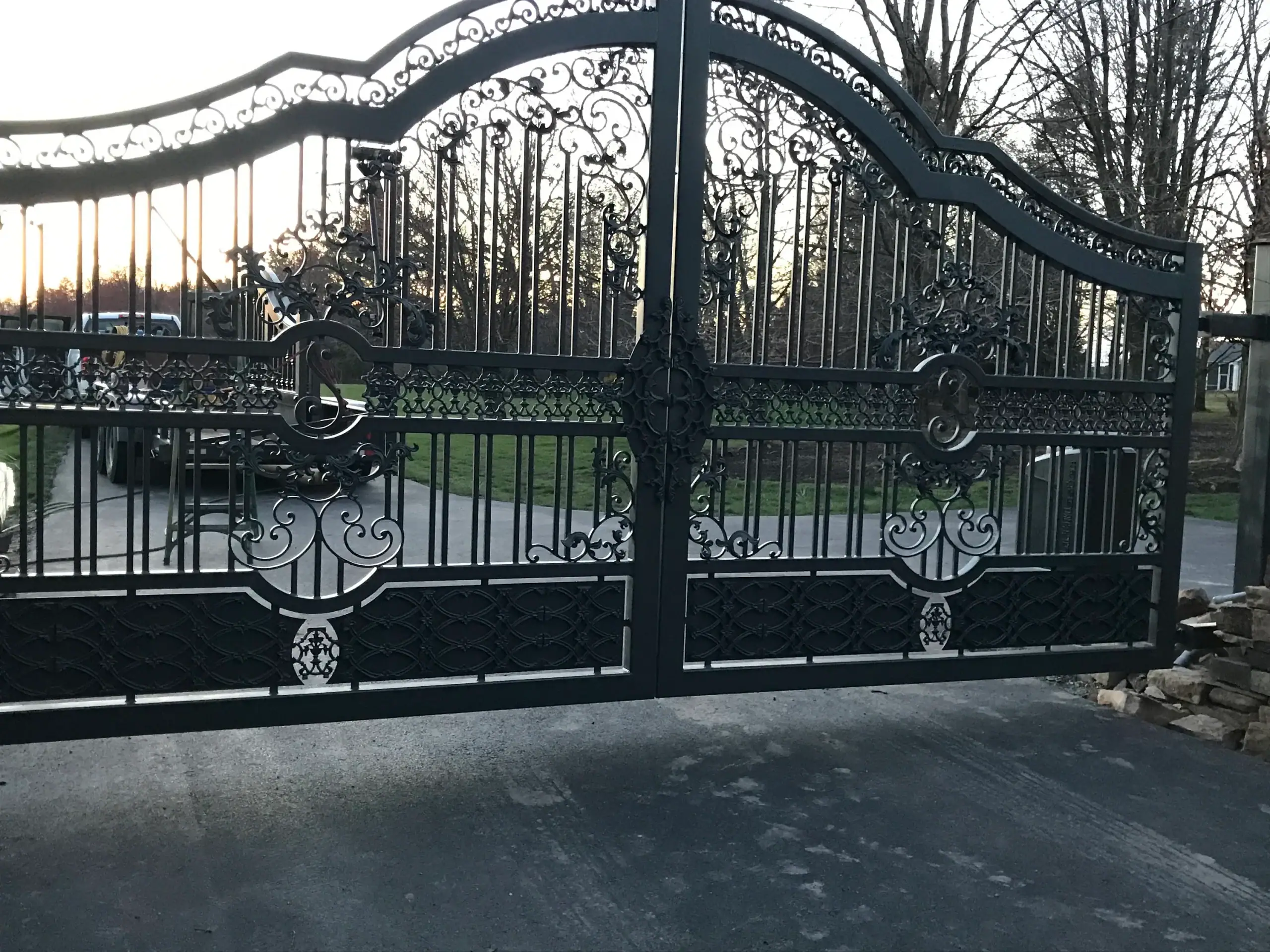
Cantilever vs. Track Sliding Gates — What’s the Difference?
Most people think of a sliding gate as having a ground track — a channel the gate rolls along at the base. That’s one version, and it works well on clean, level surfaces. The problem is that ground tracks collect debris. Leaves, gravel, mud, and in a Long Island winter, snow and ice. A track that’s frozen or packed with debris is a gate that won’t open, which is a real operational problem and not a hypothetical one.
Cantilever sliding gates solve this. Instead of rolling along a ground track, the gate panel is suspended on rollers mounted to a post structure on one side, and it glides across the opening without any ground contact at all. There’s nothing to freeze, nothing to clog, and nothing for snow to pack into. For Suffolk County properties where winter maintenance is already enough of a headache, cantilever systems are worth the additional hardware cost.
The trade-off is that cantilever gates require a longer panel than the opening width — typically 30 to 50 percent longer — to account for the counterbalanced tail section that stays behind the support post. A 12-foot driveway opening might need an 18-foot gate panel. That requires enough lateral space on one side of the driveway to park the tail section when the gate is open. It’s not a deal-breaker, but it’s something to measure before committing to the design.
Sloped driveways are where sliding gates — cantilever or track — consistently outperform swing gates. If your driveway runs uphill from the street, a sliding gate doesn’t care. It moves horizontally regardless of what the ground is doing beneath it. That’s why sliding gates are the standard recommendation for North Shore properties in Port Jefferson, Smithtown, and the hillier parts of Brookhaven Township, where flat driveway approaches are the exception rather than the rule.
Driveway Gate Cost: What Affects the Price Between the Two Types
Swing gates are generally less expensive upfront. The hardware is simpler, the installation is more straightforward, and for a standard residential driveway with the right conditions, the total installed cost tends to come in lower than a comparable sliding gate setup.
Sliding gates cost more — primarily because of the hardware involved. The track or cantilever system, the rollers, the support structure, and the operator all add up to a more complex installation. That said, the gap isn’t always as wide as people expect, especially when you’re comparing a double swing gate with quality hardware against a basic sliding system. The real cost driver is configuration: width, material, automation, and whether the installation requires any site prep like grading or concrete work.
One thing that affects cost more than most homeowners realize is the permit question. Suffolk County is divided into 10 separate towns — Brookhaven, Smithtown, Islip, Babylon, Huntington, Riverhead, and the rest — and each one has its own building department with its own rules around gate height, automated systems, and what requires a permit. Some towns require permits for any automatic gate installation. Others have height thresholds. Getting this wrong means installing a gate that has to come down, or paying fines after the fact. We handle the permit paperwork for every town in Suffolk County, which removes that variable entirely and makes sure the job is done right from the start.
If you’re planning a full fence installation along with your gate, it’s worth knowing that we include a free gate with every fence installation of 100 feet or more. It’s our most straightforward offer and one of the better deals in the local market — especially when you’re already budgeting for the full project. All of our materials are American-made, every installation comes with a written workmanship warranty, and the quote you receive is the final price. No adjustments at the end, no surprise line items.
How to Choose the Right Driveway Gate for Your Suffolk County Property
If your driveway is flat, deep enough, and sheltered from heavy wind, a swing gate is a solid choice that tends to cost less and looks great. If your driveway slopes, runs short, sits in a wind-exposed area, or you’re worried about winter performance, a sliding gate — particularly a cantilever system — is likely the better fit for the long run.
The only way to know for certain is to look at your specific property. Driveway depth, slope, soil conditions, available lateral space, and your town’s permit requirements all factor in. Getting those details right at the start is what separates a gate that works for years from one that causes headaches by the second winter.
Best Fence Long Island offers free on-site estimates with itemized written quotes — no vague totals, no pressure. We serve all of Suffolk County from our home base in Centereach, and we’re available around the clock to answer questions and schedule a visit.
Summary:
Table of Contents


Article details:
- Published by:
- Published to:
- Last modified:
- October 19, 2026
Share: