Metal Fence Repair in Suffolk County’s Coastal Climate
Suffolk County’s salt air, nor’easters, and freeze-thaw cycles are brutal on metal fencing. Here’s what you need to know before the rust gets ahead of you.

If you live in Suffolk County and you’ve got a metal fence, you already know it takes a beating. The salt air coming off the Great South Bay, the nor’easters that roll through every winter, the humidity that never really lets up — it all adds up faster than most homeowners expect. What might last 25 years in a dry inland climate can start showing serious corrosion in half that time here.
This page is for homeowners who are looking at rust spots, a leaning post, or damage from the last storm and trying to figure out what to do next. We’ll walk you through what’s actually happening to your fence, how to make the repair-vs.-replace call, and what proper treatment looks like when it’s done right.
How Suffolk County’s Coastal Environment Accelerates Metal Fence Corrosion
Most rust and corrosion guides are written for generic climates. Suffolk County is not a generic climate. You’re dealing with salt air from multiple directions — the Atlantic to the south, Long Island Sound to the north, and the Great South Bay and Peconic Bay systems in between. Even if your property isn’t directly on the water, that salt travels inland with the wind and settles on every metal surface it touches.
Salt doesn’t just make things look bad. It draws moisture in and holds it against the metal, which is exactly the condition rust needs to spread. Add in the freeze-thaw cycles that hit Long Island every winter — where water gets into small cracks or corroded areas and expands when it freezes — and you’ve got a compounding problem that moves faster than most people realize.
Why Metal Fence Posts Rust at the Base First
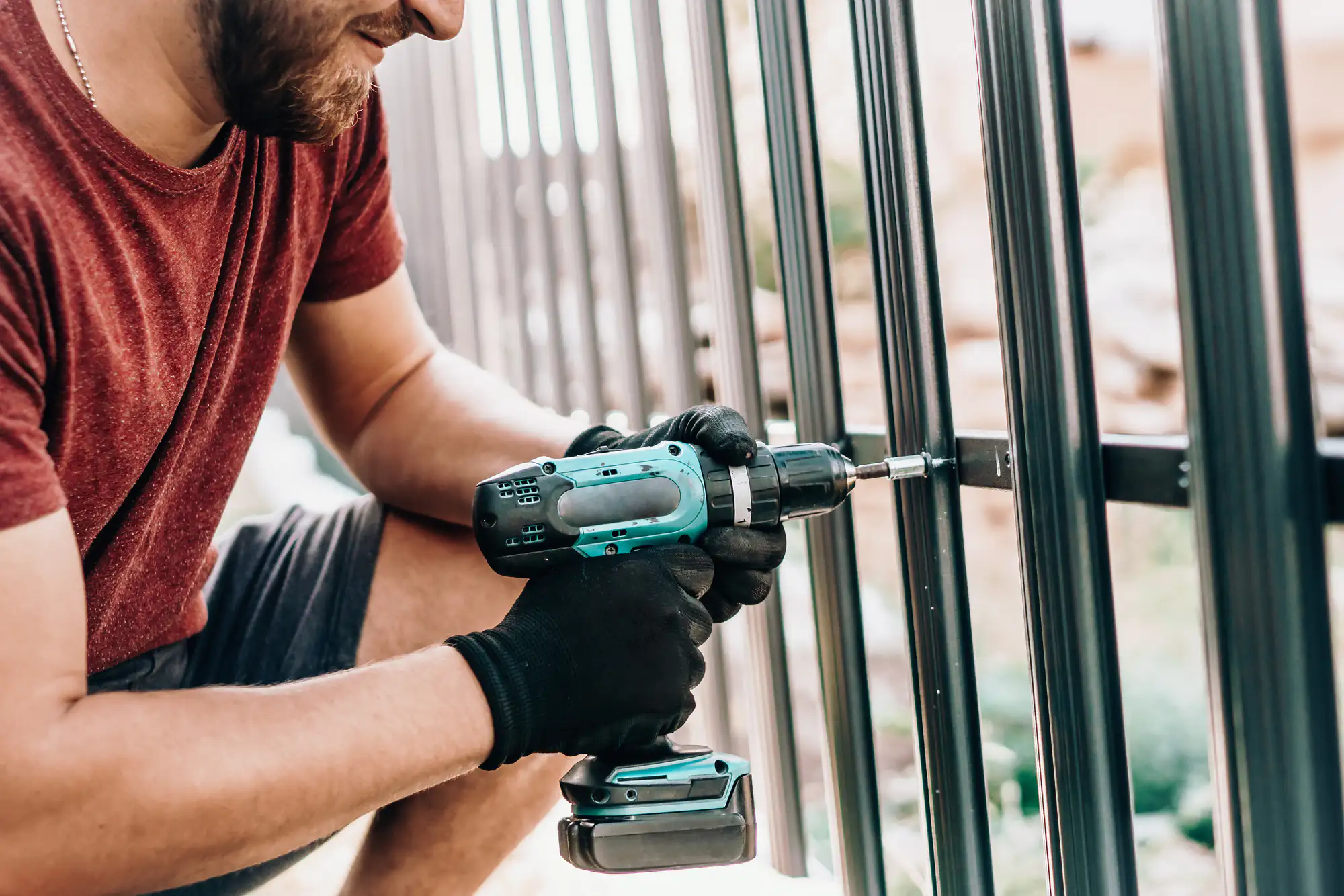
If you’ve noticed that your fence looks fine at eye level but is deteriorating near the ground, that’s not a coincidence. The base of a fence post — right at and just below grade — is where oxygen and moisture are most concentrated. It’s also where water pools after rain and where road salt and soil minerals collect over time. That combination creates the ideal environment for corrosion to start, often before you can see any surface rust above ground.
In Suffolk County, this problem is made worse by the freeze-thaw cycles that run through late fall and winter. When water infiltrates a corroded post base and freezes overnight, it expands. Do that dozens of times over a winter and you’re accelerating structural damage significantly. By spring, what looked like a surface issue has often become a structural one.
This is also why a fence that appears solid from the street can be dangerously unstable. A post that’s rotting at the base doesn’t announce itself — it just leans a little more after each storm until it finally gives. If you’re seeing any lean at all, especially after a nor’easter or a hard freeze, that’s worth having looked at before it becomes a bigger problem.
The other thing worth knowing: corrosion at the base often spreads upward through the post over time, especially if the original coating was damaged during installation or has worn through from years of exposure. Once moisture has a path in, it follows it. That’s why catching post corrosion early — before it compromises the weld connections or the concrete footing — makes a real difference in whether repair is still a viable option.
What Salt Air Does to Fence Hardware, Gates, and Welds
People focus on the fence panels themselves, but the hardware is usually where coastal deterioration shows up first. Hinges, latches, screws, and spring mechanisms are often made from standard zinc-plated steel — which works fine in a dry inland environment but corrodes quickly in the kind of salt-air conditions you get across Suffolk County. A latch that’s stiff, a gate that won’t close properly, or a hinge that’s seized up are often early signs that the hardware has given out, even when the panels still look acceptable.
Welds are another vulnerable point. Metal fence panels are welded at the joints, and those welds — if not properly coated and maintained — become entry points for moisture. Once rust gets into a weld, it can compromise the structural connection between sections faster than surface rust compromises the panel itself. If you push on a section of your fence and it moves more than it should, or if you can see rust radiating outward from a weld point, that section likely needs more than a coat of paint.
Gate alignment is a practical issue too. A gate that’s dragging, not latching, or swinging on its own isn’t just annoying — it’s often a sign that the post it’s hung on has shifted, either from ground movement, post heaving from a freeze-thaw cycle, or corrosion at the base. Fixing the latch without addressing the post is a temporary solution at best.
For properties near the water — Bay Shore, Islip, communities along the Sound in Huntington and Smithtown, or anywhere on the East End — marine-grade stainless steel hardware is worth the upgrade. It holds up significantly longer in high-salt environments and reduces how often you’re dealing with seized or failed hardware between professional service visits.
Want live answers?
Connect with a Best Fence Long Island expert for fast, friendly support.
Metal Fence Repair vs. Replacement: How to Make the Right Call
This is the question most Suffolk County homeowners are actually trying to answer when they start researching metal fence repair. The honest answer is: it depends on what you’re working with.
The general industry benchmark is that if more than 20 to 25 percent of your fence needs attention, replacement often makes more financial sense than piecemeal repairs. But the percentage alone doesn’t tell the whole story. The depth of the corrosion, the condition of the posts, and how much service life the remaining fence realistically has left all factor into the decision. A fence that’s 15 percent damaged but has severely compromised posts is a different situation than one that’s 30 percent damaged with solid structural bones.
Surface Rust vs. Structural Rust: Why the Difference Matters
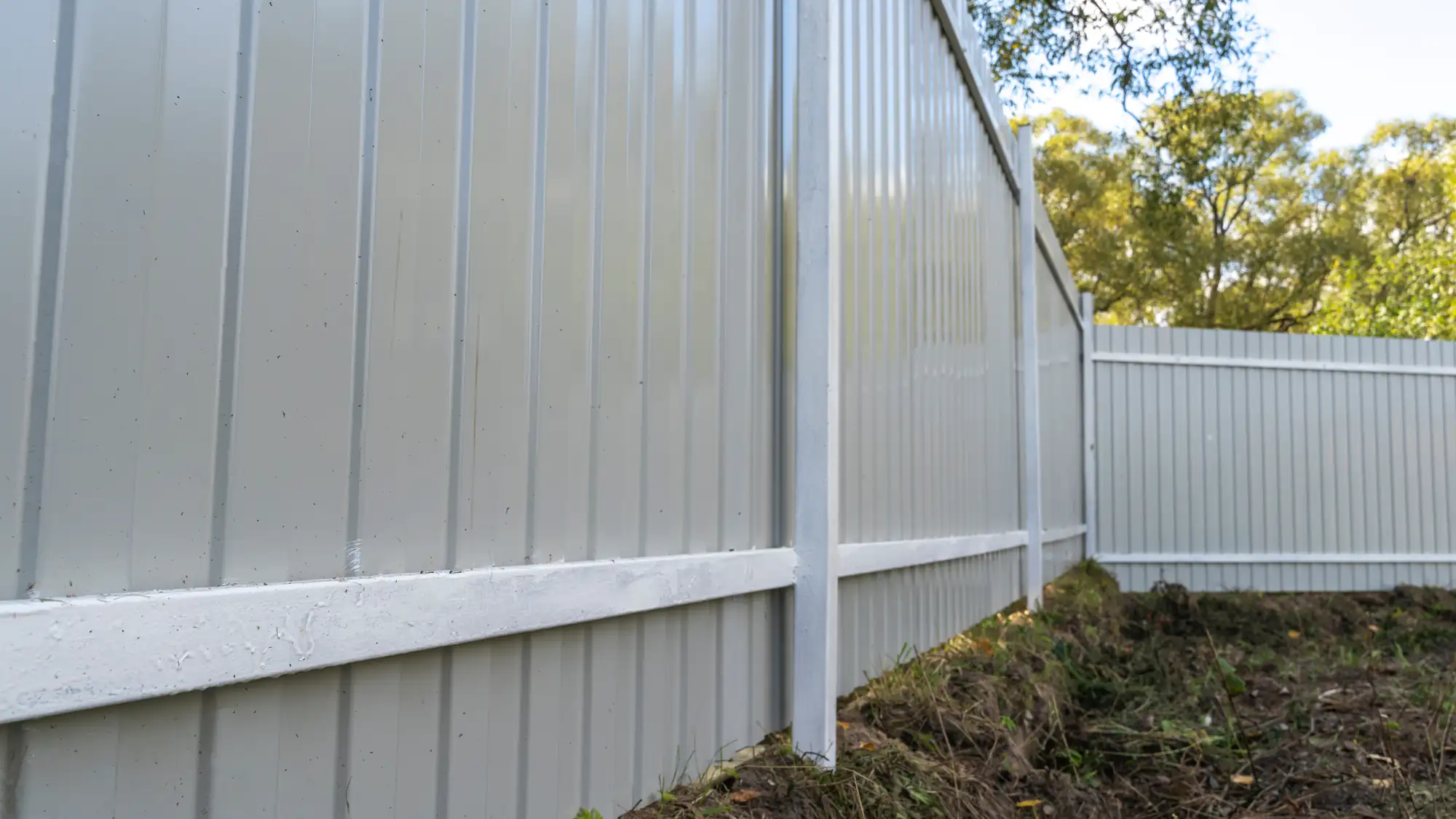
Not all rust is the same, and treating it the same way leads to wasted money. Surface rust — the reddish-brown discoloration that appears on the outer coating of a metal fence — is a cosmetic problem when it’s caught early. The metal underneath is still intact. With proper mechanical cleaning, a rust converter treatment, priming, and a quality topcoat, surface rust can be stopped and the fence restored to a condition that holds up for years.
Structural rust is different. This is corrosion that has eaten into the metal itself, creating pitting — small craters or voids in the surface. Once the metal is pitted, you’re not dealing with a coating failure anymore. You’re dealing with a material failure. Painting over pitted metal doesn’t restore its strength; it just covers the problem temporarily. Sections with structural rust typically need to be replaced, not treated.
The distinction matters practically because it changes the scope and cost of the project significantly. A fence with surface rust across several sections might be fully restorable at a fraction of the cost of replacement. A fence with pitting concentrated in a few key sections — especially posts or weld points — might be better addressed by replacing those sections specifically while leaving intact panels in place.
Over 15 years of working on metal fences across Suffolk County, we’ve seen both scenarios more times than we can count. The homeowners who come to us early — before surface rust has had two or three more winters to work its way deeper — almost always have more options and spend less money. The ones who wait until a section falls over in a storm are usually looking at a full replacement conversation.
One practical test: drag a screwdriver or key across the rusted area with moderate pressure. If the metal feels solid and the rust is just on the surface, you’re likely dealing with a treatable situation. If the metal flexes, crumbles, or the tool sinks in, the corrosion has gone deeper than a coating treatment can address.
How Professional Rust Treatment Actually Works on Long Island Metal Fences
There’s a right way to treat rust on a metal fence and a wrong way. The wrong way — which unfortunately is common — is to wire-brush the loose rust off, spray a coat of paint over it, and call it done. That approach fails within a season in Suffolk County’s climate because it doesn’t neutralize the remaining rust or seal the metal against future moisture intrusion.
The right process starts with thorough mechanical removal of all loose rust and deteriorated coating. Depending on the severity, that might mean wire brushing, power washing, or an angle grinder with a wire wheel attachment. For significant corrosion, sandblasting is the most effective approach because it gets into the texture of the metal in a way that hand tools can’t.
After mechanical removal comes chemical treatment — a rust converter applied to any remaining rust. Quality rust converters use phosphoric or tannic acid to chemically neutralize the iron oxide and convert it into a stable compound that actually bonds to the metal surface. This step is what separates a repair that lasts from one that doesn’t. Once that’s dry, an oil-based metal primer goes on to create a bonding surface and an additional moisture barrier.
The topcoat is where the long-term protection lives. For metal fences in coastal environments like Suffolk County, powder coating is the superior option. It creates a harder, more uniform barrier than liquid paint, with better adhesion and significantly better resistance to the salt and humidity that would break down a standard painted finish within a few years. If powder coating isn’t practical for an on-site repair, a high-quality oil-based metal paint applied in proper conditions is the next best option.
We use American-made materials throughout this process — not because it’s a marketing line, but because domestic metal fencing and coating products are manufactured to ASTM standards that specify minimum coating thickness and adhesion. In a coastal environment, those specifications translate directly into how long the repair holds. Imported materials often have thinner coatings that fail faster under constant salt-air exposure, which means you’re back to dealing with the same problem sooner than you should be.
Getting Metal Fence Repair Right the First Time in Suffolk County
The bottom line is that metal fence repair in Suffolk County is not the same job it is somewhere else. The salt air, the nor’easters, the freeze-thaw cycles, the pool fence code requirements — all of it means that the materials, the process, and the person doing the work need to be calibrated for this specific environment. Generic approaches produce generic results, and in this climate, that usually means you’re dealing with the same problem again in a few years.
If your fence is showing rust, leaning after a storm, or the gate just isn’t closing the way it used to, it’s worth getting a professional set of eyes on it before the problem gets ahead of you. An honest assessment — one that tells you whether repair makes sense or whether you’re better off replacing — costs you nothing upfront and saves you from making a decision you’ll regret.
We’ve been working on metal fences across Suffolk County for over 15 years. We provide itemized quotes, verify property lines before any work begins, and back everything we do with warranties on both labor and materials. If you’re ready to figure out what you’re actually dealing with, we’re ready to help.
Summary:
Table of Contents


Article details:
- Published by:
- Published to:
- Last modified:
- October 19, 2026
Share: