
Storm Season Fence Prep: Long Island Weather Guide
Long Island’s storm seasons are long and unforgiving. Here’s what every Suffolk County homeowner should know about protecting their fence before the next one hits.
If you’ve lived in Suffolk County long enough, you already know what a bad nor’easter can do to a fence. Panels down, posts leaning, gates hanging off one hinge — sometimes all before sunrise. And that’s before hurricane season even starts. Long Island doesn’t really get an off-season when it comes to storm risk, which means your fence is being tested almost year-round. This guide covers what to look for before a storm hits, how to handle fence wind damage when it does, and what the insurance process actually looks like when you’re filing a claim. No fluff — just the stuff that actually matters.
Pre-Storm Fence Inspection: How to Spot Weak Points Before the Wind Does
The best time to find a problem with your fence is before a storm reveals it for you. A fence that looks fine from the driveway can have serious structural issues at ground level — loose posts, deteriorating concrete footings, corroded hardware — that won’t hold up when wind speeds climb past 50 mph. At that threshold, the physics of a solid-panel privacy fence work against you. It acts like a wall, catching the full force of the wind rather than letting it pass through.
Start your inspection at the posts, not the panels. Walk the fence line and push firmly on each post. Any movement — even slight — means the footing has shifted or the concrete has failed. In Suffolk County’s sandy coastal soils, this is more common than people expect. Sandy soil gives posts less lateral support than clay-heavy inland soil, so footings need to be deeper and better reinforced to compensate. If your fence was installed without attention to post depth and concrete volume, you may already have a problem you can’t see.

Fence Wind Damage: What Usually Fails First — and Why
Gates go first. It’s almost always the gates. They’re heavier than standard panels, they carry more leverage against the post, and they’re only as strong as their hinges and latch hardware. During a nor’easter with sustained winds in the 40–60 mph range — which is exactly what Suffolk County’s south shore communities like Babylon, Bay Shore, and Islip regularly see — a gate that wasn’t properly reinforced will pull the post with it when it goes.
After gates, the next most common failure point is the post base. This is especially true for vinyl fencing, which looks intact from above but often develops small crimps or cracks at ground level after a storm. Those cracks are structural. A post that survived one storm with hidden damage at the base is not going to survive the next one. If you’re doing a post-storm walkthrough and the posts look fine, get closer. Look at the base where the post meets the ground. Any deformation there is a sign the post needs to come out, not just be straightened.
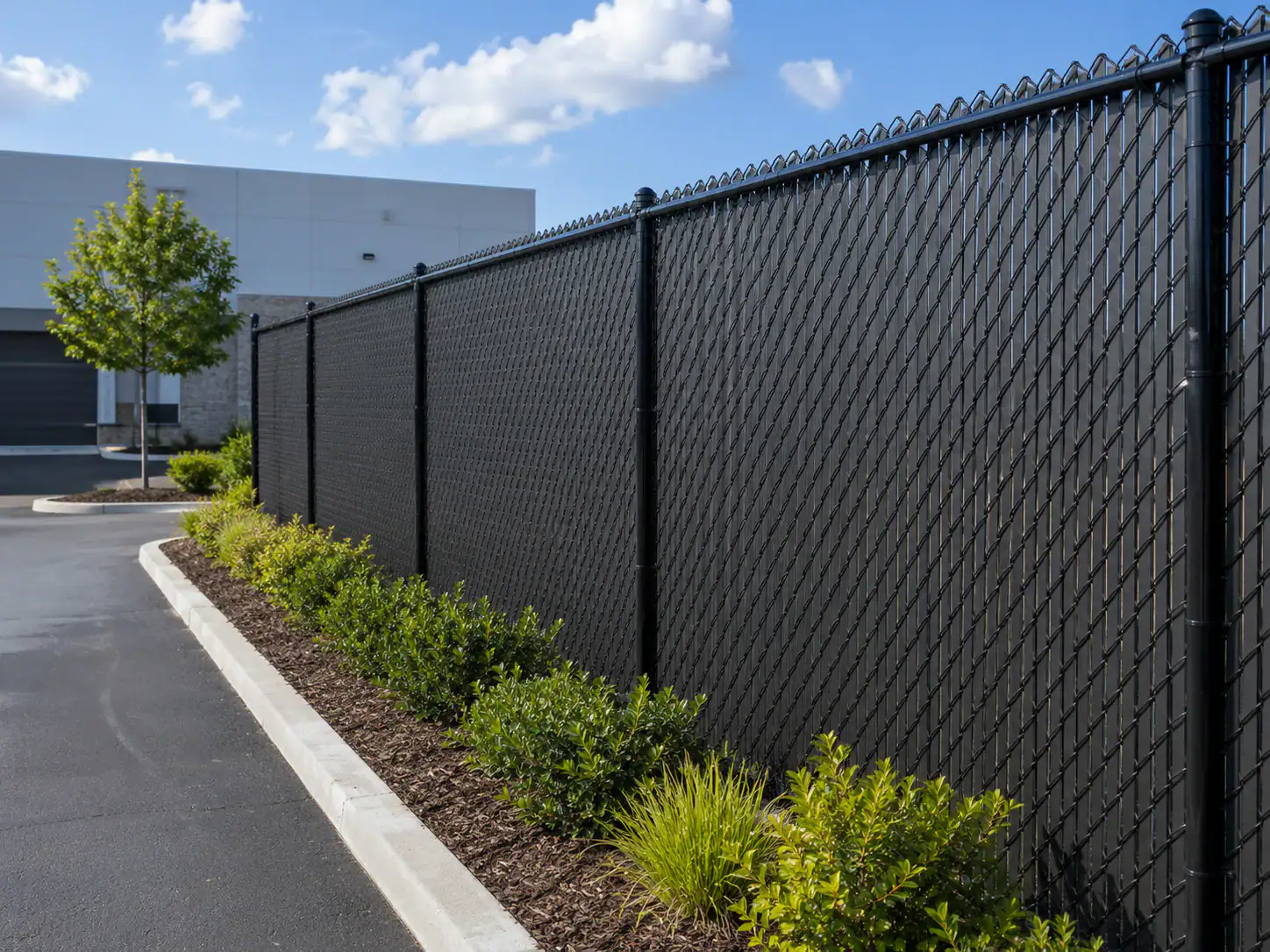
Solid-panel wood and vinyl privacy fences take the hardest beating in high winds because they offer no path for air to pass through. Open-style fences — aluminum picket, chain link — shed wind much more effectively and are significantly less likely to fail in the same conditions. That doesn’t mean they’re invincible, but it does explain why two fences on the same block can have completely different outcomes after a storm. It’s not always about installation quality. Sometimes it’s just about which fence the wind found a path around and which one it hit straight on.
Flying debris during a storm doesn’t just come from your yard. Neighboring fence panels, roof shingles, patio furniture — all of it becomes airborne in a bad storm. Compound damage from debris impact is common and often gets misread as pure wind failure. When you’re assessing damage after a storm, look for impact marks on posts and rails. That context matters when you’re talking to an insurance adjuster.
How to Reinforce Your Fence Before Hurricane or Nor’easter Season in Suffolk County
Reinforcement isn’t complicated, but it has to happen before the storm — not during it. The most effective thing you can do is address the posts. If you have posts that are already showing movement, get them reset with proper concrete footings before storm season picks up. A post set in sandy soil without enough concrete depth is going to shift the moment the ground gets saturated, which happens fast during a multi-day nor’easter. The soil in communities like Mastic Beach, Shirley, and the barrier island communities along the south shore is particularly unforgiving in this regard.
Gate hardware is the second priority. Heavy-duty hinges and a proper locking latch aren’t just about security — they’re what keeps the gate from becoming a lever that pulls your post out of the ground. If your gate hardware feels loose or corroded, replace it before June. Salt air on Long Island’s coast accelerates corrosion on metal hardware faster than most homeowners realize, and a hinge that looks acceptable in April can be compromised by September.
If you have sections of fence that back up to large trees — which is a real concern in the wooded north shore communities like Cold Spring Harbor, Northport, and Huntington — take a look at what’s overhead. Tree fall is the leading cause of fence damage in those neighborhoods during nor’easters, and no amount of post reinforcement helps when a 60-foot oak comes down on the fence line. That’s a conversation for an arborist, but it’s part of the same storm prep picture.
For homeowners in The Hamptons or on the North Fork with seasonal or investment properties, storm prep matters even more. A fence that takes damage in October may not be discovered until April. An unsecured damaged section left through the winter doesn’t just stay damaged — it becomes a projectile risk for the next storm that comes through, and it can create liability exposure if debris crosses property lines.
Want live answers?
Connect with a Best Fence Long Island expert for fast, friendly support.
Fence Storm Damage and Insurance: What Suffolk County Homeowners Need to Know
Most homeowners don’t think about their fence and their insurance policy in the same sentence until they’re standing in front of a downed fence section after a storm. Here’s the short version: fences are typically covered under the “Other Structures” provision of a standard homeowners policy — usually around 10% of your dwelling coverage. For a home insured at $250,000, that’s $25,000 in Other Structures coverage. Wind, hail, falling trees, and storm damage are generally covered perils.
What’s not covered is flood damage. This is a critical distinction in Suffolk County, where storm surge from events like Sandy in 2012 caused catastrophic damage along the south shore. Sandy’s surge exceeded FEMA 100-year flood levels at every monitoring station along the Nassau and western Suffolk coastline. If your fence was damaged by surge flooding rather than wind, a standard homeowners policy won’t cover it — that requires separate flood insurance. Knowing which type of damage you have before you call your insurer can save you a lot of frustration.

How to Document Fence Damage for an Insurance Claim
Documentation is everything. The moment it’s safe to go outside after a storm, take photos — lots of them. Photograph every section of damage from multiple angles, and make sure your timestamps are on. Don’t move debris, don’t start cleaning up, and don’t make repairs before the adjuster has seen the damage. Insurance companies require evidence of what the damage looked like immediately after the storm, not after you’ve started tidying up.
Get a professional, itemized estimate before you file. This matters more than most homeowners realize. An adjuster reviewing a claim needs to see specific line items — not a single lump-sum number from a contractor. An estimate that specifies the damaged sections, the post depth required for replacement, the concrete volume, and the linear footage of fence involved gives the adjuster what they need to process the claim accurately. A vague estimate creates gaps that adjusters fill in conservatively — meaning you get less.
One thing that can derail a claim is pre-existing deterioration. Insurance companies can deny coverage if they determine the fence was already in poor condition before the storm. If your fence had rotting posts, failing hardware, or visible structural issues before the storm hit, that history can be used to reduce or deny your payout. This is another reason regular pre-season inspection matters — not just for the fence’s performance in a storm, but for your ability to make a successful claim afterward.
Post-Storm Fence Assessment: When to Call a Professional vs. Handle It Yourself
Some storm damage is genuinely DIY-able. A panel that popped off its rails but left the posts intact, a gate latch that needs replacement, a section of picket fence that took a hit from a branch — these are manageable repairs for a handy homeowner with the right materials. If the posts are solid and the damage is limited to surface components, you’re probably in reasonable shape to handle it yourself.
The line gets crossed when the posts are involved. If a post has shifted, cracked at the base, or pulled away from its footing, that’s a structural repair — and doing it wrong means the fence fails in the next storm. Resetting a post properly in Suffolk County’s coastal soils means digging down to the right depth, pouring the right volume of concrete, and letting it cure before the fence is reloaded. Cutting corners on any of those steps produces a fence that looks repaired but isn’t.
There’s also the question of what you can’t see. A vinyl post that’s still standing after a storm may have a crimp or fracture at the base that isn’t visible without a close inspection at ground level. Reattaching panels to a structurally compromised post is a temporary fix at best. The post needs to come out and be replaced, which requires equipment and expertise most homeowners don’t have on hand.
If you’re dealing with multiple sections of damage, post-level structural issues, or a fence that feeds into an insurance claim, calling a professional is the right move — not just because of the complexity, but because a licensed contractor can provide the documentation your insurer needs. That itemized estimate, with specific measurements and materials, is part of what makes a claim succeed. A handyman quote or a verbal estimate won’t carry the same weight with an adjuster.
Storm-Ready Fences in Suffolk County: What It Actually Takes
Long Island doesn’t give you much of a break between storm seasons. Nor’easters run from October through April, hurricane season runs June through November, and summer thunderstorms fill in the gap. That’s not a reason to panic — it’s just the reality of living here, and most Suffolk County homeowners already know it. The difference between a fence that holds and one that doesn’t usually comes down to what happened before the storm: how deep the posts were set, how solid the footings were, how well the hardware held up.
Getting ahead of it is straightforward. Inspect the posts, check the gate hardware, know what your insurance actually covers, and have a contractor’s number saved before you need it urgently. After a major storm, every fence company on Long Island gets slammed with calls — and the homeowners with an established relationship get faster service at standard pricing.
If you’re dealing with storm damage now or want to get your fence assessed before the next season hits, we’ve been doing this work in Suffolk County for over 15 years. We know the soil conditions, the storm patterns, and what a properly installed fence looks like when the weather gets serious. Reach out — we’re here before the storm and after it.
Summary:
Table of Contents


Article details:
- Published by:
- Published to:
- Last modified:
- October 19, 2026
Share: