
Fence Repair in Central Islip, NY
When a Nor’easter Takes Down Your Fence, Here’s Who Picks Up
Hear from Our Customers

Wood and Chain Link Fence Repair, Suffolk County
Most fence failures in Central Islip aren’t random. The housing stock here was largely built in the late 1960s, which means a lot of the fences standing in backyards today were set on footings that were undersized to begin with and have been through fifty-plus years of Long Island freeze-thaw cycles since. When a post heaves or leans after a hard winter, it’s not just cosmetic. The footing is compromised, and a surface fix won’t survive the next season.
After a proper repair, you get a fence that’s actually set to depth posts buried to the right level with the right amount of concrete, not just straightened and backfilled. For families in Central Islip with kids in the yard or a dog that knows every weak spot in the fence line, that difference is immediate and obvious. You stop checking the fence after every windstorm.
The mature tree canopy along the streets bordering Connetquot River State Park Preserve means fallen-limb damage is a recurring issue on the eastern side of the community. We document storm and vehicle damage repair in a format that supports a homeowners insurance claim if that’s the route you’re taking.
Fence Repair Company Serving Central Islip
We’ve been doing this work across Suffolk County for over 15 years, with deep roots in Central Islip. That means we’ve repaired fences on the streets off Islip Avenue, near the courthouse corridor on Carleton Avenue, and in the neighborhoods that back up to the preserve on the eastern edge of town. We know what the soil does here in February. We know what a nor’easter does to a post that wasn’t set deep enough. That familiarity changes how we approach every job.
We’re licensed and insured, and every quote we give is itemized lineal footage, post depth, concrete volumes, all of it written out before we touch anything. No lump sums. No guesswork on your end. Our warranties cover both the workmanship and the materials, because a warranty that only covers one side of the equation isn’t really a warranty.
Central Islip is a community where people have serious equity in their homes median values have climbed dramatically over the past two decades. A fence repair that fails after one winter isn’t saving you money. It’s costing you more of it.
Fence Post Repair Process, Central Islip NY
It starts with a professional site visit, not a phone estimate. We come out, walk the fence line, and look at what’s actually going on not just what’s visible from the street. That visit includes property line verification and utility locating before any digging begins. In the Town of Islip, fence placement is governed by specific setback rules under the town zoning code, and in a community as dense as Central Islip, a fence set in the wrong location creates real problems with neighbors and with the town. We check that before anything goes in the ground. New York State also requires utility locating before any digging we handle that as a standard part of every job, not an afterthought.
Once we’ve assessed the damage and confirmed placement, you get a written, itemized quote. That means you see the exact scope how many linear feet, how deep each post is going, how much concrete is being used. If you’re comparing quotes from other contractors, ours will look different from the others, and that’s intentional.
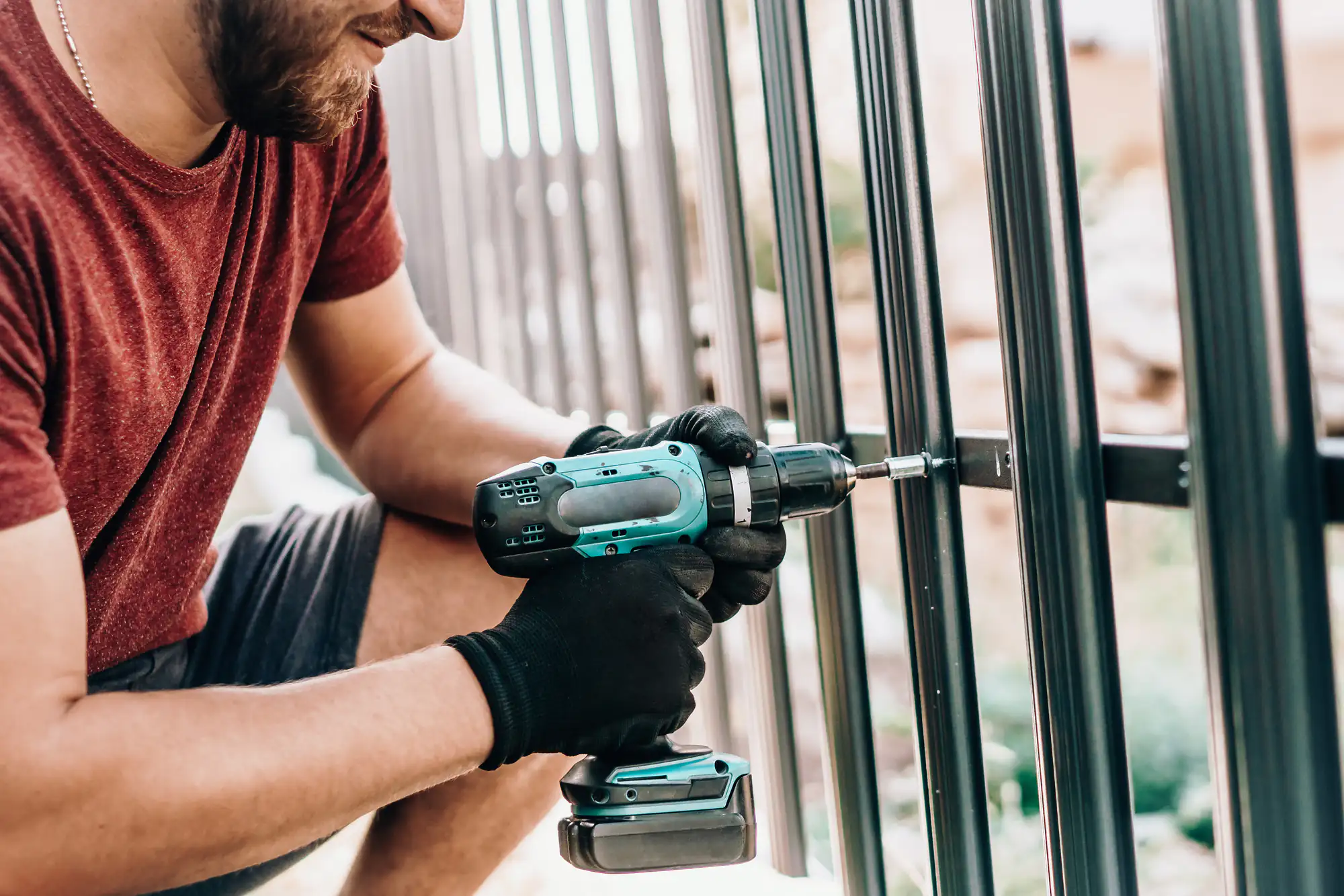
The repair itself follows a clean sequence: remove what’s failed, set new posts to proper depth, secure panels or replace sections as needed, and leave the property clean. We recycle removed materials your old fence doesn’t sit in a pile at the curb waiting for bulk pickup day. If a permit is required for the scope of work, we’ll tell you upfront and walk you through what that process looks like with the Town of Islip Building Division.

Ready to get started?
Vinyl, Wood, and Chain Link Fence Repair Near Me
Central Islip’s housing stock spans several decades of residential construction, which means the fences in this community span several decades of fencing trends too. Ranch homes from the 1960s typically have chain link. Cape Cods from the 1970s tend to have wood. Newer townhomes near the Fairfield Properties Ballpark area often have vinyl or aluminum. We repair all of it wood fence repair, vinyl fence repair, chain link fence repair, composite fence panels, aluminum whatever’s in your yard, we handle it without sending you to a specialist for each material type.
Storm damage and vehicle impact repairs are included in our scope. If a tree limb came down on your fence line or a car clipped your corner post, we repair the damage and document it properly for insurance purposes. All fence materials we use are manufactured in America, which matters on Long Island where cheap imported vinyl becomes brittle in the cold and fails under ice loading after the first serious nor’easter.
We also offer smart technology integration for homeowners who want their fence connected to a home security system or mobile app useful for families who commute and want to monitor gate activity remotely. And if your needs change after the repair, our modular fence systems allow for modifications adding a gate, extending a section without tearing out what’s already there. The fence works with your home, not against it.
Do I need a permit to repair my fence in Central Islip, NY?
It depends on the scope of the work. Cosmetic repairs tightening hardware, replacing a broken board, reattaching a loose panel generally don’t require a permit. But if you’re replacing posts, changing the height, altering the footprint of the fence, or making structural changes, the Town of Islip Building Division typically requires a permit before work begins.
Central Islip falls under the Town of Islip’s zoning code, which sets specific rules for fence height and placement. The standard maximum height is six feet, but fences within fifteen feet of a street property line are capped at four feet. Corner lots have additional sight triangle restrictions that affect where and how high a fence can be placed. When we do a site visit, we check your specific lot configuration against these rules before anything is quoted or installed because a fence that violates setback requirements creates code and neighbor issues that are much harder to fix after the fact.
How much does fence repair typically cost in Central Islip?
Fence repair costs in Suffolk County range from around $222 on the low end to over $1,400 for more extensive work and that range exists because the scope varies enormously from job to job. A single leaning post with a compromised footing is a very different job than replacing three blown-out sections of wood fence after a nor’easter. Material type matters too: chain link repair runs roughly $18 per linear foot, vinyl is typically $20 to $30 per foot, and wood comes in around $25 to $50 per foot depending on the lumber and the extent of the damage.
What drives the cost up most often isn’t the material it’s what’s underneath. In Central Islip, where the median home was built in 1969, original fence footings are frequently undersized or cracked from decades of freeze-thaw cycles. A repair that doesn’t address the footing will fail again, which means you pay twice. Our itemized quotes break down exactly what you’re getting footage, post depth, concrete volumes so you can see what you’re paying for and why, rather than comparing lump sums that tell you nothing about the actual scope of work.
Will my homeowners insurance cover fence damage from a storm in NY?
In most cases, yes if the damage was caused by a covered event like wind, a falling tree, or a vehicle impact, your homeowners policy will typically cover fence repair under the “Other Structures” portion of your coverage. That section usually covers structures not attached to your home, and fences fall into that category. The key distinction insurers make is between sudden damage from a covered event and gradual deterioration from age or neglect the latter is almost never covered.
The documentation step is where most homeowners run into trouble. Adjusters want photographs taken shortly after the event, a written estimate that clearly describes the damage and the scope of repair, and ideally some evidence that connects the damage to the specific storm. When we come out for a site visit after a storm event, we document the damage in a format that supports your claim not just a quote number, but a written breakdown that gives your adjuster what they need. Getting that estimate done quickly matters, because the window for filing a storm damage claim is typically 30 to 60 days from the date of the event.
My fence post is leaning does the whole section need to be replaced?
Not always, but it depends on why it’s leaning. If the post is leaning because the concrete footing has cracked or heaved which is extremely common in Central Islip given the age of the housing stock and the freeze-thaw cycles Long Island goes through every winter then straightening the post without addressing the footing is a temporary fix at best. The same cycle that caused the heave will repeat, and the post will be back where it started within a season or two.
If the post itself is rotted at the base, which is the other common cause of leaning in older wood fences, then the post needs to come out and be replaced. A rotted post can’t be stabilized it has no structural integrity left to anchor to. What we look at during the site visit is the condition of the post at and below grade, the state of the concrete footing, and whether the surrounding panels have been stressed by the lean. In some cases, one post replacement solves the problem. In others, the lean has put enough lateral pressure on adjacent posts that two or three need attention. We’ll tell you exactly what we find and what actually needs to be done not the maximum scope, the right scope.
How deep should fence posts be set on Long Island?
The standard rule is that a fence post should be buried to a depth equal to one-third of its total length, with a minimum of two feet below grade for most residential applications. For a six-foot fence, that means posts going at least two feet down and in practice, deeper is better on Long Island because of the freeze-thaw conditions the ground goes through every winter. Posts that aren’t set deep enough are the primary cause of heaving, leaning, and eventual failure in this climate.
Soil conditions in central Suffolk County also play a role. The ground here tends to have a mix of sandy and loamy composition, which drains reasonably well but doesn’t grip a post footing the way denser clay soils do in other parts of the country. That makes the concrete footing more important, not less a properly sized concrete collar around the post base is what keeps the post stable through seasonal ground movement. When we set posts, the depth and concrete volume are both listed in your written quote, so you know exactly what you’re getting before the first hole is dug.
Who is responsible for repairing a fence on a shared property line in New York?
Under New York State law, both property owners share responsibility for a fence that sits on a shared property line it’s considered a division fence, and both parties have a legal interest in its upkeep. If one neighbor requests a repair in writing and the other fails to act within ten days, the requesting neighbor can make the repair and recover up to twenty percent of the cost from the other party.
In a community as dense as Central Islip, where quarter-acre lots sit close together and many fences have been in place since the 1970s or 1980s, the question of where exactly the property line falls is often less clear than homeowners assume. Original surveys from when the home was built may not reflect current conditions, and a fence that’s been in place for decades may not be sitting exactly where both owners think it is. That’s one of the reasons our site visits include property line verification because starting a repair without knowing where the line actually is can create a much bigger dispute than the one you were trying to resolve. If you’re dealing with a neighbor situation around a shared fence, we can help you understand what you’re looking at before any work begins.
Useful Links
Other Services we provide in Central Islip