
Fencing Contractors in Central Islip, NY
Central Islip Homeowners Need Fences That Hold Up to Long Island Winters

Hear from Our Customers
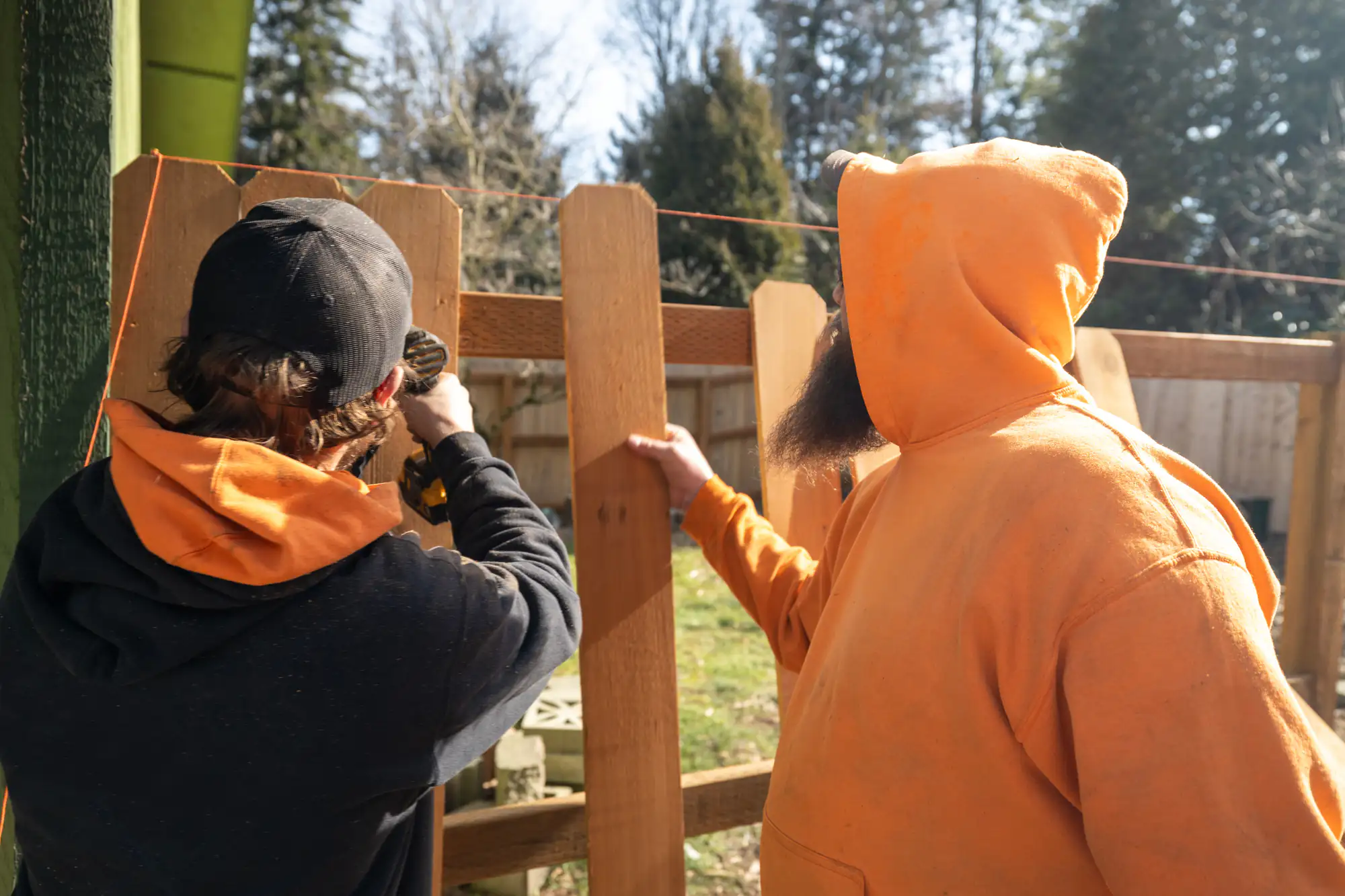
Fence Installation near Central Islip
A fence that’s installed correctly doesn’t just look good it holds up. Through Long Island’s nor’easters, the freeze-thaw cycles that stress shallow posts every winter, and the summer storms that roll through the Town of Islip without warning, the difference comes down to what went into the ground and how deep it went.
For homeowners in Central Islip’s newer developments College Woods, Bella Casa Estates, Islip Landings lot lines are clearly drawn and neighbor proximity is real. A fence that drifts over the property line isn’t a minor issue here. It’s a dispute. That’s why every installation we do starts with property line verification, not assumptions.
And when storm damage happens because on Long Island it will you need a contractor who can document the work in a format your insurance adjuster can actually use. An itemized quote that specifies materials, footage, post depth, and concrete volumes is exactly what that process requires. That’s what we provide, every time, before a single post is dug.
Fence Contractors Serving Central Islip, NY
We’ve been installing fences across Suffolk County for over 15 years. That includes every corner of the Town of Islip from the newer residential developments near the old psychiatric center grounds to the established streets closer to Sunrise Highway. Central Islip is in the middle of our service area, not the edge of it.
What that experience actually means for you: we know the Town of Islip’s fence code before we show up. We know what post depth Long Island’s soil demands. We know what a proper concrete volume looks like on a tight suburban lot in Central Islip. And we know what an insurance adjuster needs to process a storm damage claim.
Every quote we provide is itemized. Every installation is backed by a warranty that covers both the labor and the materials not one or the other. We use American-made materials only. And the job doesn’t end when the crew leaves.

How Fence Installation Works in Central Islip
It starts with a site visit, not a guess. Before any quote is written, we come out to your property, walk the perimeter, verify the property line, and locate underground utilities. In New York State, utility locating before post installation isn’t optional it’s required. We handle it as a standard part of every job, not something you have to ask about.
From there, you get a written, itemized quote. Not a ballpark. A quote that specifies lineal footage, post spacing, post depth, and concrete volumes. If you’re filing a homeowners insurance claim for storm or vehicle damage, this document is what makes that process move. If you’re just planning a new installation, it means you know exactly what you’re paying for before anyone picks up a shovel.
Once you approve the quote, we schedule the installation around your timeline. The Town of Islip has specific fence height rules four feet maximum near street property line setbacks, six feet in rear yards, with sight triangle restrictions on corner lots and every installation we do is built to those specs. When the job is done, you have a fence that’s code-compliant, properly set, and covered under a warranty that doesn’t make you guess which part of the job it applies to.

Ready to get started?
Fence Companies near Central Islip, NY
Every fence we install uses American-made materials. That’s not a tagline it means consistent dimensions, tighter tolerances, and materials that are built for the climate conditions Long Island actually has. Coastal humidity, salt air, freeze-thaw stress, and sustained wind loads from nor’easters are not edge cases here. They’re the norm. Overseas materials with inconsistent quality standards don’t hold up the same way, and on a property worth $436,000 or more, that difference matters.
Beyond the materials, the installation itself covers what most fence companies don’t advertise. Storm and vehicle damage repair is part of what we do and the documentation we provide is structured to support insurance claims, not just satisfy your curiosity. If you’re in one of Central Islip’s newer communities and your HOA has standards around fence appearance or height, we build to those specs too.
For homeowners interested in more than a standard installation, we also offer smart technology integration gate alerts, remote access monitoring, and home security system connectivity. And if your needs change down the road, our modular fence systems let you add sections or reconfigure without calling a contractor every time. Whatever your yard looks like on Carleton Avenue or off Veterans Memorial Highway, the installation is built around what your property actually needs.
Do I need a permit to install a fence in Central Islip, NY?
Not every fence installation in Central Islip requires a formal permit, but every installation must comply with the Town of Islip’s zoning and building codes regardless. That distinction matters more than most homeowners realize. A fence that was put up without a permit but also out of code can create real problems especially when you go to sell the property or file an insurance claim.
The Town of Islip’s rules are specific: no fence higher than four feet when set back less than 15 feet from a street property line, no more than six feet in rear and side yards, and strict sight triangle restrictions on corner lots that could affect a motorist’s sightline. Before any installation, it’s worth confirming current permit requirements with the Town of Islip Building Division directly. We’re familiar with these rules and build every installation to meet them so you’re not dealing with a correction order after the fact.
How deep should fence posts be set for Central Islip’s soil and winters?
This is one of the most important questions you can ask, and most homeowners in Central Islip don’t think to ask it until they’re looking at a leaning post two winters later. Long Island’s freeze-thaw cycles that run from late fall through early spring put serious stress on any post that isn’t set deep enough or doesn’t have adequate concrete around it. Posts that heave, lean, or fail within a few seasons are almost always a depth and concrete volume problem.
The general rule for Long Island conditions is that posts should be set below the frost line typically 36 to 42 inches deep depending on the post size and fence type. Concrete volume matters just as much as depth. That’s exactly why our quotes specify both: post depth and concrete volumes, in writing, before the job starts. You’re not guessing what went into the ground. It’s documented.
My fence was damaged in a storm will my homeowners insurance cover it in Central Islip?
In most cases, yes fence damage caused by a storm, fallen tree, or similar covered event falls under the “Other Structures” provision of a standard homeowners insurance policy, which typically covers up to 10% of your dwelling coverage. But the claim process depends heavily on documentation, and that’s where a lot of homeowners run into problems.
Your insurance adjuster needs to see an itemized breakdown of the repair or replacement materials, footage, post specifications, labor. A vague estimate doesn’t give them what they need to process the claim efficiently. Every quote we provide is itemized to that level of detail, which means you have exactly what the adjuster is looking for from the start. After a nor’easter or a severe storm rolls through Central Islip and the Town of Islip, that documentation is the difference between a smooth claim and a drawn-out one. We cover storm and vehicle damage repair, and we structure the paperwork to support your claim, not just the job.
What fence height is allowed in the Town of Islip for a residential property?
The Town of Islip has clear rules on this, and they vary depending on where on your property the fence is going. In rear and side yards, the general maximum is six feet with an exception for open chain-link or fences that don’t block more than 15% of their surface. Near a street property line, the maximum drops to four feet if the fence is within a 15-foot setback zone.
Corner lots have an additional layer of restriction. If your fence could obstruct a driver’s sightline within a designated sight triangle at an intersection or driveway, height limits apply regardless of fence type. This is a detail that catches a lot of homeowners off guard, especially in denser areas of Central Islip where lots are closer to intersections. We review these conditions during the site visit and design the installation to be fully compliant before anything is quoted or scheduled.
How do I know the fence will be installed on my property line and not over it?
This is a legitimate concern in Central Islip, where the population density runs close to 4,750 people per square mile and lots in many neighborhoods sit tight against each other. A fence that’s even a few inches over the line especially in newer developments like Courthouse Commons or Coventry Village where property boundaries are precisely drawn can create a neighbor dispute that’s expensive and frustrating to resolve.
The answer is professional property line verification before any installation begins. We conduct that as a standard part of every site visit. We’re not eyeballing it or going off your memory of where the line is. We verify it. If your survey documents are available, we review them. If there’s any ambiguity, we flag it before anything gets installed. The goal is a fence that’s exactly where it should be not close enough, not almost right.
Why are our prices lower than other fence companies on Long Island?
The short version: lower overhead and a direct operation. We’re not running through layers of subcontractors or carrying costs that get passed along to you. The pricing reflects that structure, not a cut in materials or installation quality. Every job still uses American-made materials, still comes with an itemized quote, and is still backed by a warranty covering both labor and materials.
For Central Islip homeowners who are weighing the cost carefully and with median home values climbing toward $436,000, that’s a real consideration the goal is straightforward value. You should know exactly what you’re paying for, why it costs what it costs, and what happens if something goes wrong after the job is done. That’s what the itemized quote and the dual warranty are for. Lower price doesn’t mean less accountability here. It means a leaner operation that doesn’t need to pad the quote to stay profitable.
Useful Links
Other Services we provide in Central Islip