Fence Repair in Fort Salonga, NY
When the Sound’s Storms Take Down Your Fence
Hear from Our Customers
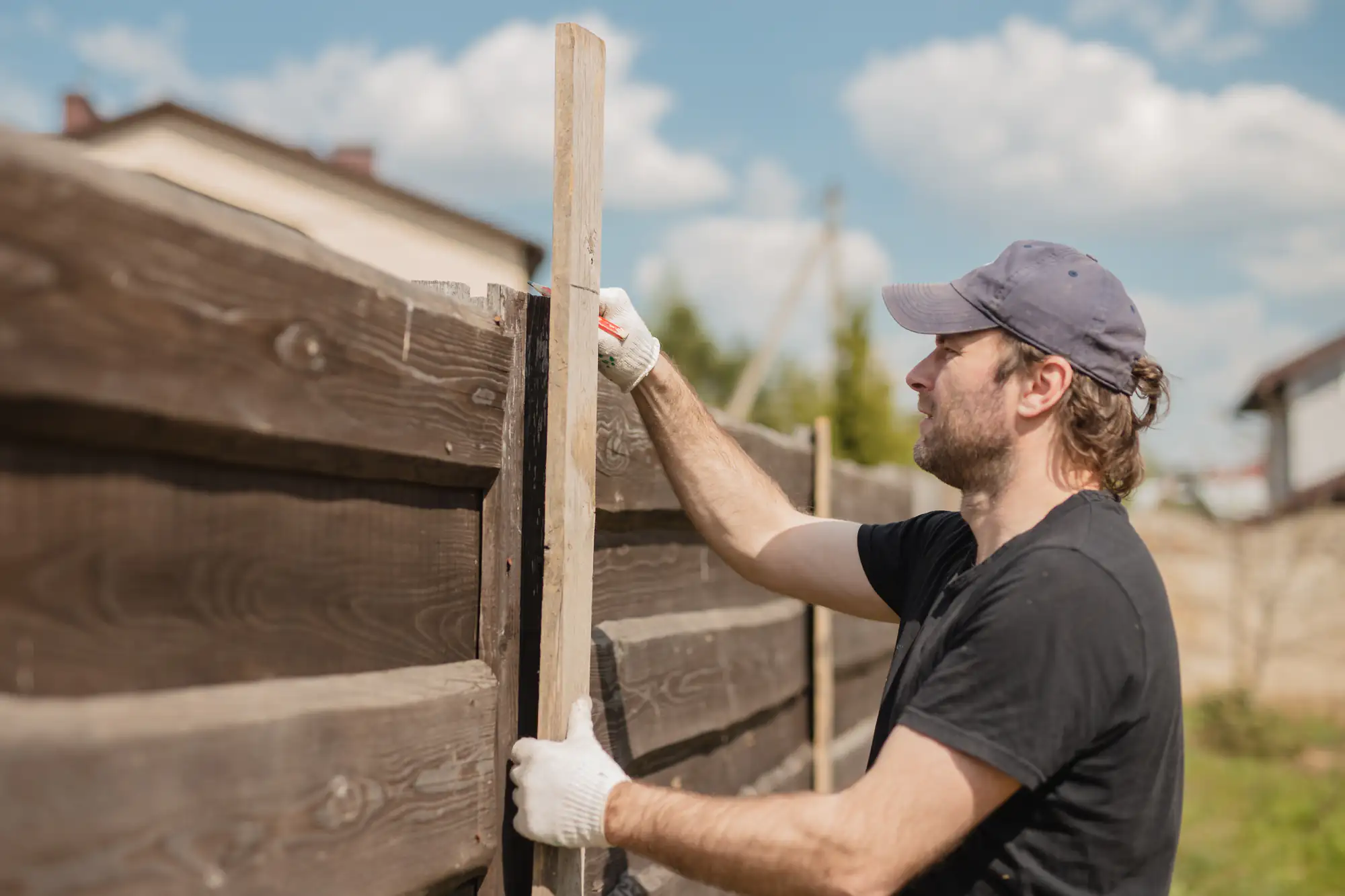
Wood and Vinyl Fence Repair
Fort Salonga sits right on the Long Island Sound, and that exposure is relentless. Salt air doesn’t just affect the water-facing side of your property. It works into wood grain, corrodes fasteners, and accelerates the kind of slow deterioration that catches homeowners off guard until a section goes down mid-storm. When your fence repair is done with the right materials and the right post depth, you stop dealing with the same problem every two winters.
Properties here run one to two acres on average. That means your fence line is long, and when something fails, it usually isn’t just one post. A repair done without a proper site assessment often misses the neighboring posts that are already compromised and those go down in the next nor’easter. Getting a full picture before work starts is what separates a repair that lasts from one that buys you six months.
Beyond the structural side, your fence is visible. In a neighborhood where homes are selling close to or above a million dollars, a patched fence that doesn’t match or a post that’s slightly out of line shows. The repair should look like it was always there, not like it was done in a hurry after a storm.
Fence Repair Company Fort Salonga, NY
We’ve been doing this work across the North Shore for over 15 years. That includes properties in Fort Salonga along Fort Salonga Road, near Crab Meadow, and out toward the Indian Hills area where the conditions are different from inland Suffolk County and the expectations are higher.
Fort Salonga straddles two town governments: Huntington to the west and Smithtown to the east. Those two towns have different fence height thresholds and different permit requirements. A contractor who doesn’t know that going in can create a code problem you end up dealing with long after the job is done. We know which side of the line you’re on and what that means before we ever put a post in the ground.
Every job comes with a written, itemized quote lineal footage, post spacing, post depth, concrete volumes and warranties on both workmanship and materials. That’s not a bonus. That’s the baseline.
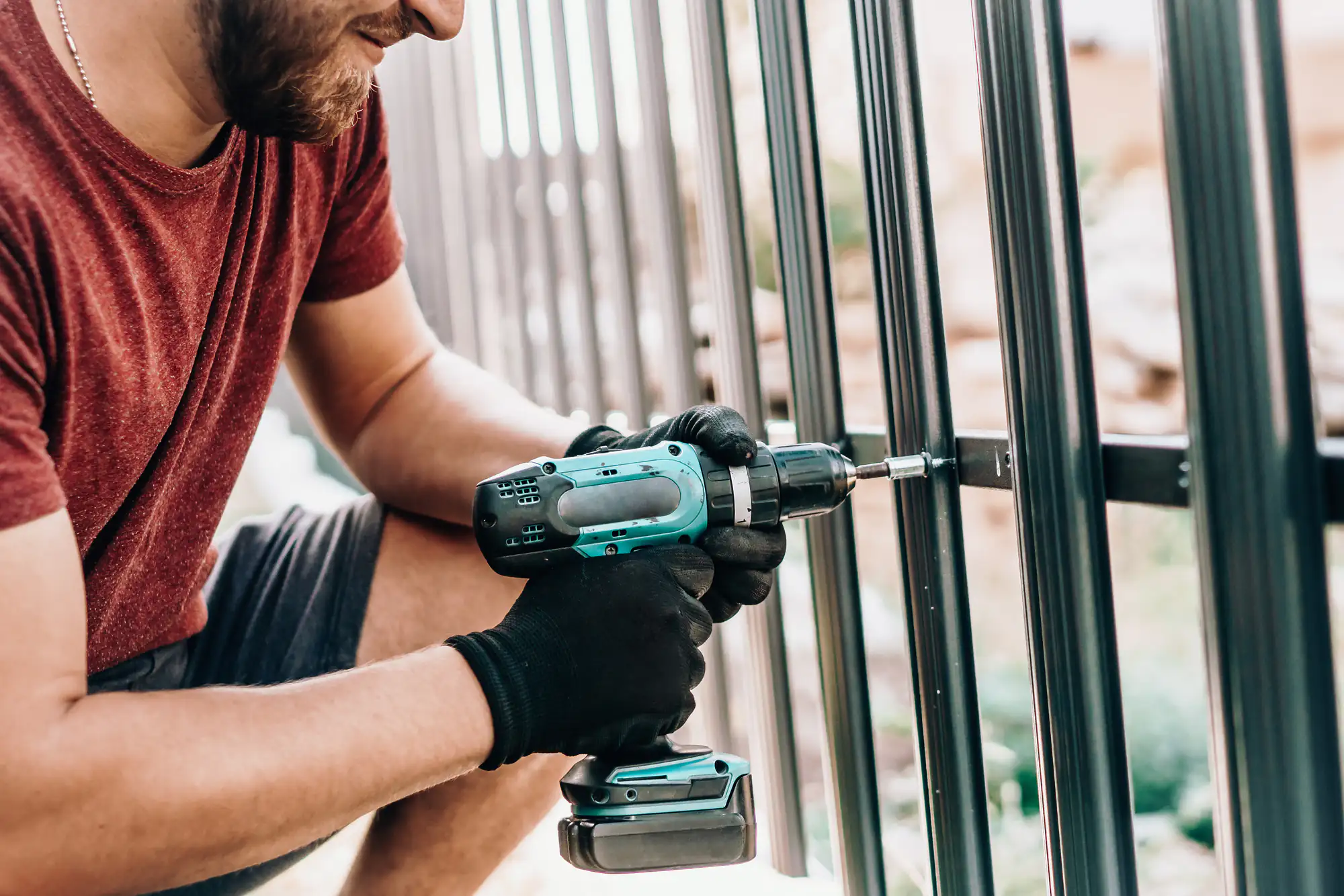
Fence Repair Process Fort Salonga, NY
It starts with a professional site visit. Before anything is quoted, we walk the property with you, identify the full scope of damage, verify your property line, and confirm which town’s building code applies Huntington or Smithtown, depending on where your lot falls. We also contact New York 811 to locate utilities before any digging starts. Fort Salonga’s older housing stock most of it built in the 1960s often has buried irrigation lines and aging utility infrastructure close to fence lines. Skipping that step isn’t just careless, it’s a liability.
From there, you get a written, itemized quote. Not a ballpark. A document that specifies exactly what’s being repaired, how many linear feet, post depth, post spacing, and how much concrete goes in each hole. You know what you’re paying for and why before you sign anything.
Once work begins, our crew handles removal of damaged materials and recycles them responsibly nothing left piled in your yard. Posts are set to the correct depth for your soil conditions and the wind exposure your property faces near the Sound. If your repair involves a permit, we handle the application and coordinate with the appropriate town building department. When the job is done, the site is clean and the fence looks like it belongs there.

Ready to get started?
Fence Repair Services Fort Salonga, NY
Whether the damage is from a fallen limb, a nor’easter that pulled posts out of saturated ground, or years of salt air working through a wood fence near the water, the repair approach depends on the material and the cause not a one-size-fits-all fix. We work with wood, vinyl, chain link, aluminum, and composite fence systems. For coastal properties in Fort Salonga, vinyl and aluminum are often the smarter long-term choice over wood because they don’t absorb moisture, don’t rot, and don’t corrode the way untreated wood and standard hardware do when salt air is a constant factor.
Storm and vehicle damage repairs come with insurance documentation support. If you’re filing a claim under your homeowner’s policy for fence damage, we provide the written, itemized damage assessment you need to support that process. That’s something a lot of homeowners don’t know to ask for until they’re already stuck in the middle of a claim.
For properties in Highview Estates or along the larger lots closer to the Sound, fence post repair is often the core issue not the panels themselves. Posts set without adequate depth or concrete fail when the ground gets saturated, and Long Island’s freeze-thaw cycle through winter makes that worse every year. All fence materials we use are made in America, and the modular systems we install allow for future modifications adding a gate, extending a run, swapping a panel without tearing out the whole structure.
Do I need a permit to repair my fence in Fort Salonga, NY?
It depends on where your property sits within Fort Salonga. The hamlet straddles two town governments the Town of Huntington on the western side and the Town of Smithtown on the eastern side and they have different rules. In Huntington, you generally don’t need a permit for a fence under six feet. In Smithtown, that threshold drops to four feet. So if you’re repairing or replacing a fence that’s five feet tall, you may need a permit on one side of Fort Salonga and not the other.
For most standard fence repairs replacing a damaged post, swapping out a panel, resetting a section that came loose a permit typically isn’t required as long as you’re not changing the height or footprint. But if the repair involves a full section rebuild or you’re near a property line in a zone with specific setback requirements, it’s worth confirming before work starts. We handle that assessment as part of every site visit, so you’re not guessing.
How much does fence repair typically cost in Fort Salonga?
In Fort Salonga, the costs tend to run higher than the national average not because contractors charge a premium for the zip code, but because the properties are larger. When your lot runs an acre or two, even a partial repair can involve a significant amount of linear footage, and that adds up.
Material matters too. Wood fence repair generally runs $25 to $50 per linear foot. Vinyl is typically $20 to $30. Chain link is usually the most affordable at around $18 per foot. If storm damage took down multiple sections or compromised several posts, you’re looking at a more involved job than a single broken board. The best way to get an accurate number is a written, itemized quote that breaks down exactly what’s being repaired and why not a ballpark over the phone.
What type of fence material holds up best near the Long Island Sound?
For properties with direct or near-direct exposure to the Sound especially along the coastal sections of Fort Salonga vinyl and aluminum consistently outperform wood over time. Wood absorbs moisture, and in a salt-air environment, that process accelerates. The posts rot faster, the hardware corrodes, and the panels warp or split sooner than they would five miles inland. A wood fence that might last 20 to 25 years in Hauppauge or Commack might need significant attention in 10 to 15 years if it’s sitting near the water.
Vinyl doesn’t absorb moisture and won’t rot. Aluminum doesn’t corrode the way steel hardware does in coastal air. Composite materials offer a similar low-maintenance profile. If you already have a wood fence and want to repair rather than replace it, that’s a completely reasonable choice but it’s worth using the right hardware (stainless or hot-dipped galvanized) and making sure the posts are set deep enough with adequate concrete to handle wind loads off the water.
My fence post is leaning after a storm is that a repair or a full replacement?
A leaning post after a nor’easter is usually a repair, not a full replacement but the answer depends on why it’s leaning. If the post shifted because the ground became saturated and the original installation didn’t use enough concrete, the fix is to reset the post properly: pull it, clean out the hole, go deeper if needed, and reset it with the right concrete volume. That’s a straightforward repair.
If the post snapped at or below grade which happens when wood has been rotting from the ground up over several years that’s a replacement. The post itself is gone, and you need a new one. On Long Island’s North Shore, freeze-thaw cycles through winter put real stress on posts that were set marginally to begin with. The ground expands and contracts, and posts that don’t have enough depth or concrete gradually work their way loose. One bad storm is usually what finally takes them down, but the failure started long before that. A proper site assessment will tell you which situation you’re dealing with before any work begins.
Can I use my homeowner’s insurance to cover storm fence damage in Fort Salonga?
In most cases, yes fence damage from a storm is covered under the “Other Structures” portion of a standard homeowner’s insurance policy. That coverage typically applies to detached structures on your property, which includes fences. The coverage limit is usually 10% of your dwelling coverage, so on a home insured for $800,000, you’d have up to $80,000 in other structures coverage more than enough for most fence repairs.
The key is documentation. Your insurance company will want a written estimate that clearly describes the damage, the cause, and the scope of repair. A vague quote or a verbal assessment won’t cut it. We provide written, itemized damage documentation as part of our storm repair process specifying what was damaged, how it was damaged, and exactly what the repair involves. That gives you what you need to file the claim and move the process forward without going back and forth with the adjuster for weeks.
How do I know if a fence repair contractor is legitimate after a storm in Fort Salonga?
After a major nor’easter, unlicensed contractors show up fast on Long Island going door to door, offering quick repairs at low prices, and sometimes taking a deposit before disappearing or delivering work that fails within a season. It happens every time there’s a significant storm on the North Shore, and Fort Salonga is not immune to it.
A few things to check before you agree to anything: ask for proof of licensing and insurance in New York State, and ask for it in writing. A legitimate contractor will hand it over without hesitation. Ask for a written, itemized quote not a number on a napkin or a verbal estimate. If they can’t tell you the post depth, the concrete volume, or the exact linear footage they’re quoting, that’s a problem. Also look at how long they’ve been operating on Long Island. A company with 15-plus years of continuous operation in Suffolk County has a track record you can verify. Someone who showed up after the storm does not. The cheapest quote after a nor’easter is rarely the one that saves you money in the long run.
Useful Links
Other Services we provide in Fort Salonga