Fence Staining in Fort Salonga, NY
Gold Coast Fences Deserve More Than a Coat of Paint
Hear from Our Customers
Wood Fence Protection Fort Salonga
Fort Salonga isn’t a typical Long Island suburb. Homes here sit on an acre or more, fences run long perimeters, and the air coming off the Long Island Sound carries enough salt and moisture to age unprotected wood faster than most homeowners expect. A fence that looked solid two summers ago can be gray, cracking, and pulling away from posts by the time you’re paying attention to it again. Professional staining stops that cycle before it starts or reverses it before replacement becomes the only option.
The Crab Meadow area and the Sound-facing properties along Fort Salonga’s northern edge take the hardest hits, but the salt air effect doesn’t stop at the waterline. It moves inland. Combined with the hamlet’s mature tree canopy which keeps fence sections shaded and damp long after rain you’re dealing with conditions that accelerate mold, mildew, and wood degradation faster than most stain timelines account for. Getting the right product applied at the right time makes a measurable difference.
Beyond protection, there’s the practical math. A full perimeter fence on a Fort Salonga property can run several hundred linear feet. At today’s replacement costs, that fence represents a real dollar figure one that professional staining at a fraction of the cost can extend by years. For homeowners in a community where median property values sit near $900,000, that’s not a small consideration.
Fence Staining Company Fort Salonga NY
We’ve been working on Long Island’s North Shore for over 15 years through nor’easters, post-Sandy repairs, and every season the Sound corridor throws at a wood fence. This isn’t a painting company that picked up a stain brush. Fence installation is the foundation of what we do, which means we understand wood at a structural level how different species absorb stain, how moisture content affects adhesion, and what Fort Salonga’s specific combination of coastal humidity and freeze-thaw cycling does to a fence over time.
We serve both the Huntington and Smithtown sides of Fort Salonga, and that matters more here than it does almost anywhere else on Long Island. The municipal boundary running through the hamlet means different codes, different permit thresholds, and different requirements depending on your exact address. We know the difference, and we factor it in from the first site visit.
Every quote we provide is itemized lineal footage, material quantities, labor scope so you’re not guessing what you agreed to when the crew shows up. No vague estimates. No surprises after the fact.

Fence Staining Process Fort Salonga NY
It starts with a site visit. We come to your property, walk the fence line, check the wood condition, verify property lines, and locate any buried utilities before anything else happens. In Fort Salonga, where the Huntington and Smithtown boundary splits the hamlet, confirming which municipality your property falls under isn’t a formality it’s a practical step that protects you from code issues down the road. We handle that conversation so you don’t have to.
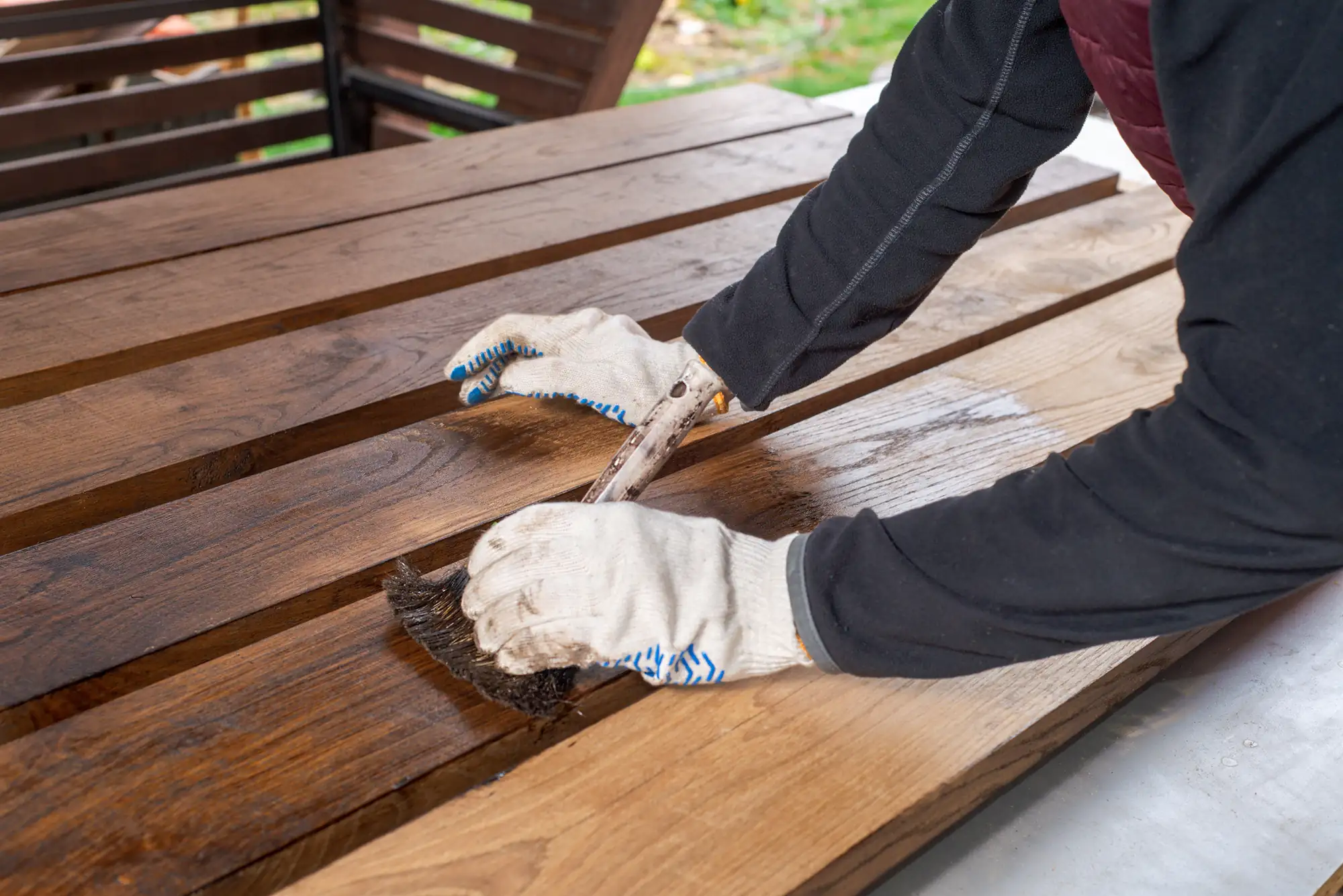
From there, we assess the wood. If your fence has been sitting unprotected through several Long Island winters, it likely needs a proper cleaning and possibly a brightening treatment before stain goes on. Applying stain over dirty, weathered, or moisture-saturated wood is one of the most common reasons stain jobs fail early and it’s something a fence specialist catches where a general painter might not. We time the cleaning and staining around Fort Salonga’s pollen season and moisture windows, because putting stain down on a damp or pollen-coated surface cuts the life of the job significantly.
Once the wood is clean, dry, and ready, we apply the stain in the right conditions temperature between 50°F and 80°F, no rain in the forecast, and enough airflow to cure properly. You get a written scope before we start and a dual labor-and-material warranty when we’re done. If something isn’t right, you have coverage that actually means something.
Ready to get started?
Professional Fence Staining Services Fort Salonga
Every fence staining job we do in Fort Salonga is scoped to the specific conditions of your property not a one-size approach pulled from a general service menu. That means accounting for your wood species, the fence’s age and current condition, its sun and shade exposure, and how close your property sits to the Sound. A cedar fence on a shaded, wooded lot in the Highview Estates area needs a different approach than a pressure-treated fence on a sun-exposed property near Crab Meadow. We make that call before the first brush touches anything.
All materials we use are American-made, and our practices include responsible material disposal and recycling something that matters in a community that borders the Long Island Sound and takes its local environment seriously. If your fence has storm damage alongside weathering a realistic scenario in a hamlet with Fort Salonga’s tree canopy and Sound-adjacent exposure we handle the repair and the staining together, so you’re not coordinating two separate contractors.
Our quotes specify every linear foot, every material volume, and every labor item in writing. You know what you’re paying for before the job starts, and our warranty covers both the workmanship and the materials after it’s done. For homeowners in a community like Fort Salonga, where property values and standards are both high, that level of accountability isn’t extra it’s the baseline.
How often should I stain my wood fence in Fort Salonga, NY?
Most wood fences in Fort Salonga need professional staining every two to three years but that window can compress depending on where your property sits and what your fence is exposed to. Properties near Crab Meadow Beach or along the Sound-facing bluffs deal with consistent salt air, which pulls moisture into wood grain and accelerates the breakdown of stain films faster than inland locations experience. If your fence is also in a shaded area under Fort Salonga’s mature tree canopy, it stays damp longer after rain events, which shortens the effective life of any stain application.
The clearest indicator isn’t a calendar it’s the wood itself. When water stops beading on the surface and starts soaking in, the stain has lost its protective barrier. Graying, surface cracking, or visible mold growth are signs the wood has been unprotected long enough to need more than just a fresh coat. At that point, cleaning and brightening the wood before restaining is necessary to get full adhesion and a result that actually lasts.
Can a weathered, gray fence actually be restored with staining, or is it too far gone?
In most cases, yes a weathered fence can be restored without replacement. The gray color you’re seeing is oxidized wood surface, not structural failure. As long as the posts are solid, the boards aren’t split through, and there’s no significant rot at the base, a professional cleaning and brightening process followed by stain application can bring the wood back to a condition that looks and performs well for years.
The key word there is professional. Applying stain directly over gray, weathered wood without cleaning it first is one of the most common mistakes made by general painters who take on fence staining jobs. The stain won’t bond correctly, it’ll look uneven, and it’ll fail faster than it should. We assess every fence honestly before recommending staining if the wood is genuinely past the point where staining makes financial sense, we’ll tell you that directly rather than take your money for a job that won’t hold.
Does Fort Salonga’s location near the Long Island Sound affect what stain product I should use?
It does, and it’s one of the reasons hiring a fence specialist matters more here than it might in an inland community. The salt air coming off the Long Island Sound creates a moisture-and-mineral combination that standard exterior stains aren’t always formulated to handle well over time. Products that perform fine in a drier, more sheltered environment can break down faster in coastal conditions leading to premature peeling, mildew growth, and color fade within a season or two.
For Fort Salonga properties, especially those in the northern part of the hamlet closer to the water, we select stain products that include mildewcides and UV inhibitors appropriate for the exposure level of your specific fence. A semi-transparent stain with the right penetrating chemistry holds up significantly better in coastal conditions than a film-forming product that sits on the surface and is more vulnerable to moisture intrusion. We make that product call based on your fence’s actual exposure not a default recommendation.
Do I need a permit to stain my fence in Fort Salonga?
No fence staining itself doesn’t require a permit in either the Town of Huntington or the Town of Smithtown. Permit requirements in Fort Salonga apply to fence construction, installation, height modifications, and pool enclosures, not to maintenance work like staining or sealing.
That said, Fort Salonga’s dual-municipality situation is worth understanding if you’re planning any fence work beyond staining. The hamlet straddles the Huntington and Smithtown boundary, roughly along Bread and Cheese Hollow Road. Huntington limits front-yard fences to four feet and requires a building permit for anything over six feet in height. Smithtown allows fences up to four feet on any portion of a lot without a permit, with its own rules for taller installations. If you’re not sure which municipality your property falls under, our site visit process includes confirming that detail it’s a practical step that prevents problems later, and it’s something most general contractors skip.
How much does professional fence staining cost in Fort Salonga?
Professional fence staining typically runs between $2 and $10 per linear foot, with most complete projects falling in the $1,400 to $2,200 range nationally. In Fort Salonga, where homes commonly sit on an acre or more and fence runs can extend several hundred linear feet around a full perimeter, total project costs can run higher depending on the scope. The condition of the wood also affects pricing a fence that needs cleaning and brightening before staining requires more labor and materials than one that’s in good shape going in.
What you’re protecting matters here. At current replacement costs of $30 to $50 per linear foot for quality wood fencing, a full perimeter fence on a Fort Salonga property can represent $10,000 to $20,000 or more in replacement value. Regular staining is straightforwardly cheaper than premature replacement, and it extends the life of the fence by years. We provide itemized quotes that show exactly what you’re paying for every linear foot, every material item so the math is clear before you commit to anything.
A storm just damaged my fence in Fort Salonga can you handle the repair and staining together?
Yes, and for most Fort Salonga homeowners dealing with storm damage, handling both in a single engagement is the practical approach. The hamlet’s combination of mature trees and Sound-adjacent exposure makes it one of the more storm-vulnerable communities in western Suffolk County nor’easters and severe thunderstorms that track up the Long Island Sound corridor regularly bring down limbs or entire trees onto fences, and the same wind events that cause structural damage also strip stain from exposed fence sections.
We cover storm and vehicle damage repair alongside staining, so you’re not coordinating two separate contractors or waiting for one to finish before the other can start. If you’re working through an insurance claim, having a single contractor handle the full scope documented, itemized, and warrantied simplifies the process considerably. We assess the structural damage first, make the repairs, and then complete the staining once the repaired sections are ready to accept the product. The result is a fence that’s both structurally sound and properly protected, not just patched and left exposed.
Useful Links
Other Services we provide in Fort Salonga